Blog
How to Build a Headless Ecommerce Website (Step-by-Step Complete Guide – 2026)

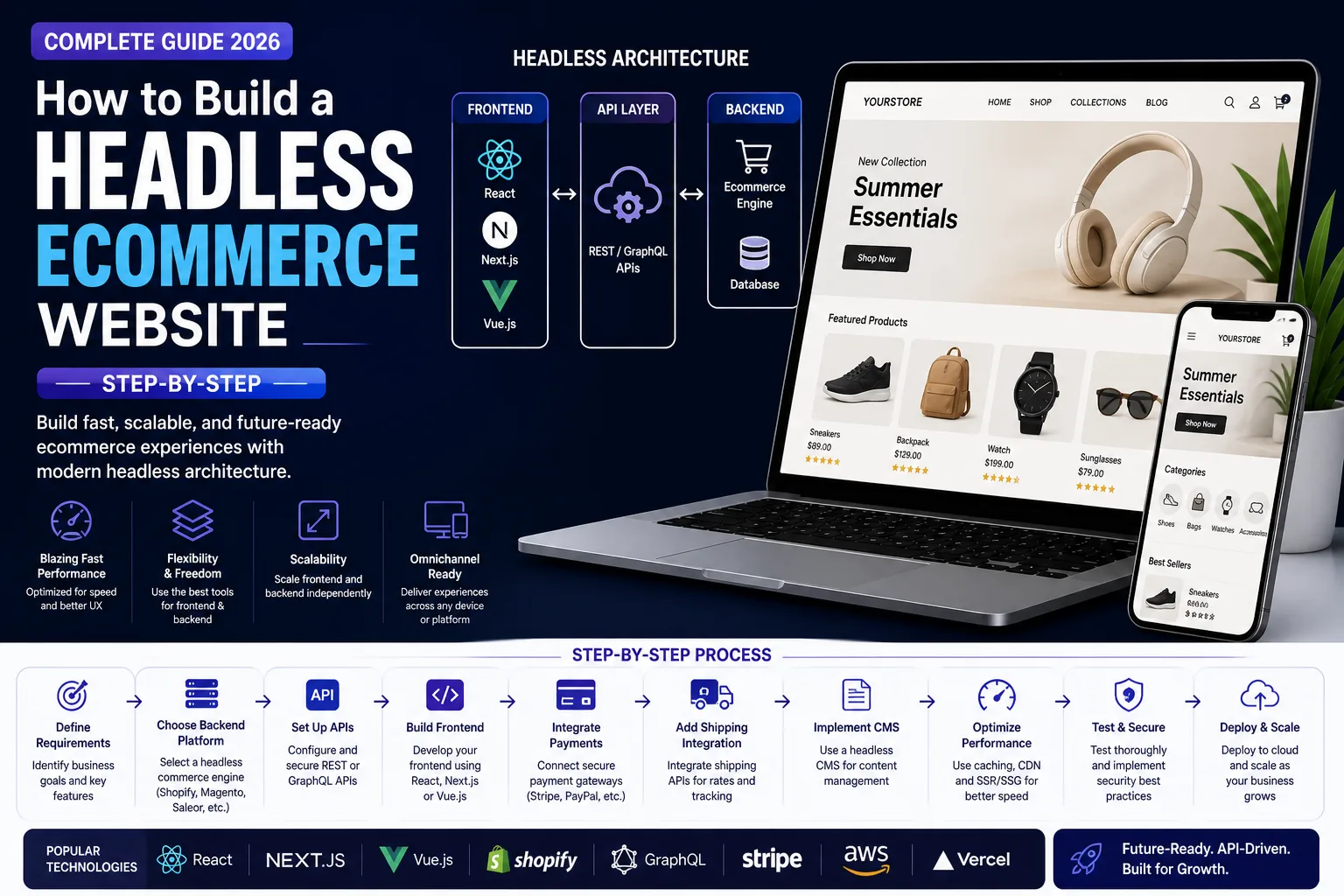
📘 Introduction: Why Headless Commerce is Reshaping Ecommerce Development
Ecommerce has evolved far beyond simple storefronts built on rigid templates. Today’s digital consumers expect fast-loading pages, seamless mobile experiences, personalized content, and consistent interactions across multiple channels such as websites, mobile apps, marketplaces, and even IoT devices. Traditional ecommerce platforms, often built as monolithic systems, struggle to keep up with these demands because their frontend and backend are tightly coupled.
Headless ecommerce offers a solution to this limitation by decoupling the frontend (presentation layer) from the backend (commerce engine). This architectural shift allows developers to build highly flexible, scalable, and performance-driven ecommerce experiences without being restricted by backend limitations.
In this comprehensive guide, we will explore how to build a headless ecommerce website step by step, covering architecture, tools, APIs, development workflows, performance optimization, and real-world implementation strategies.
🧠 What is Headless Ecommerce?
Headless ecommerce is an architecture where the frontend and backend operate independently, communicating through APIs. Unlike traditional platforms where the frontend and backend are tightly integrated, headless systems allow developers to build custom user interfaces while using a separate backend for business logic.
In a headless setup, the frontend is responsible for rendering content and handling user interactions, while the backend manages core ecommerce functions such as product data, inventory, orders, and payments.
👉 Learn more about headless commerce fundamentals:
https://developer.mozilla.org/en-US/docs/Learn/JavaScript/Client-side_web_APIs/Introduction
⚙️ Why Businesses Are Moving to Headless Ecommerce
The shift toward headless commerce is driven by several key advantages.
One of the primary benefits is flexibility. Businesses can design unique user experiences without being constrained by platform limitations. Developers can use modern frontend frameworks such as React, Vue, or Angular to create fast and interactive interfaces.
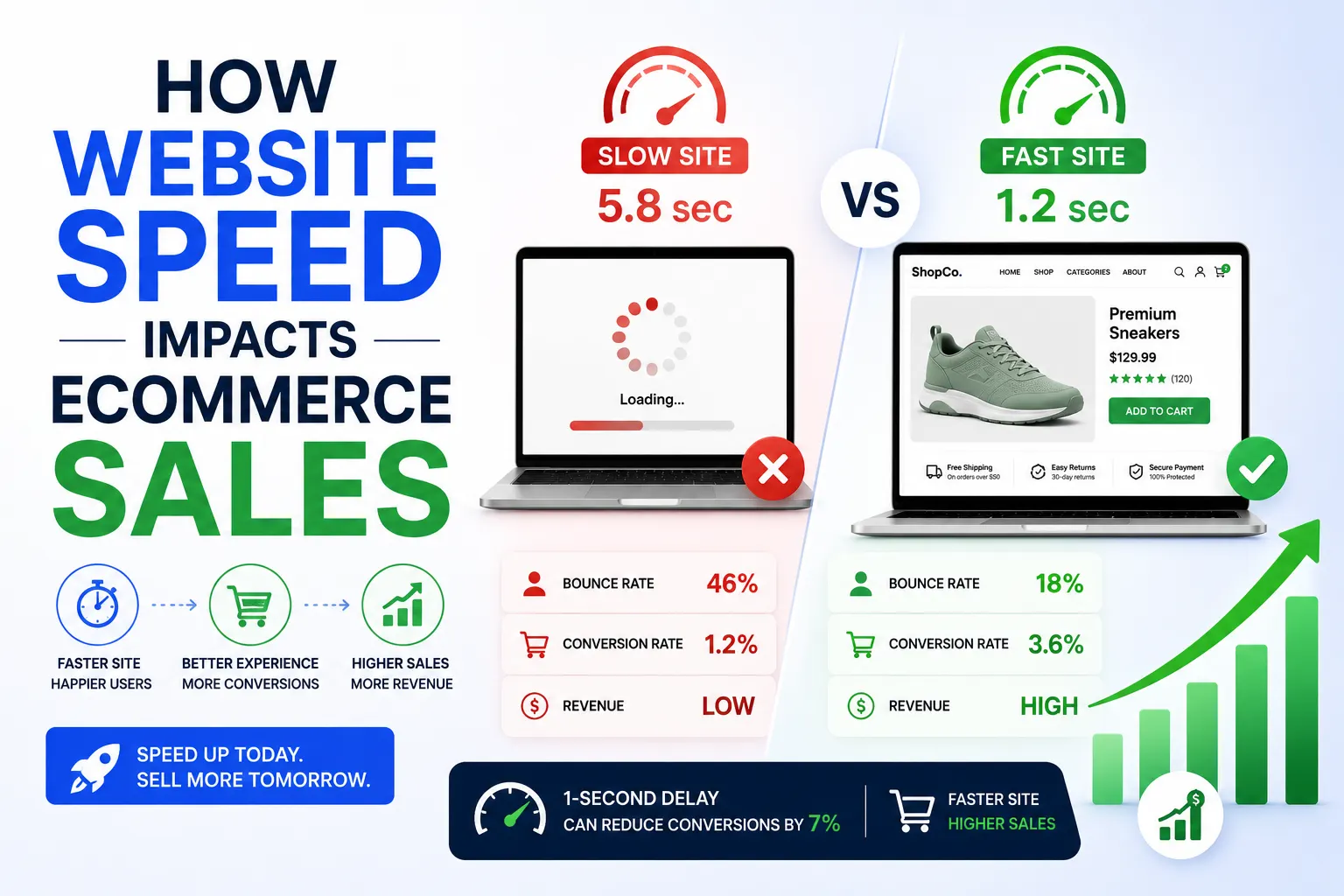
Another major advantage is performance. Headless architectures enable faster page loading by delivering content through APIs and content delivery networks (CDNs). This improves user experience and contributes to better SEO rankings.
Scalability is also a significant factor. Since the frontend and backend are independent, businesses can scale each component separately based on demand.
🏗️ Headless Ecommerce Architecture
A headless ecommerce system consists of several components working together.
🌐 Frontend (Presentation Layer)
The frontend is responsible for rendering the user interface. It communicates with backend services through APIs to fetch data and display it dynamically.
Popular frontend technologies include:
- React
- Vue.js
- Next.js
⚙️ Backend (Commerce Engine)
The backend handles business logic, including:
- Product management
- Order processing
- Inventory tracking
🔗 API Layer
APIs act as the communication bridge between frontend and backend.
☁️ Hosting & Infrastructure
Headless systems are typically hosted on cloud platforms.
Popular Platforms:
- Amazon Web Services → https://aws.amazon.com/
- Google Cloud Platform → https://cloud.google.com/
🔄 Step-by-Step Guide to Building a Headless Ecommerce Website
🧩 Step 1: Define Business Requirements
Before starting development, it is essential to define your business goals, target audience, and required features. This includes identifying product categories, payment methods, shipping options, and integrations.
🧩 Step 2: Choose Backend Platform
Select a backend system that supports headless architecture. Popular options include Shopify (headless mode), Magento, and custom-built solutions.
🧩 Step 3: Set Up API Infrastructure
APIs are the backbone of headless commerce. You need to configure endpoints for:
- Products
- Orders
- Payments
- Customers
🧩 Step 4: Build Frontend Application
Using frameworks like React or Next.js, developers create a dynamic frontend that interacts with APIs.
🧩 Step 5: Integrate Payment Gateway
Payment APIs enable secure transactions.
Examples:
- Stripe → https://stripe.com/docs/api
- PayPal → https://developer.paypal.com/docs/api/overview/
🧩 Step 6: Integrate Shipping APIs
Shipping APIs handle logistics.
Examples:
- FedEx → https://developer.fedex.com/api/en-us/home.html
- Shiprocket → https://apidocs.shiprocket.in/
🧩 Step 7: Implement CMS for Content
A headless CMS allows content management.
🧩 Step 8: Optimize Performance
Use caching and CDNs to improve speed.
🧩 Step 9: Ensure Security
Implement authentication and encryption.
🧩 Step 10: Test and Deploy
Conduct thorough testing before launching.
⚡ Performance Optimization in Headless Ecommerce
Performance is critical for ecommerce success.
Headless architectures enable faster load times by separating content delivery from backend processing. Using CDNs ensures that content is delivered from servers closest to users, reducing latency.
Caching mechanisms store frequently accessed data, minimizing API calls and improving response times.
🔐 Security Considerations
Security in headless ecommerce involves protecting APIs and data.
Developers must implement authentication protocols, encrypt data, and follow best practices from OWASP:
👉 https://owasp.org/www-project-top-ten/
📈 SEO Benefits of Headless Commerce
Headless commerce can significantly improve SEO performance.
Faster page load speeds, better mobile optimization, and dynamic content delivery contribute to higher search rankings. Additionally, developers can optimize frontend rendering for search engines using server-side rendering (SSR).
🔮 Future of Headless Ecommerce
The future of ecommerce is increasingly headless. Businesses are adopting API-first architectures, integrating AI-driven personalization, and leveraging serverless technologies to build scalable platforms.
🏁 Conclusion
Building a headless ecommerce website requires careful planning, the right technology stack, and a deep understanding of API-driven architecture. While it involves more complexity than traditional systems, the benefits in terms of flexibility, performance, and scalability make it a worthwhile investment.
To build a scalable and high-performance headless ecommerce platform, partner with Sri Hayavadhana Info Tech and create a future-ready digital commerce solution