Blog
Technical SEO for Ecommerce Stores


The Complete Guide to Crawlability, Performance, Indexing, and Search Visibility
Introduction
Technical SEO is one of the most important foundations of ecommerce success. Even the best product pages, high-quality content, strong backlinks, and advanced marketing campaigns can fail to produce consistent organic growth if the technical structure of an ecommerce website is poorly optimized.
Ecommerce websites are naturally more complex than standard business websites because they often contain thousands of URLs, dynamic product pages, faceted navigation systems, filters, category hierarchies, pagination structures, duplicate content challenges, and constantly changing inventory. Without proper technical SEO, search engines may struggle to crawl, index, understand, and rank ecommerce websites efficiently.
Modern search engines such as Google now prioritize not only relevance and content quality but also technical performance, user experience, mobile usability, page speed, structured data, security, and website architecture. Technical SEO ensures that ecommerce websites are accessible, understandable, and performant for both users and search engines.
Official Resources:
- https://developers.google.com/search/docs
- https://www.bigcommerce.com/articles/ecommerce/ecommerce-seo/
- https://web.dev/
In 2026, technical SEO for ecommerce goes far beyond fixing broken links or submitting XML sitemaps. Ecommerce businesses must optimize for:
- Mobile-first indexing
- Core Web Vitals
- AI-driven search systems
- Semantic understanding
- Structured data
- Crawl efficiency
- Site architecture
- JavaScript rendering
- International SEO
- User experience signals
This comprehensive guide explains every important aspect of technical SEO for ecommerce stores, including crawlability, indexing, site architecture, URL structures, duplicate content prevention, Core Web Vitals optimization, mobile SEO, schema markup, JavaScript SEO, log file analysis, security optimization, international SEO, AI search readiness, and future technical SEO trends.
What Is Technical SEO?
Understanding Technical SEO
Technical SEO refers to the optimization of a website’s infrastructure and technical elements to help search engines crawl, index, render, and rank pages effectively.
Unlike on-page SEO, which focuses on content and keywords, technical SEO focuses on:
- Website architecture
- Crawlability
- Indexing
- Site speed
- Mobile usability
- Structured data
- Security
- Performance optimization
Why Technical SEO Matters for Ecommerce
Ecommerce websites contain large volumes of pages and dynamic content.
Technical SEO helps ecommerce stores:
- Improve search visibility
- Reduce crawl inefficiencies
- Prevent duplicate content issues
- Enhance user experiences
- Increase conversions
- Improve organic rankings
Without proper technical SEO, search engines may:
- Miss important pages
- Waste crawl budget
- Index duplicate content
- Ignore key products
- Reduce ranking potential
Ecommerce Site Architecture
Importance of Site Structure
A clear and logical website structure helps both users and search engines navigate ecommerce stores efficiently.
Good architecture improves:
- Crawlability
- Internal linking
- User experience
- Page authority distribution
Flat Site Architecture
Important pages should be reachable within a few clicks from the homepage.
Example:
Home → Electronics → Smartphones → Android Phones
Flat structures improve discoverability.
Category Hierarchies
Well-organized categories help search engines understand topical relationships.
Best Practices
- Keep categories logical
- Avoid excessive nesting
- Use descriptive names
- Maintain consistency
Internal Linking Structure
Internal links distribute authority throughout websites.
Strategic linking improves:
- Indexation
- Engagement
- Product discoverability
Crawlability Optimization
What Is Crawlability?
Crawlability refers to how easily search engine bots can access and navigate website pages.
Importance of Crawl Efficiency
Search engines allocate limited crawl resources.
Large ecommerce websites must optimize crawl efficiency carefully.
XML Sitemaps
Why XML Sitemaps Matter
Sitemaps help search engines discover important URLs.
Ecommerce Sitemap Best Practices
Include:
- Product pages
- Category pages
- Blog pages
Exclude:
- Duplicate URLs
- Filter parameters
- Thin pages
Official Resource:
Robots.txt Optimization
Robots.txt controls crawler access.
Best Practices
Block:
- Admin pages
- Duplicate filters
- Internal search pages
Avoid blocking important content accidentally.
Official Resource:
Indexing Optimization
What Is Indexing?
Indexing occurs when search engines store webpage information for search results.
Common Ecommerce Indexing Problems
Examples include:
- Duplicate pages
- Parameterized URLs
- Thin content
- Orphan pages
Using Canonical Tags
Canonical tags tell search engines which URL version is preferred.
Example:
Product variations often create duplicate URLs.
Canonicalization consolidates authority.
Official Resource:
Noindex Tags
Use noindex for:
- Low-value pages
- Thin content
- Internal search pages
URL Structure Optimization
Importance of SEO-Friendly URLs
Clean URLs improve:
- Readability
- Crawlability
- Relevance
Ecommerce URL Best Practices
Keep URLs Short
Example:
https://example.com/men-running-shoes
Include Keywords Naturally
Use descriptive terms.
Avoid Dynamic Parameters
Too many parameters create crawl inefficiencies.
Bad Example:
https://example.com/product?id=123&ref=abc
Duplicate Content Management
Why Duplicate Content Is Common in Ecommerce
Ecommerce stores often generate duplicates through:
- Product variants
- Filters
- Pagination
- Session IDs
- Sorting parameters
Problems Caused by Duplicate Content
Duplicate pages can:
- Confuse search engines
- Split ranking signals
- Waste crawl budget
Solutions for Duplicate Content
Canonical Tags
Consolidate duplicates.
Parameter Management
Control URL variations carefully.
Unique Product Descriptions
Avoid copying manufacturer content.
Core Web Vitals Optimization
Why Core Web Vitals Matter
Google evaluates user experience performance using Core Web Vitals.
Official Resource:
Largest Contentful Paint (LCP)
Measures loading performance.
Target:
- Under 2.5 seconds
Improve LCP By:
- Optimizing images
- Using fast hosting
- Reducing render-blocking resources
Interaction to Next Paint (INP)
Measures responsiveness.
Improve INP By:
- Reducing JavaScript execution
- Optimizing scripts
- Improving server response times
Cumulative Layout Shift (CLS)
Measures visual stability.
Improve CLS By:
- Defining image dimensions
- Avoiding unexpected layout shifts
- Reserving ad spaces
Page Speed Optimization
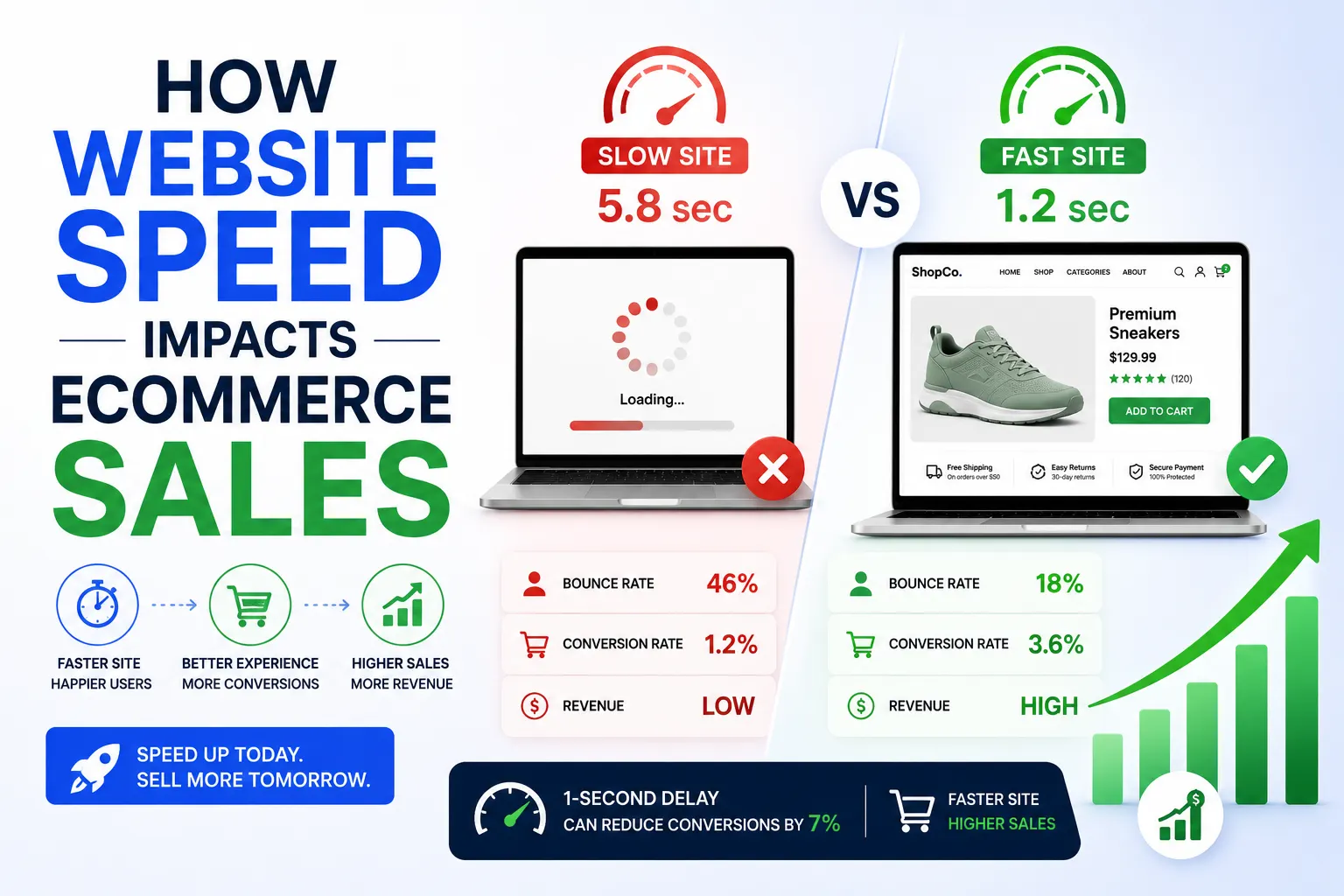
Importance of Speed in Ecommerce
Slow websites reduce:
- Rankings
- Conversions
- Engagement
Ecommerce Speed Optimization Checklist
Compress Images
Use modern formats:
- WebP
- AVIF
Enable Lazy Loading
Load images only when necessary.
Minify CSS and JavaScript
Reduce unnecessary code.
Use Content Delivery Networks (CDNs)
Examples:
Enable Browser Caching
Improve repeat visit performance.
Mobile SEO and Technical Optimization
Mobile-First Indexing
Google primarily indexes mobile versions.
Official Resource:
Mobile SEO Best Practices
Responsive Design
Ensure adaptability across devices.
Touch-Friendly Navigation
Buttons should be easy to tap.
Optimize Mobile Checkout
Reduce friction during purchases.
Improve Mobile Speed
Fast mobile performance is critical.
Structured Data and Schema Markup
What Is Structured Data?
Structured data helps search engines understand page content.
Benefits of Schema Markup
Schema improves:
- Rich snippets
- Product visibility
- Click-through rates
Important Ecommerce Schema Types
Product Schema
Includes:
- Prices
- Ratings
- Availability
Review Schema
Displays star ratings.
FAQ Schema
Improves SERP visibility.
Official Resource:
JavaScript SEO for Ecommerce
Why JavaScript SEO Matters
Modern ecommerce stores often rely heavily on JavaScript frameworks.
Poor rendering can prevent search engines from accessing content.
Common JavaScript SEO Problems
Examples:
- Delayed rendering
- Missing content
- Broken navigation
- Hidden product information
Best Practices
Server-Side Rendering (SSR)
SSR improves crawlability.
Pre-Rendering
Static snapshots improve indexing.
Test Rendered Pages
Use:
- Google Search Console
- URL Inspection Tool
Ecommerce Pagination SEO
Importance of Pagination
Large ecommerce stores often split categories into multiple pages.
Pagination Best Practices
Maintain Crawl Paths
Ensure search engines can access paginated pages.
Optimize Internal Linking
Connect pagination logically.
Avoid Infinite Scroll Problems
Infinite scrolling should still support crawlable URLs.
Faceted Navigation SEO
What Is Faceted Navigation?
Faceted navigation allows filtering by:
- Price
- Color
- Size
- Brand
SEO Challenges
Filters can generate massive duplicate URL variations.
Optimization Strategies
Canonicalization
Consolidate filtered pages.
Noindex Low-Value Filters
Prevent thin pages from indexing.
Control Crawl Access
Use robots.txt strategically.
HTTPS and Website Security
Importance of HTTPS
HTTPS encrypts data securely.
Google considers HTTPS a ranking signal.
Official Resource:
SSL Certificates
SSL certificates improve:
- Security
- Trust
- SEO performance
Security Best Practices
Update Platforms Regularly
Keep:
- CMS
- Plugins
- Themes
- APIs
updated.
Secure Payment Systems
Protect customer transactions.