Blog
SEO Case Study: Ranking Ecommerce Site #1

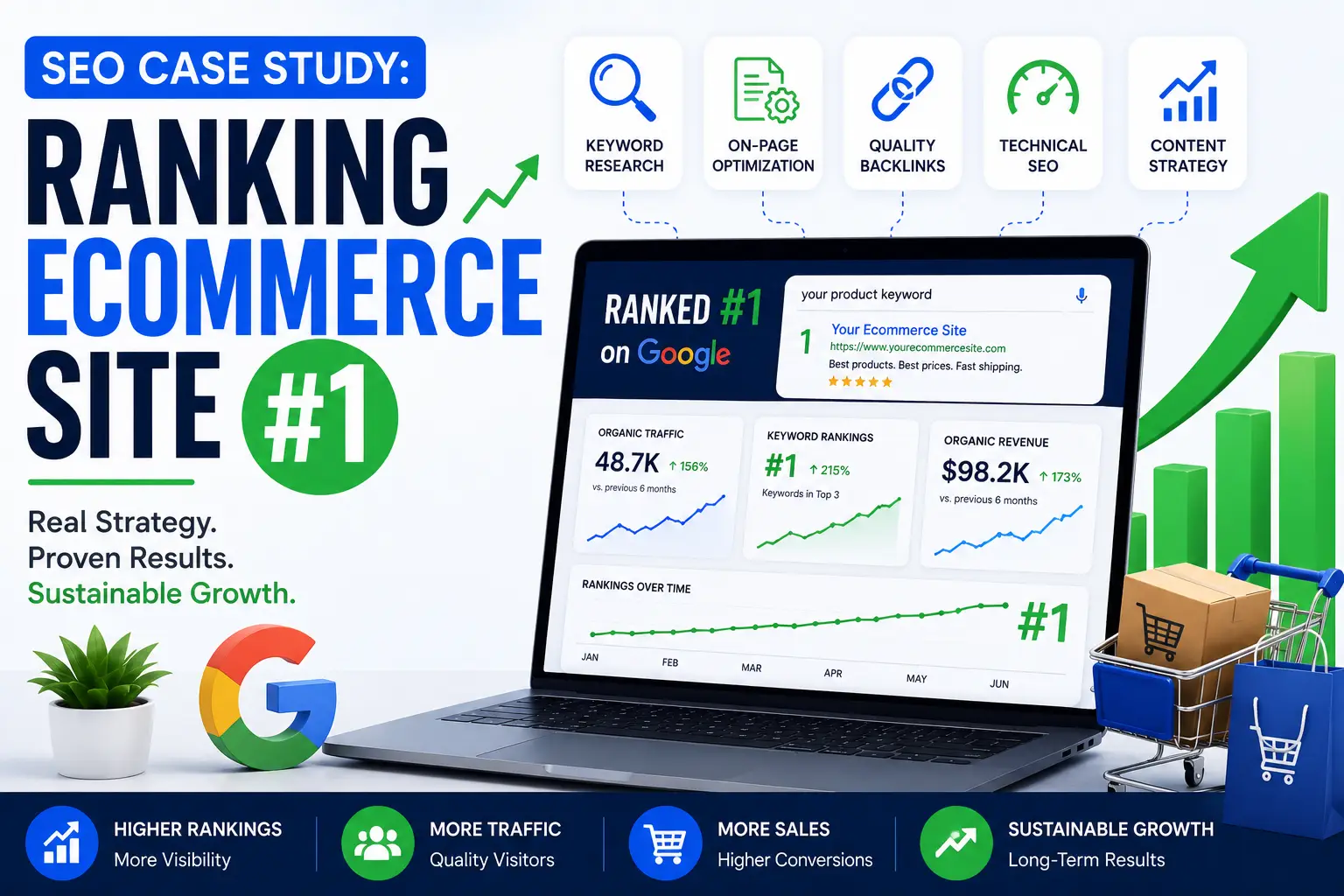
SEO Case Study: Ranking an Ecommerce Site #1 on Google
Ranking an ecommerce website at the top of Google search results requires more than adding keywords to product pages. Modern ecommerce SEO involves technical optimization, search intent analysis, content strategy, user experience improvements, internal linking, structured data implementation, and long-term authority building.
Many ecommerce businesses struggle to achieve strong organic visibility because ecommerce SEO is highly competitive. Online stores often face problems such as duplicate content, weak category pages, poor product descriptions, slow-loading websites, weak internal linking structures, low-quality backlinks, and poor mobile experiences.
This SEO case study explains how an ecommerce website improved search visibility and achieved top rankings for high-intent ecommerce keywords through a structured SEO strategy focused on technical optimization, content development, category page improvements, keyword targeting, and conversion-focused user experience enhancements.
The results were not achieved through shortcuts or temporary ranking tactics. The ecommerce growth came from consistent SEO improvements aligned with search engine best practices and user-focused optimization.
This article breaks down the full ecommerce SEO strategy, the challenges involved, the implementation process, and the lessons learned while scaling organic traffic and rankings.
For ecommerce SEO services, Shopify SEO, WooCommerce SEO, ecommerce website development, and digital growth strategies, visit:
Initial Challenges Faced by the Ecommerce Website
Before implementing the SEO strategy, the ecommerce website struggled with multiple issues affecting search visibility and organic traffic performance.
Although the website offered quality products and competitive pricing, the store failed to rank effectively for important commercial keywords.
The business depended heavily on paid advertising for traffic acquisition, which increased customer acquisition costs significantly.
Several major SEO challenges limited growth.
Weak Organic Visibility
The ecommerce website ranked poorly for important category keywords and product-focused search terms.
Many high-intent pages were buried beyond the first page of search results.
As a result, the website missed substantial organic traffic opportunities.
Thin Product Content
Most product pages contained very basic descriptions copied from suppliers.
The pages lacked:
- Unique content
- Search intent optimization
- Product FAQs
- Internal links
- Structured headings
- Semantic keyword relevance
This reduced both SEO performance and conversion potential.
Poor Category Page Optimization
Category pages were under-optimized and lacked:
- SEO-focused introductory content
- Keyword relevance
- Proper metadata
- Internal linking
- Structured navigation
Category pages are extremely important for ecommerce SEO because they often target high-volume commercial keywords.
Technical SEO Problems
Technical SEO issues negatively affected crawlability and indexing.
The website had:
- Duplicate metadata
- Slow page loading speed
- Broken links
- Crawl inefficiencies
- Poor mobile performance
- Large image sizes
- Weak URL structures
- Missing schema markup
These issues reduced search engine trust and user experience quality.
Weak Internal Linking Structure
The website lacked a strategic internal linking system.
Important pages received minimal internal authority because:
- Blog content was disconnected
- Product pages lacked contextual links
- Category structures were weak
- Navigation pathways were inefficient
This limited crawl efficiency and topical authority.
Low Content Authority
The ecommerce business published very little educational content.
Competitors dominated search results because they had:
- Detailed buying guides
- Informational blog articles
- Product comparison content
- Long-form educational resources
The ecommerce website lacked topical depth.
Understanding the SEO Goals
Before making changes, the ecommerce SEO strategy focused on measurable long-term objectives.
Instead of targeting only vanity traffic metrics, the strategy prioritized commercial growth.
The primary SEO goals included:
- Increase organic ecommerce traffic
- Rank category pages higher on Google
- Improve product page visibility
- Increase ecommerce conversions
- Improve mobile SEO performance
- Increase keyword rankings
- Build topical authority
- Improve internal linking
- Reduce dependence on paid advertising
- Increase revenue from organic search
- Improve click-through rates
- Strengthen technical SEO foundation
Clear objectives helped prioritize high-impact SEO improvements.
Step 1: Comprehensive Ecommerce SEO Audit
The first stage involved conducting a full ecommerce SEO audit.
This audit covered:
- Technical SEO
- On-page SEO
- Site architecture
- Keyword targeting
- Competitor analysis
- Content quality
- Internal linking
- Mobile usability
- Page speed
- Crawlability
- Indexing issues
- Conversion pathways
The audit identified several critical ranking obstacles.
Crawlability Issues
Search engines struggled to crawl and index important pages efficiently.
The ecommerce site contained:
- Duplicate URLs
- Pagination issues
- Poor canonical implementation
- Thin pages
- Orphan pages
This reduced search visibility.
Mobile Performance Problems
Mobile traffic accounted for most visitors, but the mobile experience was weak.
Problems included:
- Slow loading pages
- Unoptimized images
- Layout shifting
- Difficult navigation
- Poor tap target spacing
Google prioritizes mobile usability heavily, so improving mobile performance became essential.
Poor Keyword Alignment
Many pages targeted incorrect or overly broad keywords.
Search intent mismatch caused:
- Low rankings
- Weak engagement
- Poor conversions
Keyword targeting required complete restructuring.
Step 2: Ecommerce Keyword Research and Search Intent Mapping
Keyword research became the foundation of the SEO strategy.
Instead of targeting only high-volume keywords, the strategy focused heavily on commercial intent and user behavior.
Identifying High-Intent Keywords
The keyword research process identified:
- Transactional keywords
- Commercial investigation keywords
- Long-tail ecommerce keywords
- Product-specific keywords
- Category-focused search terms
The strategy balanced:
- Search volume
- Competition level
- Purchase intent
- Conversion potential
Mapping Keywords to Pages
Every important keyword was mapped strategically to:
- Category pages
- Product pages
- Blog content
- Landing pages
This reduced keyword cannibalization.
Competitor SEO Analysis
Top competitors were analyzed to understand:
- Ranking patterns
- Content depth
- Internal linking strategies
- Backlink profiles
- Category optimization methods
This helped identify ranking opportunities.
Step 3: Ecommerce Site Architecture Improvements
Website structure plays a major role in ecommerce SEO.
The ecommerce site previously had weak navigation and inefficient category organization.
Improving Category Structures
The category hierarchy was simplified to improve:
- Crawlability
- User navigation
- Keyword targeting
- Internal linking
Logical category organization improved both SEO and usability.
SEO-Friendly URL Optimization
The URL structure was cleaned and simplified.
SEO-friendly URLs improved:
- Readability
- Keyword relevance
- Crawl efficiency
Navigation Optimization
The navigation system was redesigned with:
- Better menus
- Improved filtering
- Clear product pathways
- Mobile-friendly structures
This improved user experience and reduced bounce rates.
Step 4: Category Page SEO Optimization
Category pages became one of the strongest organic traffic drivers.
Many ecommerce websites underutilize category pages for SEO.
Adding SEO-Focused Introductory Content
Each category page received:
- Keyword-optimized introductions
- Search intent-focused content
- Semantic keyword integration
- User-friendly explanations
The goal was balancing SEO relevance with readability.
Improving Metadata
Meta titles and descriptions were rewritten strategically.
The optimization focused on:
- Commercial intent
- Click-through rates
- Keyword relevance
- Clear value propositions
Internal Linking Enhancements
Category pages were connected strategically through:
- Contextual links
- Related categories
- Blog integrations
- Product recommendations
This strengthened topical relevance.
Schema Markup Implementation
Structured data was added to improve search visibility.
Schema helped search engines understand:
- Product categories
- Ratings
- Breadcrumbs
- Product availability
This improved search result presentation.
Step 5: Product Page SEO Optimization
Product pages required major improvements.
The original pages lacked depth and uniqueness.
Creating Unique Product Descriptions
Every important product page received:
- Original descriptions
- Benefit-focused content
- Semantic keyword optimization
- Product usage details
- Customer-focused language
Unique content improved both rankings and conversions.
Optimizing Product Images
Product images were optimized using:
- Compressed formats
- Better alt text
- Responsive sizing
- Faster loading systems
Image optimization improved Core Web Vitals.
Adding Product FAQs
FAQ sections helped:
- Improve search relevance
- Increase keyword coverage
- Address customer concerns
- Improve engagement
FAQs also supported featured snippet opportunities.
Product Schema Optimization
Structured product schema improved visibility in search results.
Enhanced snippets increased click-through rates.
Step 6: Technical SEO Improvements
Technical SEO optimization became a major priority.
Strong technical foundations improve crawlability, indexing, and rankings.
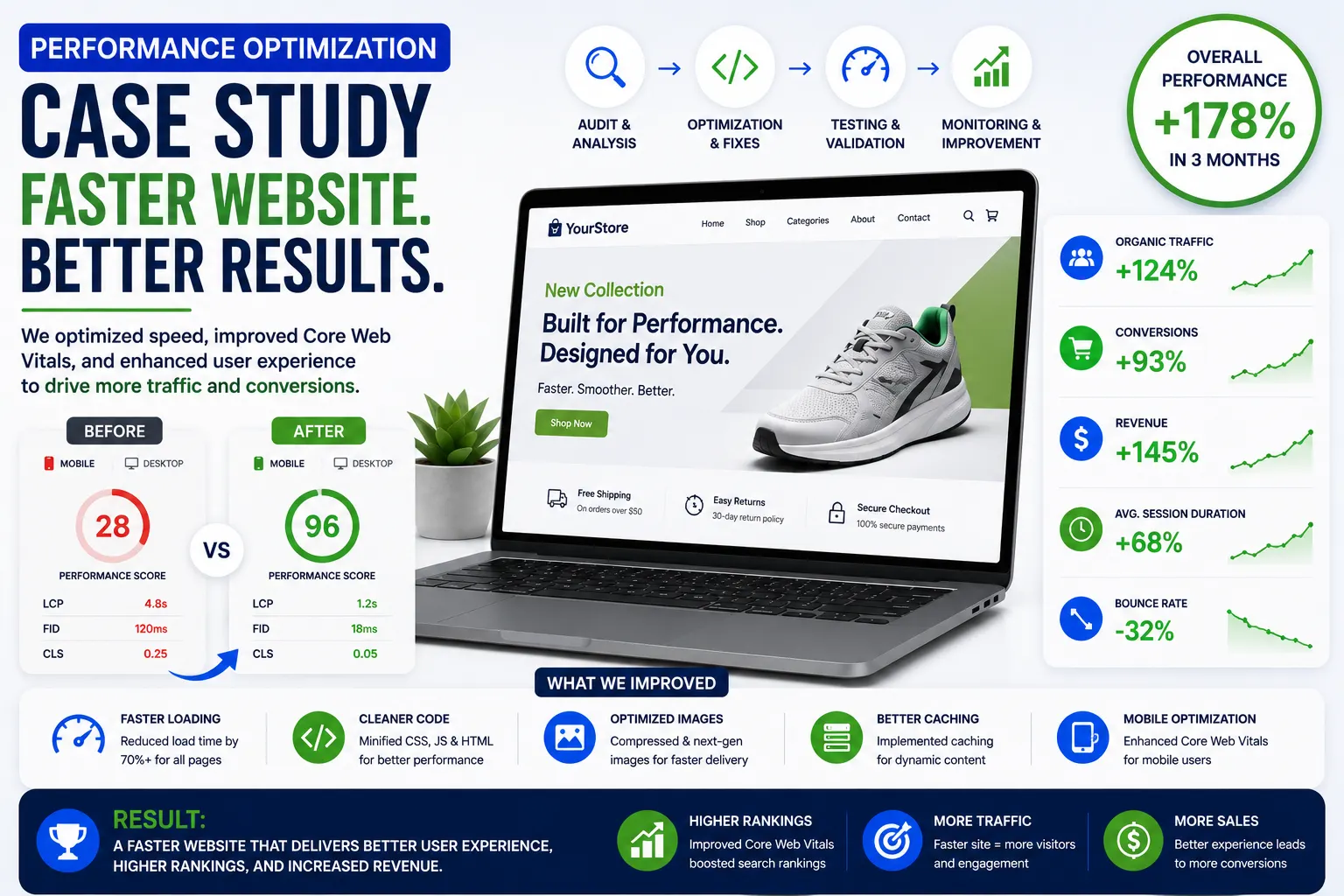
Website Speed Optimization
Page speed improvements included:
- WebP image conversion
- Lazy loading
- CDN implementation
- Script optimization
- CSS and JavaScript compression
- Better caching systems
Faster loading pages improved both SEO and user experience.
Core Web Vitals Optimization
Google increasingly prioritizes page experience signals.
The optimization focused on:
- Largest Contentful Paint
- Interaction responsiveness
- Layout stability
Improved Core Web Vitals strengthened rankings.