Blog
CRO Tools for Ecommerce

Introduction
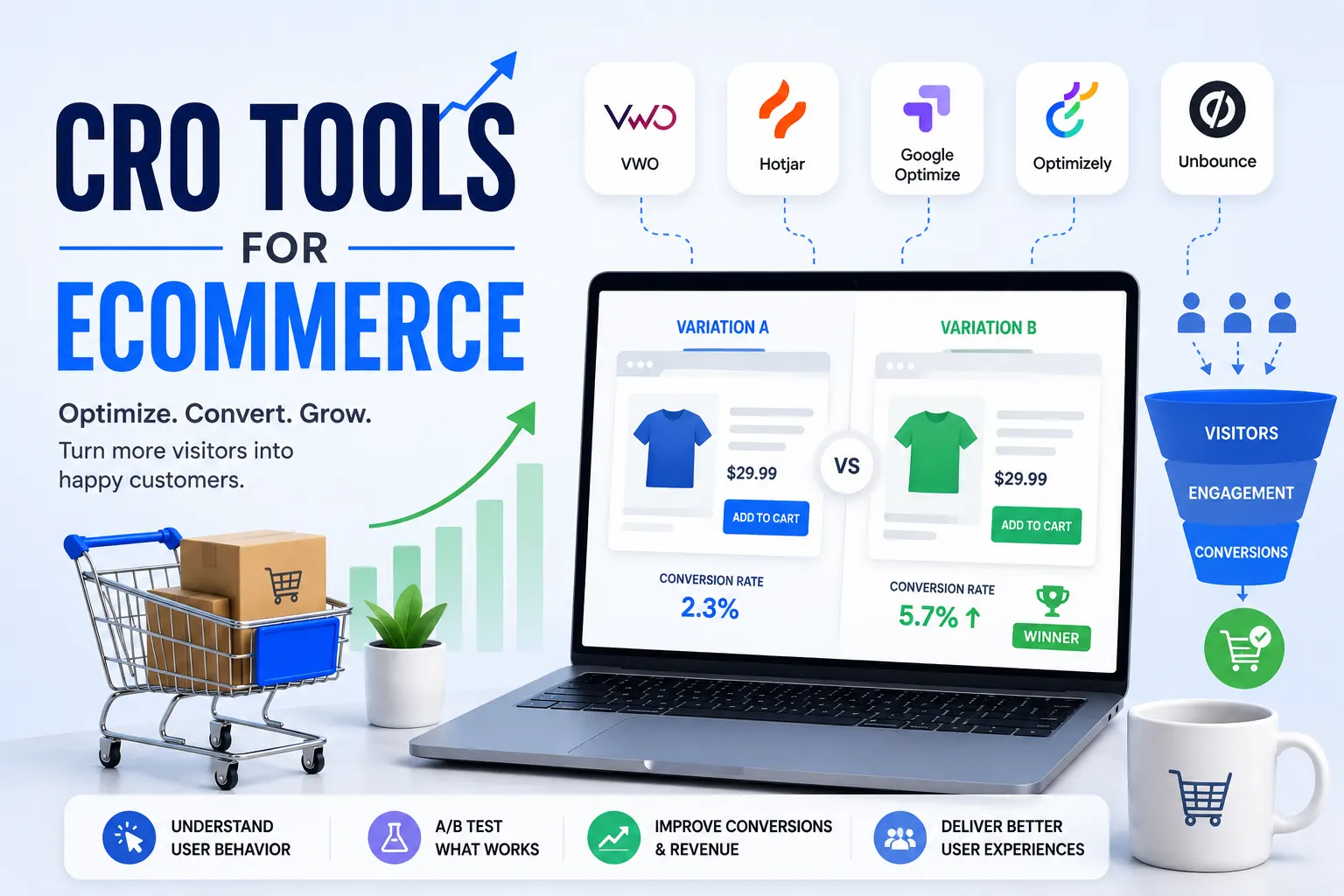
Conversion rate optimization, commonly known as CRO, has become one of the most important growth strategies in modern eCommerce. As advertising costs continue rising across Google Ads, Meta Ads, TikTok Ads, influencer campaigns, and marketplaces, businesses increasingly focus on improving the efficiency of existing traffic instead of relying only on customer acquisition.
CRO helps eCommerce businesses generate more revenue from the same number of visitors by improving user experience, reducing friction, optimizing checkout flows, improving trust signals, and creating data-driven shopping experiences.
Many online stores spend heavily on marketing campaigns while ignoring conversion optimization opportunities that could significantly improve profitability.
For example:
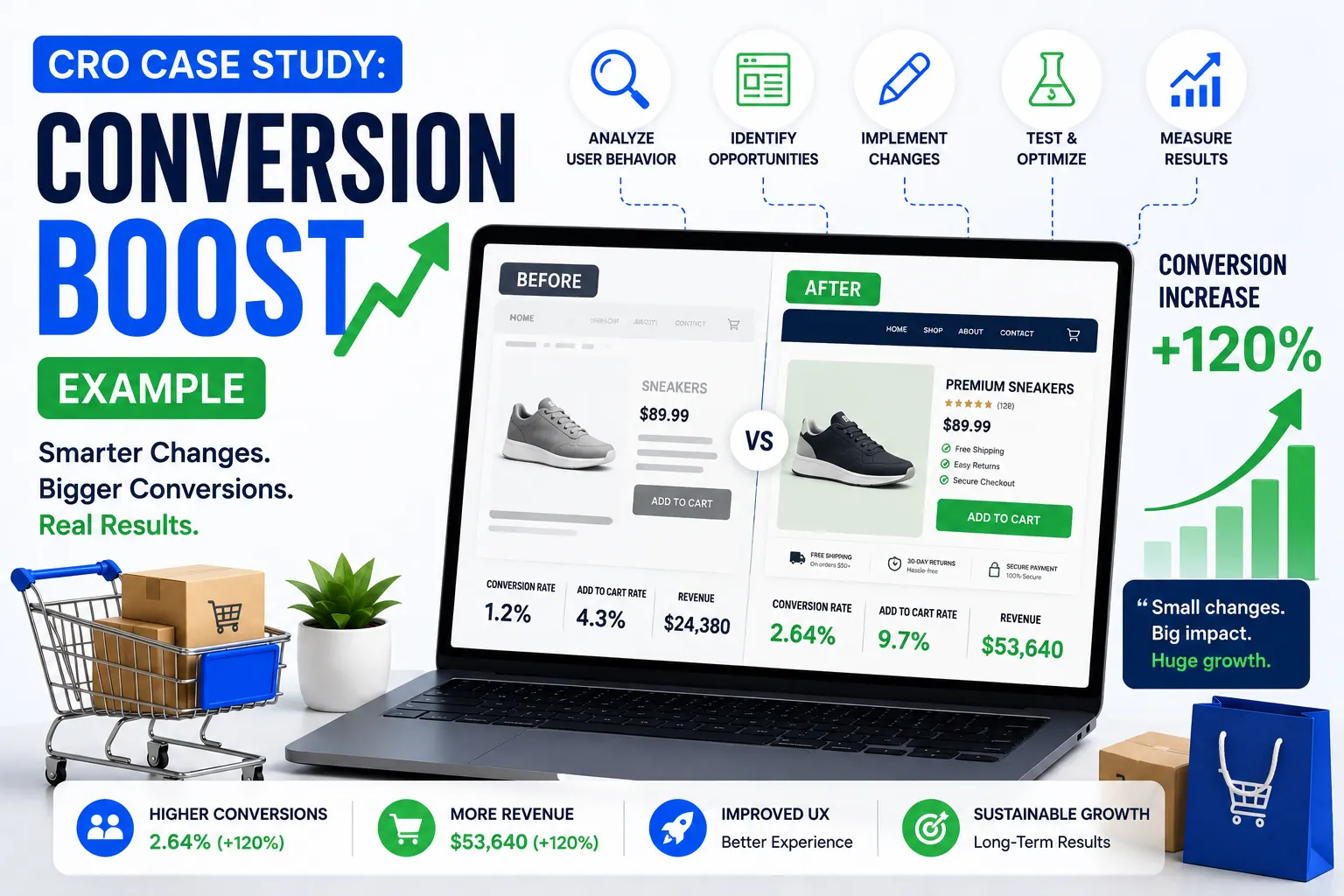
- A store converting at 1% may double revenue by improving conversion rates to 2%
- A small checkout optimization may reduce cart abandonment dramatically
- Better product page layouts may increase add-to-cart rates
- Personalized recommendations may increase average order value
Unlike traffic acquisition, CRO often improves profitability without requiring proportional increases in advertising spend.
Modern eCommerce CRO combines multiple disciplines, including:
- UX design
- Customer psychology
- Analytics
- A/B testing
- Heatmap analysis
- Checkout optimization
- Mobile usability
- Personalization
- Behavioral analysis
Because CRO involves continuous experimentation and data analysis, businesses increasingly rely on specialized CRO tools to optimize customer journeys effectively.
The best CRO tools for eCommerce help businesses:
- Analyze customer behavior
- Identify friction points
- Run A/B tests
- Improve checkout experiences
- Increase average order value
- Optimize mobile usability
- Personalize shopping experiences
- Improve product page performance
- Reduce bounce rates
- Increase customer trust
According to industry research, even small conversion improvements can significantly impact eCommerce profitability because optimization affects every marketing channel simultaneously. Businesses investing in conversion optimization often achieve better long-term ROI compared to businesses focused only on traffic growth. (shopify.com)
This comprehensive guide explains the best CRO tools for eCommerce in 2026, including:
- Heatmap tools
- Session recording software
- A/B testing platforms
- Personalization engines
- Funnel analytics systems
- Checkout optimization tools
- User feedback platforms
- Shopify CRO tools
- WooCommerce CRO tools
- AI-powered CRO software
The goal is to help businesses build conversion-focused eCommerce systems that maximize revenue and customer satisfaction.
What Is CRO in Ecommerce?
Conversion rate optimization is the process of improving an eCommerce website to increase the percentage of visitors who complete desired actions.
These actions may include:
- Purchasing products
- Adding products to cart
- Completing checkout
- Signing up for newsletters
- Submitting inquiries
- Creating accounts
CRO focuses on improving efficiency rather than simply increasing traffic volume.
For example:
If a store receives 100,000 monthly visitors and converts at 1%, it generates 1,000 orders.
If CRO improvements increase conversions to 2%, the store generates 2,000 orders from the same traffic.
This makes CRO one of the highest ROI growth strategies in eCommerce.
Why CRO Tools Matter for Ecommerce Businesses
Modern customer journeys are complex.
Visitors interact with:
- Product pages
- Navigation systems
- Search bars
- Filters
- Reviews
- Checkout pages
- Mobile layouts
Businesses cannot optimize these experiences effectively without data and testing tools.
CRO tools help businesses understand:
Why Visitors Leave
Behavior analytics reveals friction points.
Which Pages Underperform
Analytics identifies weak-performing sections.
How Customers Interact With Products
Heatmaps and recordings reveal user behavior.
Which Checkout Problems Reduce Sales
Funnel analysis identifies abandonment causes.
Which Design Changes Improve Revenue
A/B testing validates optimization decisions.
Without CRO tools, businesses often make design decisions based on assumptions instead of evidence.
Key Features to Look for in CRO Tools
Not all CRO platforms serve the same purpose.
Businesses should evaluate tools based on their operational goals.
Heatmaps
Heatmaps show:
- Click behavior
- Scroll depth
- User interaction zones
Session Recordings
Session recordings reveal real customer interactions.
Funnel Analysis
Funnels help identify where customers abandon the buying process.
A/B Testing
Testing platforms compare different versions of pages or elements.
Personalization
Advanced CRO tools personalize experiences based on customer behavior.
Integration Support
Strong integrations with:
- Shopify
- WooCommerce
- GA4
- CRM systems
- Email platforms
improve workflow efficiency.
Best Heatmap and Session Recording Tools
Hotjar
Hotjar is one of the most widely used CRO platforms.
It provides:
- Heatmaps
- Session recordings
- User feedback surveys
- Funnel analysis
Hotjar helps businesses visually analyze customer behavior and identify UX issues.
For eCommerce stores, Hotjar helps optimize:
- Product pages
- Navigation systems
- Checkout flows
- Mobile usability
The platform is especially useful for identifying friction points that traditional analytics tools cannot easily explain.
Official website: Hotjar
Microsoft Clarity
Microsoft Clarity is one of the best free CRO tools available.
It includes:
- Session recordings
- Heatmaps
- Rage click detection
- Dead click tracking
Clarity helps businesses understand where customers experience frustration.
The platform integrates easily with GA4 and other analytics systems.
Official website: Microsoft Clarity
Lucky Orange
Lucky Orange combines:
- Heatmaps
- Session recordings
- Live chat
- Conversion funnels
The platform also provides live visitor tracking.
Businesses can monitor customer interactions in real time.
Official website: Lucky Orange
Best A/B Testing Tools for Ecommerce
A/B testing is one of the most important CRO methodologies.
It allows businesses to compare different page versions scientifically.
Optimizely
Optimizely is one of the most advanced experimentation platforms.
It supports:
- A/B testing
- Multivariate testing
- Feature experimentation
- Personalization
Large enterprise eCommerce brands widely use Optimizely.
The platform supports sophisticated experimentation workflows across websites and applications.
Official website: Optimizely
VWO
VWO focuses heavily on experimentation and optimization.
Features include:
- A/B testing
- Heatmaps
- Funnel analysis
- Surveys
- Session recordings
VWO is particularly useful for businesses seeking an integrated CRO platform.
Official website: VWO
Convert
Convert specializes in privacy-focused experimentation.
It provides:
- Split testing
- Personalization
- Funnel experimentation
Businesses prioritizing privacy compliance often prefer Convert.
Official website: Convert
Best Personalization Tools for Ecommerce
Personalization improves relevance and customer engagement.
Dynamic Yield
Dynamic Yield helps businesses personalize:
- Product recommendations
- Search results
- Homepage layouts
- Promotions
The platform uses AI-driven personalization engines.
Large brands frequently use Dynamic Yield to improve customer journeys.
Official website: Dynamic Yield
Nosto
Nosto specializes in eCommerce personalization.
Features include:
- AI recommendations
- Personalized content
- Behavioral segmentation
- Merchandising optimization
Nosto integrates closely with Shopify and other eCommerce platforms.
Official website: Nosto
Rebuy
Rebuy focuses heavily on Shopify personalization and upselling.
It supports:
- AI recommendations
- Cart personalization
- Smart upsells
- Cross-selling
Rebuy helps improve average order value and customer engagement.
Official website: Rebuy
Best Funnel Analytics Tools
Funnels reveal where customers abandon the buying process.
Mixpanel
Mixpanel provides advanced behavioral analytics.
It tracks:
- User journeys
- Funnel completion
- Retention patterns
- Event tracking
Mixpanel helps businesses understand how customers interact with websites across multiple sessions.
Official website: Mixpanel
Amplitude
Amplitude focuses heavily on customer journey analytics.
It supports:
- Funnel analysis
- Cohort tracking
- Predictive analytics
- User segmentation
Enterprise businesses frequently use Amplitude for deeper customer intelligence.
Official website: Amplitude
Best Checkout Optimization Tools
Checkout optimization directly affects revenue.
Bolt
Bolt provides accelerated checkout experiences.
Features include:
- One-click checkout
- Fraud prevention
- Faster payment processing
Reducing checkout friction significantly improves conversions.
Official website: Bolt
Shop Pay
Shop Pay helps Shopify stores improve checkout speed and usability.
It simplifies payment experiences and supports mobile optimization.
Many Shopify businesses experience improved conversion rates after implementing Shop Pay.
Official website: Shopify Shop Pay
Best User Feedback Tools
Customer feedback provides valuable qualitative insights.
Typeform
Typeform helps businesses create interactive surveys and feedback forms.
It is useful for:
- Customer research
- UX feedback
- Post-purchase surveys
Official website: Typeform
Qualaroo
Qualaroo specializes in contextual customer feedback.
Businesses can collect insights during user journeys.
Official website: Qualaroo
Best Shopify CRO Tools
Shopify businesses require specialized CRO integrations.
Popular Shopify CRO tools include:
- Rebuy
- Hotjar
- Microsoft Clarity
- Lucky Orange
- VWO
- Nosto
Professional Shopify optimization also improves:
- Mobile UX
- Checkout performance
- Store speed
- Product page structure
Businesses can explore Shopify optimization services at Sri Hayavadhana Solutions
Best WooCommerce CRO Tools
WooCommerce flexibility allows extensive CRO customization.
Popular WooCommerce CRO tools include:
- Hotjar
- Microsoft Clarity
- Optimizely
- VWO
- CartFlows
WooCommerce businesses often combine CRO tools with advanced checkout customization.
Mobile CRO for Ecommerce
Mobile commerce dominates modern eCommerce traffic.
Businesses must optimize:
- Mobile navigation
- Product browsing
- Checkout flows
- Page speed
- Form usability
CRO tools help identify mobile-specific friction points.
Poor mobile UX significantly reduces conversions.
AI and the Future of CRO
Artificial intelligence increasingly influences conversion optimization.
AI systems now support:
- Predictive personalization
- Dynamic product recommendations
- Automated experimentation
- Behavioral forecasting
AI-powered CRO tools help businesses deliver more relevant shopping experiences at scale.
Common Ecommerce CRO Mistakes
Making Changes Without Testing
Design assumptions often fail.
Testing is essential.
Ignoring Mobile Experience
Mobile optimization remains critical.
Overloading Pages With Popups
Excessive interruptions reduce user satisfaction.
Weak Product Pages
Product content quality strongly affects conversions.
Slow Website Speed
Performance issues reduce conversion rates dramatically.
Essential Ecommerce CRO Metrics
Businesses should monitor:
Conversion Rate
Measures purchase efficiency.
Cart Abandonment Rate
Identifies checkout friction.
Bounce Rate
Evaluates landing page engagement.
Average Order Value
Measures revenue per transaction.
Revenue Per Visitor
Tracks traffic quality.
Checkout Completion Rate
Analyzes checkout performance.
Building the Ideal CRO Tool Stack
Beginner CRO Stack
- Microsoft Clarity
- GA4
- Hotjar
Intermediate CRO Stack
- Hotjar
- VWO
- Rebuy
- Mixpanel
Enterprise CRO Stack
- Optimizely
- Dynamic Yield
- Amplitude
- Advanced personalization systems
The right combination depends on business scale and operational complexity.
CRO and SEO: Why They Work Together
SEO drives traffic, but CRO determines how effectively traffic converts into revenue.
Strong CRO improves:
- User engagement
- Session duration
- Mobile usability
- Customer satisfaction
These improvements also support SEO indirectly.
Businesses combining SEO and CRO strategies often achieve stronger long-term profitability.
For advanced eCommerce SEO implementation, businesses can explore Sri Hayavadhana Solutions
Why Professional Ecommerce Development Matters for CRO
CRO tools work best when supported by strong technical infrastructure.
Professional development improves:
- Site speed
- Mobile optimization
- Checkout usability
- Tracking implementation
- UX consistency
Weak technical implementation limits CRO effectiveness significantly.
Businesses planning long-term growth often combine CRO systems with professional eCommerce development.
Custom eCommerce development services are available at Sri Hayavadhana Solutions
The Future of Ecommerce CRO
Several trends are shaping the future of conversion optimization.
AI-Powered Personalization
Experiences will become increasingly dynamic.
Predictive Customer Journeys
AI systems will anticipate customer behavior.
Omnichannel CRO
Businesses will optimize experiences across:
- Websites
- Mobile apps
- Social commerce
- Retail environments
Privacy-Focused Optimization
CRO strategies must adapt to evolving privacy regulations.
Real-Time Experimentation
Testing systems will increasingly automate optimization decisions.
Final Thoughts
CRO has become one of the most important profitability strategies in modern eCommerce.
The best CRO tools for eCommerce help businesses:
- Understand customer behavior
- Reduce friction
- Improve checkout experiences
- Increase conversion rates
- Improve average order value
- Enhance personalization
- Optimize mobile usability
Platforms such as Hotjar, Microsoft Clarity, Optimizely, VWO, Rebuy, Mixpanel, and Dynamic Yield each solve different optimization challenges.
Successful eCommerce brands no longer rely on assumptions. They use analytics, experimentation, personalization, and behavioral insights to create better shopping experiences.
As competition continues increasing across digital commerce, businesses that invest in CRO infrastructure will gain stronger competitive advantages through higher profitability, improved customer satisfaction, and more efficient marketing performance.
Combining CRO tools with strong SEO, professional eCommerce development, analytics systems, and customer-focused UX strategies creates a scalable foundation for sustainable online growth in 2026 and beyond.