Blog
Best Shopify Apps for Growth

Introduction
Shopify has evolved far beyond a simple eCommerce platform. In 2026, successful Shopify stores rely heavily on apps to improve conversions, automate marketing, increase customer retention, optimize SEO, and scale operations efficiently. While Shopify provides a strong foundation, the right app ecosystem helps online businesses grow faster without rebuilding their store from scratch.
However, many store owners make a costly mistake. They install too many apps without understanding how each tool affects speed, customer experience, and long-term scalability. A bloated Shopify store can reduce conversions, slow page speed, and create technical conflicts that damage SEO performance and user trust.
That is why choosing the best Shopify apps for growth requires a strategic approach. Instead of installing dozens of random plugins, merchants should focus on apps that solve specific business problems. Some apps improve customer acquisition, while others increase average order value, recover abandoned carts, improve retention, or automate repetitive tasks.
According to the official Shopify App Store, Shopify merchants now have access to more than 16,000 apps covering marketing, conversion optimization, SEO, customer support, fulfillment, subscriptions, loyalty programs, and analytics. (Shopify App Store)
Modern Shopify growth is no longer about using isolated tools. High-performing stores now build integrated growth systems that combine email automation, upselling, loyalty rewards, SEO optimization, social proof, analytics, and customer retention into one connected ecosystem. Several recent industry reports also highlight that the best-performing Shopify stores in 2026 focus on automation, personalization, and customer lifetime value rather than only traffic generation. (Huptech Web)
This comprehensive guide explains the best Shopify apps for growth in 2026. You will learn:
- Which Shopify apps actually increase sales
- Which apps improve conversion rates
- Which tools help SEO and organic traffic
- How to choose apps without slowing down your store
- Which Shopify apps are ideal for beginners
- Which apps enterprise brands use for scaling
- How to build a high-performance Shopify app stack
This guide follows a practical business-focused approach similar to enterprise-level eCommerce publications. Every section explains not just what the app does, but why it matters for long-term Shopify growth.
Why Shopify Apps Matter for eCommerce Growth
Many businesses assume that Shopify growth comes mainly from advertising. In reality, long-term eCommerce growth depends on operational efficiency, customer retention, user experience, and conversion optimization.
Shopify apps play a major role in each of these areas.
For example:
- Email marketing apps increase repeat purchases
- Review apps improve trust and conversion rates
- Upsell apps increase average order value
- SEO apps improve organic visibility
- Analytics apps improve decision-making
- Subscription apps increase recurring revenue
- Loyalty apps improve customer retention
Without these systems, many Shopify stores struggle to scale profitably.
Modern customer acquisition costs are rising rapidly across Google Ads, Meta Ads, TikTok Ads, and influencer marketing campaigns. Because of this, store owners increasingly depend on retention-focused Shopify apps to maximize customer lifetime value.
Recent industry analysis also shows that stores using automation, personalization, and retention-focused apps consistently outperform stores relying only on paid traffic. (Untitled AI)
The right Shopify apps help businesses:
- Reduce manual work
- Improve conversion rates
- Increase repeat customers
- Improve customer experience
- Increase revenue per visitor
- Automate marketing workflows
- Improve operational scalability
Apps are no longer optional for serious Shopify businesses. They are now core infrastructure.
How to Choose the Best Shopify Apps
Before installing apps, merchants should evaluate several critical factors.
Performance Impact
Some apps inject large amounts of JavaScript into your storefront. Poorly optimized apps can slow your store dramatically, especially on mobile devices.
A slow store reduces:
- Conversion rates
- SEO rankings
- Customer engagement
- Add-to-cart rates
Always prioritize lightweight apps with strong performance optimization.
Integration Compatibility
The best Shopify apps integrate smoothly with:
- Shopify themes
- Checkout systems
- Email platforms
- Analytics tools
- CRM systems
- Subscription platforms
Disconnected systems create operational problems and fragmented customer data.
Customer Support Quality
When an app breaks your checkout or interferes with theme functionality, responsive support becomes extremely important.
Choose apps with:
- Active support teams
- Detailed documentation
- Frequent updates
- Large user bases
- Strong review history
Scalability
Many beginner apps work well initially but become limiting as your business grows.
Evaluate whether the app supports:
- Higher order volumes
- Multi-location inventory
- Advanced automation
- Enterprise workflows
- International selling
Built for Shopify Badge
Shopify now highlights apps with the “Built for Shopify” badge. These apps meet Shopify’s standards for performance, integration quality, and user experience. (Shopify App Store)
For long-term stability, these apps are often safer choices.
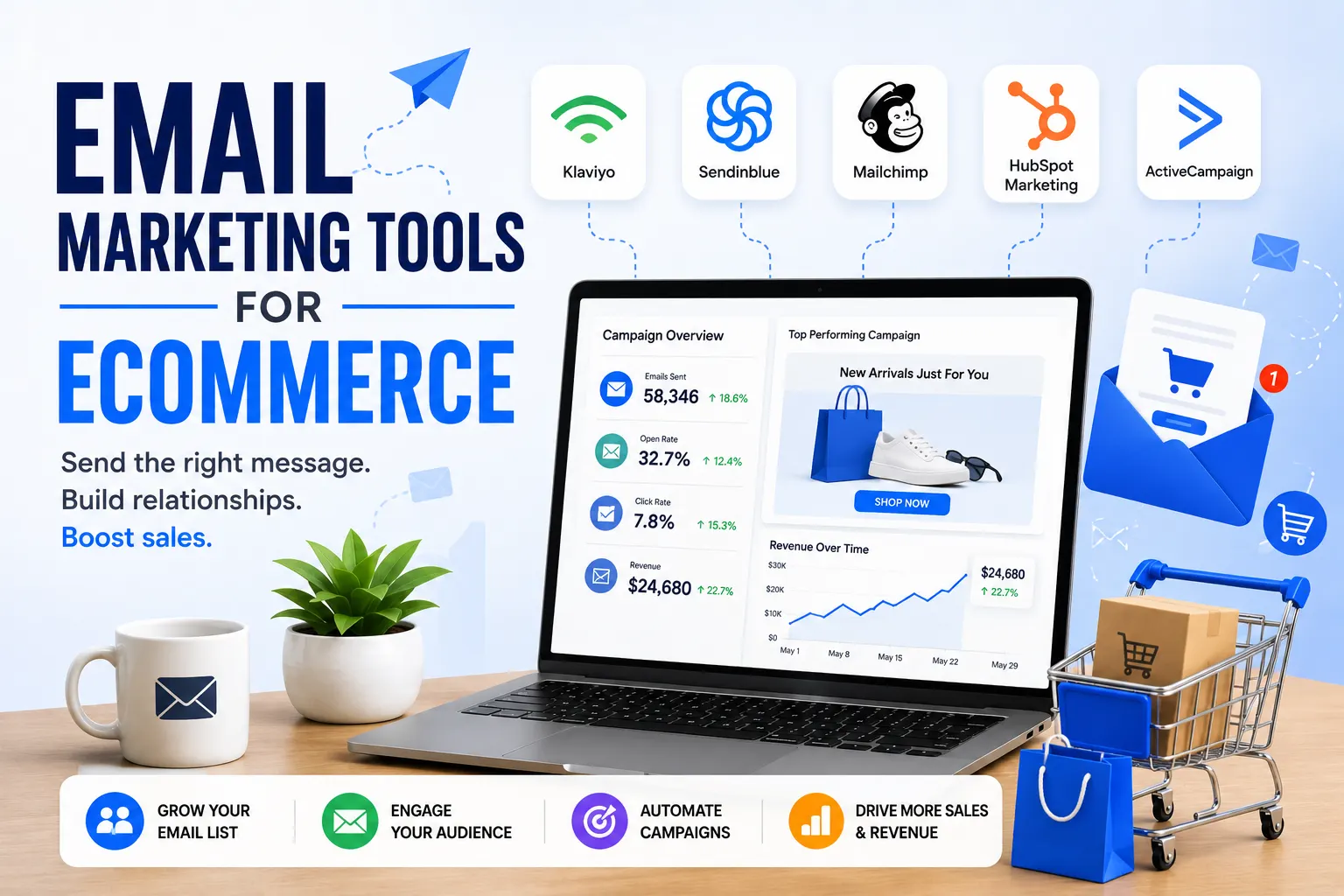
Best Shopify Apps for Email Marketing
Email marketing remains one of the highest ROI channels in eCommerce. Several recent Shopify industry reports continue to rank email and SMS automation among the most effective growth channels for online stores. (Yotpo)
Klaviyo
Klaviyo is widely considered one of the best Shopify apps for email and SMS marketing.
It helps businesses create:
- Automated email flows
- Abandoned cart sequences
- Welcome campaigns
- Post-purchase automation
- Customer segmentation
- SMS marketing campaigns
Klaviyo integrates deeply with Shopify customer data, enabling highly personalized marketing campaigns.
The platform is particularly effective for stores focused on retention marketing and repeat purchases.
Key strengths include:
- Advanced segmentation
- Strong automation workflows
- Predictive analytics
- Personalized recommendations
- High scalability
Klaviyo works especially well for medium and large Shopify stores.
Official website: Klaviyo
Omnisend
Omnisend is another powerful email and SMS marketing platform for Shopify stores.
Compared to Klaviyo, Omnisend is often easier for beginners while still offering advanced automation features.
Popular features include:
- Email templates
- SMS campaigns
- Push notifications
- Product recommendations
- Automation workflows
- Cart recovery campaigns
Omnisend is ideal for growing Shopify stores that want strong automation without enterprise-level complexity.
Official website: Omnisend
Privy
Privy focuses heavily on list building and conversion optimization.
Its features include:
- Popups
- Spin-to-win campaigns
- Exit intent forms
- Email automation
- SMS marketing
- Cart abandonment recovery
Privy is particularly effective for smaller Shopify stores looking to improve lead capture quickly.
Industry reports also continue to highlight Privy as a strong beginner-friendly Shopify growth platform. (privy.com)
Official website: Privy
Best Shopify Apps for Conversion Optimization
Traffic alone does not generate revenue. Conversion optimization determines how efficiently a Shopify store turns visitors into customers.
Rebuy Personalization Engine
Rebuy is one of the most powerful Shopify personalization and upsell platforms.
It helps increase average order value through:
- AI-powered recommendations
- Smart cart upsells
- Cross-sells
- Personalized product suggestions
- Dynamic checkout offers
Rebuy works especially well for brands with larger product catalogs.
Official website: Rebuy
Frequently Bought Together
This app helps merchants create Amazon-style product bundles.
The app increases average order value by recommending complementary products during the shopping journey.
Common use cases include:
- Fashion outfit combinations
- Electronics accessories
- Supplement bundles
- Home decor matching products
Cross-selling remains one of the simplest ways to improve Shopify revenue without increasing advertising spend.
Official website: Frequently Bought Together
Lucky Orange
Lucky Orange helps merchants understand customer behavior through:
- Heatmaps
- Session recordings
- Conversion funnels
- Visitor analytics
- Live chat
Instead of guessing why customers abandon checkout, merchants can visually analyze customer interactions.
Recent Shopify growth reports continue to recommend Lucky Orange as a valuable conversion optimization tool. (Yotpo)
Official website: Lucky Orange
Best Shopify Apps for Product Reviews and Social Proof
Social proof significantly influences buying decisions in eCommerce.
Customers often hesitate to purchase from stores without reviews, ratings, or user-generated content.
Loox
Loox focuses heavily on visual reviews.
Customers can upload:
- Product photos
- Video reviews
- Star ratings
- Testimonials
Visual reviews improve trust and help potential buyers see real customer experiences.
Loox is especially effective for fashion, beauty, fitness, and lifestyle brands.
Official website: Loox
Judge.me
Judge.me is one of the most popular review apps on Shopify.
Key benefits include:
- Unlimited reviews
- Review request emails
- SEO-rich review snippets
- Q&A functionality
- Photo reviews
Judge.me offers excellent value, especially for startups and growing brands.
Official website: Judge.me
Yotpo Reviews
Yotpo combines reviews, loyalty programs, SMS marketing, and user-generated content.
Large Shopify brands frequently use Yotpo because of its enterprise capabilities and integration ecosystem.
Recent reports continue to identify Yotpo as one of the leading Shopify review and retention platforms. (Yotpo)
Best Shopify SEO Apps
SEO remains one of the highest long-term ROI channels for Shopify stores.
Unlike paid ads, SEO continues generating traffic without ongoing advertising costs.
Smart SEO
Smart SEO helps automate technical SEO improvements for Shopify stores.
Features include:
- Meta tag automation
- Structured data
- Image optimization
- Broken link management
- JSON-LD schema generation
Smart SEO is particularly useful for stores with large product catalogs.
Industry sources also continue recommending Smart SEO among the top Shopify SEO apps. (Zapier)
Official website: Smart SEO
Booster SEO
Booster SEO focuses on automated SEO optimization.
It includes:
- Alt text optimization
- Meta optimization
- Broken link fixes
- Speed improvements
- SEO auditing
The app is beginner-friendly and useful for merchants with limited SEO knowledge.
Official website: Booster SEO
TinyIMG
TinyIMG specializes in image optimization and speed improvement.
Large image files often slow Shopify stores significantly.
TinyIMG helps improve:
- Page speed
- Core Web Vitals
- Mobile performance
- SEO rankings
Store speed directly impacts both conversions and search visibility.
Official website: TinyIMG
Best Shopify Apps for Upselling and Average Order Value
Increasing average order value is often more profitable than acquiring additional customers.
Selleasy
Selleasy helps merchants create:
- Product bundles
- Frequently bought together offers
- Upsell popups
- Post-purchase upsells
The app is simple to implement and beginner-friendly.
Official website: Selleasy
LimeSpot
LimeSpot focuses on AI-powered personalization.
It creates personalized shopping experiences through:
- Recommendation engines
- Personalized collections
- Smart cross-selling
- Behavioral targeting
AI-driven personalization continues becoming more important for large Shopify brands.
Official website: LimeSpot
Best Shopify Apps for Loyalty and Retention
Retention is critical because acquiring new customers is increasingly expensive.
Smile.io
Smile.io helps stores build customer loyalty through:
- Reward points
- Referral programs
- VIP tiers
- Customer incentives
Loyalty programs encourage repeat purchases and improve customer lifetime value.
Official website: Smile.io
ReferralCandy
ReferralCandy helps stores generate referral sales through automated referral systems.
Customers receive incentives for referring friends and family.
Referral-based growth often produces highly profitable customers because trust already exists.
ReferralCandy remains widely recommended in Shopify growth reports.
Official website: ReferralCandy
Best Shopify Apps for Subscription Businesses
Subscription commerce continues growing rapidly in industries such as:
- Health supplements
- Coffee brands
- Beauty products
- Pet supplies
- Digital memberships
Recharge
Recharge is one of the leading Shopify subscription platforms.
It supports:
- Recurring billing
- Subscription management
- Customer portals
- Subscription analytics
- Bundled subscriptions
Recharge is widely used by scaling subscription brands.
Best Shopify Page Builder Apps
Custom landing pages help improve conversions significantly.
PageFly
PageFly is one of the most popular Shopify page builders.
It allows merchants to create:
- Landing pages
- Product pages
- Sales funnels
- Collection pages
- Homepage layouts
PageFly remains one of the highest-rated Shopify design apps.
Official website: PageFly
GemPages
GemPages offers advanced visual page building functionality for Shopify stores.
The platform is especially useful for merchants running aggressive conversion optimization campaigns.
Official website: GemPages
Best Shopify Apps for International Selling
Global eCommerce growth requires localization.
Langify
Langify helps Shopify stores translate content into multiple languages.
Features include:
- Language translation
- SEO-friendly localization
- Multi-language product pages
- International user experience improvements
Official website: Langify
Nova Multi Currency Converter
Currency localization improves conversion rates for international customers.
Nova automatically converts pricing based on customer regions.
Official website: Nova Multi Currency Converter
Best Shopify Apps for Analytics and Data
Data-driven decision-making is essential for scaling Shopify stores.
Triple Whale
Triple Whale centralizes Shopify analytics across multiple marketing channels.
It tracks:
- Ad performance
- Customer lifetime value
- Attribution
- Profitability
- Revenue trends
Official website: Triple Whale
Lifetimely
Lifetimely focuses heavily on profitability analytics.
The platform helps merchants understand:
- Customer acquisition costs
- Profit margins
- Repeat purchase behavior
- Long-term customer value
Official website: Lifetimely
Best Shopify Apps for Customer Support
Customer support directly impacts retention and brand reputation.
Gorgias
Gorgias centralizes customer support conversations across:
- Live chat
- Shopify orders
It is one of the most widely used support systems for Shopify stores.
Official website: Gorgias
Tidio
Tidio combines:
- Live chat
- AI chatbots
- Email support
- Automated workflows
The app is ideal for improving customer response times.
Official website: Tidio
Best Shopify Apps for Store Speed and Performance
Store speed affects:
- SEO rankings
- Conversion rates
- Bounce rates
- Customer satisfaction
Hyperspeed
Hyperspeed focuses on advanced Shopify speed optimization.
It improves:
- JavaScript loading
- CSS optimization
- Core Web Vitals
- Mobile performance
Official website: Hyperspeed
Common Shopify App Mistakes to Avoid
Many Shopify merchants damage performance by installing too many apps simultaneously.
Common mistakes include:
Installing Redundant Apps
Some merchants install:
- Multiple review apps
- Multiple popup apps
- Multiple SEO apps
This creates unnecessary code conflicts.
Ignoring Speed Impact
Every app adds scripts and resources to your store.
Always monitor:
- Lighthouse scores
- Core Web Vitals
- Mobile speed
- JavaScript size
Choosing Apps Based Only on Price
Cheap apps often lack:
- Stability
- Support
- Scalability
- Security
Long-term reliability matters more than saving a few dollars monthly.
Not Auditing Apps Regularly
Many stores keep unused apps installed for years.
Regular app audits improve:
- Performance
- Security
- Operational efficiency
Recommended Shopify App Stack for Beginners
New Shopify stores should keep their app stack simple.
A balanced beginner stack may include:
- Klaviyo for email marketing
- Judge.me for reviews
- PageFly for landing pages
- TinyIMG for optimization
- Smile.io for loyalty
- Rebuy or Selleasy for upsells
This setup covers:
- Marketing
- Conversion optimization
- SEO
- Retention
- Revenue growth
without overwhelming the store.
Recommended Shopify App Stack for Scaling Brands
Scaling stores often require more advanced systems.
A strong scaling Shopify stack may include:
- Klaviyo
- Yotpo
- Recharge
- Rebuy
- Triple Whale
- Gorgias
- PageFly
- Smart SEO
This combination supports:
- Advanced automation
- Subscription growth
- Customer retention
- Profitability tracking
- Enterprise-level scaling
How Shopify Apps Affect SEO
Many merchants underestimate the SEO impact of Shopify apps.
Apps influence:
- Page speed
- Structured data
- Mobile usability
- Internal linking
- Core Web Vitals
Poorly coded apps can:
- Inject render-blocking scripts
- Increase CLS issues
- Slow mobile loading
- Create duplicate content
SEO-focused app selection is extremely important for long-term organic traffic growth.
For professional Shopify SEO implementation, merchants often combine app-based optimization with technical SEO consulting from experienced Shopify SEO agencies such as Sri Hayavadhana Solutions
The Future of Shopify Apps in 2026 and Beyond
The Shopify ecosystem continues evolving rapidly.
Key trends shaping the future include:
AI-Powered Personalization
AI recommendation engines are becoming more sophisticated.
Future Shopify apps will increasingly personalize:
- Product recommendations
- Search experiences
- Pricing strategies
- Customer journeys
First-Party Data Growth
Privacy regulations continue limiting third-party tracking.
Apps increasingly rely on:
- Email capture
- SMS marketing
- Customer-owned data
- Predictive analytics
Automation Expansion
Automation reduces operational workload.
Future Shopify apps will automate:
- Inventory forecasting
- Customer segmentation
- Marketing optimization
- Fraud detection
- Customer service
Performance-Focused Apps
Store speed remains critical.
Shopify increasingly prioritizes apps that meet performance standards through the Built for Shopify program.
Final Thoughts
The best Shopify apps for growth are not necessarily the most popular or expensive tools. The best apps are the ones that solve real business problems while supporting long-term scalability, performance, and profitability.
Successful Shopify stores focus on building efficient growth systems rather than installing countless disconnected apps.
A strong Shopify growth stack typically includes:
- Email automation
- Conversion optimization
- SEO improvements
- Customer retention systems
- Upselling tools
- Analytics platforms
- Customer support automation
At the same time, merchants should prioritize:
- Store speed
- Mobile performance
- User experience
- Integration compatibility
- Scalability
The Shopify ecosystem in 2026 is more advanced than ever. Businesses that strategically leverage apps for automation, retention, personalization, and conversion optimization will continue outperforming competitors that rely only on paid advertising.
For businesses planning long-term Shopify growth, combining the right apps with professional Shopify development and SEO implementation can significantly improve scalability and organic visibility.