Introduction to Subscription Ecommerce Model Explained
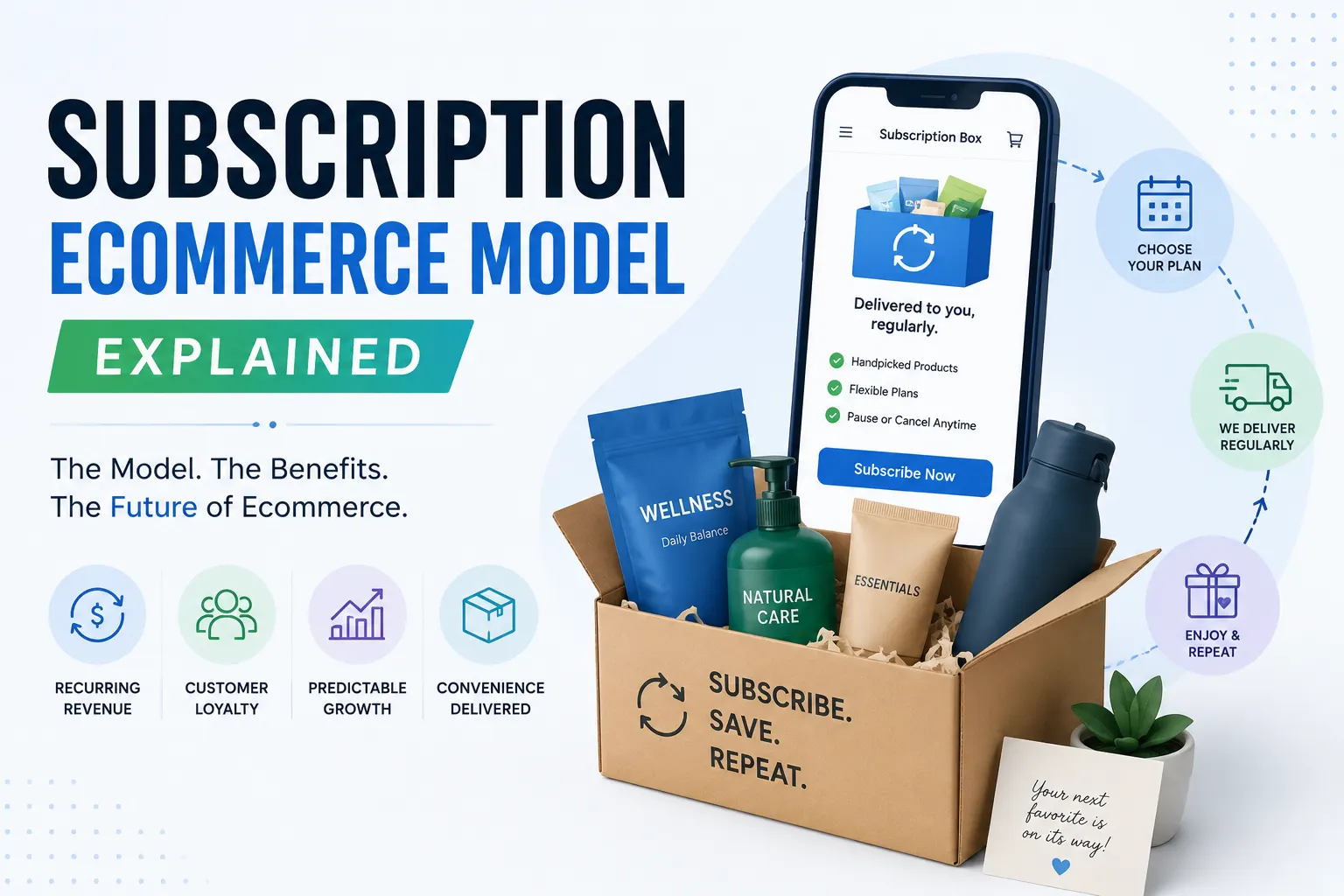
The ecommerce industry has evolved rapidly over the past decade, shifting from simple transactional online shopping toward long-term customer relationship models that prioritize recurring revenue, customer retention, predictable cash flow, and personalized shopping experiences. Among the most transformative business models in modern digital commerce is the subscription ecommerce model.
Subscription ecommerce has fundamentally changed how businesses interact with customers by replacing one-time purchases with ongoing relationships. Instead of convincing customers to make repeated buying decisions every month, subscription models automate purchasing behavior, improve convenience, and create predictable recurring revenue streams for businesses.
Today, subscription ecommerce is used across countless industries including beauty, food, fashion, fitness, software, healthcare, pet supplies, digital products, education, electronics, and household essentials. Companies ranging from startups to global brands leverage subscription systems to increase customer lifetime value, reduce customer acquisition pressure, stabilize inventory forecasting, and build stronger brand loyalty.
The success of subscription-based ecommerce businesses demonstrates how consumer preferences have changed significantly. Modern customers increasingly prioritize convenience, personalization, automated replenishment, curated experiences, and ongoing brand engagement. Subscription commerce aligns perfectly with these evolving expectations.
For ecommerce entrepreneurs, D2C brands, WooCommerce stores, Shopify businesses, and enterprise ecommerce companies, understanding subscription ecommerce models has become increasingly important for sustainable long-term growth. Businesses that successfully implement recurring revenue systems often experience stronger financial stability, better customer retention, improved operational predictability, and higher business valuations compared to traditional ecommerce models.
This comprehensive guide explains the subscription ecommerce model in depth, including its types, benefits, operational structure, technology requirements, marketing strategies, customer retention systems, challenges, optimization methods, and future trends shaping recurring commerce.
What Is a Subscription Ecommerce Model?
A subscription ecommerce model is a business structure where customers pay recurring fees at regular intervals in exchange for products or services delivered continuously over time.
Instead of a customer making a single purchase manually each time they need a product, the subscription system automates repeat purchases according to a predefined schedule such as:
- Weekly
- Monthly
- Quarterly
- Annually
The primary objective of subscription ecommerce is to establish long-term recurring customer relationships rather than focusing solely on one-time transactions.
In a traditional ecommerce model, every sale requires:
- New marketing efforts
- Customer acquisition spending
- Conversion optimization
- Repeat customer persuasion
In subscription commerce, businesses retain customers for extended periods, significantly reducing customer acquisition dependency while increasing customer lifetime value.
Subscription ecommerce models generally operate through automated billing systems integrated with recurring order fulfillment workflows. Customers subscribe to products, membership benefits, curated boxes, replenishment items, or digital services and continue receiving them automatically until cancellation.
Why Subscription Ecommerce Has Become So Popular
The rapid growth of subscription commerce is driven by changing consumer behavior, digital transformation, and advancements in ecommerce technology.
Modern consumers value convenience more than ever before. Busy lifestyles encourage customers to automate recurring purchases whenever possible. Subscription systems eliminate the need to reorder frequently used products manually.
Several factors contribute to the popularity of subscription ecommerce.
Convenience for Customers
Convenience is one of the strongest drivers behind subscription commerce adoption.
Customers no longer need to remember:
- Reordering products
- Visiting physical stores
- Comparing products repeatedly
- Managing recurring purchases manually
Automated deliveries save time and reduce decision fatigue.
Predictable Revenue for Businesses
Traditional ecommerce businesses often experience unpredictable revenue fluctuations due to seasonal demand changes, advertising performance, and market conditions.
Subscription businesses benefit from recurring predictable income streams, improving financial planning and operational stability.
Improved Customer Retention
Retaining customers is significantly more profitable than constantly acquiring new customers.
Subscription systems naturally encourage longer customer relationships through automated recurring engagement.
Better Inventory Forecasting
Recurring order patterns help businesses forecast demand more accurately, improving inventory planning and reducing operational inefficiencies.
Stronger Brand Loyalty
Subscription commerce encourages ongoing customer interaction, helping brands build deeper emotional relationships with consumers.
How Subscription Ecommerce Works
The subscription ecommerce process typically follows several operational stages.
Customer Acquisition
Businesses attract potential subscribers through:
- SEO
- Paid advertising
- Social media marketing
- Influencer partnerships
- Email campaigns
- Referral programs
- Content marketing
The objective is to convince users to subscribe rather than make one-time purchases.
Subscription Enrollment
Customers choose subscription plans based on:
- Delivery frequency
- Product quantity
- Membership level
- Personalization preferences
The subscription system collects billing and shipping information for automated recurring processing.
Recurring Billing
Payment gateways automatically charge customers according to selected subscription schedules.
Recurring billing systems must handle:
- Failed payments
- Card expirations
- Renewals
- Billing updates
Order Fulfillment
The ecommerce platform generates recurring orders automatically based on subscription cycles.
Efficient fulfillment systems are essential for maintaining customer satisfaction.
Customer Retention
Successful subscription businesses focus heavily on retention through:
- Personalization
- Engagement
- Loyalty rewards
- Flexible management options
- Customer support
Main Types of Subscription Ecommerce Models
Subscription ecommerce includes several different business structures.
Each model serves different industries and customer behaviors.
Replenishment Subscription Model
Replenishment subscriptions automate repeat purchases for products customers use regularly.
Examples include:
- Groceries
- Vitamins
- Pet food
- Skincare
- Coffee
- Household supplies
Customers subscribe because these products require ongoing replenishment.
Advantages of Replenishment Models
Replenishment subscriptions offer several business advantages:
- Predictable recurring revenue
- High retention potential
- Stable demand forecasting
- Lower acquisition costs over time
Customers benefit from convenience and automated supply continuity.
Challenges of Replenishment Models
Competition can be intense because products are often commoditized.
Businesses must differentiate through:
- Pricing
- Customer experience
- Brand trust
- Delivery reliability
Curation Subscription Model
Curation subscriptions provide personalized product selections based on customer preferences.
Examples include:
- Beauty boxes
- Fashion styling boxes
- Snack subscriptions
- Book clubs
- Hobby kits
Customers subscribe not only for convenience but also for discovery and experience.
Personalization Importance
Personalization is central to successful curation models.
Businesses collect customer data such as:
- Preferences
- Sizes
- Interests
- Purchase behavior
Advanced personalization improves satisfaction and retention.
Emotional Engagement
Curation subscriptions often generate strong emotional excitement because customers anticipate discovering new products regularly.
This emotional connection strengthens brand loyalty.
Access Subscription Model
Access subscriptions provide ongoing benefits, discounts, or premium services.
Examples include:
- Membership clubs
- VIP programs
- Streaming services
- Educational platforms
- Premium communities
Customers pay recurring fees for exclusive access rather than physical products.
High Profit Potential
Access-based subscriptions often have stronger margins because digital services have lower fulfillment costs.
Scalability Advantages
Digital subscription models scale more efficiently than physical product subscriptions because operational complexity is lower.
Hybrid Subscription Models
Many modern ecommerce businesses combine multiple subscription approaches.
Examples include:
- Product replenishment plus VIP benefits
- Curated boxes with exclusive member access
- Physical products combined with digital content
Hybrid models improve customer engagement and retention.
Benefits of Subscription Ecommerce for Businesses
Subscription commerce provides numerous long-term business advantages.
Predictable Revenue Streams
Recurring revenue is one of the most valuable aspects of subscription ecommerce.
Predictable monthly income helps businesses:
- Forecast growth
- Plan inventory
- Manage staffing
- Allocate marketing budgets
- Improve cash flow stability
Investors and financial institutions also value recurring revenue businesses more highly.
Increased Customer Lifetime Value
Subscription models significantly improve customer lifetime value (CLV).
The formula for customer lifetime value is:
CLV=Average Revenue Per Customer×Customer Lifespan\text{CLV} = \text{Average Revenue Per Customer} \times \text{Customer Lifespan}CLV=Average Revenue Per Customer×Customer Lifespan
CLV=Average Revenue Per Customer×Customer Lifespan\text{CLV}=\text{Average Revenue Per Customer}\times\text{Customer Lifespan}CLV=Average Revenue Per Customer×Customer Lifespan
Because subscribers continue purchasing over extended periods, businesses earn substantially more revenue from each acquired customer.
Lower Customer Acquisition Pressure
Traditional ecommerce businesses constantly need new customers to sustain growth.
Subscription models reduce acquisition dependency because retained subscribers continue generating recurring revenue automatically.
Better Operational Forecasting
Recurring orders improve predictability across operations.
Businesses can forecast:
- Inventory demand
- Packaging requirements
- Shipping volumes
- Staffing needs
This operational predictability improves efficiency and reduces waste.
Stronger Customer Relationships
Subscription commerce creates ongoing customer engagement rather than isolated transactions.
Brands can continuously interact with subscribers through:
- Personalized recommendations
- Email campaigns
- Loyalty programs
- Community experiences
Higher Business Valuation
Subscription businesses often receive higher valuations because recurring revenue is considered more stable and scalable than transactional income.
Investors value:
- Predictable cash flow
- Retention metrics
- Subscriber growth
- Revenue stability
Challenges of Subscription Ecommerce
Despite its advantages, subscription commerce also presents operational and strategic challenges.
Subscriber Churn
Churn refers to customers canceling subscriptions.
High churn rates can damage profitability significantly.
Common reasons for churn include:
- Poor product quality
- Pricing dissatisfaction
- Delivery delays
- Lack of perceived value
- Subscription fatigue
Reducing churn is critical for subscription business success.
Customer Acquisition Costs
Acquiring subscribers often requires significant upfront marketing investment.
Businesses must ensure customer lifetime value exceeds acquisition costs.
Inventory Complexity
Subscription businesses must manage recurring inventory requirements carefully.
Operational challenges include:
- Forecasting inaccuracies
- Seasonal fluctuations
- Supplier delays
Fulfillment Demands
Recurring delivery systems require highly reliable logistics operations.
Late shipments or inconsistent fulfillment negatively impact retention.
Subscription Fatigue
Consumers increasingly manage multiple subscriptions across different services.
Businesses must provide clear ongoing value to prevent cancellation.
Choosing the Right Subscription Products
Not every product is suitable for subscription ecommerce.
Ideal subscription products typically have:
- Recurring usage patterns
- Consistent demand
- Emotional engagement
- Convenience value
- Replenishment necessity
Best Product Categories for Subscription Ecommerce
Popular subscription categories include:
- Health supplements
- Coffee
- Skincare
- Grooming products
- Pet supplies
- Baby products
- Fitness products
- Snacks
- Fashion accessories
- Educational content
Building a Subscription Ecommerce Website
The ecommerce platform plays a major role in subscription business success.
Businesses need systems capable of handling:
- Recurring billing
- Automated renewals
- Subscription management
- Customer accounts
- Flexible fulfillment workflows
Professional ecommerce development solutions from <a href=”https://srihayavadhana.com”>Sri Hayavadhana</a> can help businesses build scalable subscription ecommerce platforms optimized for recurring revenue operations.
Essential Features for Subscription Ecommerce Platforms
Subscription websites require specialized functionality beyond standard ecommerce features.
Subscription Management Dashboards
Customers should easily manage:
- Billing information
- Delivery schedules
- Product preferences
- Subscription pauses
- Plan upgrades
Flexible management improves retention.
Recurring Payment Systems
Secure recurring billing systems are essential.
Payment gateways must support:
- Automated renewals
- Retry logic
- Multiple payment methods
- Subscription lifecycle management
Customer Personalization
Personalization systems improve engagement and retention.
Examples include:
- Product recommendations
- Customized plans
- Usage tracking
- Personalized content
Analytics and Reporting
Subscription businesses require advanced analytics including:
- Monthly recurring revenue
- Churn rate
- Subscriber growth
- Lifetime value
- Retention cohorts
Subscription Pricing Strategies
Pricing significantly affects subscription retention and profitability.
Tiered Pricing
Tiered pricing offers multiple subscription levels with varying features and pricing.
Examples include:
- Basic plans
- Premium plans
- Enterprise plans
Tiered structures increase customer flexibility and upsell opportunities.
Freemium Models
Freemium models provide limited free access while encouraging upgrades to paid subscriptions.
This strategy is common in digital subscription businesses.
Annual vs Monthly Plans
Annual subscriptions improve cash flow and reduce churn compared to monthly plans.
Businesses often incentivize annual plans with discounts.
Psychological Pricing
Psychological pricing strategies influence subscription conversions.
Examples include:
- ₹999/month instead of ₹1,000
- “Save 20% annually”
- Limited-time introductory pricing
Subscription Ecommerce Marketing Strategies
Marketing subscription businesses differs from traditional ecommerce marketing.
The goal is not only conversion but also long-term retention.
Content Marketing
Educational content builds trust and authority.
Effective content includes:
- Tutorials
- Product guides
- Industry insights
- Comparison articles
- Lifestyle content
SEO-driven content marketing improves organic acquisition while lowering customer acquisition costs.
Businesses seeking subscription ecommerce SEO strategies can explore services from <a href=”https://srihayavadhana.com”>https://srihayavadhana.com</a>.
Email Marketing Automation
Email automation is critical for subscription retention.
Key email flows include:
- Welcome sequences
- Renewal reminders
- Re-engagement campaigns
- Win-back campaigns
- Upsell emails
Influencer Marketing
Influencers help demonstrate subscription experiences visually.
Unboxing videos and authentic reviews increase trust and conversion rates.
Referral Programs
Referral systems encourage subscribers to invite others.
Referral marketing often produces highly profitable customer acquisition.
Social Media Engagement
Strong social communities improve emotional brand attachment.
Subscription brands frequently use:
- Instagram
- TikTok
- YouTube
- Pinterest
to build recurring engagement.
Reducing Subscription Churn
Retention is the foundation of subscription ecommerce profitability.
Even small retention improvements significantly increase lifetime value.
Flexible Subscription Controls
Customers should easily:
- Pause subscriptions
- Skip deliveries
- Modify products
- Change billing schedules
Flexibility reduces cancellations.
Consistent Product Quality
Maintaining high product quality is essential for long-term retention.
Proactive Customer Support
Fast support resolution improves customer satisfaction and loyalty.
Loyalty Rewards
Reward systems encourage long-term subscriptions.
Examples include:
- Exclusive discounts
- Early access
- Bonus products
- Milestone rewards
Customer Feedback Systems
Listening to subscriber feedback helps businesses improve continuously.
Subscription Ecommerce Metrics
Tracking performance metrics is essential for optimization.
Monthly Recurring Revenue
Monthly recurring revenue (MRR) measures predictable subscription income.
The formula is:
MRR=Total Active Subscribers×Average Revenue Per User\text{MRR} = \text{Total Active Subscribers} \times \text{Average Revenue Per User}MRR=Total Active Subscribers×Average Revenue Per User
MRR=Total Active Subscribers×Average Revenue Per User\text{MRR}=\text{Total Active Subscribers}\times\text{Average Revenue Per User}MRR=Total Active Subscribers×Average Revenue Per User
Churn Rate
Churn measures subscriber cancellations.
The formula is:
Churn Rate=Lost SubscribersTotal Subscribers×100\text{Churn Rate} = \frac{\text{Lost Subscribers}}{\text{Total Subscribers}} \times 100Churn Rate=Total SubscribersLost Subscribers×100
Churn Rate=Lost SubscribersTotal Subscribers×100\text{Churn Rate}=\frac{\text{Lost Subscribers}}{\text{Total Subscribers}}\times100Churn Rate=Total SubscribersLost Subscribers×100
Customer Acquisition Cost
CAC measures marketing expenses required to acquire subscribers.
Lifetime Value
CLV helps determine long-term subscriber profitability.
Average Revenue Per User
ARPU measures average subscriber revenue contribution.
SEO for Subscription Ecommerce
SEO is highly valuable for subscription businesses because it reduces reliance on paid advertising.
Organic traffic compounds over time and improves acquisition profitability.
Transactional Keyword Optimization
Subscription businesses should target keywords such as:
- Monthly subscription boxes
- Best coffee subscription
- Skincare subscription plans
- Pet food subscription delivery
These keywords attract high-intent customers.
Long-Form Educational Content
Detailed educational content helps attract top-of-funnel traffic.
Examples include:
- Product usage guides
- Lifestyle content
- Industry trend analysis
- Subscription comparisons
Technical SEO
Subscription websites require strong technical SEO foundations including:
- Fast page speed
- Mobile optimization
- Structured data
- Crawl optimization
- Internal linking
Professional ecommerce SEO optimization from <a href=”https://srihayavadhana.com”>https://srihayavadhana.com</a> can improve visibility and recurring subscriber acquisition.
Mobile Optimization for Subscription Ecommerce
Mobile commerce dominates modern ecommerce traffic.
Subscription websites must provide excellent mobile experiences.
Simplified Mobile Checkout
Mobile checkout should minimize friction.
Mobile Wallet Payments
Supporting payment methods such as:
- Google Pay
- Apple Pay
- UPI
- PayPal
improves conversions.
Responsive Subscription Dashboards
Customers should manage subscriptions easily on mobile devices.
Subscription Ecommerce Fulfillment Strategies
Fulfillment reliability directly impacts retention.
Warehouse Automation
Automation improves efficiency and reduces errors.
Subscription Packaging
Packaging should reinforce brand identity and customer excitement.
Delivery Tracking
Real-time tracking improves transparency and customer trust.
International Fulfillment
Global subscription brands require localized logistics systems.
AI and Automation in Subscription Commerce
Artificial intelligence is transforming subscription ecommerce operations.
Predictive Churn Analysis
AI identifies customers likely to cancel subscriptions.
Businesses can intervene proactively with retention campaigns.
Personalized Recommendations
AI improves product recommendations based on customer behavior.
Inventory Forecasting
Predictive systems improve inventory management accuracy.
AI Customer Support
Chatbots reduce support costs while improving response speed.
Subscription Ecommerce for Different Industries
Different industries implement subscription models uniquely.
Beauty Subscription Commerce
Beauty brands often use curation and replenishment models.
Food Subscription Services
Food subscriptions focus heavily on freshness, logistics, and personalization.
Fitness Subscription Platforms
Fitness businesses combine digital access with physical products.
Pet Subscription Ecommerce
Pet owners frequently purchase recurring consumables, making subscriptions highly effective.
Fashion Subscription Boxes
Fashion subscriptions emphasize personalization and styling experiences.
Common Subscription Ecommerce Mistakes
Many subscription businesses fail due to avoidable mistakes.
Overcomplicated Onboarding
Complex signup processes reduce conversions.
Weak Value Proposition
Customers must clearly understand ongoing benefits.
Poor Retention Focus
Acquiring subscribers without retention strategies creates unsustainable growth.
Inflexible Subscription Terms
Rigid systems frustrate customers and increase churn.
Ignoring Customer Feedback
Continuous improvement is essential for long-term retention.
Future Trends in Subscription Ecommerce
Subscription commerce continues evolving rapidly.
Hyper-Personalization
AI-driven personalization will become increasingly sophisticated.
Sustainability-Focused Subscriptions
Consumers increasingly prefer eco-friendly subscription models.
Community-Driven Commerce
Subscription brands will invest more heavily in community engagement.
Omnichannel Subscription Experiences
Businesses will integrate subscriptions across:
- Websites
- Mobile apps
- Physical stores
- Social commerce platforms
Smart Device Integration
IoT devices may automate replenishment subscriptions automatically.
Why Subscription Ecommerce Is Important for Modern Brands
Subscription commerce represents more than a sales strategy. It reflects a broader shift toward relationship-based commerce.
Consumers increasingly prefer brands that provide:
- Convenience
- Consistency
- Personalization
- Long-term value
Businesses that embrace subscription models often achieve stronger financial predictability and deeper customer relationships.
Final Thoughts on Subscription Ecommerce Models
The subscription ecommerce model has become one of the most powerful and scalable business structures in digital commerce. By transforming one-time transactions into recurring customer relationships, subscription businesses create sustainable revenue systems that improve profitability, retention, operational forecasting, and long-term business value.
Successful subscription ecommerce businesses focus not only on acquisition but also on customer experience, personalization, flexibility, and retention optimization. Building a profitable subscription business requires strong technology infrastructure, reliable fulfillment systems, data-driven marketing strategies, and continuous customer engagement.
As ecommerce competition continues increasing, subscription commerce provides businesses with a strategic advantage through recurring revenue stability and stronger customer loyalty. Brands that successfully implement subscription systems can reduce dependence on unpredictable advertising performance while building long-term sustainable growth.
Whether launching a subscription box business, creating recurring replenishment systems, developing digital memberships, or building hybrid subscription ecosystems, ecommerce businesses that prioritize customer value and operational excellence are best positioned to succeed in the future of recurring commerce.