Blog
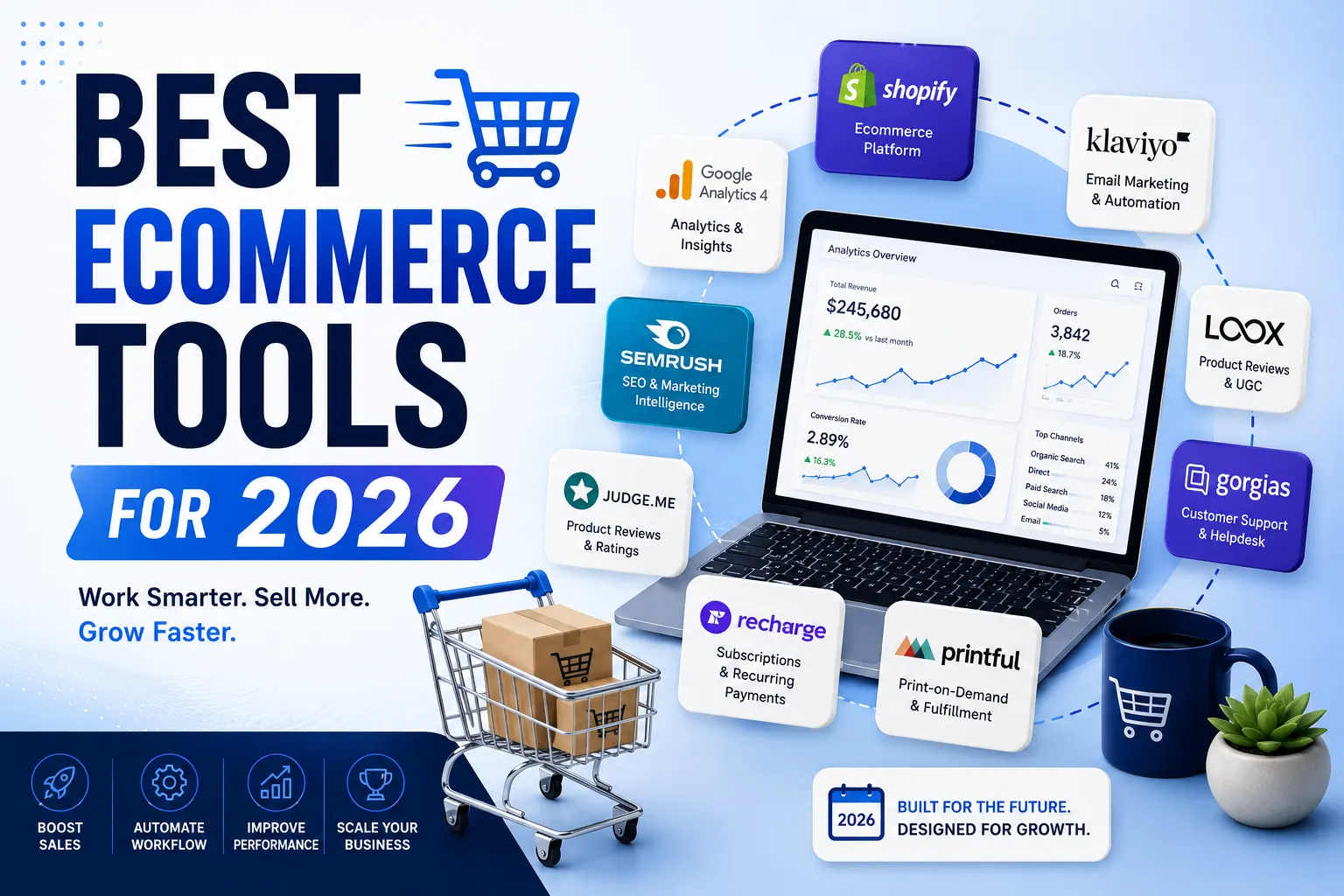
Best Ecommerce Tools for 2026

Introduction
The ecommerce industry in 2026 is moving faster than ever before. Online businesses are no longer competing only on pricing or product quality. Instead, modern ecommerce brands are competing on customer experience, automation, personalization, speed, AI-powered workflows, and data-driven decision-making.
Whether you run a Shopify store, WooCommerce website, B2B ecommerce platform, dropshipping business, D2C brand, or multi-vendor marketplace, using the right ecommerce tools can dramatically improve conversions, customer retention, and operational efficiency.
Today’s ecommerce ecosystem includes tools for:
- Website building
- AI content generation
- SEO optimization
- Product discovery
- Customer support
- Marketing automation
- Email campaigns
- Inventory management
- Analytics
- Payment processing
- CRM integration
- Personalization
- Social commerce
- Logistics automation
- Conversion optimization
AI is also transforming ecommerce at an accelerated pace. Large ecommerce companies are now integrating conversational shopping, AI agents, predictive automation, and intelligent customer support into their platforms. (Axios)
For ecommerce businesses in India and global markets alike, selecting the right technology stack is no longer optional. It is essential for growth.
This detailed guide explains the best ecommerce tools for 2026, including platforms for startups, scaling brands, enterprise ecommerce businesses, and SEO-focused online stores.
Why Ecommerce Tools Matter More in 2026
The ecommerce landscape has changed significantly over the last few years. Earlier, businesses could succeed with a simple online store and basic marketing campaigns. However, customer expectations have increased dramatically.
Modern shoppers expect:
- Fast-loading websites
- Personalized product recommendations
- Instant support
- Multiple payment options
- Seamless mobile experiences
- Real-time shipping updates
- AI-powered search
- Voice and conversational commerce
- Omnichannel experiences
At the same time, ecommerce competition has become more aggressive. Thousands of new online stores launch every single day.
As a result, ecommerce tools now play a direct role in:
- Revenue growth
- SEO visibility
- Conversion rates
- Customer retention
- Cart recovery
- Inventory forecasting
- Operational efficiency
- Marketing ROI
Businesses using AI-powered ecommerce tools are increasingly achieving better automation, improved personalization, and higher conversion performance. (Fin)
Key Categories of Ecommerce Tools
Before choosing tools, it is important to understand the major ecommerce software categories.
Ecommerce Platforms
These tools help businesses create and manage online stores.
Examples include:
- Shopify
- WooCommerce
- BigCommerce
- Magento
- Wix Ecommerce
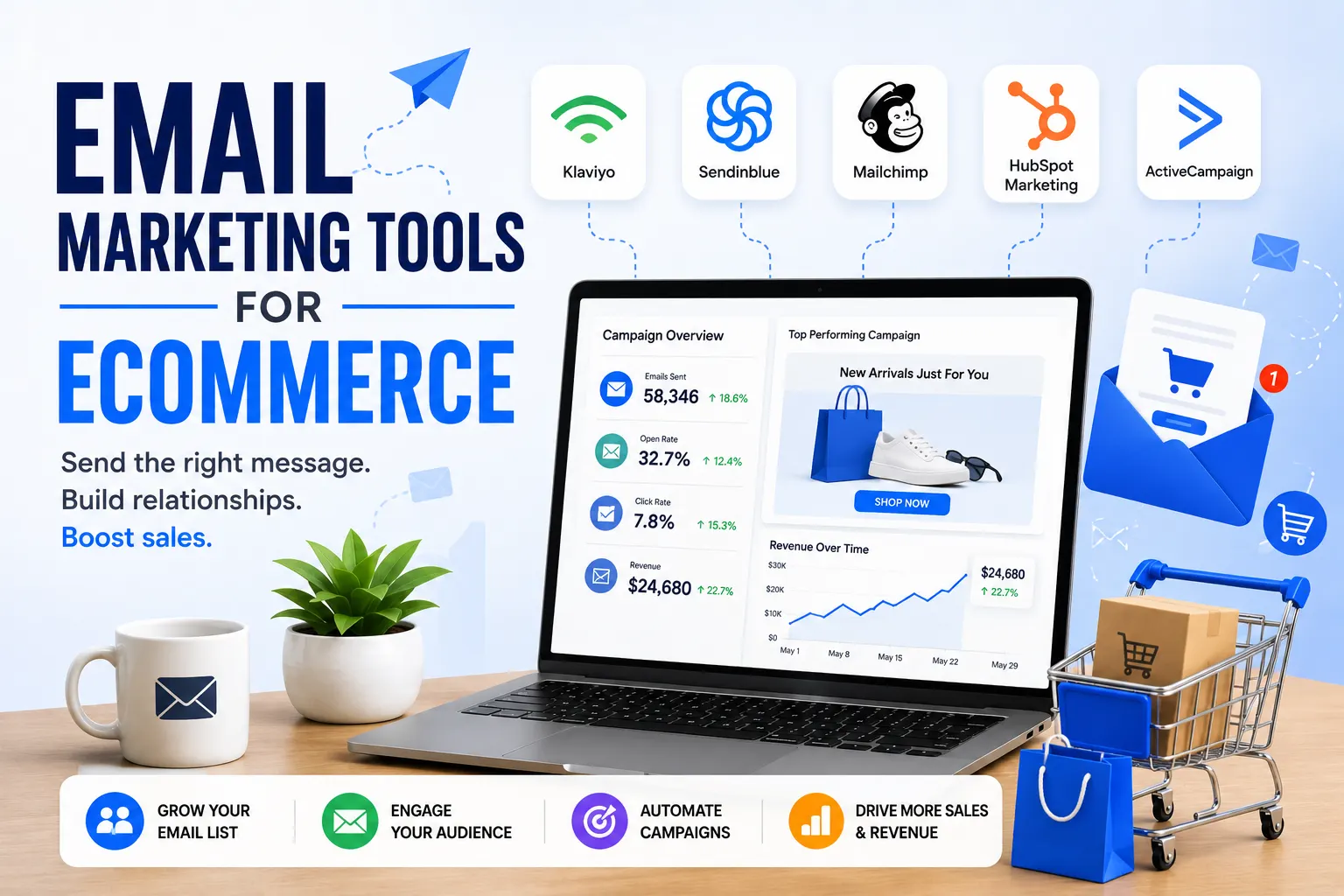
Marketing Automation Tools
These platforms automate campaigns across email, SMS, push notifications, and customer journeys.
Examples include:
- Klaviyo
- Omnisend
- Mailchimp
SEO Tools
SEO tools help ecommerce businesses improve search visibility.
Examples include:
- Ahrefs
- Semrush
- Surfer SEO
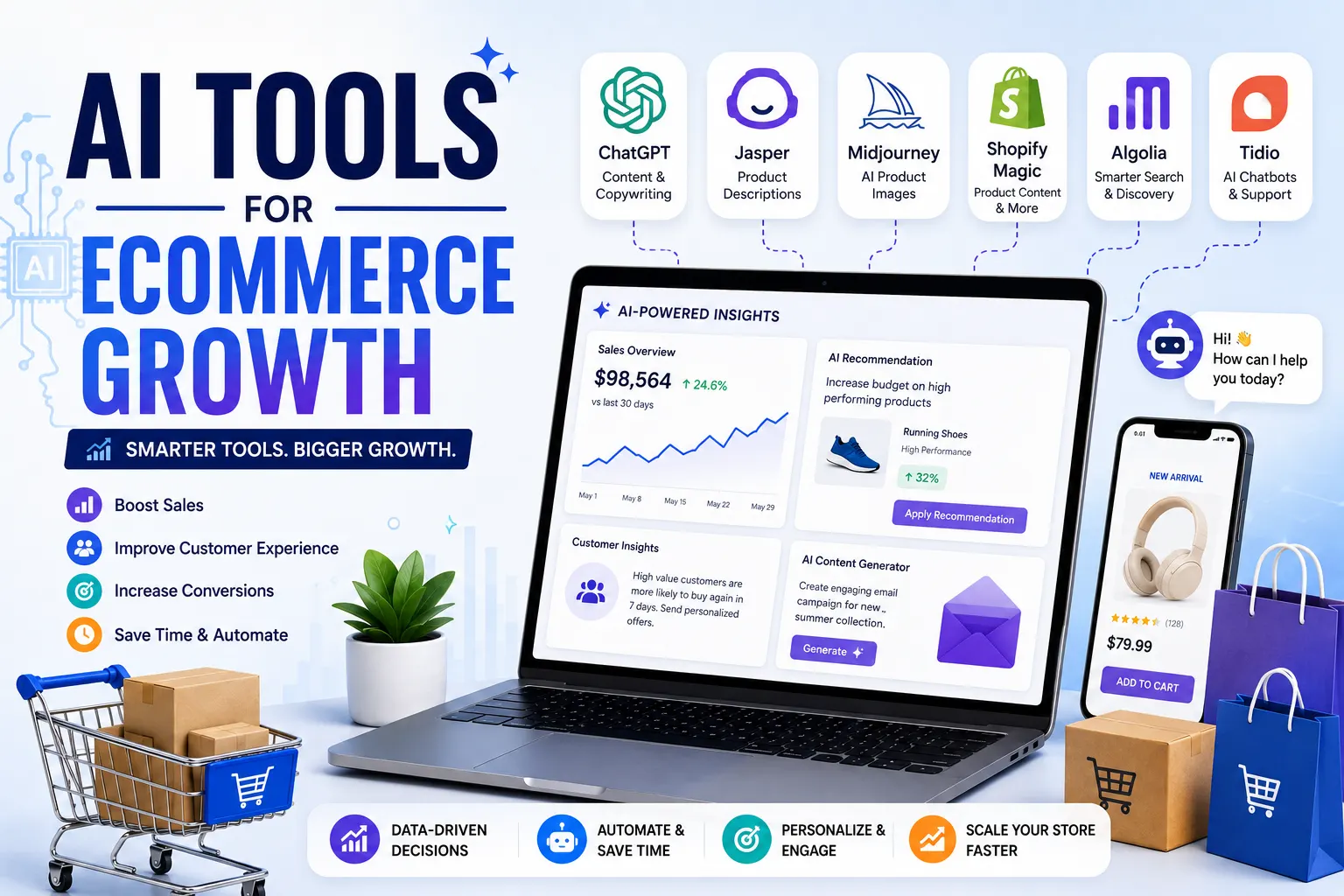
AI Ecommerce Tools
AI-powered platforms now help with:
- Product descriptions
- Chatbots
- Product recommendations
- Customer support
- Predictive analytics
- Dynamic pricing
Examples include:
- ChatGPT
- Jasper
- Tidio
- Gorgias
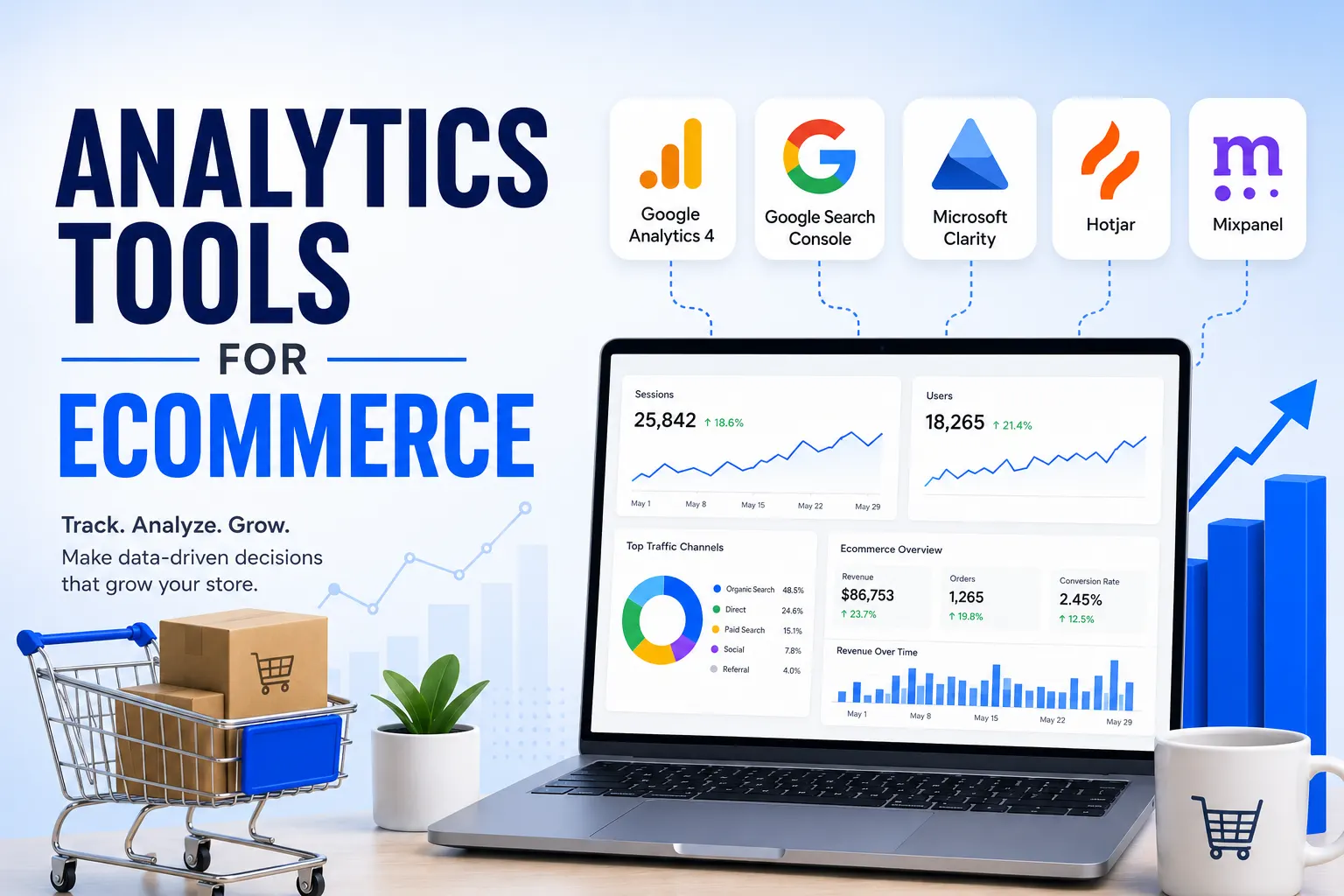
Analytics Tools
Analytics tools help track:
- User behavior
- Conversion funnels
- Sales performance
- Customer journeys
Examples include:
- Google Analytics 4
- Hotjar
- Microsoft Clarity
Customer Support Tools
Support tools improve customer satisfaction and retention.
Examples include:
- Zendesk
- Intercom
- Freshdesk
Best Ecommerce Platforms for 2026
Shopify
Shopify remains one of the most powerful ecommerce platforms in 2026. It is particularly popular among D2C brands, startups, and fast-growing ecommerce businesses because of its simplicity, scalability, and app ecosystem.
One major advantage of Shopify is its ability to help businesses launch quickly without complex development work. Even non-technical business owners can create professional ecommerce stores with minimal effort.
Key Features
- AI-powered Shopify Magic tools
- Mobile-first themes
- Extensive app marketplace
- Fast checkout system
- Integrated payment processing
- Multi-channel selling
- Social commerce integration
- Advanced inventory management
Best For
- Small businesses
- D2C brands
- Fashion stores
- Dropshipping businesses
- Fast-scaling ecommerce companies
Pros
- Easy to use
- Excellent scalability
- Strong app ecosystem
- Fast website performance
- Secure infrastructure
Cons
- Monthly subscription costs
- Transaction fees in some plans
- Limited customization compared to open-source platforms
WooCommerce
WooCommerce continues to dominate the WordPress ecommerce ecosystem in 2026. It is one of the best options for businesses that want complete flexibility and SEO control.
For content-heavy ecommerce websites, WooCommerce offers a significant advantage because it integrates directly with WordPress.
Many SEO-focused ecommerce brands prefer WooCommerce because it allows:
- Advanced blog integration
- Custom SEO optimization
- Better content marketing workflows
- Complete technical control
Key Features
- Open-source flexibility
- WordPress integration
- Thousands of plugins
- Full SEO customization
- Large developer ecosystem
Best For
- SEO-focused ecommerce stores
- Content-driven brands
- Businesses needing customization
- Local ecommerce companies
Pros
- Highly customizable
- Strong SEO capabilities
- No platform lock-in
- Large plugin ecosystem
Cons
- Requires hosting management
- Technical maintenance needed
- Plugin conflicts may occur
BigCommerce
BigCommerce is a strong enterprise-ready ecommerce platform that has become increasingly popular among mid-sized and large ecommerce brands.
The platform is known for built-in features that reduce dependency on third-party apps.
Key Features
- Enterprise scalability
- Multi-storefront support
- Headless commerce options
- Advanced SEO capabilities
- B2B ecommerce features
Best For
- Large ecommerce businesses
- Enterprise brands
- B2B ecommerce
- Multi-channel commerce
Pros
- Strong native features
- Excellent scalability
- Good SEO structure
- Multi-channel support
Cons
- Higher pricing
- Learning curve for beginners
Adobe Commerce (Magento)
Adobe Commerce remains one of the most powerful ecommerce platforms for enterprise businesses.
It offers deep customization capabilities and advanced ecommerce infrastructure for large-scale operations.
Key Features
- Enterprise-level scalability
- Advanced product management
- Custom workflows
- B2B features
- Headless commerce support
Best For
- Enterprise ecommerce businesses
- Large catalogs
- Global ecommerce brands
Pros
- Extremely flexible
- Advanced customization
- Enterprise-ready architecture
Cons
- Expensive implementation
- Requires technical expertise
Best AI Ecommerce Tools for 2026
AI is becoming the core engine behind ecommerce growth. Many ecommerce platforms are integrating AI directly into shopping experiences, customer support, logistics, and personalization. (Axios)
ChatGPT
ChatGPT has become one of the most widely used AI tools in ecommerce.
Businesses use it for:
- Product descriptions
- SEO content
- Email campaigns
- Customer support drafts
- FAQ creation
- Social media content
Best Use Cases
- Ecommerce blogging
- Product copywriting
- AI customer interaction
- Marketing automation
Benefits
- Saves time
- Improves content production speed
- Supports multilingual content
- Enhances customer communication
Klaviyo
Klaviyo remains one of the best ecommerce email marketing and automation platforms in 2026.
AI-driven lifecycle marketing tools are now essential for ecommerce retention strategies. (Fin)
Key Features
- Email automation
- SMS marketing
- Predictive analytics
- Customer segmentation
- Abandoned cart recovery
Best For
- Shopify stores
- D2C brands
- Ecommerce retention marketing
Pros
- Excellent ecommerce integrations
- Advanced segmentation
- Powerful automation workflows
Cons
- Can become expensive at scale
Gorgias
Gorgias is one of the best AI-powered customer support platforms for ecommerce businesses.
AI support automation is becoming increasingly important because customers expect immediate assistance. (Fin)
Features
- AI customer support
- Shopify integration
- Automated ticket handling
- Order management integration
Best For
- High-volume ecommerce stores
- Support-heavy ecommerce brands
Tidio
Tidio offers AI chatbot solutions for ecommerce businesses.
Key Features
- AI live chat
- Customer automation
- Cart recovery workflows
- Multichannel support
Best For
- Small ecommerce stores
- Mid-sized online businesses
Jasper AI
Jasper AI is widely used for ecommerce content generation.
Businesses use it for:
- Product descriptions
- Ad copy
- SEO content
- Landing page creation
Benefits
- Faster content workflows
- Brand voice consistency
- AI-driven copywriting
Best Ecommerce SEO Tools for 2026
SEO continues to be one of the highest ROI channels for ecommerce growth.
Organic traffic helps reduce dependency on paid advertising while improving long-term profitability.
Ahrefs
Ahrefs remains one of the most comprehensive SEO platforms for ecommerce businesses.
Key Features
- Keyword research
- Competitor analysis
- Backlink auditing
- Site audits
- Content gap analysis
Best For
- Ecommerce SEO agencies
- Content-focused ecommerce brands
Semrush
Semrush provides a complete digital marketing toolkit for ecommerce businesses.
Features
- Keyword tracking
- Competitor research
- Technical SEO audits
- PPC analysis
- Content optimization
Surfer SEO
Surfer SEO helps ecommerce websites optimize product pages and blog content for better rankings.
Best Use Cases
- Ecommerce blogs
- Category pages
- Buying guides
- Product descriptions
Best Ecommerce Analytics Tools
Google Analytics 4
Google Analytics 4 remains essential for ecommerce tracking and performance analysis.
Features
- Ecommerce event tracking
- Funnel analysis
- Customer journey analysis
- Conversion tracking
Hotjar
Hotjar helps ecommerce businesses understand user behavior visually.
Features
- Heatmaps
- Session recordings
- User feedback
- Funnel analysis
Microsoft Clarity
Microsoft Clarity provides free behavioral analytics tools for ecommerce websites.
Benefits
- Heatmaps
- User session tracking
- Rage click detection
- Performance insights
Best Ecommerce Payment Tools
Stripe
Stripe remains one of the best ecommerce payment processing solutions globally.
Features
- Global payments
- Subscription billing
- Fraud protection
- Developer-friendly APIs
Best For
- SaaS ecommerce
- Subscription businesses
- International ecommerce
Razorpay
Razorpay is one of the leading payment gateways for Indian ecommerce businesses.
Features
- UPI support
- Subscription billing
- Payment links
- Multi-method payments
PayPal
PayPal remains widely used for international ecommerce transactions.
Benefits
- Global acceptance
- Buyer trust
- Cross-border payments
Best Ecommerce CRM Tools
HubSpot
HubSpot offers CRM, automation, email marketing, and customer management features for ecommerce businesses.
Features
- Customer segmentation
- Marketing automation
- Lead management
- Email campaigns
Salesforce Commerce Cloud
Salesforce continues to dominate enterprise CRM and commerce ecosystems.
Best For
- Enterprise ecommerce brands
- Omnichannel commerce
Best Ecommerce Shipping and Logistics Tools
Shiprocket
Shiprocket is one of the leading logistics platforms for Indian ecommerce businesses.
AI-driven ecommerce logistics automation is becoming increasingly important for operational efficiency. (The Economic Times)
Features
- Courier aggregation
- Shipping automation
- COD support
- Order tracking
GoKwik
GoKwik focuses on ecommerce conversion optimization and logistics enhancement.
Benefits
- RTO reduction
- Checkout optimization
- AI-powered shipping workflows
Emerging Ecommerce Trends for 2026
Conversational Commerce
AI-powered conversational shopping is becoming mainstream.
Large ecommerce companies are integrating AI assistants directly into shopping experiences. (Axios)
Customers increasingly expect:
- AI shopping assistants
- Conversational product discovery
- Voice commerce
- AI-powered recommendations
Agentic AI
Agentic AI systems can perform actions automatically instead of simply generating content.
This is becoming a major ecommerce trend in 2026. (TechRadar)
Examples include:
- Automated refunds
- AI inventory forecasting
- Dynamic pricing adjustments
- AI-powered campaign optimization
Unified Commerce
Modern ecommerce businesses are moving toward unified commerce systems where inventory, customer data, marketing, and logistics work together seamlessly.
AI Personalization
AI personalization engines are becoming critical for ecommerce conversion optimization.
Businesses using AI-driven personalization often achieve better customer retention and increased revenue. (EvenDigit)
How to Choose the Best Ecommerce Tools
Choosing the right ecommerce tools depends on several factors.
Business Size
Small businesses need simplicity and affordability.
Enterprise businesses need scalability and automation.
Technical Skills
Some tools require technical expertise, while others are beginner-friendly.
For example:
- Shopify is beginner-friendly
- WooCommerce offers flexibility
- Magento requires advanced development knowledge
SEO Requirements
SEO-focused ecommerce businesses should prioritize:
- Fast loading speed
- Technical SEO support
- Structured data
- Content management flexibility
Marketing Goals
If customer retention is important, focus on:
- Email automation
- CRM tools
- AI personalization
- SMS marketing
Budget
Some ecommerce tools become expensive as stores scale.
Businesses should evaluate:
- Monthly costs
- Transaction fees
- Add-on expenses
- Integration costs
Recommended Ecommerce Tool Stack for Different Businesses
Small Ecommerce Startups
Recommended stack:
- Shopify
- Klaviyo
- Tidio
- Google Analytics
- Razorpay
SEO-Focused Ecommerce Stores
Recommended stack:
- WooCommerce
- Ahrefs
- Surfer SEO
- Hotjar
- HubSpot
Enterprise Ecommerce Brands
Recommended stack:
- Adobe Commerce
- Salesforce Commerce Cloud
- Klaviyo
- Gorgias
- Stripe
Indian Ecommerce Businesses
Recommended stack:
- WooCommerce or Shopify
- Razorpay
- Shiprocket
- GoKwik
- WhatsApp automation tools
Common Mistakes When Choosing Ecommerce Tools
Using Too Many Tools
Many ecommerce businesses overload their systems with unnecessary plugins and software.
This often causes:
- Slow website speed
- Integration issues
- High operational costs
Ignoring Scalability
Some tools work well initially but fail during rapid growth.
Businesses should select scalable platforms from the beginning.
Neglecting SEO
SEO remains one of the most sustainable ecommerce growth channels.
Ignoring SEO tools and optimization can reduce long-term profitability.
Choosing Based Only on Price
The cheapest tool is not always the best option.
Businesses should prioritize:
- Reliability
- Performance
- Scalability
- Customer support
Future of Ecommerce Tools Beyond 2026
The future of ecommerce tools will likely include:
- Fully autonomous AI agents
- Predictive inventory systems
- Hyper-personalized shopping
- AI-generated storefronts
- Voice-first ecommerce
- AR-powered product experiences
- Real-time AI pricing optimization
AI integration is expected to become standard across ecommerce infrastructure. (Axios)
Businesses that adopt intelligent ecommerce systems early will likely gain significant competitive advantages over slower-moving competitors.
Final Thoughts
The best ecommerce tools for 2026 are not simply software platforms. They are growth engines that help businesses automate operations, improve customer experiences, increase conversions, and scale efficiently.
Successful ecommerce businesses are increasingly combining:
- AI automation
- SEO optimization
- Customer personalization
- Omnichannel commerce
- Advanced analytics
- Intelligent marketing systems
For most growing ecommerce brands, the ideal strategy is to build a flexible ecommerce ecosystem rather than depending on a single platform.
Businesses should focus on selecting tools that align with their:
- Business model
- Growth stage
- Technical capabilities
- Marketing strategy
- Customer experience goals
As ecommerce continues evolving rapidly, brands that invest in scalable and AI-powered ecommerce tools will be better positioned to compete in the digital commerce landscape of 2026 and beyond.