Blog
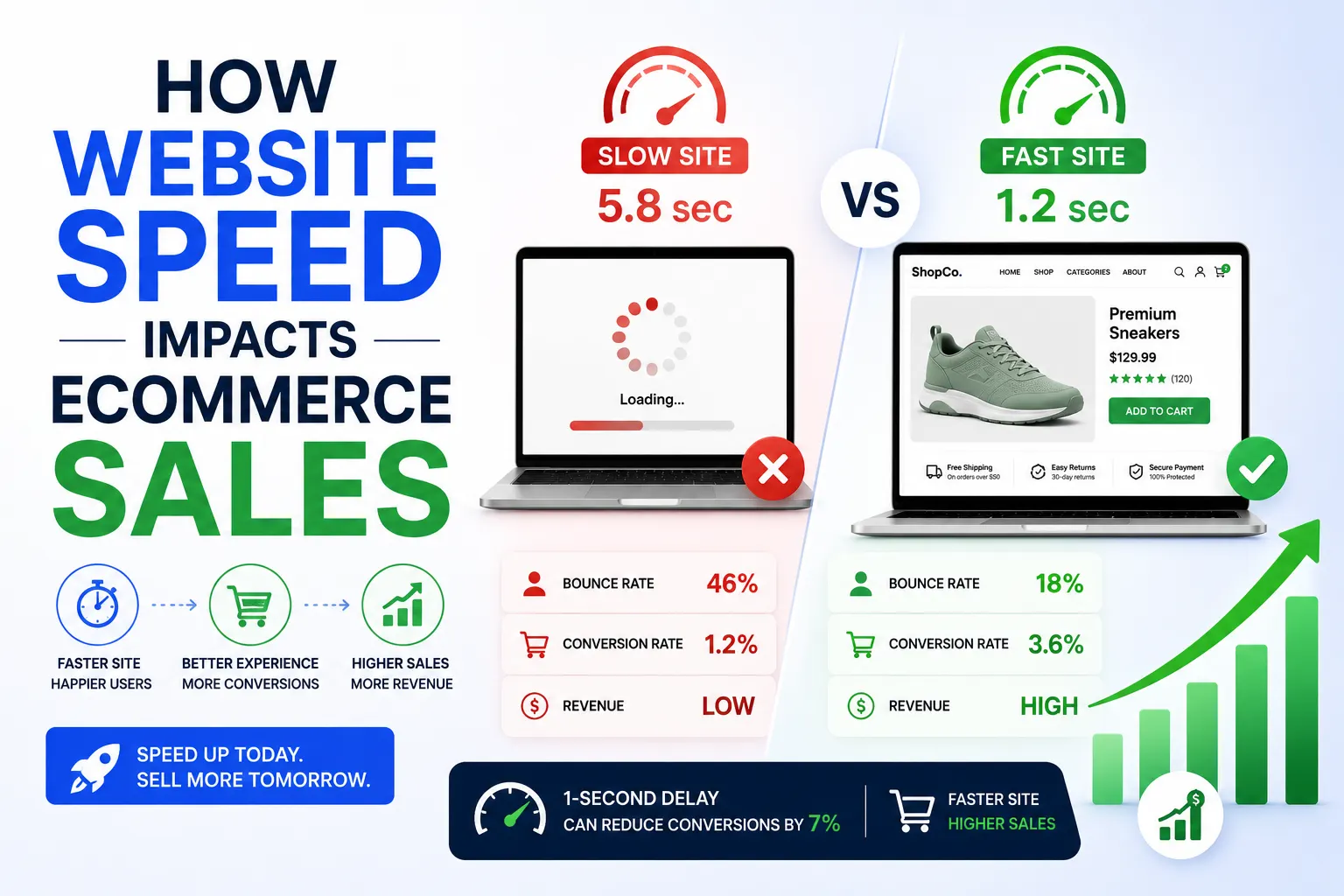
How Website Speed Impacts Ecommerce Sales

The Complete Guide for Online Stores in 2026
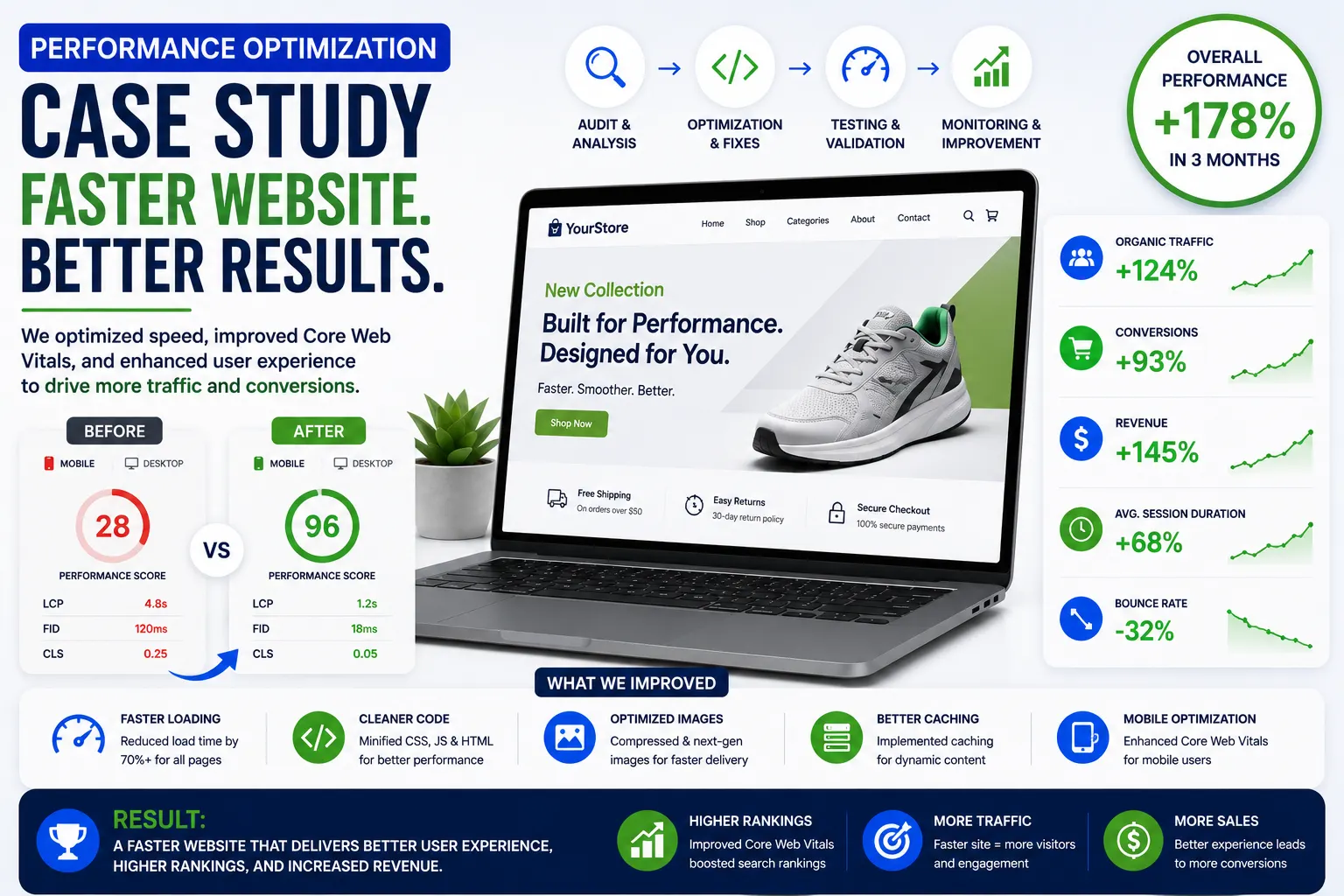
Website speed has become one of the most critical factors influencing ecommerce success. Modern online shoppers expect websites to load instantly, product pages to respond smoothly, and checkout processes to function without delays. Even a few seconds of waiting can significantly reduce customer satisfaction, increase bounce rates, and lower overall conversions.
In the early days of ecommerce, customers were more patient with slow-loading websites because online shopping itself was still evolving. Today, customer expectations are entirely different. Mobile commerce, high-speed internet access, social media influence, and intense competition have created an environment where users expect fast digital experiences across every device and platform.
A slow ecommerce website does not simply create inconvenience. It directly impacts revenue, search engine rankings, customer trust, user engagement, advertising performance, and long-term brand perception. Businesses often invest heavily in marketing campaigns, SEO, social media promotions, and paid advertisements, only to lose potential customers because their website performance is poor.
Website speed optimization is no longer a technical enhancement reserved for developers. It is now a core ecommerce growth strategy that affects every stage of the customer journey. Faster ecommerce websites typically experience higher conversion rates, better customer retention, stronger organic visibility, and improved return on advertising investment.
This comprehensive guide explains how website speed impacts ecommerce sales, why performance optimization matters, how page speed affects customer psychology, and what ecommerce businesses can do to build faster, high-performing online stores in 2026 and beyond.
Understanding Website Speed in Ecommerce
Website speed refers to how quickly a webpage loads and becomes interactive for users. In ecommerce, website speed affects everything from homepage browsing to product page interactions and checkout completion.
Many businesses assume speed only means how quickly a page appears visually. In reality, ecommerce performance involves several technical and user experience metrics that determine how customers perceive website responsiveness.
Website speed includes factors such as:
- Initial page loading time
- Server response speed
- Image rendering performance
- Mobile responsiveness
- Checkout interaction speed
- Search functionality responsiveness
- Time to interactivity
- Product filtering performance
A website may appear partially loaded while important functionality still remains unusable. Customers judge performance based on the complete browsing experience rather than simple loading indicators.
Modern ecommerce stores contain large amounts of dynamic content, including product images, videos, scripts, personalization engines, analytics trackers, payment integrations, recommendation systems, and third-party applications. While these features improve functionality and marketing capabilities, they can also significantly slow down website performance if not optimized properly.
Fast ecommerce websites create smoother shopping experiences that encourage users to continue browsing and purchasing products. Slow websites create frustration and increase abandonment rates.
Why Website Speed Matters More Than Ever in Ecommerce
The importance of ecommerce speed continues increasing because digital consumer behavior has changed dramatically.
Customer Expectations Have Evolved
Modern consumers are accustomed to instant digital experiences from platforms such as:
- Amazon
- Netflix
- YouTube
- TikTok
These platforms have conditioned users to expect near-instant responses.
When ecommerce websites fail to meet these expectations, users often leave immediately and search for alternatives.
Customers no longer compare your website only against direct competitors. They compare your website experience against every fast digital platform they use daily.
Mobile Commerce Dominates Online Shopping
Most ecommerce traffic now comes from mobile devices.
Mobile users often browse while:
- Traveling
- Multitasking
- Using unstable internet connections
- Shopping quickly between activities
Slow mobile experiences create even greater frustration because users have less patience on smartphones.
Mobile speed optimization has become essential not only for conversions but also for SEO because Google uses mobile-first indexing.
Competition Is Extremely High
Customers can switch between ecommerce websites instantly.
If:
- Product pages load slowly
- Checkout feels delayed
- Search results lag
- Filters respond poorly
Users often abandon the website and purchase from competitors instead.
Fast ecommerce performance has become a competitive advantage.
The Relationship Between Website Speed and Ecommerce Sales
Website speed directly impacts revenue generation.
Faster Websites Increase Conversion Rates
Research consistently shows that faster ecommerce websites generate more sales.
When websites load quickly:
- Users browse more products
- Session duration increases
- Cart additions improve
- Checkout completion rises
Fast-loading stores reduce friction during the buying process.
Customers remain engaged because the experience feels smooth and efficient.
Slow Websites Increase Bounce Rates
Bounce rate refers to users leaving a website without interacting further.
Slow loading pages often cause:
- Homepage abandonment
- Product page exits
- Search frustration
- Checkout abandonment
Customers interpret slow performance as a sign of:
- Poor professionalism
- Low reliability
- Potential security risks
Even slight delays can significantly reduce engagement.
Speed Affects Average Order Value
Website performance influences how much customers spend.
Fast ecommerce stores encourage users to:
- Explore additional products
- Browse recommendations
- Continue category exploration
- Add more items to the cart
Slow websites reduce browsing depth and lower average order values.
Customer Psychology and Website Speed
Website speed strongly influences customer emotions and decision-making behavior.
Instant Gratification Drives Online Shopping
Modern ecommerce behavior revolves around convenience and speed.
Customers expect:
- Fast product discovery
- Instant search results
- Quick image loading
- Immediate checkout confirmation
Delays interrupt momentum and reduce purchase intent.
Slow Websites Create Anxiety
When pages load slowly, customers often wonder:
- Is the website broken?
- Did the payment process fail?
- Is the website trustworthy?
- Should I refresh the page?
- Will my order process correctly?
This uncertainty damages customer confidence.
Fast Websites Feel More Trustworthy
Customers subconsciously associate speed with:
- Professionalism
- Reliability
- Security
- Business quality
Faster ecommerce experiences improve perceived brand credibility.
How Website Speed Affects SEO for Ecommerce
Website speed plays a major role in search engine optimization.
Google prioritizes websites that provide strong user experiences.
Core Web Vitals Influence Rankings
Google measures user experience using Core Web Vitals metrics.
Important metrics include:
Largest Contentful Paint (LCP)
Measures how quickly primary page content loads.
Interaction to Next Paint (INP)
Measures interaction responsiveness.
Cumulative Layout Shift (CLS)
Measures visual stability during loading.
Poor scores negatively affect SEO performance.
Learn more:
Slow Websites Reduce Crawl Efficiency
Search engines allocate crawl budgets to websites.
Slow ecommerce stores may:
- Reduce crawl frequency
- Delay indexing
- Hurt product visibility
Fast websites help search engines crawl pages more efficiently.
User Signals Affect Rankings
Google analyzes behavioral signals such as:
- Bounce rates
- Session duration
- Engagement
Slow websites often produce weaker engagement metrics, which can indirectly affect rankings.
Mobile Speed and Ecommerce Sales
Mobile optimization is now one of the most important ecommerce priorities.
Mobile Users Are Less Patient
Desktop users may tolerate slight delays.
Mobile users expect instant performance because:
- Smaller screens reduce patience
- Mobile browsing is task-oriented
- Interruptions occur frequently
Even minor mobile delays reduce conversions significantly.
Mobile Networks Vary Widely
Not all users browse using high-speed Wi-Fi.
Many customers use:
- 4G networks
- 5G networks
- Public internet
- Limited bandwidth connections
Heavy ecommerce websites struggle under weaker mobile conditions.
Mobile Checkout Performance Matters
Slow mobile checkout experiences often lead to:
- Cart abandonment
- Payment frustration
- Reduced trust
Mobile speed optimization directly influences ecommerce revenue.
Homepage Speed and First Impressions
The homepage creates the first impression for many ecommerce visitors.
Heavy Homepages Hurt Performance
Many ecommerce homepages contain:
- Large sliders
- Autoplay videos
- Multiple banners
- Animation effects
- Third-party widgets
These elements can dramatically slow loading speed.
First Impressions Determine Engagement
Customers quickly decide whether to continue browsing.
Slow homepages create negative perceptions before users even explore products.
Optimized Homepages Improve Exploration
Fast homepages encourage:
- Category browsing
- Product exploration
- Search usage
- Deeper engagement
The homepage should balance visual quality with performance efficiency.
Product Page Speed and Conversions
Product pages are among the most critical ecommerce conversion pages.
Slow Product Pages Reduce Purchase Intent
Customers expect instant access to:
- Product images
- Descriptions
- Reviews
- Variants
- Pricing
Delays interrupt the buying process.
High-Resolution Images Must Be Optimized
Product imagery is essential for ecommerce success, but large image files often hurt performance.
Modern optimization methods include:
- WebP images
- AVIF formats
- Lazy loading
- Responsive image sizing
Fast Product Pages Improve User Confidence
Responsive product pages create smoother experiences during:
- Variant selection
- Zoom interactions
- Gallery browsing
- Cart additions
Fast performance increases purchasing confidence.
Checkout Speed and Cart Abandonment
Checkout performance directly affects ecommerce revenue.
Delayed Checkout Creates Friction
Slow checkout pages increase customer anxiety.
Users may worry:
- Payments failed
- Transactions froze
- Information was lost
Every Extra Second Matters
Checkout delays significantly increase abandonment rates.
Fast checkout experiences improve:
- Payment completion
- Customer satisfaction
- Repeat purchase likelihood
Simplified Checkout Improves Speed
Reducing unnecessary elements helps improve checkout performance.
Best practices include:
- One-page checkout
- Minimal scripts
- Lightweight forms
- Autofill optimization
Common Causes of Slow Ecommerce Websites
Many ecommerce websites suffer from preventable performance issues.
Large Unoptimized Images
Oversized images are among the biggest speed problems.
Many stores upload:
- Massive JPG files
- Uncompressed banners
- High-resolution images without optimization
Excessive Third-Party Apps
Ecommerce platforms often rely heavily on plugins and apps.
Too many integrations increase:
- Script loading
- HTTP requests
- Browser processing
Poor Hosting Infrastructure
Low-quality hosting affects:
- Server response times
- Traffic handling
- Stability
Cheap hosting often struggles during high traffic periods.
Excessive JavaScript
Heavy JavaScript slows:
- Rendering
- Interactivity
- Mobile performance
Render-Blocking Resources
CSS and JavaScript files can delay page rendering if poorly optimized.
Website Speed Optimization Techniques for Ecommerce
Improving ecommerce speed requires strategic optimization.
Compress and Optimize Images
Use modern image formats such as:
- WebP
- AVIF
Additional techniques include:
- Compression
- Responsive sizing
- Lazy loading
Use Content Delivery Networks (CDNs)
CDNs distribute website content globally for faster delivery.
Popular CDN providers include:
Minify CSS and JavaScript
Minification removes unnecessary code elements to reduce file sizes.
Enable Browser Caching
Caching stores resources locally for faster repeat visits.
Reduce App and Plugin Usage
Audit unnecessary integrations regularly.
Remove:
- Unused scripts
- Redundant widgets
- Heavy plugins
Use High-Performance Hosting
Quality hosting improves:
- Stability
- Speed
- Scalability
Managed ecommerce hosting often delivers better performance.
Shopify Speed Optimization
Shopify stores frequently face performance challenges because of app-heavy setups.
Common Shopify Speed Problems
Issues often include:
- Excessive apps
- Heavy themes
- Large banners
- Third-party scripts
Shopify Optimization Best Practices
Recommendations include:
- Limiting apps
- Compressing images
- Using lightweight themes
- Optimizing Liquid code
Learn more:
WooCommerce Speed Optimization
WooCommerce performance depends heavily on hosting and optimization practices.
Common WooCommerce Speed Issues
Problems often include:
- Plugin overload
- Shared hosting limitations
- Poor database optimization
WooCommerce Performance Improvements
Best practices include:
- Managed WordPress hosting
- CDN integration
- Caching plugins
- Database cleanup
Learn more:
Speed Optimization for Large Ecommerce Websites
Enterprise ecommerce stores face unique challenges.
Large Product Catalogs
Thousands of products increase:
- Database load
- Search complexity
- Filtering demands
Advanced Search Optimization
Search functionality should remain fast even with large inventories.
Solutions include:
- Elasticsearch
- Algolia
- Server-side indexing
Scalable Infrastructure
Enterprise stores require scalable hosting environments capable of handling:
- Traffic spikes
- Seasonal sales
- Global audiences
Website Speed and Paid Advertising Performance
Slow websites reduce advertising efficiency.
Faster Pages Improve Ad ROI
Users arriving from:
- Google Ads
- Facebook Ads
- Instagram campaigns
Expect fast experiences.
Slow landing pages waste advertising spend.
Quality Score and Landing Page Experience
Google Ads evaluates:
- Page speed
- User experience
- Relevance
Slow pages may increase cost-per-click.
Social Media Traffic Requires Speed
Social media users often have short attention spans.
Fast-loading landing pages improve:
- Engagement
- Conversion rates
- Campaign profitability
Website Speed and Customer Retention
Retention depends heavily on user experience.
Returning Customers Expect Efficiency
Existing customers want:
- Fast reordering
- Quick account access
- Smooth browsing
Slow websites damage loyalty.
Speed Impacts Brand Perception
Consistently slow experiences create negative brand associations.
Fast ecommerce stores appear:
- More modern
- More reliable
- More premium
Website Speed Testing Tools
Businesses should regularly monitor performance.
Google PageSpeed Insights
Analyzes:
- Core Web Vitals
- Mobile performance
- Optimization opportunities
Useful tool:
GTmetrix
Provides:
- Performance scores
- Waterfall analysis
- Loading breakdowns
Useful tool:
Lighthouse
Measures:
- Performance
- Accessibility
- SEO
- Best practices
WebPageTest
Offers advanced speed diagnostics.
Useful tool:
The Role of Core Web Vitals in Ecommerce
Core Web Vitals focus on real user experiences.
Largest Contentful Paint (LCP)
Ideal target:
Under 2.5 seconds.
Interaction to Next Paint (INP)
Measures responsiveness after user interactions.
Cumulative Layout Shift (CLS)
Prevents unexpected movement during loading.
Stable layouts improve trust and usability.
Speed Optimization and User Experience
Website speed is deeply connected to UX.
Faster Sites Reduce Friction
Smooth experiences encourage:
- Exploration
- Product discovery
- Checkout completion
Responsive Interactions Improve Satisfaction
Customers expect:
- Instant clicks
- Quick search results
- Immediate feedback
Speed Enhances Accessibility
Fast websites perform better across:
- Devices
- Internet conditions
- Geographic regions
Future of Ecommerce Speed Optimization
Performance expectations will continue increasing.
AI-Powered Optimization
AI tools will increasingly automate:
- Image optimization
- Code optimization
- Predictive loading
Edge Computing
Edge delivery systems will improve global performance.
Progressive Web Apps (PWAs)
PWAs combine app-like performance with web accessibility.
Lightweight Ecommerce Experiences
Minimalist performance-focused design will become more common.
Final Thoughts
Website speed has evolved from a technical concern into a major ecommerce revenue factor. Fast-loading ecommerce websites consistently outperform slower competitors in conversions, customer engagement, SEO visibility, advertising performance, and long-term retention.
Modern online shoppers expect instant experiences across every stage of the customer journey. Slow loading pages, delayed interactions, and sluggish checkout processes create friction that directly reduces sales and damages customer trust.
Website speed affects:
- Conversion rates
- Cart abandonment
- SEO rankings
- Mobile usability
- Customer retention
- Brand perception
- Advertising ROI
Businesses that prioritize performance optimization create smoother shopping experiences that encourage deeper engagement and higher revenue generation.
Improving ecommerce speed requires strategic attention to:
- Hosting quality
- Image optimization
- Mobile responsiveness
- Script management
- Checkout performance
- Core Web Vitals
Whether operating a Shopify store, WooCommerce website, Magento platform, or custom ecommerce solution, website speed optimization should remain a continuous priority.
In the future, ecommerce competition will increasingly revolve around experience quality. Faster websites will continue outperforming slower competitors because performance directly shapes customer satisfaction, trust, and purchasing behavior.
Businesses that invest in ecommerce speed optimization today position themselves for stronger growth, better search visibility, and improved profitability in the evolving digital commerce landscape.