Blog
Website Redesign Case Study

How a Strategic Redesign Improved SEO, User Experience, and Business Growth
A website redesign is much more than changing colors, updating fonts, or creating a modern-looking homepage. For growing businesses, a redesign can directly impact search engine visibility, conversion rates, customer trust, lead generation, and long-term digital growth. Many businesses continue using outdated websites for years without realizing how poor navigation, slow loading speed, weak mobile responsiveness, and old design structures silently reduce conversions and organic traffic.
This website redesign case study explains how a structured redesign process can transform a business website into a high-performing digital platform. From identifying technical SEO problems to improving user experience and optimizing conversion-focused layouts, every stage of the redesign process plays an important role in achieving measurable business results.
Businesses today compete in an environment where users expect fast-loading pages, intuitive navigation, mobile-friendly experiences, and trustworthy branding. Search engines also prioritize websites that offer better usability, accessibility, and content quality. A strategic redesign helps align all these elements together instead of treating them as separate tasks.
For businesses planning a redesign project, understanding the complete process through a practical case study can help avoid common mistakes and improve decision-making during development and SEO implementation.
Why Businesses Decide to Redesign Their Website
Many companies initially build websites to establish an online presence. However, as the business grows, the original website often becomes outdated both technically and visually. Over time, changes in user behavior, search engine algorithms, and mobile usage create a gap between the old website structure and modern digital expectations.
A redesign usually becomes necessary when businesses notice declining engagement metrics, lower conversions, or poor rankings in competitive search results. In many cases, the website may still function technically, but it fails to support business growth effectively.
Some of the most common reasons businesses choose website redesign services include:
- Outdated user interface and branding
- Slow page loading speed
- Poor mobile responsiveness
- Complicated navigation structure
- Low conversion rates
- Weak SEO performance
- High bounce rates
- Poor content organization
- Difficulty updating content
- Non-optimized product or service pages
- Technical SEO problems
- Inconsistent customer journey
Modern redesign projects focus on solving these problems systematically rather than applying cosmetic changes alone.
For businesses looking for professional redesign and development services, Sri Hayavadhana provides custom website redesign solutions focused on SEO, user experience, performance optimization, and conversion improvement.
Initial Website Problems Before the Redesign
Before beginning the redesign process, a complete audit was conducted to identify the major issues affecting website performance. The audit included technical SEO analysis, UI/UX evaluation, mobile responsiveness testing, page speed analysis, and content structure review.
The original website faced several limitations that negatively impacted both search engine visibility and user engagement.
Poor User Experience and Navigation
The website navigation structure was cluttered and confusing. Users had difficulty finding important services, case studies, and contact information. Important pages were buried deep inside the menu hierarchy, increasing friction during the browsing process.
The homepage also lacked clear content hierarchy. Visitors could not quickly understand the business offerings or unique value proposition. This increased bounce rates and reduced user engagement duration.
Modern website redesign projects prioritize user journey mapping to ensure visitors can navigate smoothly through every stage of the website.
Weak Mobile Optimization
A significant percentage of users accessed the website through smartphones. However, the old website was not fully responsive across different screen sizes. Some sections overlapped on smaller screens, buttons were difficult to tap, and images were not properly optimized for mobile devices.
Mobile responsiveness now directly affects both SEO rankings and user satisfaction. Search engines prioritize mobile-friendly websites because mobile browsing continues to dominate internet usage globally.
The redesign process focused heavily on responsive layouts, flexible grids, scalable typography, and optimized mobile interactions.
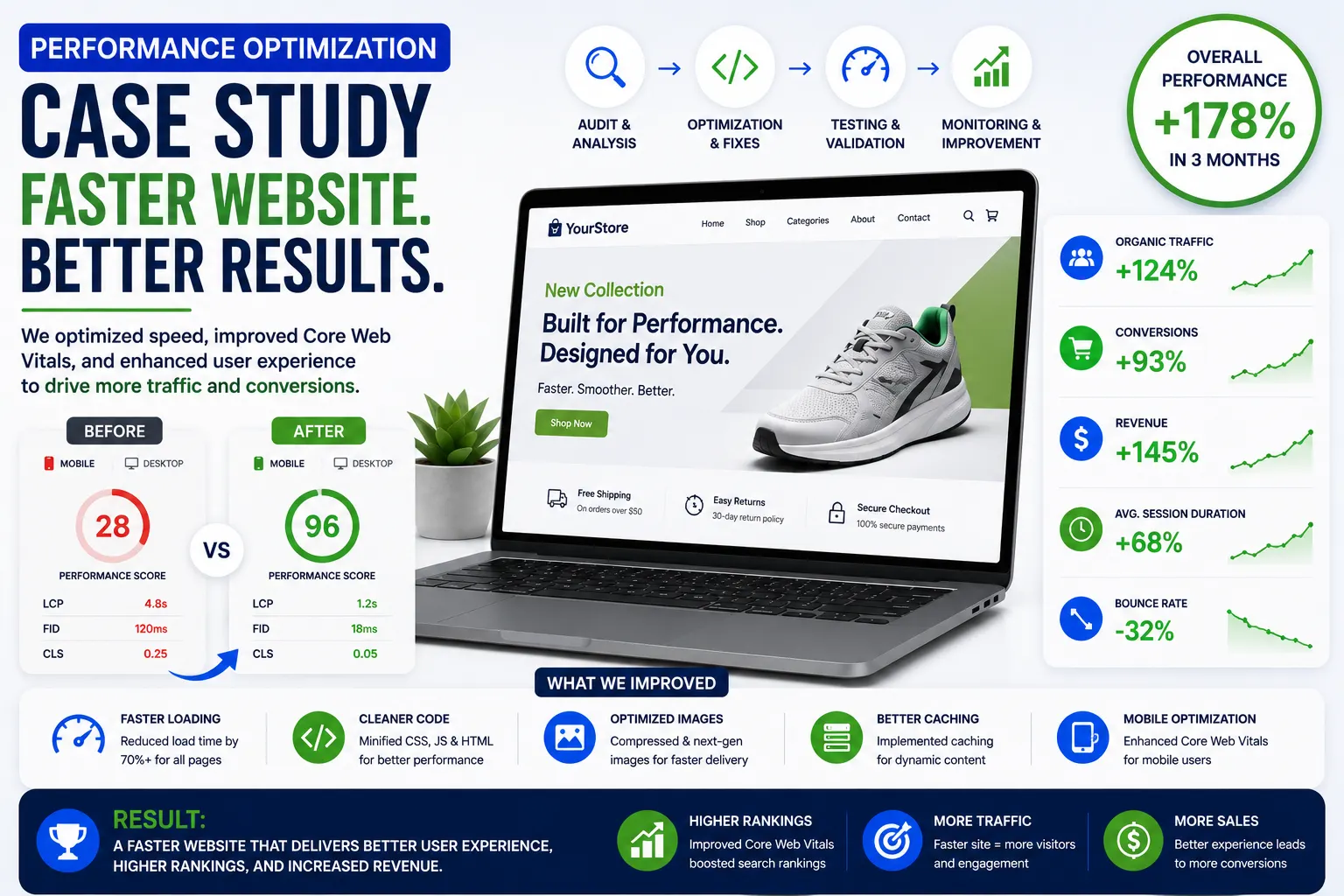
Slow Loading Speed
The previous website used large image files, outdated scripts, excessive plugins, and unoptimized assets. As a result, loading times were significantly slower than industry recommendations.
Slow websites negatively impact:
- SEO rankings
- User retention
- Conversion rates
- Core Web Vitals performance
- Mobile usability
- Customer trust
During the redesign process, several performance optimization strategies were implemented, including:
- Image compression
- WebP image conversion
- Lazy loading
- Script optimization
- CSS minimization
- Improved hosting configuration
- Caching improvements
These changes helped improve overall site speed and performance metrics.
SEO Challenges Identified During the Audit
The SEO audit revealed multiple structural and technical issues that limited organic search visibility.
Weak On-Page SEO Structure
Many pages lacked optimized heading structures, keyword targeting, metadata, and internal linking. Several pages also contained thin content with insufficient topical depth.
The redesign project included a complete content restructuring process to improve:
- Keyword relevance
- Search intent alignment
- Content readability
- Internal linking
- Topical authority
- Metadata optimization
Long-form content strategies were introduced to help improve organic visibility for competitive search terms.
Technical SEO Issues
The old website contained several technical SEO problems, including:
- Broken internal links
- Duplicate metadata
- Missing alt attributes
- Poor URL structures
- Non-optimized schema implementation
- Crawl inefficiencies
- Redirect inconsistencies
Technical SEO improvements were integrated directly into the redesign framework rather than being treated as an afterthought.
Businesses seeking SEO-friendly redesign strategies can explore professional web development and SEO services at Website Design Company in Coimbatore.
Website Redesign Strategy and Planning
Successful redesign projects begin with strategic planning instead of jumping directly into development.
The redesign strategy focused on four primary goals:
- Improve user experience
- Strengthen SEO performance
- Increase conversion rates
- Modernize the overall brand presentation
Every redesign decision was aligned with these business objectives.
Competitor Research and Industry Analysis
A detailed competitor analysis was conducted to identify design trends, content strategies, navigation structures, and conversion elements used by high-performing competitors.
This research helped identify opportunities to improve the website beyond basic industry standards.
Areas analyzed included:
- Homepage structure
- Service page depth
- CTA placements
- Visual hierarchy
- Mobile experience
- Content formatting
- Page speed
- SEO structure
Competitor benchmarking helped establish realistic redesign goals while identifying areas for differentiation.
Wireframing and User Journey Mapping
Before development began, wireframes were created to visualize the new structure and customer journey flow.
The redesign prioritized:
- Simplified navigation
- Clear call-to-action sections
- Better content hierarchy
- Faster user access to services
- Improved readability
- Logical internal linking
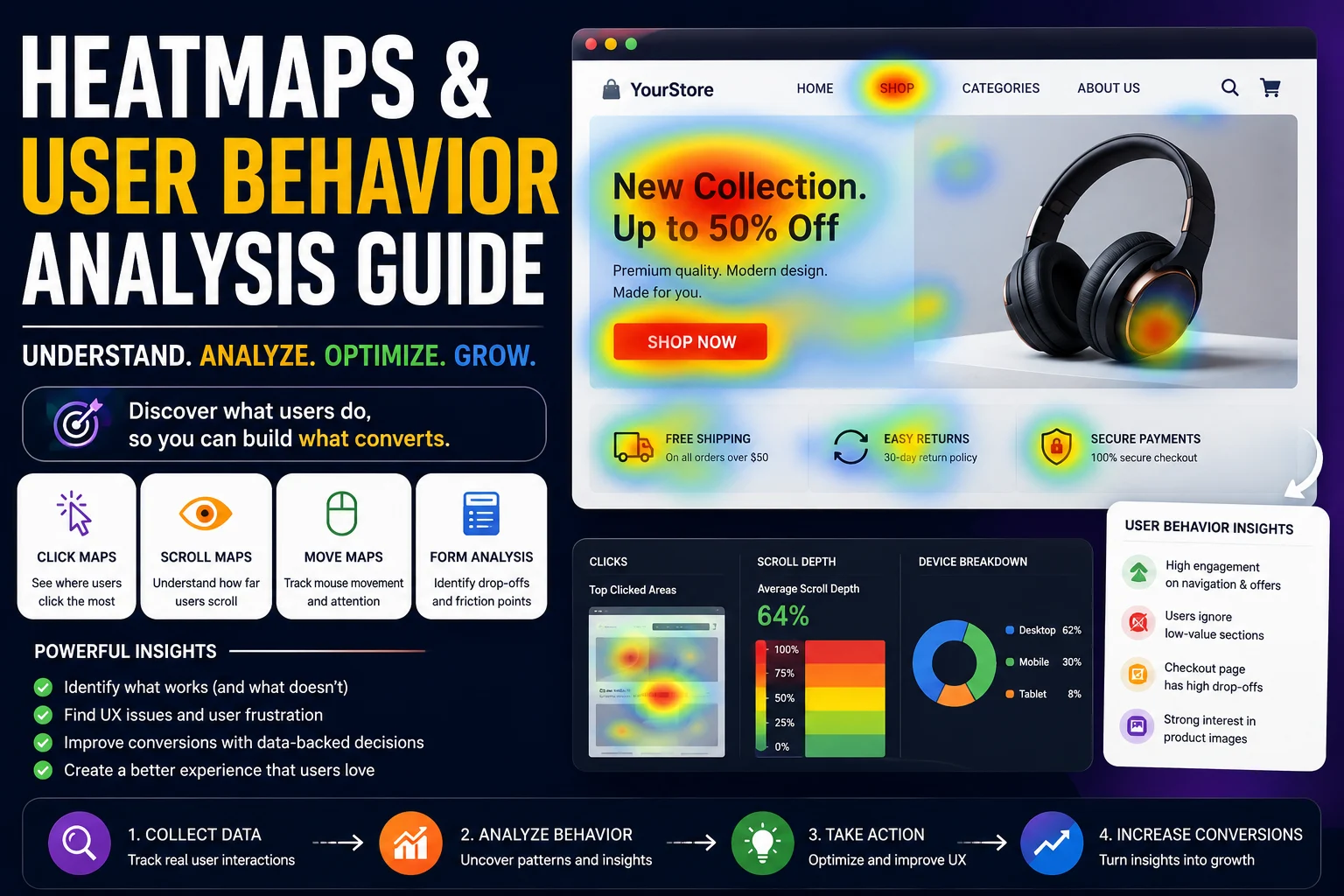
User behavior patterns were analyzed to ensure important business pages remained easily accessible across all devices.
UI/UX Improvements Implemented During the Redesign
The visual redesign focused on creating a cleaner, more modern, and user-friendly experience.
Improved Homepage Structure
The homepage was redesigned to communicate business value clearly within the first few seconds of user interaction.
The updated homepage included:
- Strong headline messaging
- Service highlights
- Case study previews
- Trust-building sections
- Clear call-to-action buttons
- Optimized service navigation
The goal was to reduce confusion while guiding users toward conversion-focused actions.
Better Typography and Readability
Content readability significantly affects engagement metrics. The redesign introduced:
- Larger font sizes
- Better line spacing
- Clear heading hierarchy
- Improved paragraph spacing
- Mobile-friendly typography
- Consistent design patterns
Readable content improves both user experience and SEO performance because users spend more time engaging with structured information.
Modern Visual Design
The updated design system focused on simplicity, professionalism, and performance.
Key visual improvements included:
- Cleaner layouts
- Consistent spacing
- High-quality visuals
- Modern icon usage
- Improved color balance
- Conversion-focused sections
The redesign avoided unnecessary animations or visual clutter that could slow down performance or distract users.
SEO Improvements After the Website Redesign
SEO was integrated into every stage of the redesign process rather than added later.
Improved Site Architecture
The new website structure improved crawlability and user navigation simultaneously.
Key improvements included:
- Logical URL structures
- Organized service categories
- Better internal linking
- Reduced orphan pages
- Simplified navigation hierarchy
Search engines can better understand well-structured websites, which helps improve indexing and ranking opportunities.
Long-Form Content Optimization
The redesign introduced comprehensive content strategies designed to improve topical authority and keyword relevance.
Instead of short service descriptions, pages were expanded with:
- Detailed explanations
- FAQ sections
- Industry insights
- Process explanations
- Case studies
- User-focused information
This approach aligns with modern SEO strategies where content depth and relevance strongly influence rankings.
Core Web Vitals Optimization
Core Web Vitals improvements became a major focus during development.
The redesigned website improved:
- Largest Contentful Paint (LCP)
- Cumulative Layout Shift (CLS)
- Interaction responsiveness
- Mobile performance scores
Technical improvements helped create a faster and more stable browsing experience.
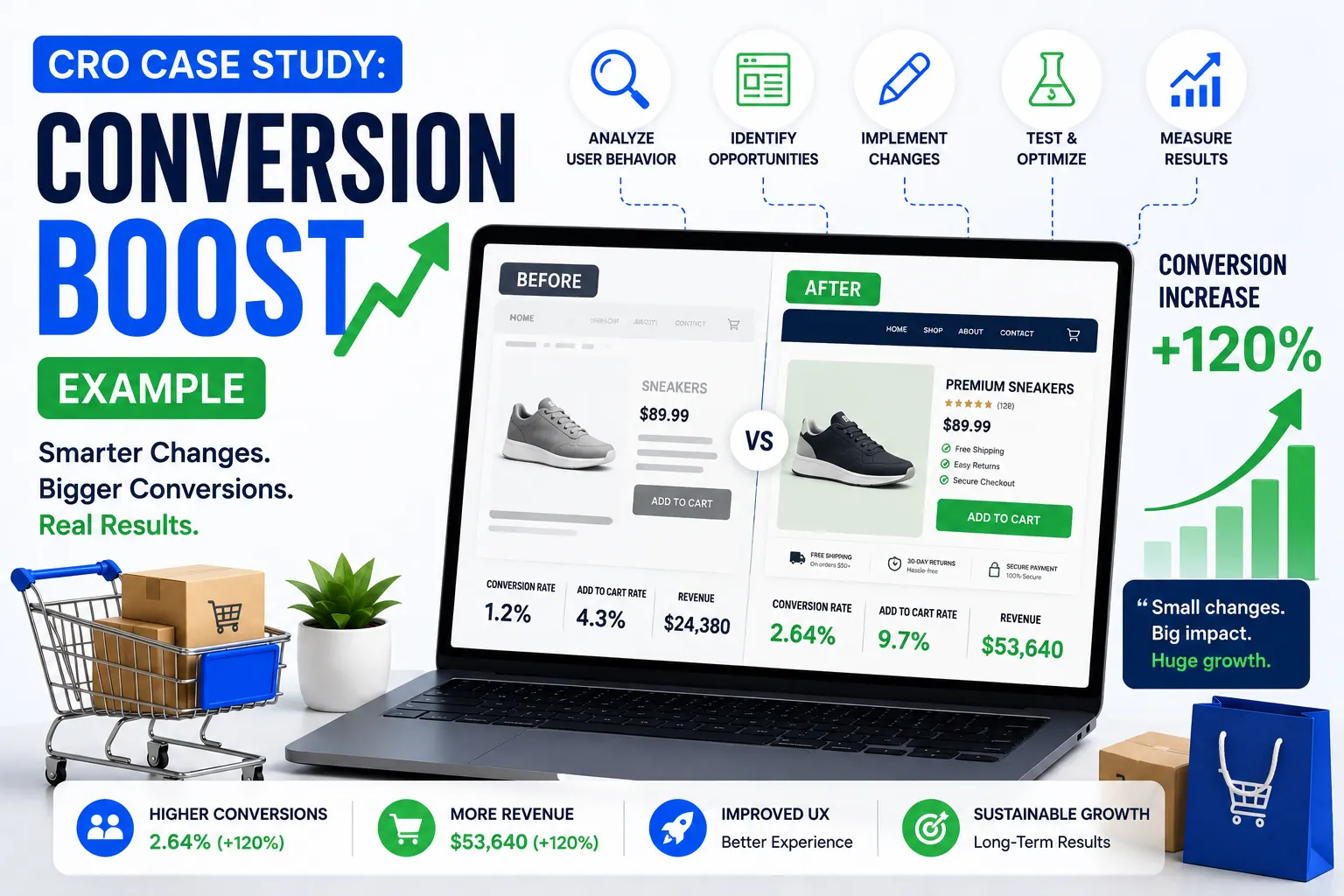
Conversion Rate Improvements After the Redesign
Website redesign success should not be measured only through aesthetics. Conversion performance is equally important.
The redesigned website introduced:
- Better lead generation forms
- Stronger CTA placement
- Improved service page layouts
- Clearer contact pathways
- Trust-building content
- Optimized mobile conversion experience
These changes helped increase user engagement and improve inquiry generation.
Results Achieved After the Redesign
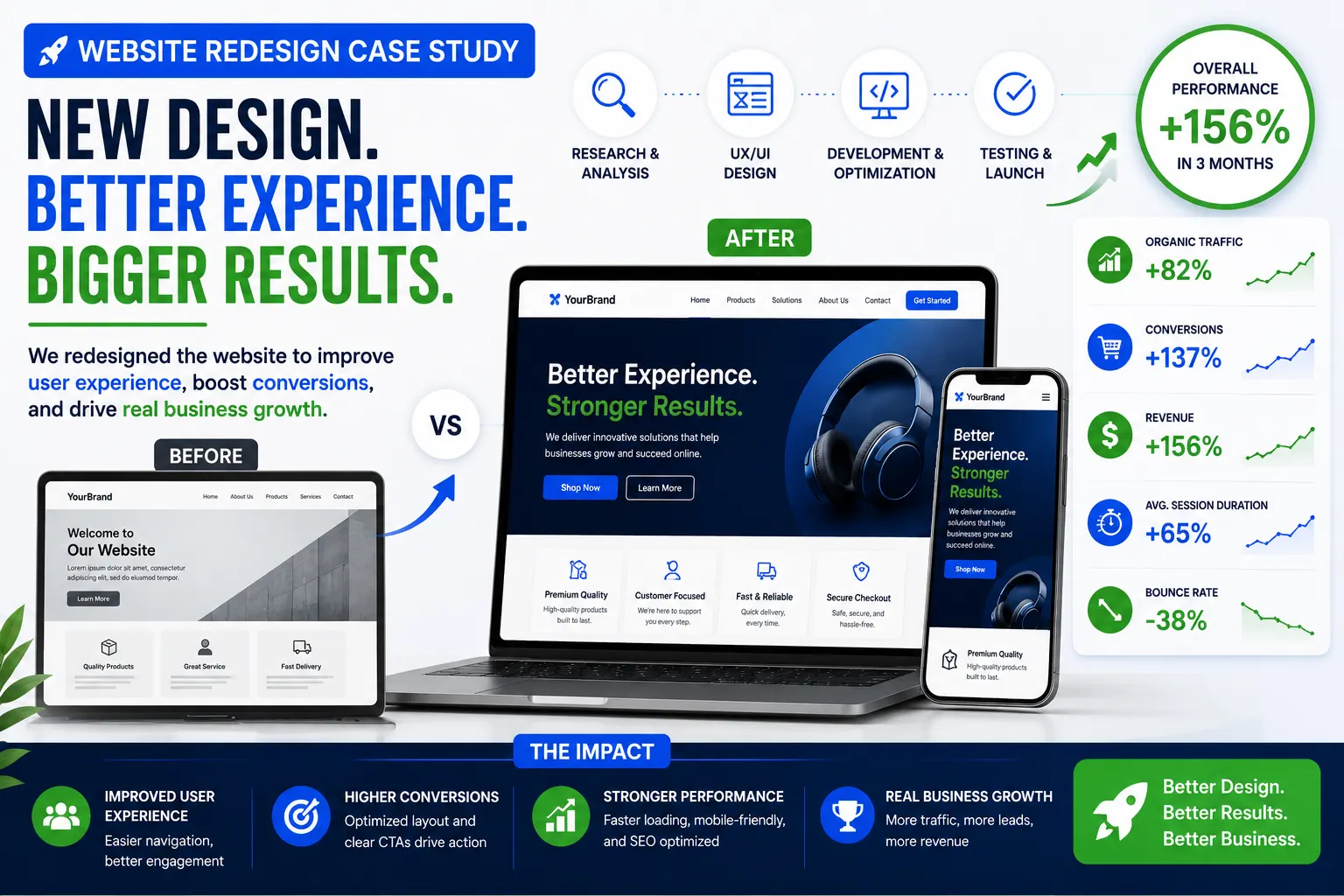
After implementing the redesign and SEO improvements, the website experienced measurable performance improvements across multiple metrics.
Key Improvements Included
- Increased organic traffic
- Lower bounce rates
- Improved mobile usability
- Faster loading speeds
- Better engagement duration
- Higher lead generation rates
- Improved keyword visibility
- Better conversion performance
The redesign demonstrated how combining SEO, UI/UX, performance optimization, and content strategy can create stronger long-term digital growth.
Important Lessons Learned From the Website Redesign Project
Several important insights emerged throughout the redesign process.
SEO Should Be Integrated From the Beginning
Many redesign projects fail because SEO is added after development. Integrating SEO planning early prevents traffic loss and improves long-term search performance.
User Experience Directly Impacts Conversions
Even visually attractive websites can fail if navigation and usability are poor. User journey optimization should remain central throughout the redesign process.
Performance Optimization Is Essential
Modern users expect websites to load quickly across all devices. Performance improvements directly affect SEO rankings and customer satisfaction.
Content Quality Matters More Than Ever
Long-form, well-structured, informative content helps improve both user trust and search engine visibility. Thin content no longer performs effectively in competitive industries.
How Businesses Can Prepare for a Successful Website Redesign
Businesses planning a redesign should begin with a complete audit instead of focusing only on visual inspiration.
A successful redesign process usually includes:
- Technical SEO analysis
- Competitor research
- User behavior analysis
- Conversion optimization planning
- Mobile usability testing
- Content restructuring
- Speed optimization
- SEO migration planning
Working with experienced developers and SEO professionals helps reduce risks during migration and redesign implementation.
Businesses looking for SEO-focused redesign and development services can explore:
- Ecommerce Website Development Guide
- Web Development Company
- SEO Company in Coimbatore
Conclusion
A strategic website redesign can significantly improve business performance when executed with the right balance of SEO, user experience, performance optimization, and conversion-focused planning.
Modern websites must do more than simply look attractive. They need to load quickly, perform well on mobile devices, support search visibility, guide users effectively, and help businesses generate measurable results.
This website redesign case study highlights the importance of combining technical expertise, design strategy, and SEO best practices throughout the entire redesign process. Businesses that approach redesign strategically often achieve stronger organic visibility, better customer engagement, and improved lead generation over time.
As digital competition continues to increase, investing in a modern, SEO-friendly, conversion-focused website becomes essential for sustainable online growth.