Blog
Website Redesign Guide for Ecommerce

Introduction to Website Redesign Guide for Ecommerce
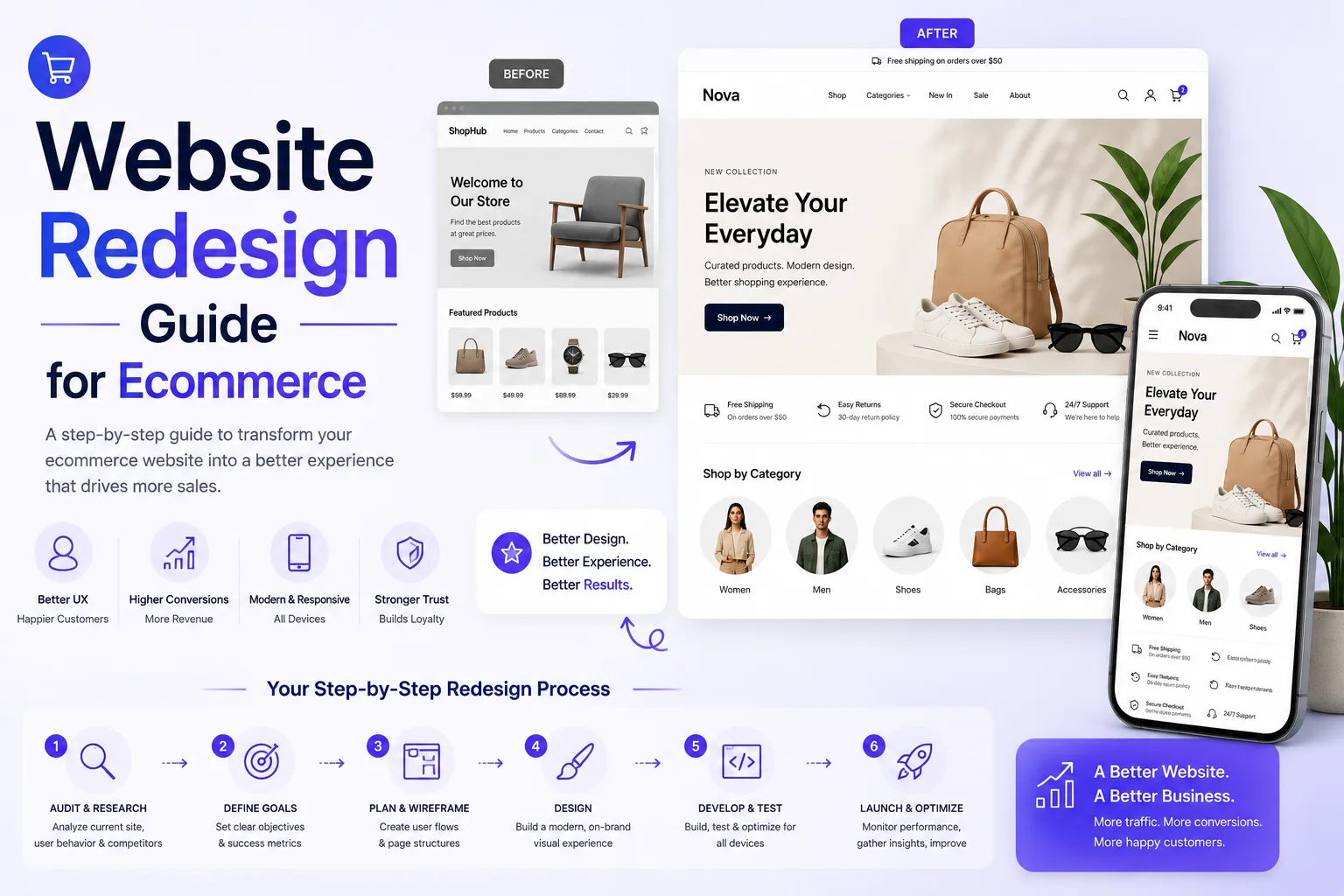
Ecommerce website redesign is no longer simply about changing colors, updating layouts, or refreshing branding visuals. In modern digital commerce, redesigning an ecommerce website is a strategic business decision that directly affects user experience, search engine rankings, conversion rates, customer trust, mobile usability, and long-term revenue growth. As customer expectations continue evolving rapidly, ecommerce businesses must regularly evaluate whether their websites still meet modern usability standards and support current business goals effectively.
Many ecommerce businesses initially launch websites that perform reasonably well during early growth stages. However, over time, technology changes, customer behavior evolves, design trends shift, and competitors improve their online shopping experiences. Websites that once felt modern can eventually become outdated, slow, difficult to navigate, or poorly optimized for mobile users. When this happens, ecommerce businesses often experience:
- Lower conversion rates
- Higher bounce rates
- Reduced customer engagement
- Poor mobile performance
- SEO ranking declines
- Increased cart abandonment
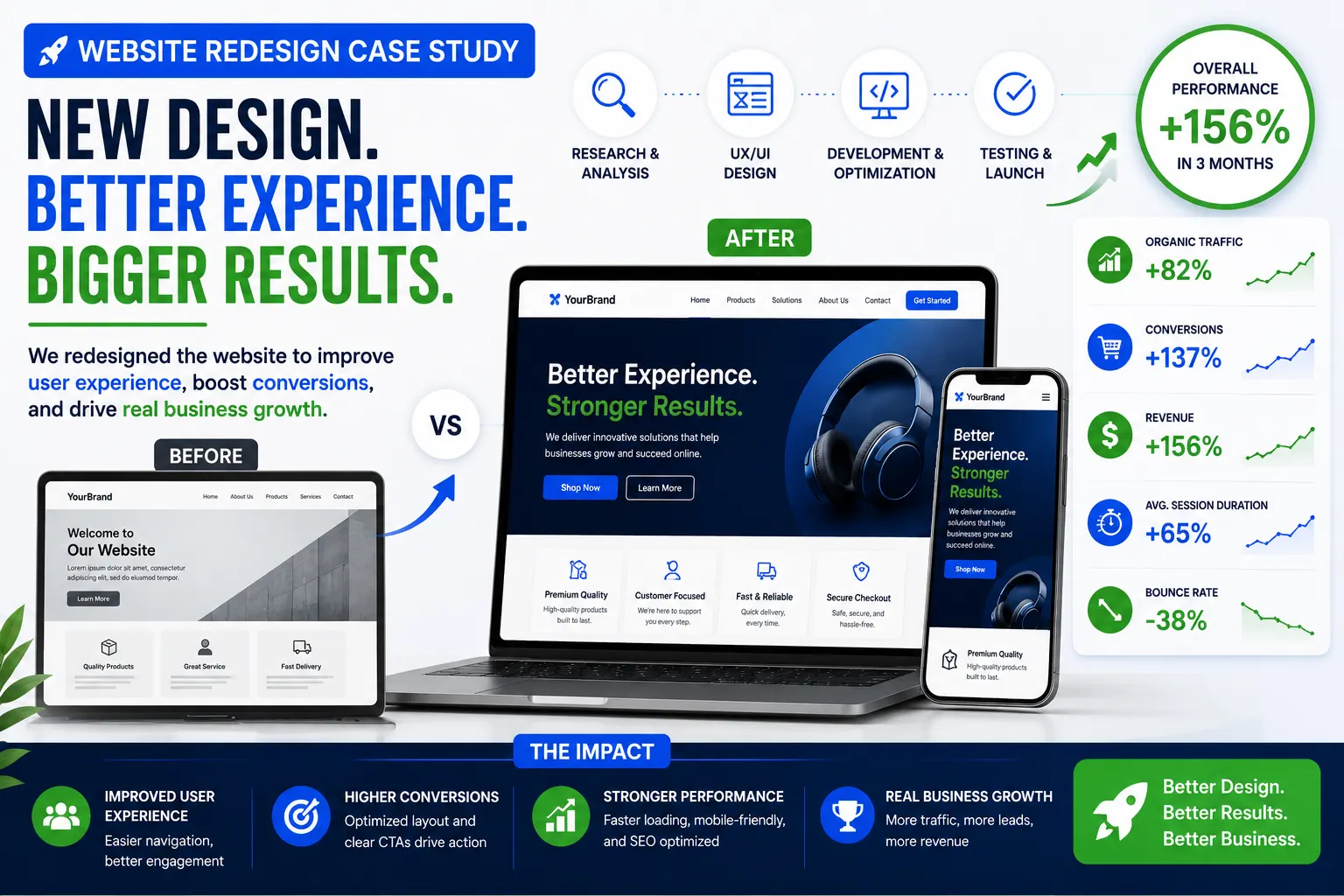
A strategic ecommerce website redesign helps businesses modernize digital experiences while improving usability, branding, performance, scalability, and conversion optimization. Successful redesign projects focus not only on aesthetics but also on customer psychology, UX strategy, SEO preservation, mobile-first design, technical performance, and ecommerce growth opportunities.
Redesigning an ecommerce website involves balancing several important priorities simultaneously:
- Preserving SEO rankings
- Improving user experience
- Enhancing mobile responsiveness
- Increasing conversions
- Strengthening branding
- Improving speed performance
- Supporting future scalability
This comprehensive guide explores ecommerce website redesign strategies in depth, including redesign planning, UX optimization, SEO migration strategies, mobile-first redesign principles, navigation improvements, homepage optimization, checkout usability, performance enhancements, accessibility, branding, and future ecommerce redesign trends shaping online commerce in 2026 and beyond.
Why Ecommerce Website Redesign Matters
An ecommerce website serves as the digital storefront of a business. Just like physical retail stores require periodic renovations and modernization, ecommerce websites also require ongoing improvements to remain competitive and effective.
Customer expectations continue increasing every year. Modern shoppers expect ecommerce websites to provide:
- Fast loading speed
- Mobile-friendly usability
- Intuitive navigation
- Simplified checkout
- Personalized experiences
- Modern visual design
- Secure browsing environments
When websites fail to meet these expectations, customers often leave quickly and purchase from competitors instead.
Website redesign becomes important when ecommerce businesses experience issues such as:
- Outdated visual appearance
- Poor mobile UX
- Low conversion rates
- Weak SEO performance
- Slow page speed
- Navigation confusion
- Checkout friction
A successful ecommerce redesign improves:
- Customer trust
- Brand perception
- Product discoverability
- Mobile usability
- SEO visibility
- Conversion optimization
Modern ecommerce redesign projects should focus on long-term business growth rather than simply cosmetic changes.
Signs Your Ecommerce Website Needs a Redesign
Many ecommerce businesses delay redesign projects until problems become severe enough to affect revenue directly. However, identifying redesign warning signs early helps businesses remain competitive and avoid long-term usability problems.
Common signs an ecommerce website needs redesign include:
Outdated Visual Design
Websites using outdated layouts, typography, or visual styles often reduce customer trust and brand perception.
Modern ecommerce customers associate professional design quality with:
- Product quality
- Business reliability
- Payment security
Outdated websites can make ecommerce brands appear less trustworthy.
Poor Mobile Performance
Mobile traffic now dominates ecommerce browsing behavior globally.
If a website:
- Loads slowly on smartphones
- Has difficult navigation
- Uses tiny tap targets
- Displays broken layouts
customers are likely to leave quickly.
Mobile-first redesign strategies are now essential for ecommerce growth.
High Bounce Rates
High bounce rates often indicate:
- Weak UX
- Slow loading speed
- Confusing navigation
- Poor relevance
- Weak first impressions
Redesign projects frequently focus on improving homepage UX and navigation clarity to reduce bounce rates.
Declining Conversion Rates
Low or declining conversions often suggest:
- Poor usability
- Weak trust signals
- Checkout friction
- Mobile UX problems
Redesign optimization can significantly improve ecommerce conversion performance.
Slow Website Speed
Slow-loading ecommerce websites negatively affect:
- SEO rankings
- User engagement
- Customer retention
- Checkout completion
Modern redesign projects should prioritize performance optimization heavily.
Weak SEO Structure
Older ecommerce websites often contain:
- Broken internal linking
- Poor URL structures
- Duplicate content
- Weak category architecture
SEO-focused redesign strategies improve both usability and organic visibility.
Setting Goals for an Ecommerce Redesign
Before redesigning an ecommerce website, businesses should define clear strategic goals.
Without clear objectives, redesign projects often become overly focused on aesthetics instead of business performance improvements.
Common ecommerce redesign goals include:
- Increasing conversions
- Improving mobile UX
- Modernizing branding
- Enhancing SEO performance
- Improving navigation
- Increasing average order value
- Reducing bounce rates
- Improving speed performance
Every redesign decision should align with measurable business outcomes.
Businesses should identify:
- Current pain points
- Customer frustrations
- Technical limitations
- UX weaknesses
before beginning redesign work.
Clear redesign goals help prioritize development resources effectively and improve project outcomes.
Ecommerce Website Audit Before Redesign
A comprehensive website audit is one of the most important steps before redesigning an ecommerce website.
Website audits help businesses identify:
- UX issues
- Technical problems
- SEO weaknesses
- Conversion bottlenecks
- Mobile usability issues
Important ecommerce audit areas include:
- Navigation structure
- Mobile responsiveness
- Product page UX
- Checkout usability
- Page speed
- SEO performance
- Accessibility compliance
Analytics tools help businesses understand:
- User behavior
- Bounce rates
- Conversion paths
- Traffic sources
- Device usage
Businesses redesigning ecommerce stores often work with professional ecommerce UX and SEO specialists such as Sri Hayavadhana Solutions to conduct usability audits and build conversion-focused redesign strategies tailored for long-term growth.
Mobile-First Ecommerce Redesign
Mobile-first design has become essential because smartphones now generate the majority of ecommerce traffic.
Older ecommerce websites often prioritize desktop layouts and later attempt to adapt them for mobile screens. This approach frequently creates usability problems.
Mobile-first ecommerce redesign focuses on:
- Simplified layouts
- Thumb-friendly navigation
- Fast loading speed
- Responsive design
- Minimal friction
Strong mobile UX improves:
- Customer engagement
- Conversion rates
- SEO visibility
- Customer retention
Mobile redesign best practices include:
- Sticky navigation
- Large tap targets
- Optimized typography
- Mobile-friendly checkout
- Responsive product imagery
Mobile optimization should remain a primary redesign priority rather than an afterthought.
Homepage Redesign Strategies
The homepage creates the first impression customers have about an ecommerce business.
Effective homepage redesign focuses on:
- Visual hierarchy
- Product discoverability
- Brand messaging
- Trust building
- Mobile usability
Many ecommerce homepages fail because they:
- Feel cluttered
- Overload users with promotions
- Lack clear navigation
- Hide important products
Homepage redesign often includes:
- Simplified hero sections
- Better product categorization
- Improved CTA visibility
- Cleaner layouts
- Faster loading visuals
Modern ecommerce homepage design prioritizes:
- Minimalism
- Speed
- Product focus
- Customer clarity
Strong homepage UX improves both engagement and conversion performance.
Navigation Redesign Best Practices
Navigation plays a major role in ecommerce usability and product discovery.
Many ecommerce websites require navigation redesign because of:
- Confusing category structures
- Poor mobile menus
- Weak search systems
- Overloaded navigation bars
Strong navigation redesign strategies focus on:
- Simplicity
- Searchability
- Mobile usability
- Product discoverability
Effective ecommerce navigation includes:
- Mega menus
- Predictive search
- Clear categories
- Breadcrumb navigation
- Filtering systems
Search functionality is especially important because many users prefer searching directly instead of browsing categories manually.
Navigation redesign improves:
- Product exploration
- Customer satisfaction
- SEO crawlability
- Conversion rates
Product Page Redesign Strategies
Product pages directly influence purchasing decisions.
Weak product page UX often creates:
- Customer hesitation
- Lower add-to-cart rates
- Reduced trust
Product page redesign projects commonly focus on:
- Better imagery
- Improved descriptions
- Cleaner layouts
- Mobile optimization
- Trust-building elements
Strong ecommerce product pages typically include:
- Multiple product images
- Lifestyle photography
- Customer reviews
- Delivery details
- Return policy visibility
- Clear CTA buttons
Modern product pages emphasize:
- Simplicity
- Trust
- Visual storytelling
- Mobile responsiveness
Product page UX improvements frequently create measurable conversion growth.
Checkout Redesign and Conversion Optimization
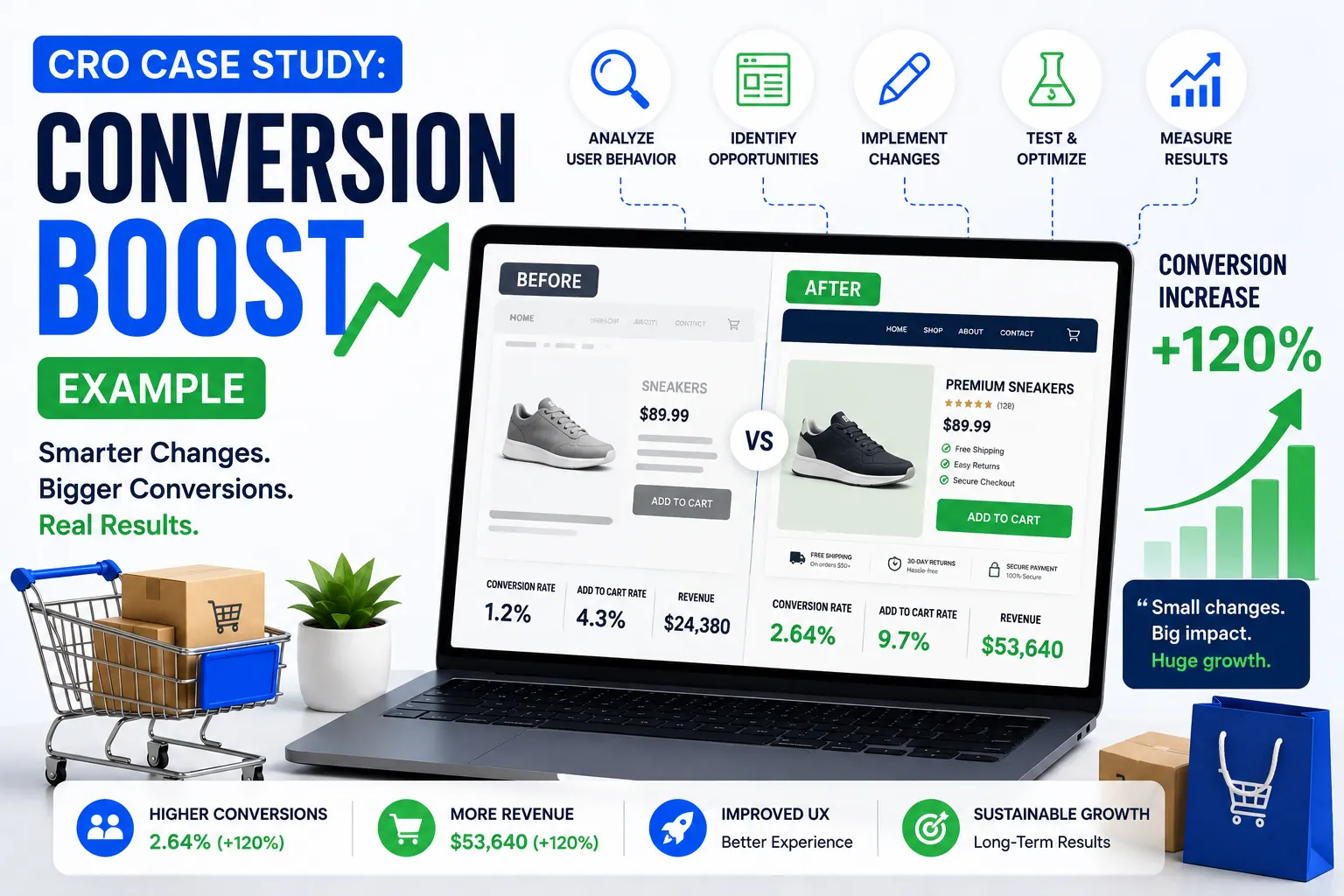
Checkout optimization is one of the most impactful areas of ecommerce redesign because checkout friction directly affects revenue generation.
Many ecommerce stores lose sales because of:
- Long forms
- Hidden fees
- Mandatory account creation
- Weak mobile UX
- Limited payment methods
Checkout redesign best practices include:
- Guest checkout
- Simplified forms
- Digital wallet support
- Transparent pricing
- Progress indicators
Modern ecommerce customers expect checkout systems to feel:
- Fast
- Secure
- Simple
- Mobile-friendly
Checkout redesign often delivers some of the highest ROI among ecommerce UX improvements.
Ecommerce SEO During Redesign
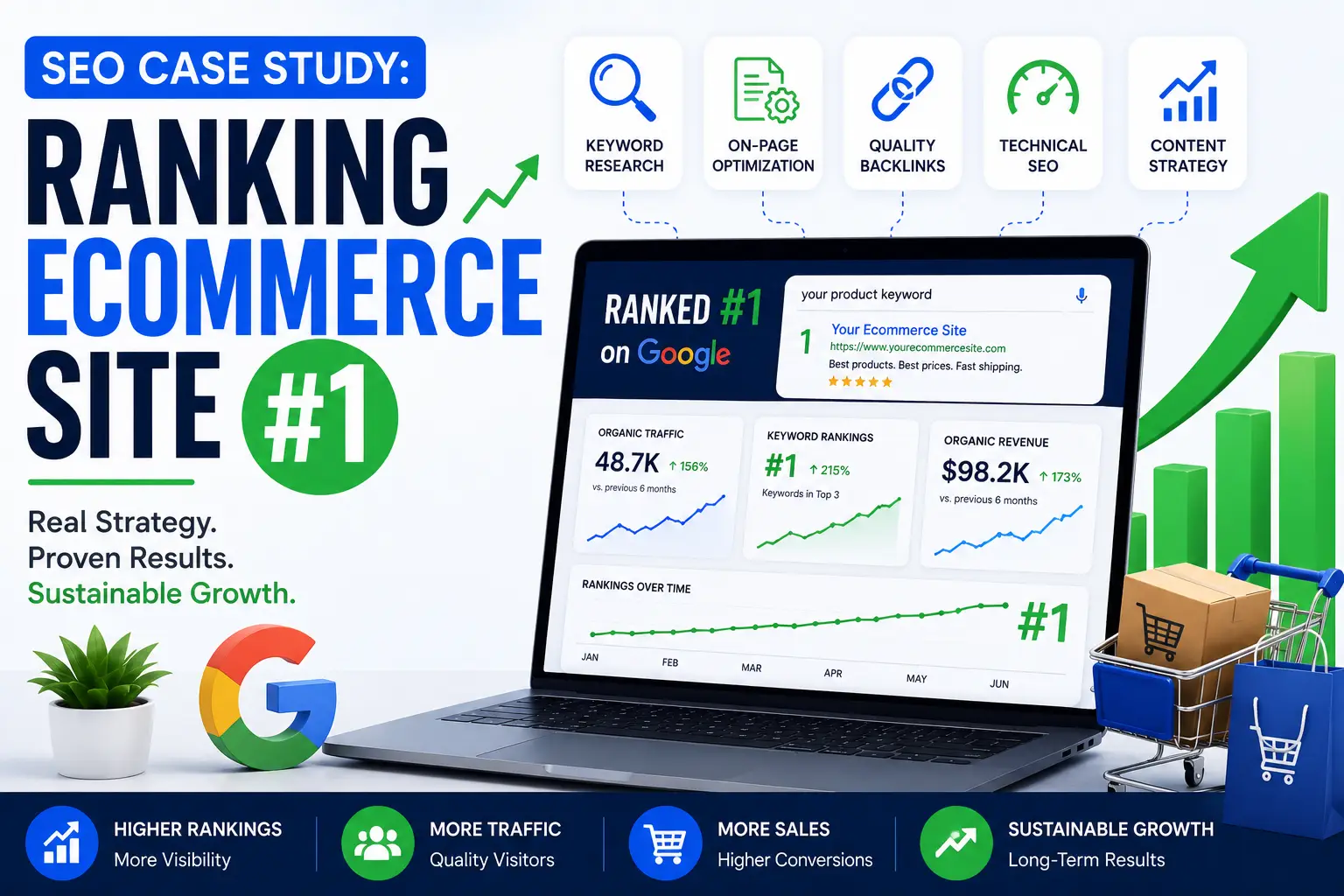
SEO preservation is one of the most critical aspects of ecommerce redesign projects.
Poorly executed redesigns can cause:
- Traffic loss
- Ranking drops
- Broken links
- Indexing issues
SEO-focused redesign strategies include:
- URL preservation
- Redirect mapping
- Internal linking optimization
- Metadata migration
- Structured data implementation
Businesses should carefully preserve:
- High-ranking pages
- Valuable backlinks
- Existing category structures
Helpful SEO resources include:
SEO should remain integrated into redesign strategy from the beginning rather than added later.
Improving Website Speed During Redesign
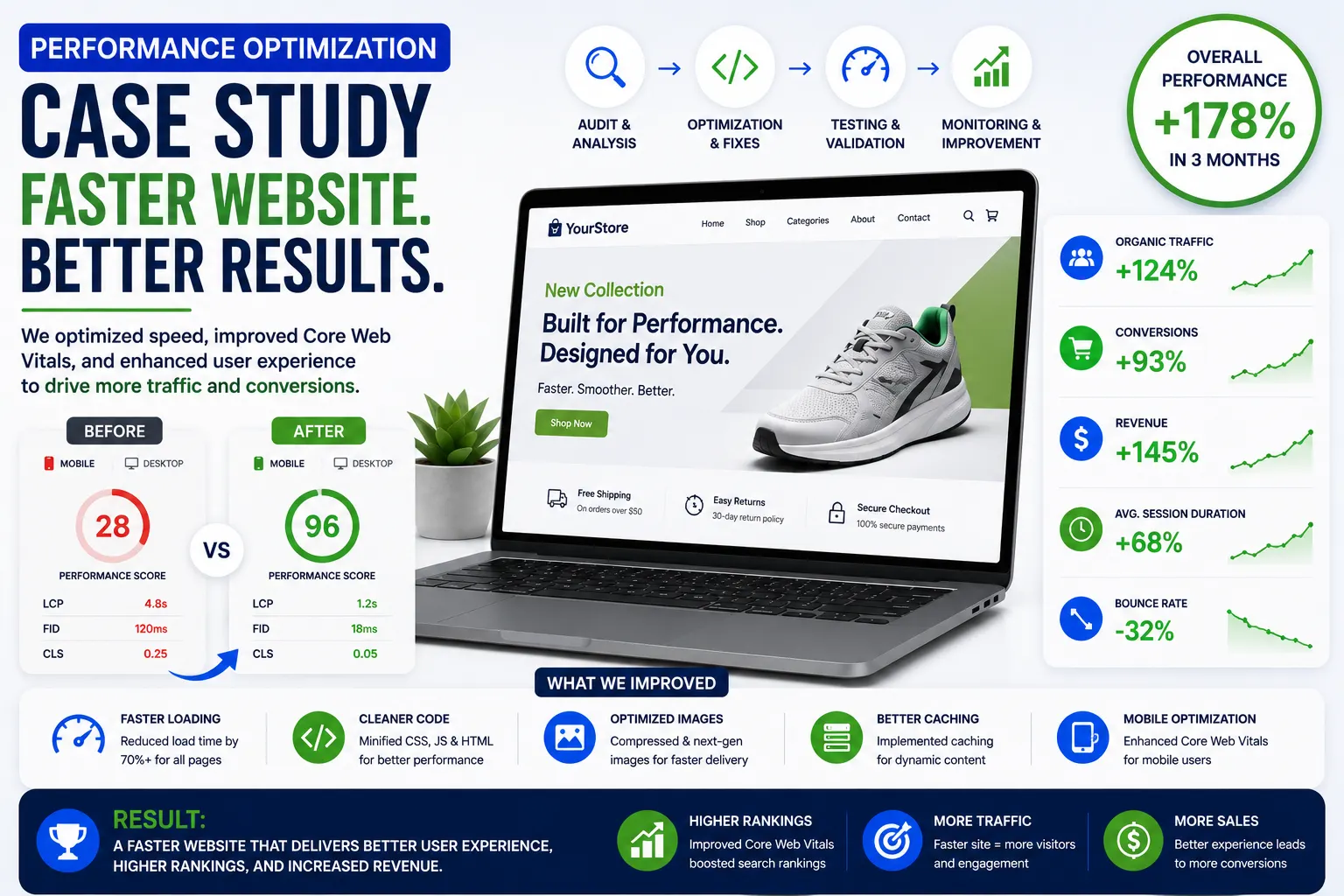
Performance optimization is one of the most important ecommerce redesign priorities.
Modern customers expect ecommerce websites to load almost instantly.
Slow websites increase:
- Bounce rates
- Cart abandonment
- Customer frustration
Redesign projects often improve speed through:
- Image optimization
- Code cleanup
- Better hosting
- CDN integration
- Lazy loading
- Script reduction
Fast ecommerce websites improve:
- SEO rankings
- User engagement
- Conversion rates
- Customer satisfaction
Helpful speed optimization resource:
Performance optimization should remain central to every ecommerce redesign strategy.
Branding and Visual Identity Redesign
Branding strongly influences customer trust and emotional connection.
Many ecommerce redesign projects involve:
- Logo updates
- Typography improvements
- New color systems
- Improved imagery
- Consistent visual identity
Strong branding improves:
- Recognition
- Professionalism
- Customer trust
- Emotional engagement
Visual consistency across:
- Homepage
- Product pages
- Checkout systems
- Marketing materials
creates stronger ecommerce experiences.
Brand redesign should align with:
- Target audience
- Product positioning
- Industry expectations
Modern ecommerce branding increasingly prioritizes minimalism and mobile usability.
Accessibility in Ecommerce Redesign
Accessibility ensures ecommerce websites remain usable for all customers, including users with disabilities.
Accessible redesign strategies improve:
- SEO performance
- Customer inclusivity
- Usability standards
Important accessibility considerations include:
- Contrast ratios
- Keyboard navigation
- Alt text
- Screen reader compatibility
- Readable typography
Accessibility-focused redesign improves overall UX for all users.
Helpful accessibility resource:
Accessibility should remain integrated into redesign planning from the beginning.
Testing Before Launching the Redesigned Website
Testing is essential before launching a redesigned ecommerce website.
Pre-launch testing helps identify:
- UX problems
- Broken links
- Mobile issues
- Checkout errors
- Performance bottlenecks
Important testing areas include:
- Mobile responsiveness
- Search functionality
- Navigation usability
- Checkout flows
- Speed performance
User testing provides valuable feedback regarding:
- Confusing layouts
- Friction points
- Navigation clarity
Businesses should avoid launching redesigns without thorough QA testing.
Post-Launch Optimization
Ecommerce redesign is not a one-time project.
After launch, businesses should continuously monitor:
- Conversion rates
- Bounce rates
- SEO rankings
- Mobile performance
- Customer behavior
Analytics tools help identify:
- UX problems
- Traffic changes
- Conversion bottlenecks
Helpful analytics resources include:
Continuous optimization helps ecommerce businesses improve performance over time.
Common Ecommerce Redesign Mistakes
Many ecommerce redesign projects fail because businesses focus too heavily on aesthetics instead of usability and performance.
Common redesign mistakes include:
- Ignoring SEO
- Removing important pages
- Overcomplicating navigation
- Weak mobile optimization
- Excessive animations
- Slow-loading layouts
Another major mistake is redesigning without analyzing customer behavior data.
Successful redesign projects remain:
- User-centered
- Data-driven
- Conversion-focused
Businesses should avoid redesigning solely based on visual trends.
Future Trends in Ecommerce Website Redesign
Ecommerce redesign trends continue evolving rapidly as customer expectations and technologies change.
Future ecommerce redesign trends may include:
- AI-driven personalization
- Voice commerce integration
- Augmented reality shopping
- Dynamic interfaces
- Progressive web apps
- Immersive mobile experiences
Minimalist and mobile-first design trends will likely continue growing because customers increasingly prioritize speed and simplicity.
AI-powered UX systems may eventually personalize:
- Layouts
- Product recommendations
- Navigation systems
- Content displays
based on individual customer behavior.
Businesses adapting early to emerging ecommerce trends will remain more competitive in future digital commerce markets.
Final Thoughts
Ecommerce website redesign is one of the most important investments online businesses can make to improve usability, customer experience, SEO visibility, branding, and conversion performance.
Successful redesign projects combine:
- UX optimization
- Mobile-first design
- SEO preservation
- Performance optimization
- Branding strategy
- Accessibility improvements
Modern customers expect ecommerce websites to feel fast, intuitive, trustworthy, and easy to navigate across every device.
Businesses investing in strategic ecommerce redesign often achieve:
- Higher conversion rates
- Better customer retention
- Improved SEO rankings
- Stronger engagement
- Increased revenue
Whether redesigning Shopify stores, WooCommerce websites, Magento platforms, or custom ecommerce systems, businesses should prioritize long-term usability and customer satisfaction rather than simply visual appearance.
The future of ecommerce redesign will increasingly revolve around personalized experiences, AI-driven interfaces, mobile convenience, accessibility, and frictionless customer journeys. Businesses that continuously improve digital experiences will remain competitive and profitable in the evolving ecommerce landscape.