Blog
How to Start an Ecommerce Business in India (2026)

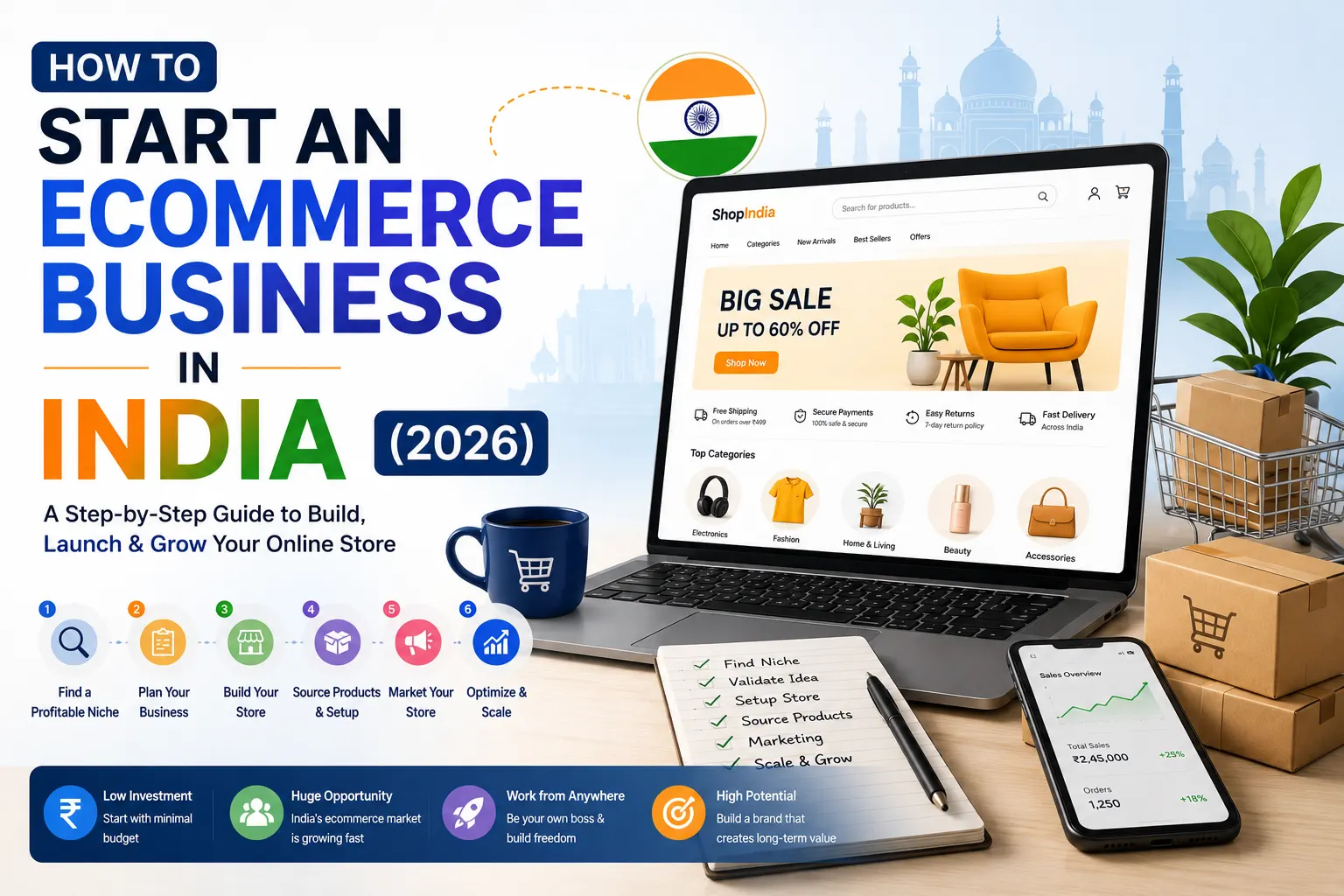
Introduction to How to Start an Ecommerce Business in India (2026)
India’s ecommerce industry is experiencing massive growth, creating unprecedented opportunities for entrepreneurs, retailers, manufacturers, wholesalers, and digital-first startups. Increasing internet penetration, affordable smartphones, digital payment adoption, faster logistics networks, and changing consumer behavior have transformed how Indian customers shop online. From metropolitan cities to tier-2 and tier-3 towns, ecommerce adoption continues expanding rapidly across categories such as fashion, electronics, groceries, beauty products, home decor, fitness equipment, digital products, and niche specialty items.
In 2026, starting an ecommerce business in India is more accessible than ever before. Entrepreneurs no longer require massive infrastructure investments or large retail showrooms to launch successful online stores. With the right business strategy, product selection, ecommerce platform, branding, digital marketing approach, and customer experience optimization, businesses can build scalable ecommerce brands capable of serving customers across India and even globally.
However, while opportunities are increasing, ecommerce competition is also becoming more intense. Thousands of online stores launch every year, but only a small percentage manage to achieve sustainable long-term growth. Many ecommerce businesses struggle because they:
- Choose the wrong products
- Ignore customer experience
- Fail to optimize for mobile users
- Lack branding consistency
- Neglect SEO and digital marketing
- Use poor ecommerce platforms
- Underestimate logistics challenges
Successful ecommerce businesses in India focus not only on selling products but also on creating strong digital experiences, trust-building systems, operational efficiency, and scalable marketing strategies.
Starting an ecommerce business in India requires strategic planning across multiple areas, including:
- Product research
- Business registration
- Ecommerce website development
- Payment gateway setup
- Logistics integration
- SEO optimization
- Social media marketing
- Customer support systems
- Mobile-first UX
This comprehensive guide explains how to start an ecommerce business in India in 2026, including business planning, product selection, ecommerce platform setup, legal requirements, branding strategies, digital marketing, logistics management, SEO optimization, conversion optimization, and future ecommerce trends shaping India’s rapidly growing online commerce industry.
Understanding the Ecommerce Industry in India
India’s ecommerce market has evolved dramatically over the past decade. Earlier, ecommerce was concentrated mainly in large metropolitan cities, but today online shopping is growing rapidly across smaller towns and rural regions as internet access improves.
Several factors are driving ecommerce growth in India:
- Affordable smartphones
- UPI payment adoption
- Improved logistics infrastructure
- Digital literacy growth
- Social media influence
- Expanding internet penetration
Indian consumers are increasingly comfortable purchasing products online across categories such as:
- Fashion
- Electronics
- Beauty products
- Home appliances
- Grocery items
- Furniture
- Health products
- Educational products
The growth of digital payments has also accelerated ecommerce adoption significantly. UPI, wallets, net banking, and card payments have simplified online transactions for millions of users.
In 2026, ecommerce opportunities exist not only for large businesses but also for:
- Small retailers
- Home-based businesses
- Manufacturers
- Content creators
- D2C brands
- Niche startups
Businesses that understand customer behavior, digital marketing, and ecommerce UX have significant growth potential in the Indian market.
Choosing the Right Ecommerce Business Model
Before launching an ecommerce business, entrepreneurs must select the most suitable business model based on budget, inventory management preferences, and long-term goals.
Common ecommerce business models in India include:
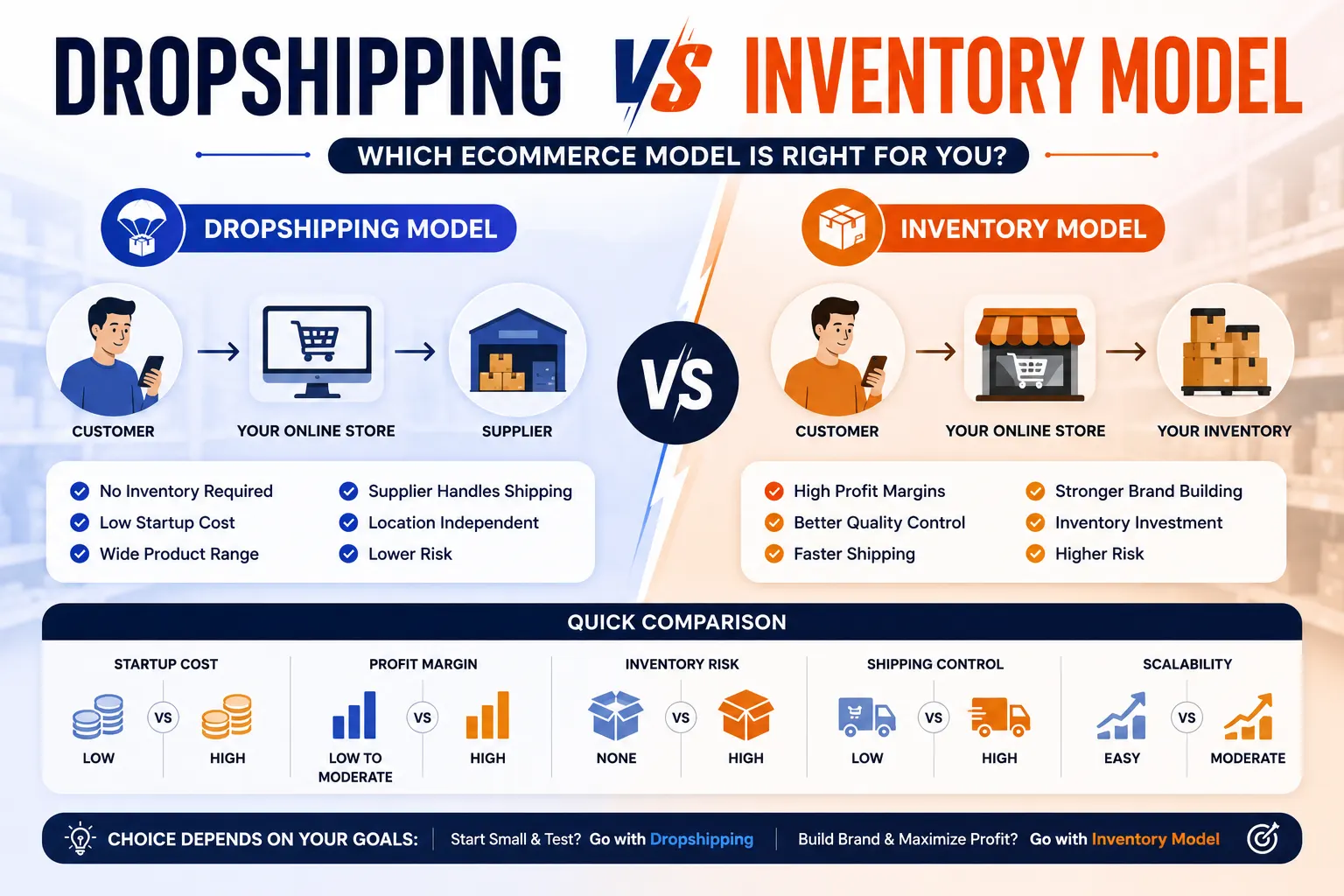
Inventory-Based Ecommerce
In this model, businesses purchase and store inventory before selling products online.
Advantages include:
- Better quality control
- Faster order fulfillment
- Higher profit margins
- Stronger branding opportunities
Challenges include:
- Inventory investment
- Storage costs
- Stock management risks
Inventory-based ecommerce works well for businesses wanting long-term brand building.
Dropshipping
Dropshipping allows businesses to sell products without maintaining inventory.
When customers place orders:
- Suppliers handle packaging
- Suppliers manage shipping
- Businesses focus mainly on marketing and customer acquisition
Advantages include:
- Lower startup investment
- Reduced inventory risk
- Faster launch potential
Challenges include:
- Lower margins
- Supplier dependency
- Quality control limitations
Dropshipping is often suitable for beginners testing ecommerce markets.
Marketplace Selling
Many Indian ecommerce businesses initially sell through marketplaces such as:
- Amazon India
- Flipkart
- Meesho
Advantages include:
- Existing customer traffic
- Easier setup
- Faster sales opportunities
Challenges include:
- High competition
- Marketplace commissions
- Limited brand control
Many successful businesses eventually combine marketplace selling with independent ecommerce websites.
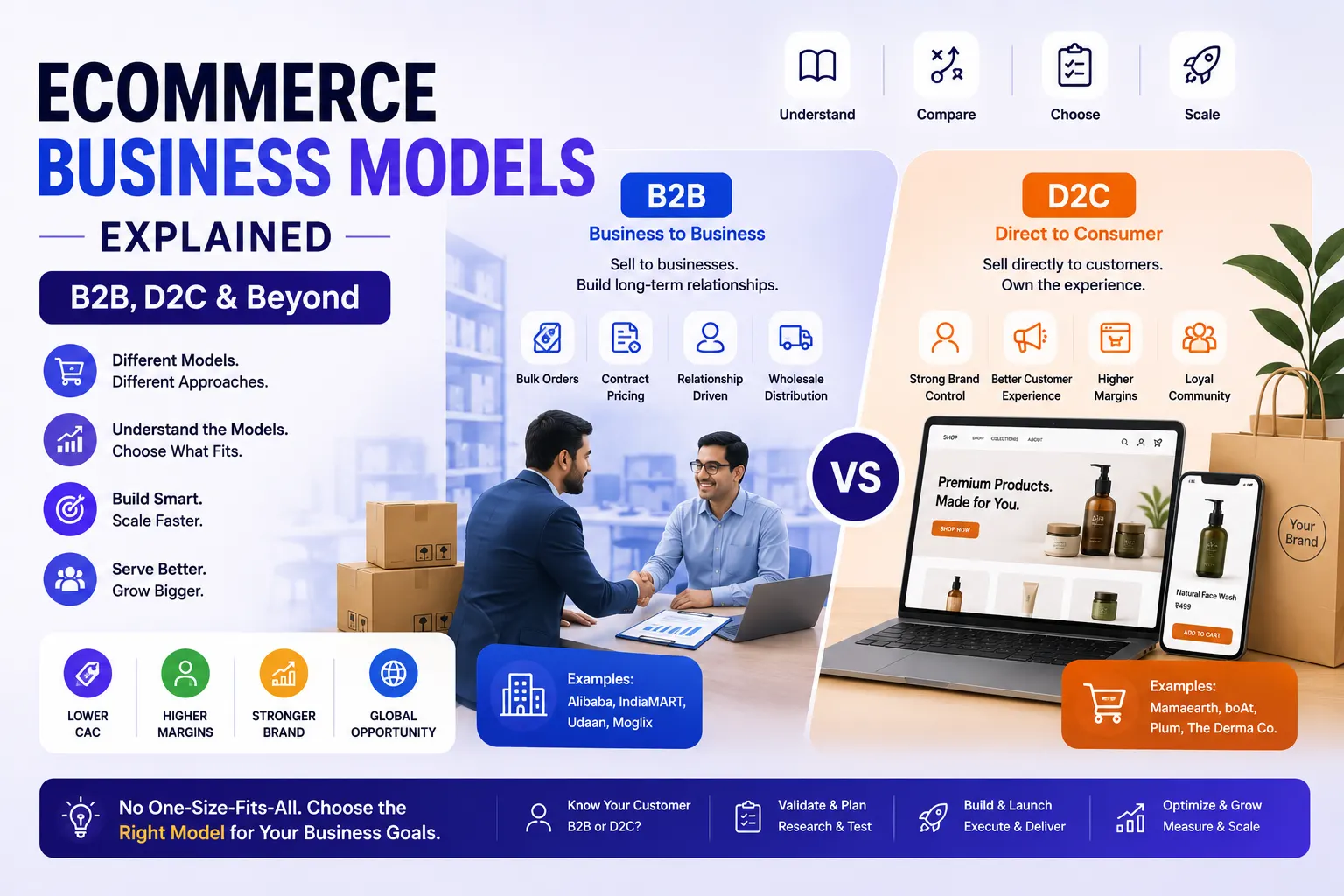
Direct-to-Consumer (D2C)
D2C ecommerce brands sell directly through their own websites rather than relying solely on marketplaces.
Advantages include:
- Full branding control
- Better customer relationships
- Higher margins
- Better customer data ownership
D2C businesses often focus heavily on:
- Branding
- Customer experience
- Social media marketing
- SEO optimization
D2C ecommerce continues growing rapidly in India in 2026.
Selecting the Right Product Category
Product selection is one of the most important decisions when starting an ecommerce business.
Successful ecommerce products often solve specific customer problems or fulfill strong market demand.
Good ecommerce product categories typically include:
- Fashion
- Beauty products
- Electronics accessories
- Fitness products
- Organic foods
- Home decor
- Pet products
- Digital products
- Baby products
When selecting products, businesses should evaluate:
- Market demand
- Competition levels
- Profit margins
- Shipping complexity
- Product uniqueness
Avoid selecting products solely based on trends without analyzing long-term demand potential.
Product research methods include:
- Google Trends analysis
- Marketplace research
- Social media trend monitoring
- Keyword research
- Competitor analysis
Niche-focused ecommerce businesses often perform better than generic stores because they target specific audiences more effectively.
Creating an Ecommerce Business Plan
A detailed business plan helps entrepreneurs organize strategies and make informed decisions before investing heavily.
An ecommerce business plan should include:
- Business goals
- Product strategy
- Target audience analysis
- Branding strategy
- Marketing plans
- Logistics planning
- Budget forecasting
- Revenue projections
A clear business plan improves:
- Strategic clarity
- Operational efficiency
- Investor confidence
- Long-term scalability
Businesses should also define:
- Customer acquisition strategies
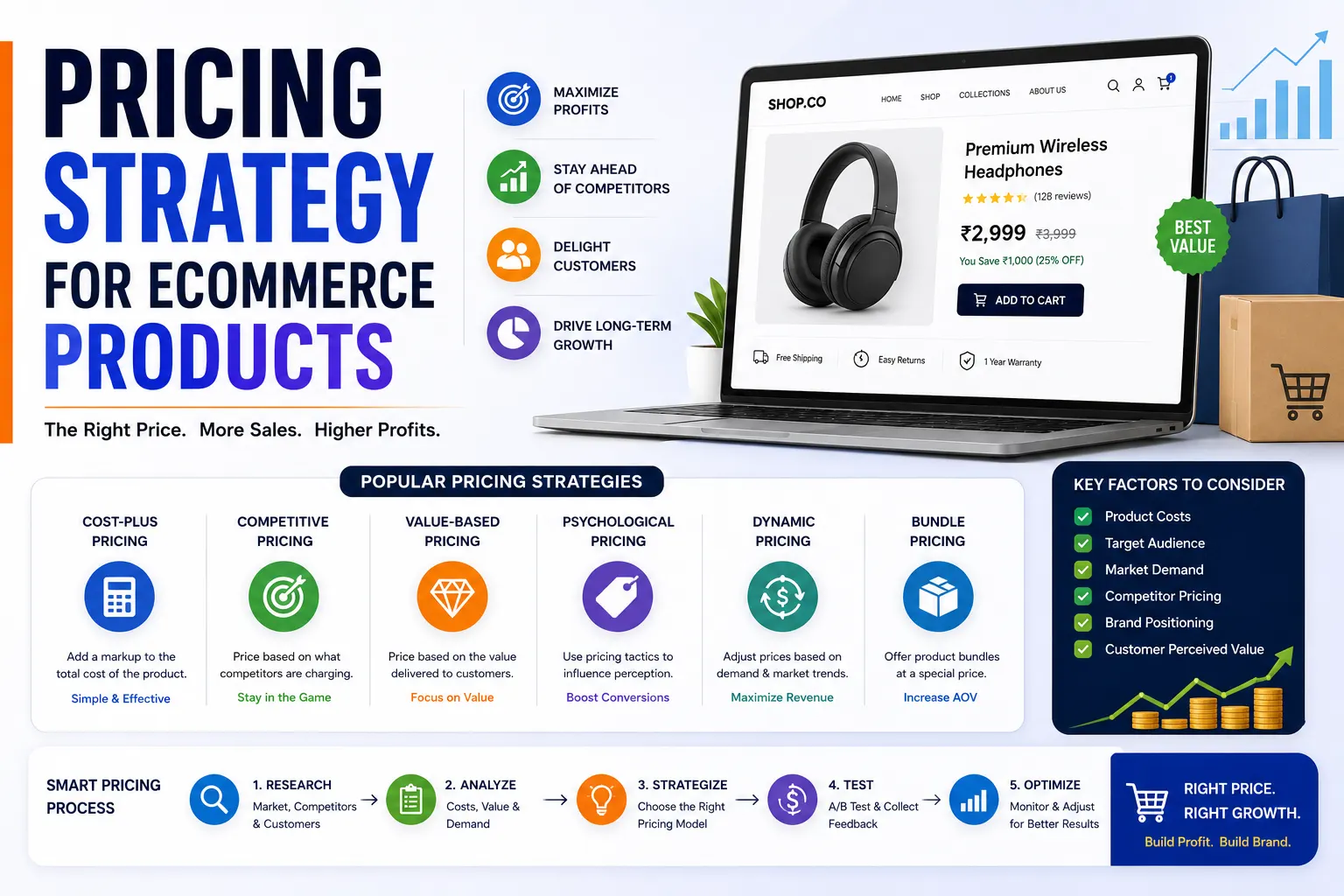
- Pricing models
- Return policies
- Customer support systems
Planning reduces risks and improves decision-making during early growth stages.
Registering an Ecommerce Business in India
Legal registration is important for operating professionally and building customer trust.
Common business structures in India include:
- Sole Proprietorship
- Partnership Firm
- LLP
- Private Limited Company
Business registration affects:
- Tax compliance
- Funding opportunities
- Legal liability
- Operational scalability
Most growing ecommerce businesses eventually prefer Private Limited structures because they support:
- Better scalability
- Investor confidence
- Brand professionalism
Important registrations may include:
- GST registration
- MSME registration
- Trademark registration
- Import-export code (if selling internationally)
Businesses should consult legal and accounting professionals for compliance guidance.
Helpful government resource:
Choosing the Right Ecommerce Platform
Selecting the right ecommerce platform is one of the most important technical decisions.
Popular ecommerce platforms in India include:
- Shopify
- WooCommerce
- Magento
- OpenCart
- Custom ecommerce solutions
Platform selection depends on:
- Budget
- Product catalog size
- Scalability needs
- Technical expertise
- Customization requirements
Shopify
Shopify is beginner-friendly and suitable for:
- D2C brands
- Small businesses
- Fast ecommerce launches
Helpful resource:
WooCommerce
WooCommerce offers:
- Flexibility
- WordPress integration
- SEO advantages
- Customization control
WooCommerce works well for businesses wanting greater design flexibility and content marketing integration.
Helpful resource:
Custom Ecommerce Websites
Custom ecommerce development provides:
- Full scalability
- Unique UX
- Advanced customization
- Performance optimization
Businesses seeking advanced ecommerce UX, SEO-focused architecture, and scalable custom ecommerce solutions often work with professional ecommerce development agencies such as Sri Hayavadhana Solutions.
Ecommerce Website Design Best Practices
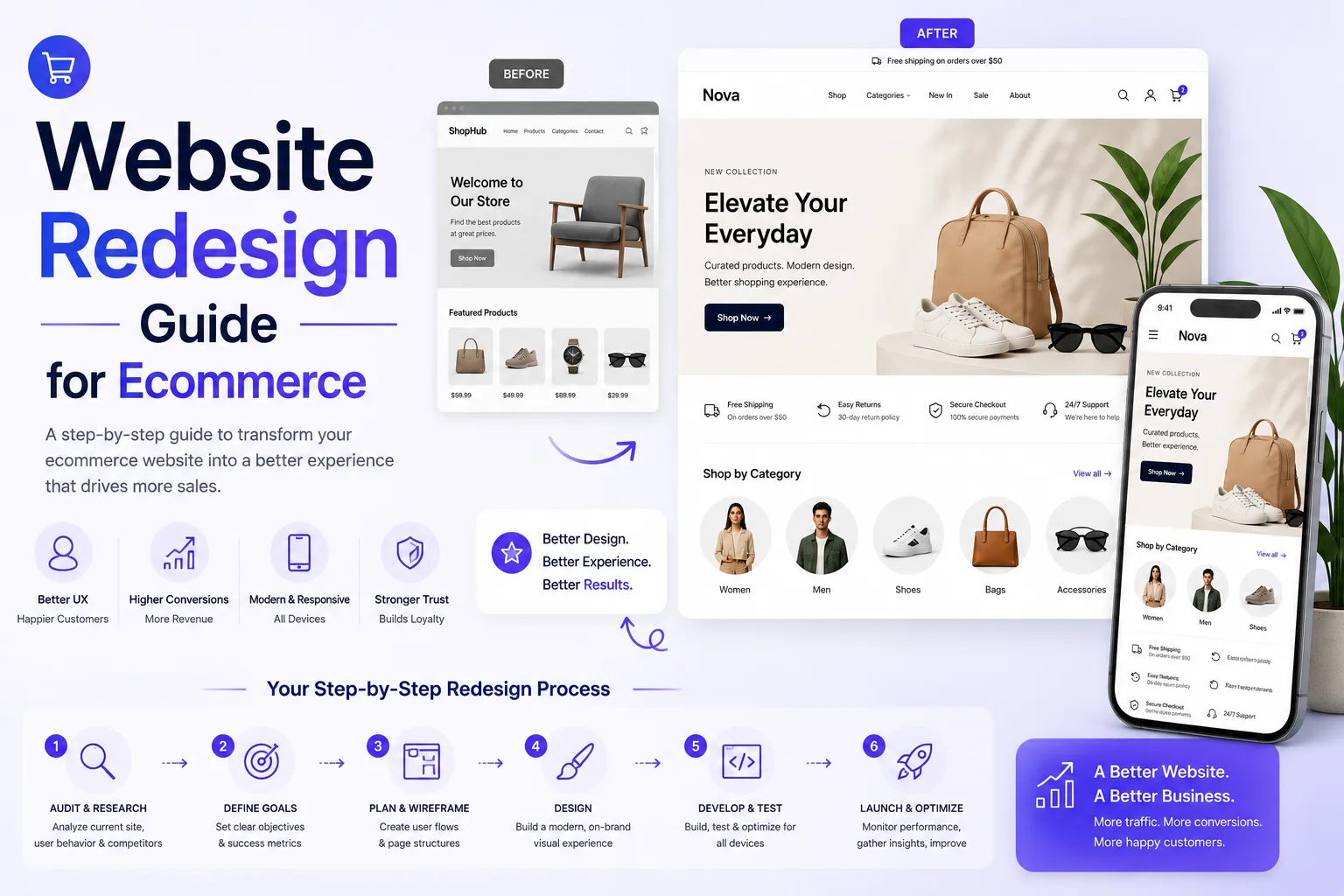
Website design strongly influences customer trust and conversion rates.
Modern ecommerce websites should prioritize:
- Mobile-first UX
- Fast loading speed
- Simple navigation
- Product discoverability
- Trust-building elements
Important ecommerce website sections include:
- Homepage
- Product pages
- Category pages
- About Us
- Contact page
- Policies
Strong ecommerce UX improves:
- Engagement
- SEO performance
- Customer retention
- Conversion rates
Minimalist and speed-focused designs often perform best because they reduce distractions and improve usability.
Mobile Optimization for Ecommerce
Mobile optimization is essential because most Indian ecommerce traffic now comes from smartphones.
Mobile ecommerce UX should prioritize:
- Responsive layouts
- Thumb-friendly navigation
- Fast loading speed
- Simplified checkout
Poor mobile UX can significantly reduce:
- Engagement
- Product discovery
- Conversion rates
Mobile-first ecommerce strategies improve:
- SEO rankings
- Customer satisfaction
- Revenue growth
Businesses should continuously test mobile usability across multiple devices.
Setting Up Payment Gateways
Payment systems are critical for ecommerce trust and operational efficiency.
Popular Indian payment gateways include:
- Razorpay
- Cashfree
- PayU
- PhonePe Payment Gateway
Important payment features include:
- UPI support
- Credit cards
- Debit cards
- Net banking
- Wallet payments
Secure payment systems improve customer confidence significantly.
Payment gateways should support:
- Fast processing
- Mobile optimization
- Refund management
- Fraud protection
Helpful resource:
Logistics and Shipping Management
Logistics directly affects customer satisfaction in ecommerce businesses.
Reliable delivery systems improve:
- Customer trust
- Repeat purchases
- Brand reputation
Popular logistics providers in India include:
- Delhivery
- Shiprocket
- Blue Dart
- XpressBees
Businesses should evaluate:
- Delivery speed
- Shipping costs
- Coverage areas
- COD support
COD remains important in India because many customers still prefer cash-on-delivery options.
Helpful resource:
Ecommerce SEO Strategies
SEO helps ecommerce businesses generate long-term organic traffic.
Strong ecommerce SEO focuses on:
- Keyword optimization
- Internal linking
- Category page SEO
- Product page optimization
- Technical SEO
SEO-friendly ecommerce websites improve:
- Organic visibility
- Customer acquisition
- Brand authority
Important ecommerce SEO practices include:
- Optimized URLs
- Fast loading speed
- Mobile usability
- Structured data
- High-quality content
Helpful SEO resources:
Content marketing also supports ecommerce SEO growth significantly.
Social Media Marketing for Ecommerce
Social media plays a major role in ecommerce customer acquisition.
Popular platforms include:
- YouTube
Social media helps ecommerce businesses:
- Build brand awareness
- Drive traffic
- Engage audiences
- Showcase products
Video content and influencer collaborations often perform especially well.
Social commerce continues growing rapidly in India.
Businesses should maintain consistent branding and content quality across platforms.
Running Paid Ads for Ecommerce Growth
Paid advertising helps ecommerce businesses generate faster traffic and sales.
Popular advertising platforms include:
- Google Ads
- Meta Ads
- YouTube Ads
Paid campaigns can support:
- Product launches
- Retargeting
- Brand awareness
- Conversion growth
Successful ecommerce advertising requires:
- Audience targeting
- Creative testing
- Landing page optimization
- Conversion tracking
Businesses should monitor ROI carefully to maintain profitability.
Building Customer Trust
Trust strongly affects ecommerce conversion rates because customers cannot physically inspect products before purchasing.
Trust-building strategies include:
- Professional website design
- Customer reviews
- Secure payment systems
- Transparent policies
- Clear shipping information
Strong branding and UX also improve trust perception significantly.
Customers prefer ecommerce stores that feel:
- Reliable
- Professional
- Transparent
Trust-building should remain integrated throughout the ecommerce experience.
Customer Support for Ecommerce Businesses
Customer support strongly influences retention and brand reputation.
Effective ecommerce customer support includes:
- Email support
- WhatsApp support
- Chat systems
- Return assistance
Fast and helpful support improves:
- Customer satisfaction
- Repeat purchases
- Brand loyalty
Businesses should clearly communicate:
- Shipping policies
- Refund procedures
- Delivery timelines
Good customer support can significantly differentiate ecommerce brands in competitive markets.
Analytics and Ecommerce Growth Tracking
Analytics help ecommerce businesses understand:
- Customer behavior
- Traffic sources
- Conversion performance
- Product demand
Important ecommerce metrics include:
- Conversion rate
- Bounce rate
- Average order value
- Customer acquisition cost
Helpful analytics tools include:
Data-driven decision-making improves long-term ecommerce scalability.
Common Mistakes New Ecommerce Businesses Make
Many ecommerce businesses struggle because of avoidable mistakes.
Common issues include:
- Choosing poor products
- Ignoring SEO
- Weak mobile UX
- Slow websites
- Poor branding
- Weak customer support
Another major mistake is focusing only on traffic rather than conversion optimization.
Successful ecommerce growth requires balancing:
- Marketing
- UX
- Branding
- Operations
Businesses should continuously test and optimize their ecommerce systems.
Future Trends in Indian Ecommerce
India’s ecommerce industry will continue evolving rapidly over the coming years.
Important future trends may include:
- AI-powered personalization
- Voice commerce
- Faster logistics systems
- Social commerce growth
- AR shopping experiences
- Hyperlocal delivery
Mobile-first ecommerce experiences will remain dominant.
Businesses adopting emerging technologies early will remain more competitive.
D2C ecommerce brands are also expected to continue growing strongly across India.
Final Thoughts
Starting an ecommerce business in India in 2026 offers enormous opportunities for entrepreneurs willing to invest strategically in customer experience, branding, SEO, and operational excellence.
Successful ecommerce businesses focus on:
- Product quality
- Mobile-first UX
- SEO optimization
- Fast delivery
- Customer trust
- Strong branding
Modern ecommerce customers expect online shopping experiences to feel fast, intuitive, secure, and reliable across every device.
Businesses that continuously optimize digital experiences and customer satisfaction often achieve:
- Higher conversions
- Better retention
- Stronger SEO rankings
- Long-term brand growth
Whether launching small niche stores, D2C brands, or scalable ecommerce startups, entrepreneurs should prioritize long-term customer experience and operational efficiency rather than short-term sales alone.
The future of ecommerce in India will increasingly revolve around personalization, mobile convenience, AI-driven experiences, and frictionless customer journeys. Businesses that adapt early to evolving ecommerce trends will remain competitive and profitable in India’s rapidly expanding digital commerce ecosystem.