Blog
Pricing Strategy for Ecommerce Products

Introduction to Pricing Strategy for Ecommerce Products
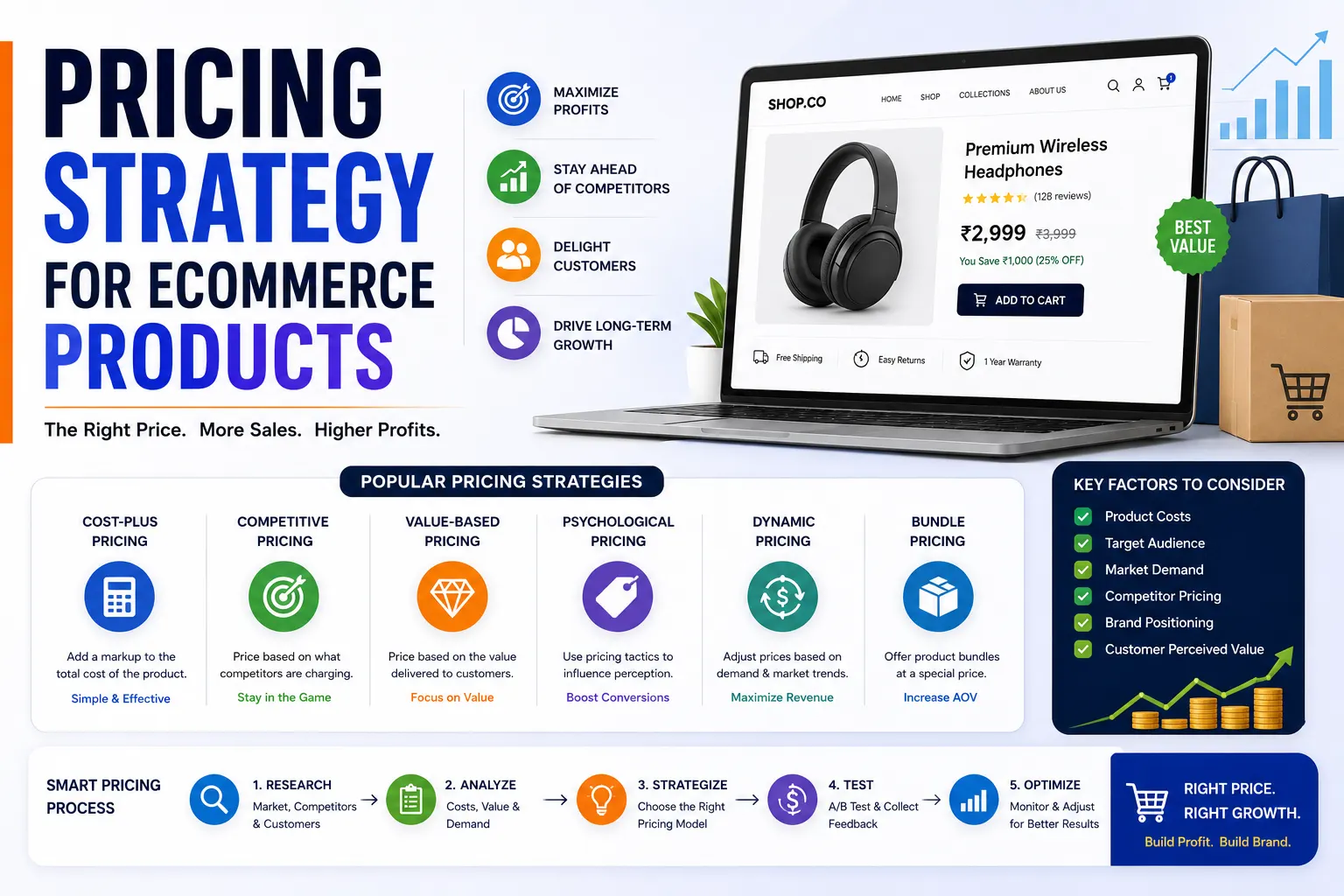
Pricing is one of the most important factors influencing ecommerce success. In online retail, customers can compare prices across multiple websites within seconds, making pricing strategy a critical element of conversion optimization, profitability, customer perception, and long-term business growth. Ecommerce businesses that fail to develop effective pricing strategies often struggle with low profit margins, weak customer retention, poor brand positioning, and unsustainable operational models.
In 2026, ecommerce pricing has become more complex than simply choosing a product cost and adding a markup percentage. Modern ecommerce businesses must balance several factors simultaneously, including:
- Customer psychology
- Competitor pricing
- Brand positioning
- Operational costs
- Shipping expenses
- Advertising budgets
- Market demand
- Conversion optimization
Pricing strategy directly affects:
- Revenue generation
- Customer acquisition
- Profitability
- Brand perception
- Customer loyalty
- Conversion rates
- Average order value
A product priced too high may reduce conversions, while pricing products too low can damage profitability and reduce perceived product quality. Successful ecommerce pricing requires strategic balance between value perception and business sustainability.
Modern ecommerce customers are increasingly informed and price-conscious. They compare products across marketplaces, social media ads, search engines, and competitor websites before making purchasing decisions. Because of this, ecommerce pricing strategy now involves more than mathematics alone. It also includes psychology, branding, customer trust, and user experience optimization.
Different ecommerce businesses use different pricing models depending on:
- Product category
- Target audience
- Brand positioning
- Operational costs
- Market competition
Luxury brands, discount marketplaces, D2C startups, subscription businesses, and wholesale ecommerce stores all approach pricing differently because customer expectations vary across industries and business models.
This comprehensive guide explores pricing strategy for ecommerce products in depth, including pricing models, customer psychology, competitive pricing, profit margin analysis, dynamic pricing, discount strategies, D2C pricing, marketplace pricing, mobile ecommerce pricing UX, SEO considerations, and future pricing trends shaping ecommerce growth globally.
Why Pricing Strategy Matters in Ecommerce
Pricing directly influences how customers perceive products and brands. In ecommerce, price is not only a transactional factor but also a psychological signal.
Customers often associate pricing with:
- Product quality
- Brand value
- Trustworthiness
- Exclusivity
- Reliability
Pricing affects nearly every aspect of ecommerce performance, including:
- Conversion rates
- Revenue growth
- Customer retention
- Advertising ROI
- Brand positioning
An ineffective pricing strategy can create several problems:
- Reduced profitability
- Weak brand perception
- Cart abandonment
- Lower customer trust
- Unsustainable operations
Successful ecommerce pricing strategies balance:
- Customer expectations
- Business profitability
- Competitive positioning
- Long-term growth
Modern ecommerce businesses should treat pricing as a strategic business function rather than a simple calculation exercise.
Understanding Ecommerce Pricing Psychology
Pricing psychology plays a major role in ecommerce purchasing behavior because customers often make emotional purchasing decisions rather than purely logical ones.
Customers interpret pricing emotionally based on:
- Presentation
- Comparisons
- Branding
- Discounts
- Context
Effective pricing psychology helps ecommerce businesses improve:
- Conversion rates
- Perceived value
- Customer trust
- Average order value
Several psychological pricing principles influence ecommerce success.
Charm Pricing Strategy
Charm pricing refers to pricing products slightly below rounded numbers.
Examples include:
- ₹999 instead of ₹1000
- ₹499 instead of ₹500
This pricing technique works because customers subconsciously focus on the first digit.
Charm pricing is extremely common in ecommerce because it creates stronger value perception.
It is particularly effective for:
- Fashion products
- Electronics
- Consumer goods
- Discount campaigns
However, luxury brands sometimes avoid charm pricing because rounded pricing may feel more premium.
Anchor Pricing Strategy
Anchor pricing involves displaying a higher original price next to the discounted price.
For example:
- Original price: ₹5000
- Sale price: ₹3499
This creates a perception of:
- Savings
- Better value
- Urgency
Anchor pricing is commonly used during:
- Seasonal sales
- Limited-time offers
- Product launches
Customers evaluate discounted prices relative to the original anchor value.
Effective anchor pricing improves conversion rates significantly when implemented ethically.
Premium Pricing Strategy
Premium pricing positions products as:
- High-quality
- Exclusive
- Luxury-focused
Premium pricing often works well for:
- Designer fashion
- Luxury electronics
- Organic products
- Premium skincare
- High-end accessories
Premium pricing strategies rely heavily on:
- Branding
- Product presentation
- Customer trust
- Visual quality
Businesses using premium pricing must deliver:
- Excellent UX
- Strong packaging
- Superior customer service
because customers expect premium experiences alongside premium prices.
Competitive Pricing Strategy
Competitive pricing involves setting product prices based on competitor pricing analysis.
Many ecommerce businesses monitor:
- Marketplace pricing
- Competitor websites
- Seasonal discounts
- Promotional campaigns
Competitive pricing helps businesses remain attractive in crowded markets.
However, competing purely on price can reduce profitability significantly.
Businesses should avoid constant price wars unless supported by:
- Strong operational efficiency
- Large-scale volume advantages
Successful ecommerce businesses often compete through:
- Branding
- Customer experience
- Faster delivery
- Product quality
rather than pricing alone.
Cost-Plus Pricing Strategy
Cost-plus pricing is one of the simplest ecommerce pricing methods.
In this model:
- Product cost is calculated.
- Desired profit margin is added.
For example:
- Product cost: ₹500
- Desired margin: 40%
- Selling price: ₹700
Cost-plus pricing helps ensure profitability.
However, relying solely on cost-plus pricing may ignore:
- Customer perception
- Competitor pricing
- Market demand
Successful ecommerce pricing strategies balance cost analysis with customer psychology and market positioning.
Dynamic Pricing in Ecommerce
Dynamic pricing refers to adjusting prices based on:
- Demand
- Competition
- Inventory levels
- Seasonal trends
- Customer behavior
Large ecommerce companies frequently use dynamic pricing systems powered by AI and automation.
Examples include:
- Airline ticket pricing
- Hotel pricing
- Marketplace price adjustments
Dynamic pricing helps businesses:
- Maximize revenue
- Improve inventory management
- Respond to market trends
However, excessive price fluctuations may reduce customer trust if not handled carefully.
Transparency remains important in ecommerce pricing strategies.
Value-Based Pricing Strategy
Value-based pricing focuses on perceived customer value rather than product cost alone.
This approach works especially well for:
- D2C brands
- Specialized products
- Problem-solving products
- Premium experiences
Businesses using value-based pricing focus heavily on:
- Branding
- Storytelling
- Customer experience
- Emotional positioning
Customers may willingly pay higher prices when they perceive stronger value.
Value-based pricing is often more profitable than competing solely on low pricing.
Penetration Pricing Strategy
Penetration pricing involves setting lower prices initially to:
- Attract customers
- Gain market share
- Build awareness
This strategy is common among:
- New ecommerce brands
- Marketplace sellers
- Competitive product launches
Penetration pricing can accelerate early growth but may reduce profitability temporarily.
Businesses should avoid remaining permanently dependent on ultra-low pricing.
Long-term sustainability requires balancing growth with profitability.
Ecommerce Pricing and Branding
Pricing strongly influences brand perception.
Customers often judge product quality based partly on pricing.
Very low pricing may create perceptions such as:
- Poor quality
- Low reliability
- Weak durability
On the other hand, higher pricing often communicates:
- Exclusivity
- Premium quality
- Better customer service
Brand positioning should align with pricing strategy.
Businesses developing strong ecommerce branding and conversion-focused UX often work with professional ecommerce strategy and web development specialists such as Sri Hayavadhana Solutions to build ecommerce websites optimized for pricing psychology, mobile UX, customer trust, and conversion performance.
Marketplace Pricing vs D2C Pricing
Pricing strategies differ between marketplaces and D2C ecommerce stores.
Marketplace Pricing
Marketplace ecommerce platforms such as:
- Amazon
- Flipkart
- Meesho
often involve intense pricing competition.
Marketplace customers compare products rapidly, making pricing extremely important.
Marketplace sellers often compete through:
- Discounts
- Fast delivery
- Reviews
- Sponsored listings
Margins may become lower because of:
- Platform commissions
- Advertising costs
- Pricing competition
D2C Pricing
D2C ecommerce brands have greater control over:
- Branding
- Customer experience
- Product positioning
D2C brands can often maintain stronger pricing power through:
- Emotional branding
- Better UX
- Product differentiation
Successful D2C pricing focuses on:
- Perceived value
- Brand storytelling
- Customer trust
rather than competing only on low pricing.
Discount Pricing Strategy
Discounts are among the most widely used ecommerce pricing tactics.
Common ecommerce discount strategies include:
- Percentage discounts
- Buy-one-get-one offers
- Bundle pricing
- Flash sales
- Seasonal promotions
Discounts help:
- Increase conversions
- Clear inventory
- Attract new customers
However, excessive discounting may:
- Reduce profit margins
- Weaken brand perception
- Train customers to wait for sales
Businesses should use discounts strategically rather than constantly.
Bundle Pricing Strategy
Bundle pricing combines multiple products into one offer at a slightly lower combined price.
Examples include:
- Skincare kits
- Electronics bundles
- Clothing sets
Bundle pricing helps:
- Increase average order value
- Improve product discovery
- Move slow inventory
Customers often perceive bundles as:
- Better value
- Convenient purchasing
Bundle strategies work especially well for complementary products.
Subscription Pricing Strategy
Subscription ecommerce is growing rapidly across categories such as:
- Beauty products
- Fitness supplements
- Coffee
- Pet products
- Digital services
Subscription pricing creates:
- Recurring revenue
- Predictable cash flow
- Higher customer retention
Businesses should ensure subscription pricing remains:
- Transparent
- Flexible
- Customer-friendly
Subscription fatigue can occur if customers feel locked into poor-value plans.
Shipping Costs and Pricing Strategy
Shipping strongly affects ecommerce conversion rates.
Unexpected shipping charges often increase:
- Cart abandonment
- Customer frustration
Businesses commonly use:
- Free shipping thresholds
- Flat-rate shipping
- Included shipping pricing
Many ecommerce brands increase product pricing slightly to support “free shipping” offers.
Customers often respond positively to:
- Transparent pricing
- Predictable delivery costs
Shipping strategy should align with overall pricing structure and customer expectations.
Pricing Strategy for Mobile Ecommerce
Mobile ecommerce UX strongly influences how customers perceive pricing.
Mobile pricing presentation should prioritize:
- Clarity
- Visibility
- Simplicity
Important mobile pricing elements include:
- Readable typography
- Clear discounts
- Visible savings
- Easy CTA visibility
Poor mobile pricing UX can reduce conversions significantly.
Modern ecommerce customers browse products rapidly on smartphones, making pricing presentation especially important.
International Pricing Strategy
Global ecommerce businesses often require localized pricing strategies.
International pricing considerations include:
- Currency conversion
- Local competition
- Import duties
- Shipping costs
- Regional purchasing power
Localized pricing improves:
- Customer trust
- Conversion performance
- International scalability
Businesses should also consider cultural pricing psychology differences across regions.
Ecommerce Pricing and SEO
Pricing indirectly affects ecommerce SEO because:
- Conversion rates influence engagement metrics
- Competitive pricing improves click-through rates
- Structured pricing data improves search visibility
SEO-friendly ecommerce pages should include:
- Clear pricing
- Product schema markup
- Mobile optimization
- Fast loading speed
Helpful SEO resource:
Pricing strategy should support overall ecommerce UX and SEO goals.
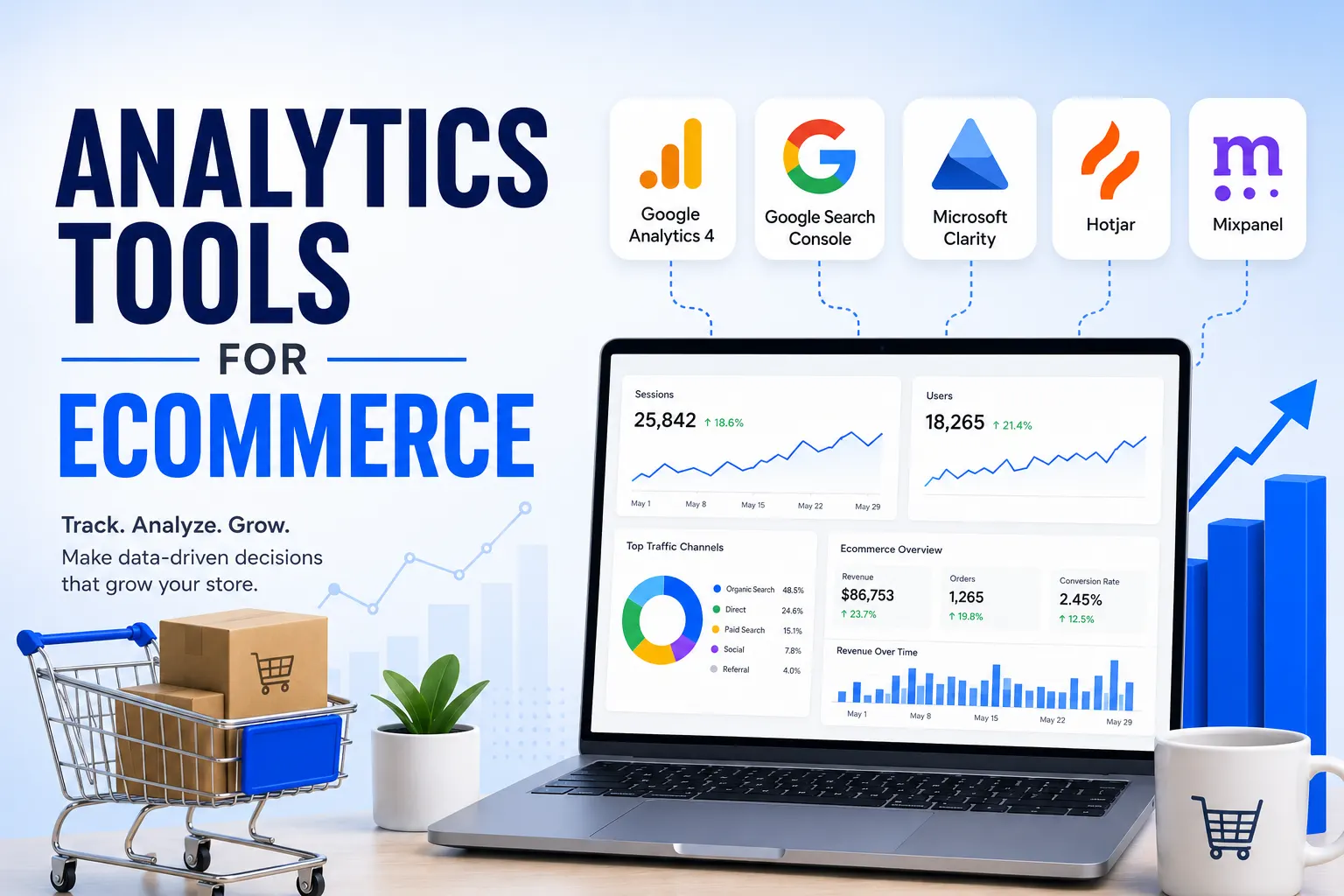
Analytics and Pricing Optimization
Successful ecommerce pricing requires continuous testing and optimization.
Businesses should monitor:
- Conversion rates
- Cart abandonment
- Average order value
- Customer retention
- Advertising ROI
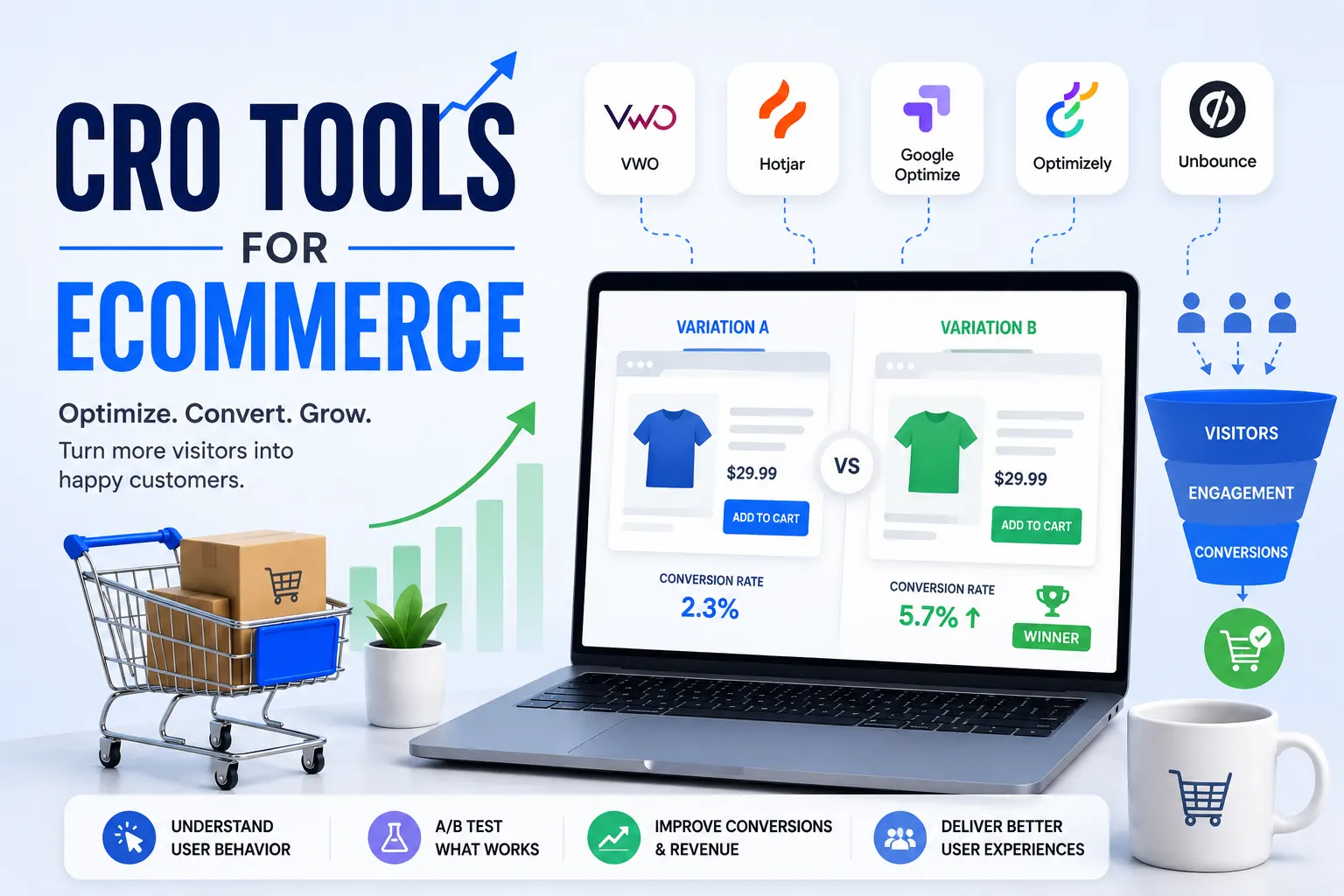
A/B testing helps evaluate:
- Pricing variations
- Discount effectiveness
- Bundle performance
Helpful analytics resources include:
Data-driven pricing optimization improves long-term profitability.
Common Ecommerce Pricing Mistakes
Many ecommerce businesses struggle because of poor pricing strategies.
Common pricing mistakes include:
- Competing only on low price
- Ignoring profit margins
- Excessive discounting
- Weak value positioning
- Hidden shipping costs
- Inconsistent pricing
Another major issue is failing to align pricing with brand identity.
Premium brands using aggressive discount pricing may weaken customer trust and perceived exclusivity.
Successful pricing strategies remain:
- Consistent
- Strategic
- Customer-focused
Future Trends in Ecommerce Pricing
Ecommerce pricing strategies continue evolving rapidly.
Future trends may include:
- AI-powered dynamic pricing
- Personalized pricing experiences
- Subscription growth
- Real-time pricing optimization
- Behavioral pricing systems
AI systems may eventually optimize pricing based on:
- Customer behavior
- Demand forecasting
- Inventory levels
- Competitor analysis
Businesses adopting advanced pricing technologies early may achieve stronger profitability and operational efficiency.
Final Thoughts
Pricing strategy plays a central role in ecommerce success because it influences profitability, customer psychology, brand perception, conversion rates, and long-term business growth.
Successful ecommerce pricing strategies balance:
- Customer value perception
- Operational sustainability
- Competitive positioning
- Brand identity
Modern ecommerce businesses should treat pricing as a strategic growth tool rather than simply assigning numbers to products.
Whether operating:
- D2C brands
- Marketplace stores
- Subscription businesses
- Wholesale ecommerce operations
pricing decisions should align with:
- Target audience expectations
- Brand positioning
- Customer experience goals
Modern ecommerce customers expect transparent, fair, and value-driven pricing supported by strong UX, mobile optimization, fast delivery, and trustworthy branding.
Businesses continuously optimizing pricing psychology, customer experience, SEO, and operational efficiency often achieve:
- Higher conversions
- Better customer retention
- Stronger profitability
- Long-term brand growth
The future of ecommerce pricing will increasingly revolve around personalization, AI-driven optimization, mobile convenience, and value-focused customer experiences. Businesses that strategically adapt to evolving pricing trends and customer expectations will remain competitive and profitable in the rapidly growing ecommerce industry.