Blog
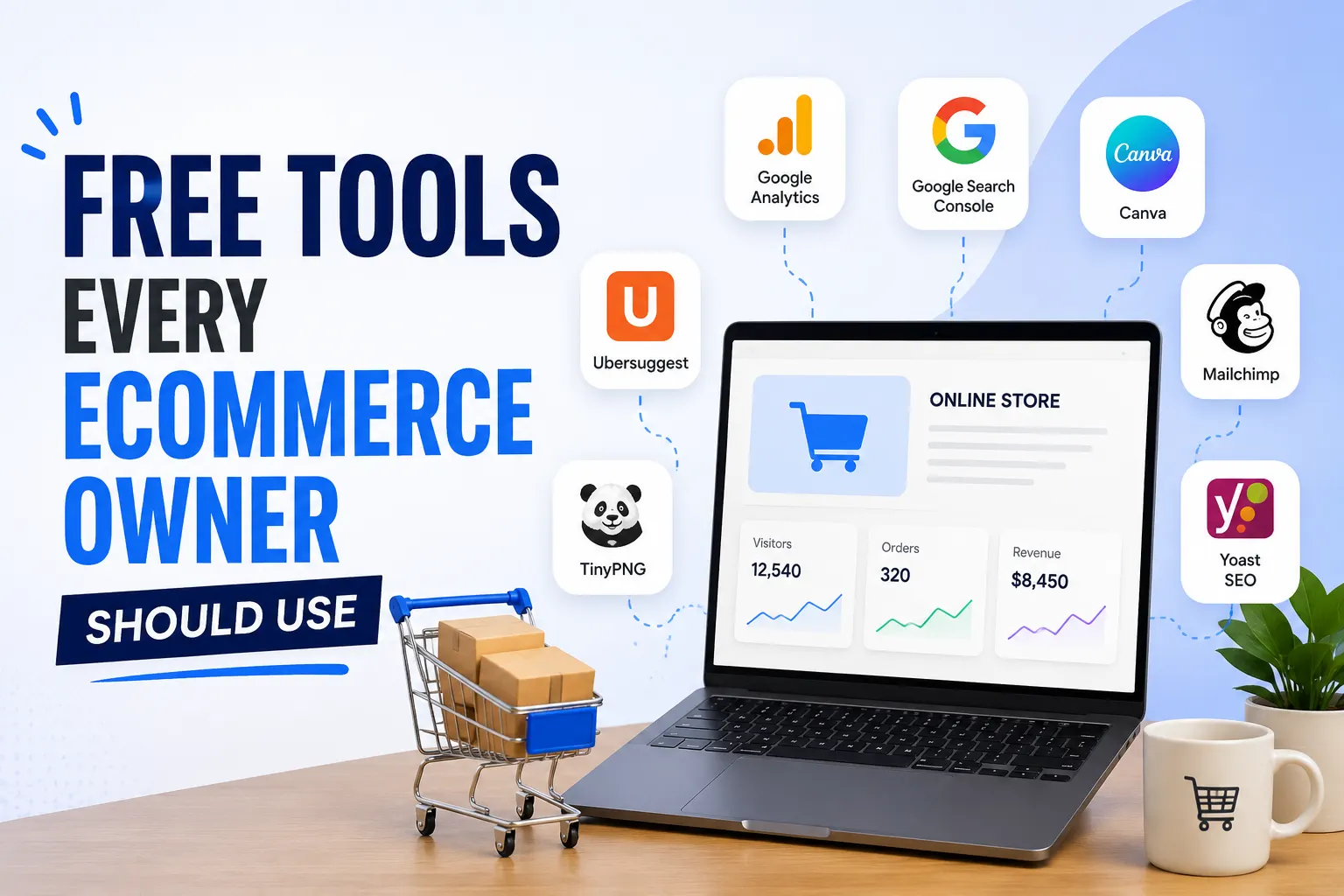
Free Tools Every Ecommerce Owner Should Use

Introduction
Running a successful eCommerce business requires much more than launching an online store and adding products. Modern eCommerce growth depends on data analysis, customer experience optimization, marketing automation, SEO performance, conversion tracking, logistics management, content creation, and operational efficiency.
Many online businesses struggle not because they lack products or demand, but because they lack the right systems and tools to manage growth effectively.
Fortunately, eCommerce owners today have access to a wide range of free tools that help improve productivity, optimize websites, analyze customer behavior, automate marketing tasks, improve search engine visibility, and increase sales without requiring large software budgets.
For startups and growing businesses, free tools are especially valuable because they allow merchants to build scalable workflows before investing in expensive enterprise software.
The right free tools can help eCommerce businesses:
- Improve SEO rankings
- Monitor website performance
- Analyze customer behavior
- Optimize product pages
- Improve email marketing
- Automate workflows
- Manage shipping operations
- Improve customer support
- Increase conversion rates
- Create marketing content
- Track competitor performance
- Improve mobile usability
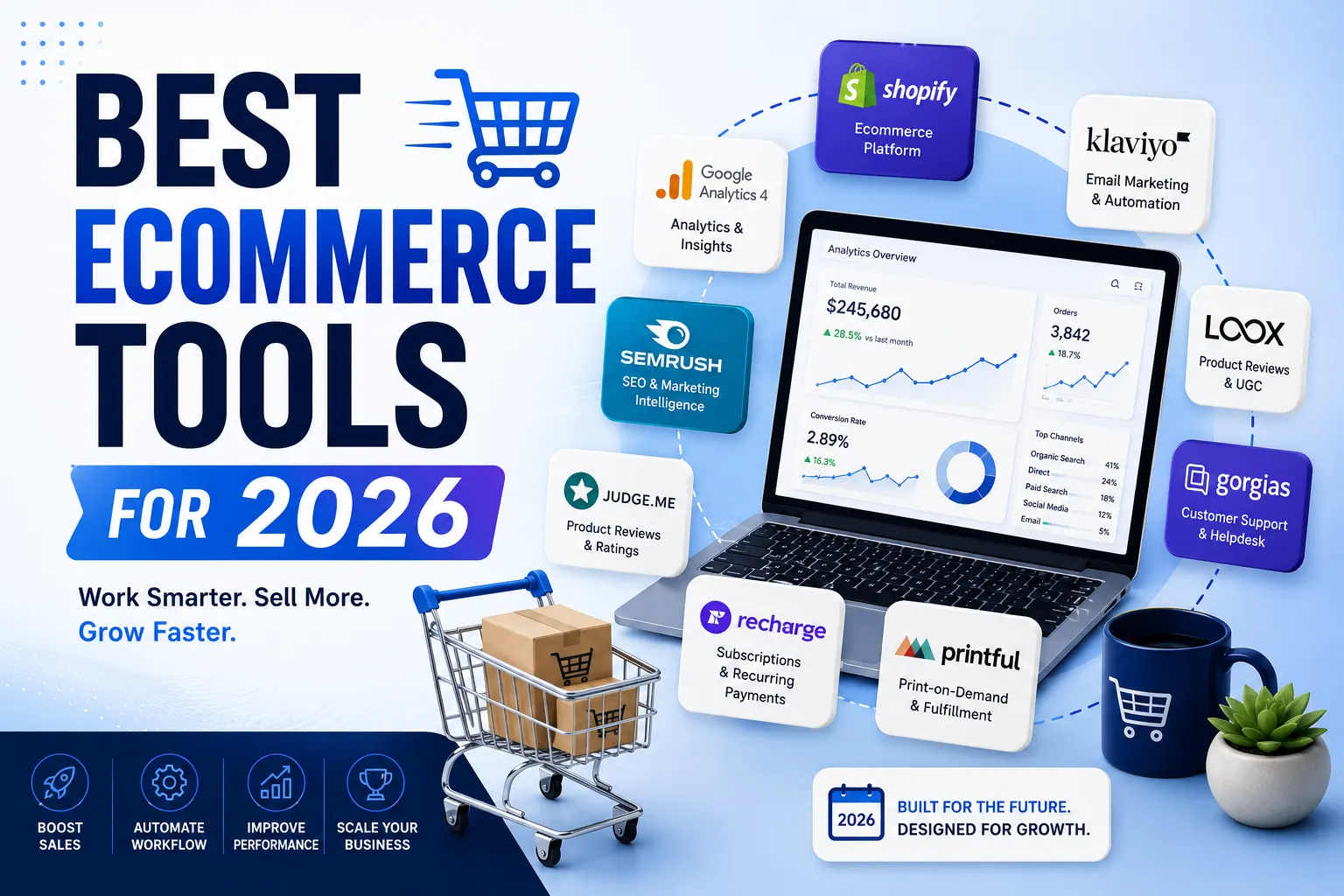
As digital commerce becomes more competitive, businesses increasingly depend on tool ecosystems rather than isolated software solutions. Modern eCommerce growth comes from combining multiple systems into efficient workflows that support long-term scalability.
According to industry reports, businesses that use analytics, automation, SEO monitoring, and customer experience optimization tools consistently outperform businesses relying on manual workflows and assumptions. (shopify.com)
This comprehensive guide explains the best free tools every eCommerce owner should use in 2026, including:
- SEO tools
- Analytics tools
- Marketing tools
- Design tools
- Content tools
- Shipping tools
- Productivity tools
- Customer support tools
- Conversion optimization tools
- AI-powered eCommerce tools
- Shopify tools
- WooCommerce tools
The goal is to help eCommerce businesses build efficient systems using high-value free software solutions.
Why Free Tools Matter for eCommerce Businesses
Many new eCommerce businesses operate with limited budgets.
At the same time, they must compete against:
- Established brands
- Large marketplaces
- International retailers
- Aggressive advertisers
Free tools help level the playing field by providing access to powerful capabilities without requiring major upfront investment.
These tools help businesses improve:
Operational Efficiency
Automation reduces repetitive manual work.
Data-Driven Decision Making
Analytics tools help merchants make informed decisions.
Marketing Performance
Free marketing tools improve visibility and customer acquisition.
Customer Experience
Optimization tools improve usability and conversions.
Scalability
Structured workflows make scaling easier.
Modern eCommerce businesses rarely rely on one platform alone. Instead, they combine specialized tools across multiple operational areas.
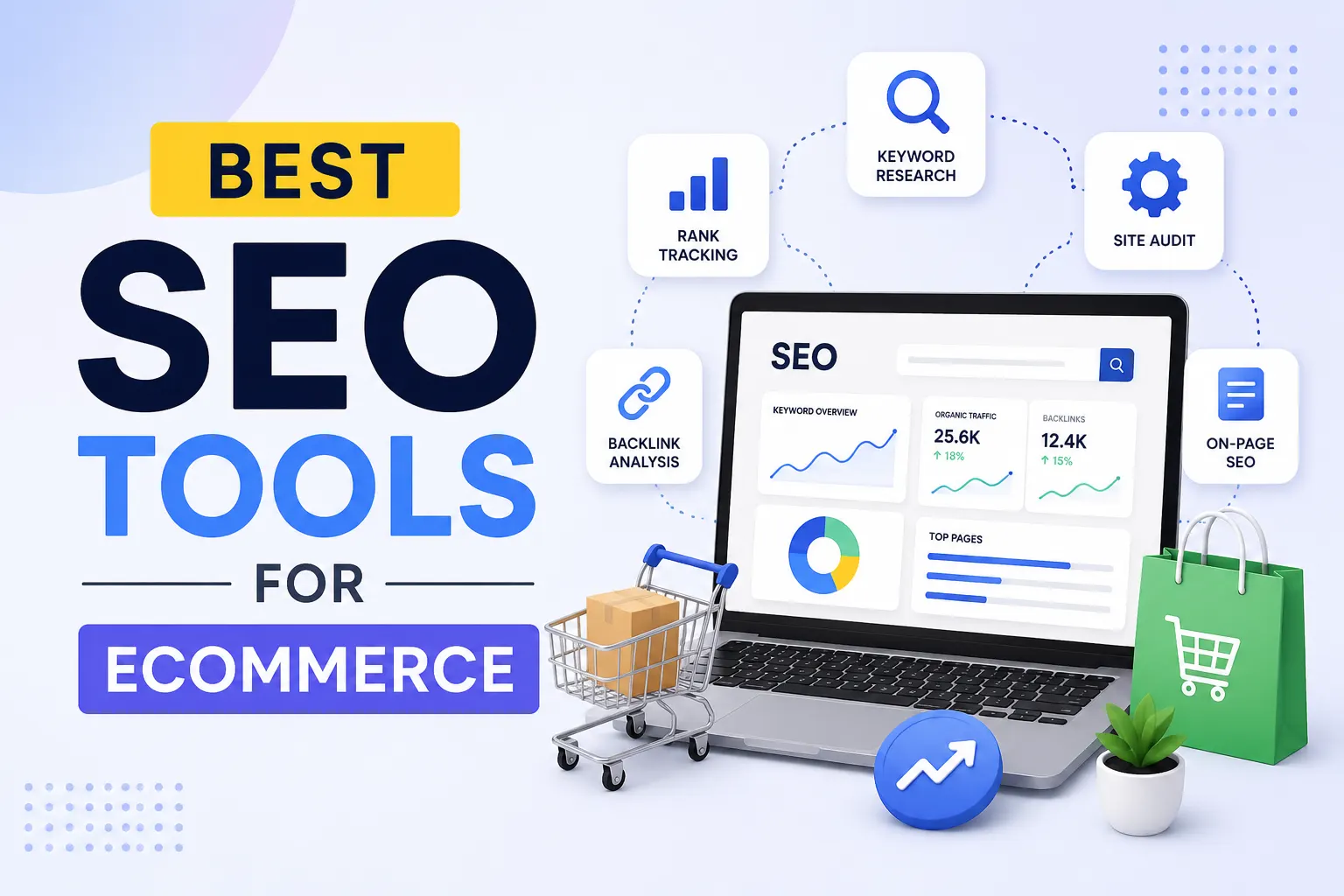
Best Free SEO Tools for eCommerce Owners
SEO remains one of the highest long-term ROI channels in eCommerce.
Free SEO tools help businesses improve search visibility and organic traffic.
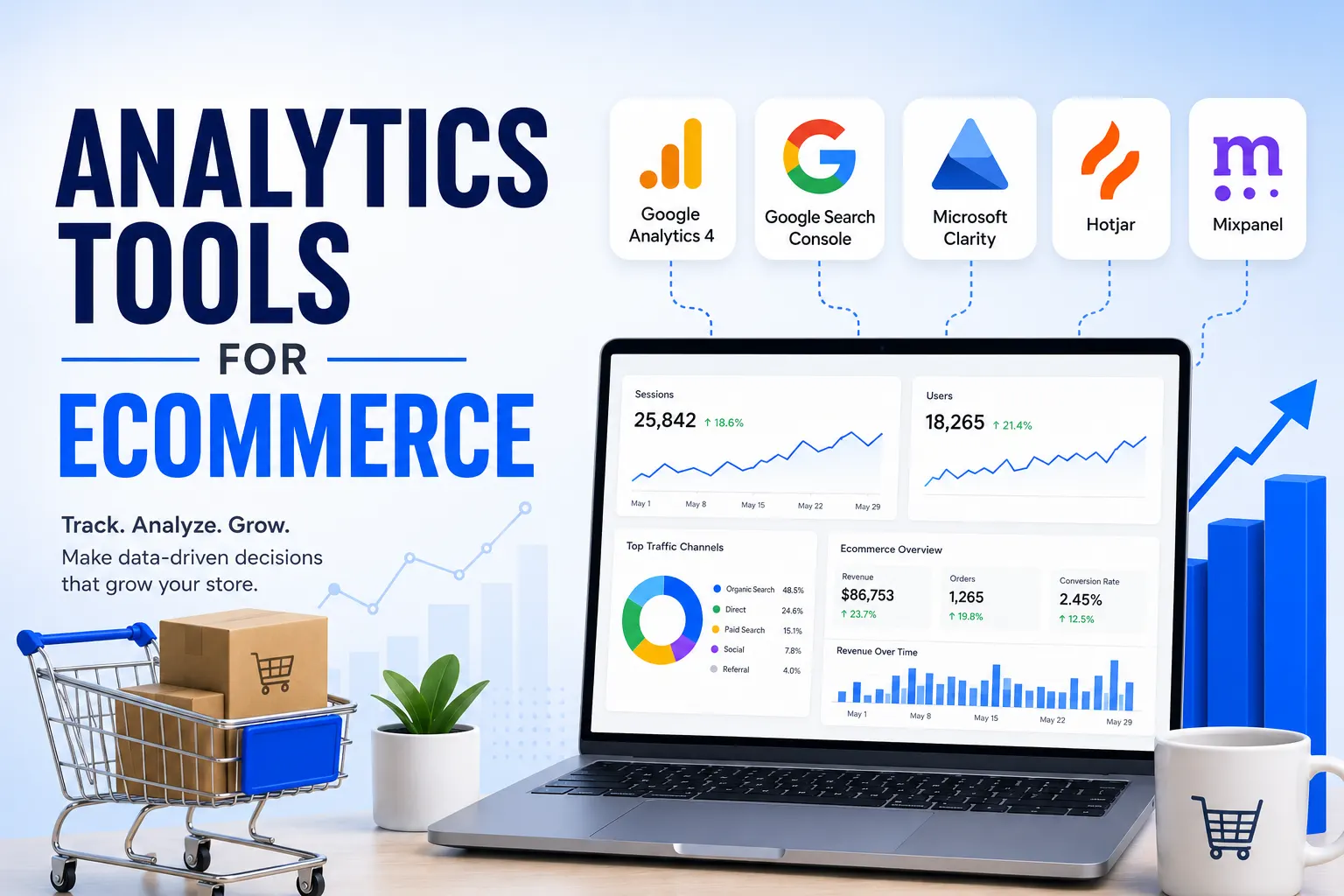
Google Search Console
Google Search Console is one of the most important free tools for every eCommerce website.
It helps businesses monitor:
- Organic traffic
- Search queries
- Indexing issues
- Mobile usability
- Core Web Vitals
- Structured data errors
Search Console provides direct insights from Google itself.
Every online store should integrate Search Console immediately after launching.
Official website: Google Search Console
Google Analytics 4
GA4 helps eCommerce businesses analyze:
- Traffic sources
- Customer behavior
- Revenue attribution
- Conversion funnels
- Product performance
The platform provides essential business intelligence for online stores.
GA4 integrates with:
- Shopify
- WooCommerce
- Google Ads
- Search Console
Official website: Google Analytics
Ahrefs Webmaster Tools
Ahrefs offers free webmaster tools that help businesses monitor:
- Backlinks
- SEO issues
- Keyword visibility
- Technical problems
This is highly valuable for smaller businesses that cannot initially afford premium SEO subscriptions.
Official website: Ahrefs Webmaster Tools
Google PageSpeed Insights
Website speed directly affects:
- SEO rankings
- Conversion rates
- User experience
PageSpeed Insights helps identify:
- Slow-loading resources
- Core Web Vitals issues
- Mobile optimization problems
Fast websites generally perform better in both SEO and sales.
Official website: PageSpeed Insights
Ubersuggest
Ubersuggest provides limited free keyword research functionality.
Businesses can use it to analyze:
- Keyword ideas
- Search volume
- Competitor rankings
- Content opportunities
It is useful for beginner SEO workflows.
Official website: Ubersuggest
Best Free Design Tools for eCommerce
Visual presentation strongly affects eCommerce conversions.
Canva
Canva is one of the most widely used design tools for online businesses.
It helps merchants create:
- Social media graphics
- Product banners
- Email headers
- Promotional creatives
- Marketing materials
The free version offers extensive templates and design flexibility.
Canva is especially valuable for businesses without dedicated design teams.
Official website: Canva
Photopea
Photopea is a browser-based Photoshop alternative.
It supports:
- PSD editing
- Background removal
- Image optimization
- Product image editing
It is useful for quick design workflows without expensive software subscriptions.
Official website: Photopea
Remove.bg
Product photography often requires clean backgrounds.
Remove.bg automatically removes image backgrounds using AI.
This helps businesses create professional-looking product images quickly.
Official website: Remove.bg
Best Free Marketing Tools for eCommerce
Marketing automation and audience engagement are critical for growth.
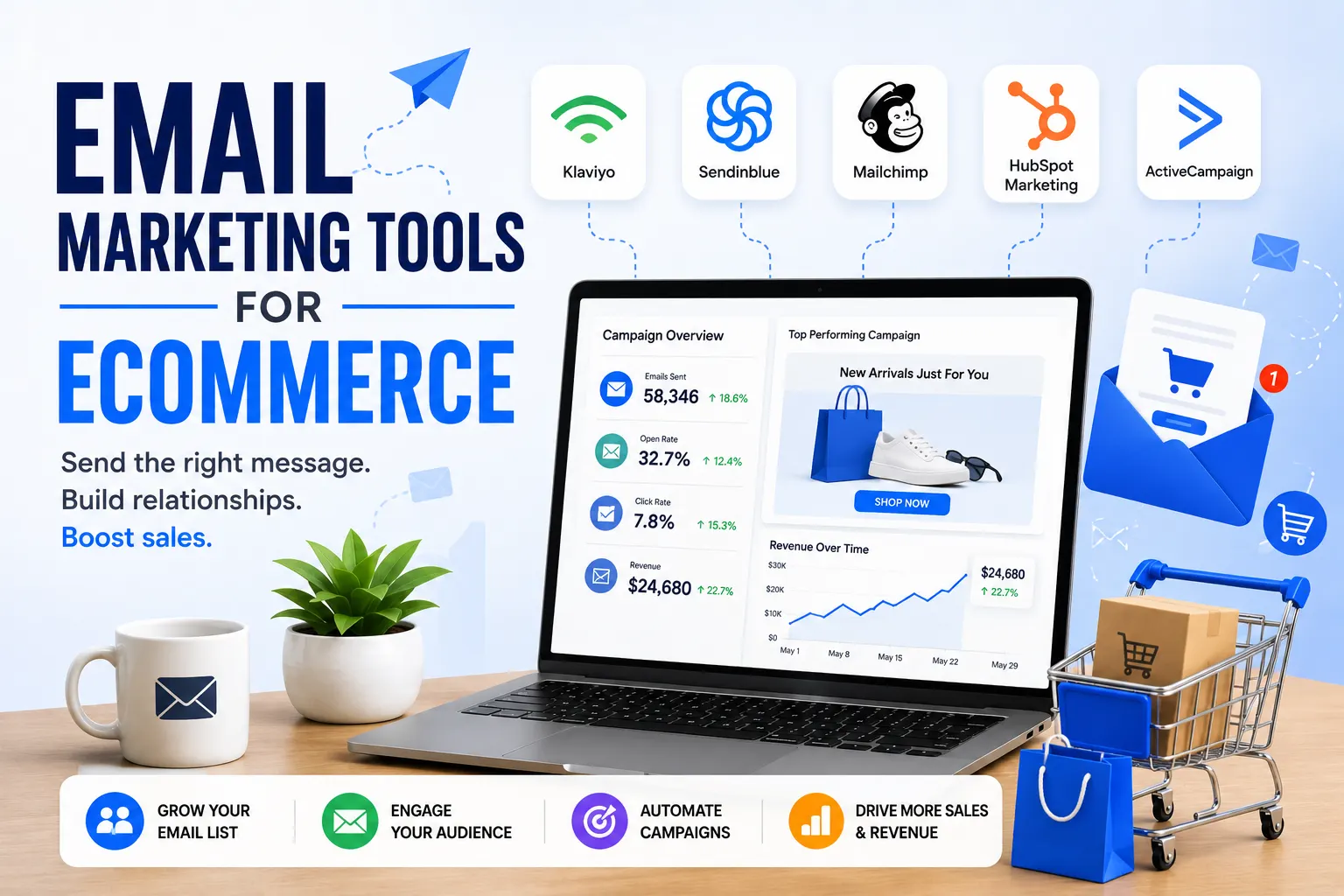
Mailchimp Free Plan
Mailchimp’s free plan helps businesses manage:
- Email marketing
- Customer segmentation
- Automated campaigns
- Newsletter creation
Email marketing continues delivering high ROI for eCommerce businesses.
Official website: Mailchimp
Brevo
Brevo offers free email marketing and CRM functionality.
Features include:
- Email automation
- SMS campaigns
- Contact management
- Transactional emails
It is useful for growing businesses looking for integrated communication systems.
Official website: Brevo
Buffer
Buffer helps businesses schedule social media posts across multiple platforms.
It supports:
- X
Consistent social publishing improves brand visibility.
Official website: Buffer
Best Free AI Tools for eCommerce Owners
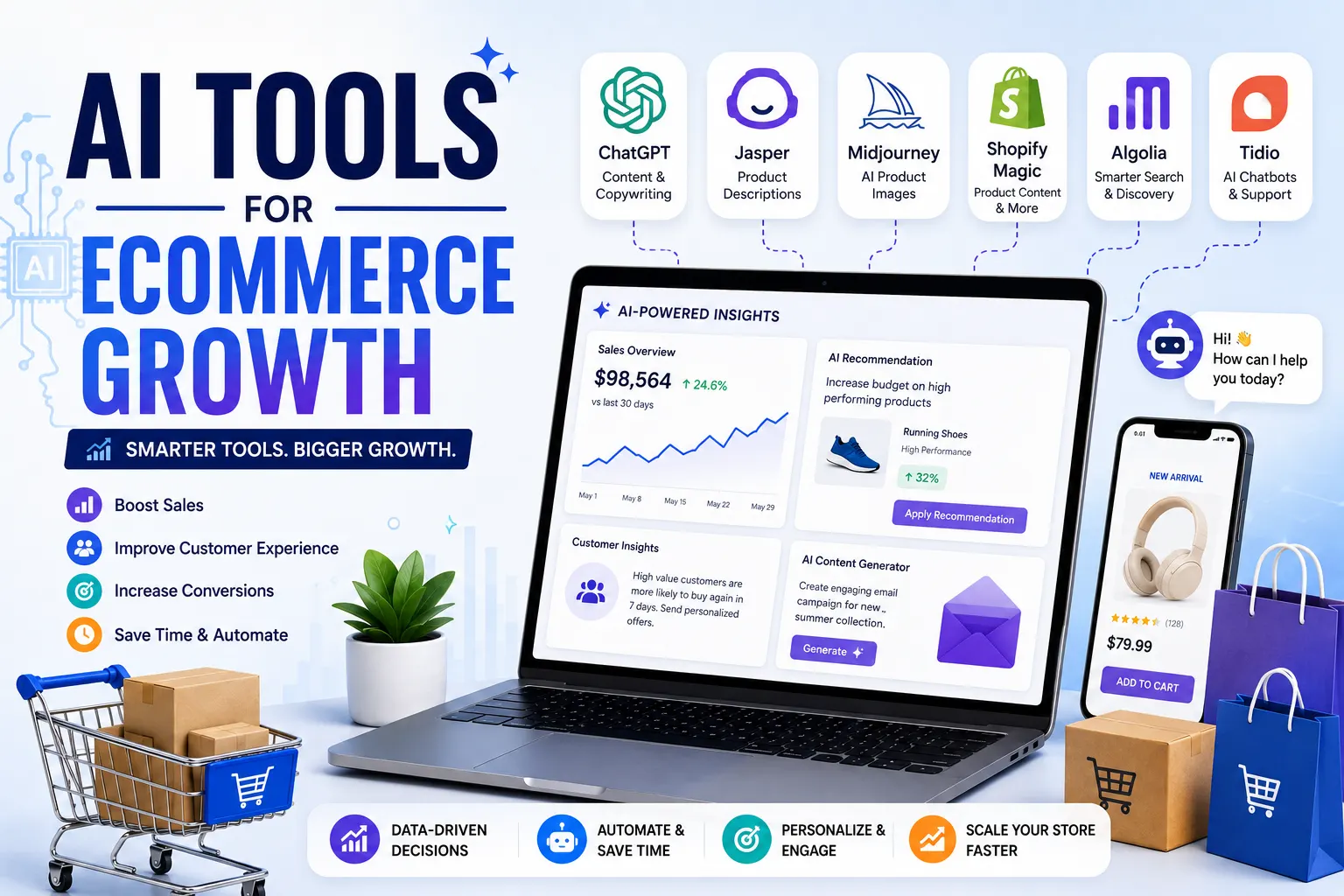
AI tools increasingly support eCommerce operations.
ChatGPT
AI writing assistants help businesses create:
- Product descriptions
- Blog content
- Email drafts
- FAQ sections
- Ad copy
AI tools improve productivity significantly when combined with human editing and strategic oversight.
Official website: OpenAI
Grammarly
Readable content improves customer trust and engagement.
Grammarly helps improve:
- Grammar
- Clarity
- Tone
- Readability
It is especially useful for product descriptions and long-form content.
Official website: Grammarly
Hemingway Editor
Hemingway improves readability by identifying:
- Complex sentences
- Passive voice
- Difficult phrasing
Readable content improves user experience and SEO performance.
Official website: Hemingway Editor
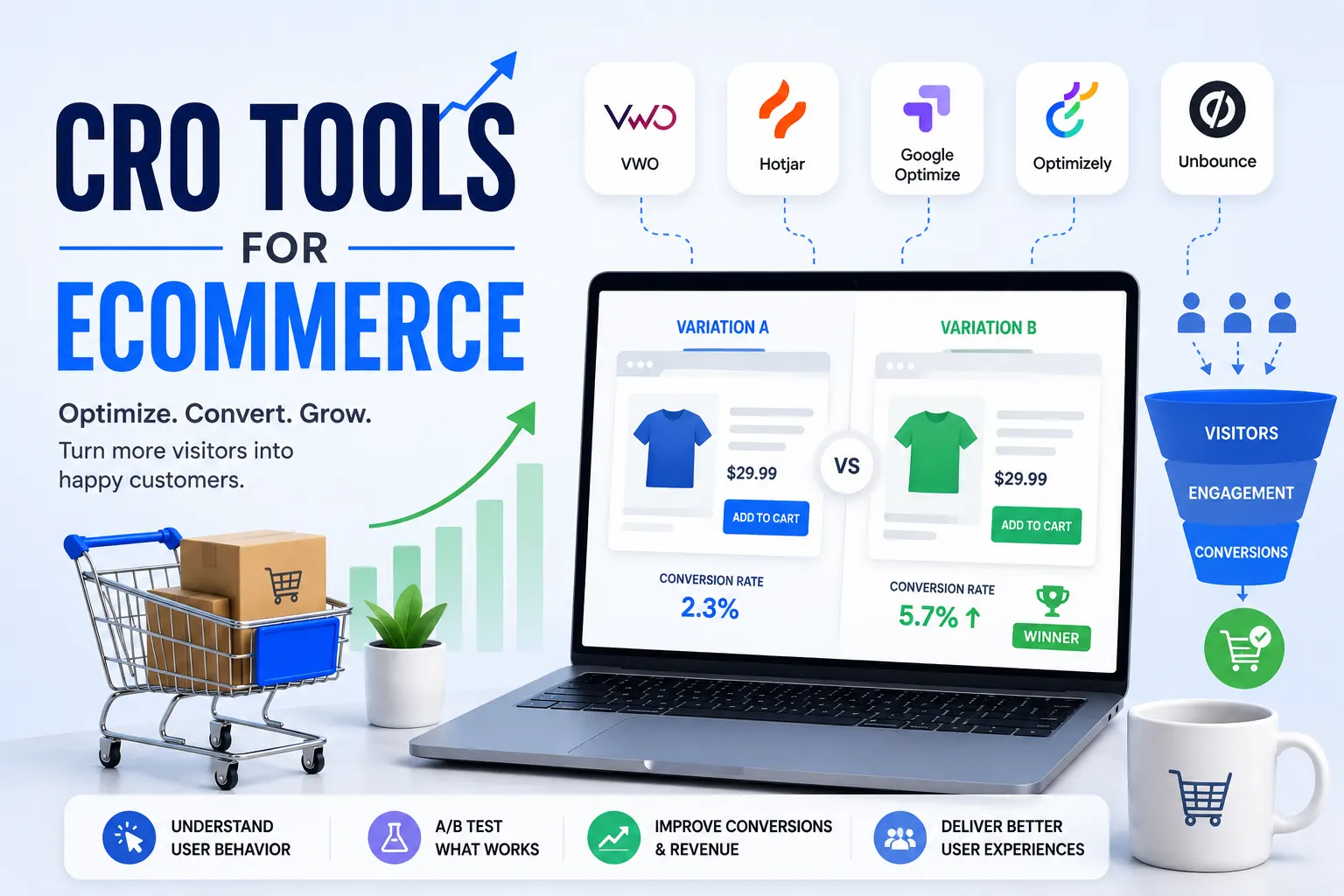
Best Free Conversion Optimization Tools
Traffic alone does not guarantee revenue.
Conversion optimization tools help businesses improve sales performance.
Microsoft Clarity
Microsoft Clarity provides:
- Heatmaps
- Session recordings
- User behavior analysis
Businesses can visually analyze how customers interact with websites.
This helps identify:
- Friction points
- UX problems
- Checkout issues
Official website: Microsoft Clarity
Hotjar Free Plan
Hotjar combines:
- Heatmaps
- User feedback
- Session recordings
- Conversion analysis
It helps businesses understand customer behavior more effectively.
Official website: Hotjar
Best Free Shipping and Logistics Tools
Shipping efficiency directly affects customer satisfaction.
Shiprocket Free Features
Shiprocket offers entry-level shipping management capabilities.
Businesses can manage:
- Courier selection
- Shipment tracking
- Order processing
Official website: Shiprocket
AfterShip Tracking
AfterShip helps businesses improve post-purchase communication through shipment tracking systems.
Features include:
- Tracking pages
- Delivery notifications
- Courier tracking
Official website: AfterShip
Best Free Productivity Tools for eCommerce Teams
Operational efficiency is essential for scaling businesses.
Trello
Trello helps businesses manage:
- Content calendars
- Marketing tasks
- Inventory workflows
- Team collaboration
Its visual interface makes workflow management easier.
Official website: Trello
Notion
Notion combines:
- Documentation
- Project management
- Databases
- Team collaboration
Many eCommerce businesses use Notion for SOP management and operational organization.
Official website: Notion
Google Workspace Tools
Free Google tools remain highly valuable for eCommerce operations.
Useful tools include:
- Google Sheets
- Google Docs
- Google Drive
- Google Calendar
These support operational collaboration and reporting workflows.
Official website: Google Workspace
Best Free Customer Support Tools
Customer support directly affects retention and reviews.
Tidio Free Plan
Tidio offers free live chat functionality.
It helps businesses:
- Respond to customer questions
- Improve support speed
- Reduce cart abandonment
Official website: Tidio
Crisp Chat
Crisp provides customer communication tools including:
- Live chat
- Chat history
- Team inbox systems
It improves customer engagement efficiency.
Official website: Crisp
Best Free Ecommerce Platform Tools
Shopify Free Trials and Free Apps
Shopify offers free trials and multiple free apps for:
- SEO
- Reviews
- Upselling
- Analytics
Businesses can explore Shopify development solutions at Sri Hayavadhana Solutions
WooCommerce
WooCommerce itself is free and highly customizable.
It supports extensive plugin ecosystems for:
- Payments
- SEO
- Shipping
- Marketing
Businesses seeking flexible eCommerce infrastructure often prefer WooCommerce.
Best Free Security Tools for eCommerce
Website security is critical for customer trust.
Cloudflare Free Plan
Cloudflare improves:
- Security
- CDN performance
- DDoS protection
- Website speed
It is widely used by eCommerce businesses globally.
Official website: Cloudflare
SSL Checker
SSL validation tools help ensure secure website configurations.
HTTPS security improves both trust and SEO performance.
Official website: SSL Shopper
Common Mistakes eCommerce Owners Make With Free Tools
Using Too Many Tools
Excessive tools create operational complexity.
Businesses should prioritize integrated workflows.
Ignoring Data Analysis
Many businesses install analytics tools but never review insights.
Relying Fully on Automation
Automation helps efficiency but still requires strategic oversight.
Poor Integration Planning
Disconnected systems create workflow inefficiencies.
Ignoring Website Speed
Too many scripts and plugins can slow websites significantly.
Building the Ideal Free Tool Stack for eCommerce
A balanced free tool stack may include:
SEO
- Google Search Console
- GA4
- Ahrefs Webmaster Tools
Marketing
- Mailchimp
- Buffer
- Canva
Conversion Optimization
- Microsoft Clarity
- Hotjar
Productivity
- Notion
- Trello
Customer Support
- Tidio
Security
- Cloudflare
This combination provides strong operational capabilities for growing businesses.
The Future of Free Ecommerce Tools
Several trends are shaping the future of eCommerce software.
AI Integration
AI increasingly supports:
- Customer service
- Content generation
- Analytics
- Personalization
Workflow Automation
More tools are integrating automation features into free plans.
No-Code Ecommerce Systems
Businesses increasingly build workflows without advanced development skills.
Omnichannel Integration
Future tools will increasingly unify:
- Websites
- Marketplaces
- Social commerce
- Mobile commerce
Predictive Analytics
AI-based forecasting tools will become more accessible.
Why Professional Ecommerce Development Still Matters
Free tools provide strong operational support, but businesses still require strategic implementation.
Professional development improves:
- Website performance
- SEO architecture
- Mobile optimization
- Checkout systems
- Integration quality
- Conversion optimization
Weak technical implementation can limit the effectiveness of even the best tools.
Businesses planning long-term growth often combine free operational tools with professional eCommerce development and SEO strategy.
Professional eCommerce development services are available at Sri Hayavadhana Solutions
Final Thoughts
Free tools have transformed the eCommerce industry by making advanced capabilities accessible to businesses of all sizes.
The best free tools for eCommerce owners help improve:
- SEO
- Marketing
- Design
- Analytics
- Shipping
- Customer support
- Productivity
- Conversion optimization
Businesses no longer need massive software budgets to build scalable digital operations.
However, success depends on using the right tools strategically rather than installing every available platform.
The most effective eCommerce businesses focus on:
- Workflow efficiency
- Data-driven decisions
- Customer experience
- Automation
- Long-term scalability
As AI, automation, and digital commerce continue evolving, businesses that adopt efficient tool ecosystems early will gain stronger competitive advantages in 2026 and beyond.
Combining the right free tools with professional SEO, optimized eCommerce development, and conversion-focused strategies creates a strong foundation for sustainable online growth.