Blog
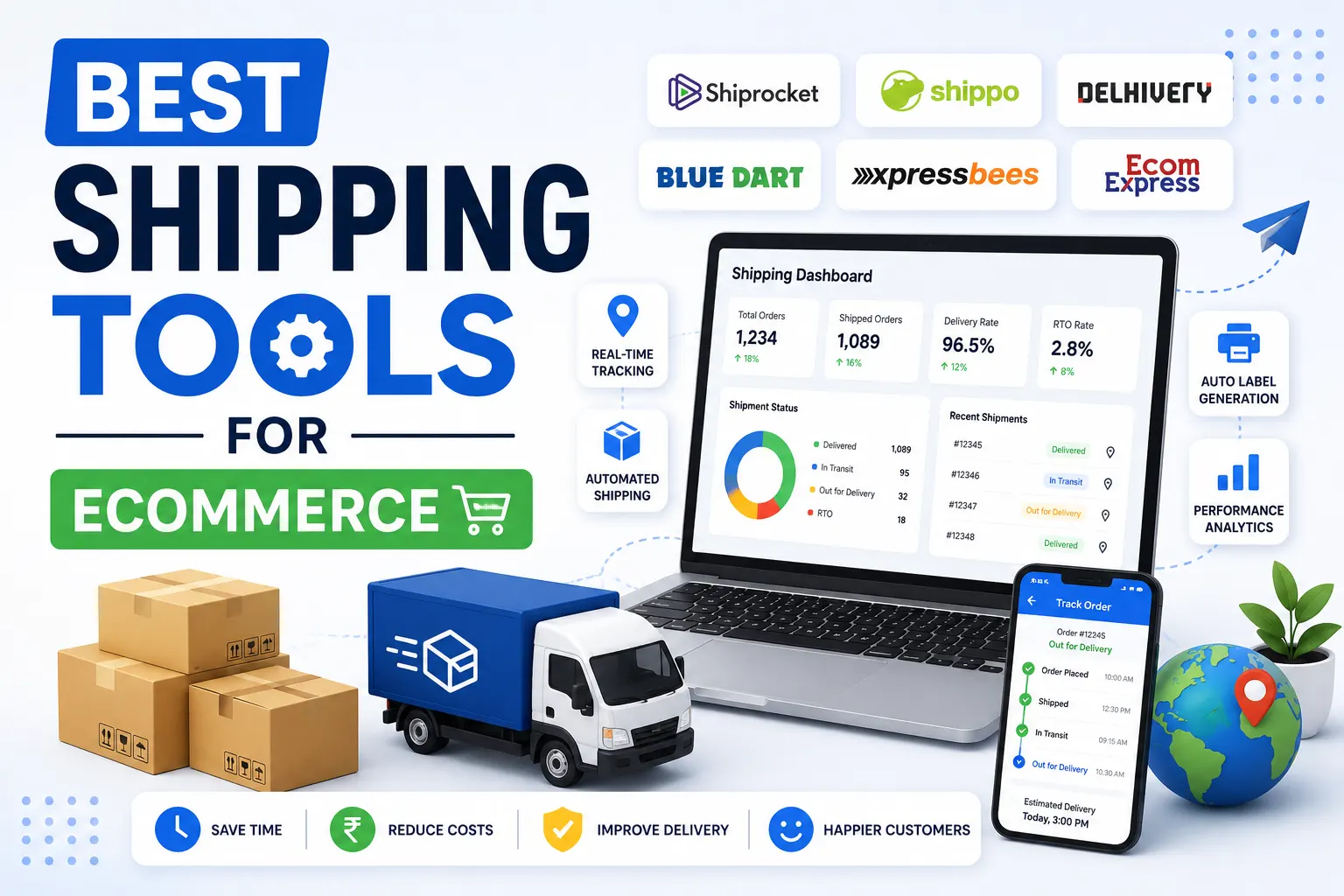
Best Shipping Tools for Ecommerce

Introduction
Shipping has become one of the most critical operational components of modern eCommerce businesses. In today’s competitive digital marketplace, customers no longer evaluate online stores only based on products and pricing. They also judge brands based on delivery speed, shipping transparency, packaging quality, return management, and post-purchase communication.
As online shopping continues expanding across India and global markets, businesses increasingly rely on shipping tools to automate logistics, reduce operational complexity, improve customer satisfaction, and scale efficiently.
Whether an online business sells through Shopify, WooCommerce, Magento, Amazon, marketplaces, or custom eCommerce platforms, shipping operations directly affect:
- Customer experience
- Conversion rates
- Profit margins
- Repeat purchases
- Brand reputation
- Operational efficiency
Modern customers expect:
- Fast shipping
- Real-time tracking
- Multiple delivery options
- Accurate delivery timelines
- Affordable shipping charges
- Hassle-free returns
- Delivery notifications
- International shipping support
Without strong shipping systems, even high-quality eCommerce businesses may struggle to scale successfully.
According to industry reports, shipping experience and delivery reliability significantly influence customer retention and repeat purchasing behavior in eCommerce. Businesses with optimized fulfillment systems often achieve higher customer satisfaction and stronger long-term profitability. (shopify.com)
However, managing shipping manually becomes increasingly difficult as order volumes grow. Businesses handling hundreds or thousands of orders require automation systems that integrate inventory management, courier aggregation, order tracking, returns processing, and fulfillment optimization into a centralized workflow.
This is where shipping tools become essential.
The best shipping tools for eCommerce help businesses:
- Automate order fulfillment
- Compare courier rates
- Print shipping labels
- Track shipments
- Manage returns
- Optimize delivery costs
- Improve post-purchase communication
- Support international shipping
- Scale logistics operations efficiently
This comprehensive guide explains the best shipping tools for eCommerce in 2026, including:
- Shipping aggregators
- Fulfillment management platforms
- Real-time tracking systems
- International shipping tools
- Return management software
- Shipping automation platforms
- Multi-carrier shipping systems
- Shopify shipping tools
- WooCommerce shipping tools
- Enterprise logistics platforms
The goal is to help businesses build scalable shipping systems that improve both operational efficiency and customer satisfaction.
Why Shipping Tools Matter for eCommerce Growth
Shipping is no longer just a backend operational task. It has become a core part of the customer experience.
Customers increasingly compare delivery experiences across brands. Major marketplaces and large eCommerce companies have changed customer expectations by offering:
- Same-day delivery
- Next-day delivery
- Live shipment tracking
- Flexible delivery options
- Easy returns
- Delivery notifications
As a result, smaller businesses must improve their shipping operations to remain competitive.
Shipping tools help businesses address several important challenges.
Operational Efficiency
Manual shipping processes consume large amounts of time.
Businesses handling orders manually often face:
- Incorrect shipments
- Delayed dispatch
- Inventory mismatches
- Tracking issues
- Customer complaints
Automation significantly reduces operational friction.
Cost Optimization
Shipping costs directly affect profit margins.
Shipping tools help businesses:
- Compare courier rates
- Optimize packaging
- Reduce delivery expenses
- Select efficient courier partners
Customer Retention
Delivery experience influences whether customers purchase again.
Poor shipping experiences can damage trust even if products are excellent.
Scalability
As order volumes grow, businesses require systems capable of managing:
- Bulk shipments
- Multiple warehouses
- Courier integrations
- International logistics
Shipping software enables operational scalability without proportional increases in manual workload.
Key Features to Look for in Shipping Tools
Not every shipping platform is suitable for every business model.
Businesses should evaluate shipping tools based on several important factors.
Multi-Carrier Integration
The best shipping tools support multiple courier partners.
This allows businesses to:
- Compare rates
- Optimize delivery speed
- Reduce shipping costs
- Improve regional coverage
Real-Time Tracking
Customers increasingly expect shipment visibility.
Tracking systems should provide:
- Real-time updates
- Tracking pages
- SMS notifications
- Email alerts
Automation Features
Automation improves operational efficiency.
Important automation capabilities include:
- Auto-label generation
- Pickup scheduling
- Shipping rule creation
- Inventory synchronization
- Bulk processing
International Shipping Support
Global businesses require:
- Customs documentation
- Multi-currency shipping
- International carriers
- Duty calculation systems
Returns Management
Returns are a major component of eCommerce logistics.
Strong shipping tools simplify:
- Return requests
- Reverse logistics
- Refund processing
- Return label generation
Platform Integrations
Shipping tools should integrate with:
- Shopify
- WooCommerce
- Magento
- Amazon
- ERP systems
- Inventory management systems
Integration quality significantly affects workflow efficiency.
Best Shipping Tools for eCommerce
Shiprocket
Shiprocket is one of the most widely used shipping platforms in India.
It helps businesses automate shipping through multiple courier integrations.
Features include:
- Courier aggregation
- Real-time tracking
- Automated shipping labels
- COD support
- Return management
- International shipping
- AI-based courier recommendations
Shiprocket integrates with:
- Shopify
- WooCommerce
- Magento
- Amazon
- Flipkart
The platform is popular among:
- Small businesses
- D2C brands
- Marketplace sellers
- Growing eCommerce stores
Shiprocket’s extensive courier network makes it suitable for businesses shipping across India.
Official website: Shiprocket
Pickrr
Pickrr focuses heavily on logistics automation and operational intelligence.
Its capabilities include:
- Courier allocation automation
- Shipping analytics
- Tracking systems
- NDR management
- Reverse logistics
Pickrr is especially useful for brands managing high shipment volumes.
The platform helps optimize delivery performance using AI-based logistics decisions.
Official website: Pickrr
NimbusPost
NimbusPost is another rapidly growing shipping aggregator in India.
Key features include:
- Multiple courier integrations
- Automated shipping
- COD reconciliation
- Shipment tracking
- Return order management
NimbusPost supports businesses looking for scalable shipping systems with centralized control.
Official website: NimbusPost
ShipStation
ShipStation is one of the most popular international shipping management platforms.
It supports:
- Multi-carrier shipping
- International fulfillment
- Batch label printing
- Inventory synchronization
- Automation workflows
ShipStation integrates with major eCommerce platforms and marketplaces globally.
It is especially useful for businesses handling cross-border commerce.
Official website: ShipStation
Easyship
Easyship specializes in international shipping and global fulfillment.
Features include:
- International courier integrations
- Automated tax calculations
- Customs documentation
- Real-time shipping rates
- Global tracking
Businesses selling internationally benefit from Easyship’s cross-border shipping infrastructure.
Official website: Easyship
AfterShip
AfterShip focuses primarily on shipment tracking and post-purchase experiences.
Its strengths include:
- Real-time tracking
- Branded tracking pages
- Delivery notifications
- Return management
- Shipment analytics
AfterShip helps businesses improve customer communication during the shipping process.
The platform supports multiple global courier providers.
Official website: AfterShip
Best Shipping Tools for Shopify Stores
Shopify businesses require shipping systems that integrate seamlessly with Shopify workflows.
Popular Shopify shipping tools include:
- Shiprocket
- AfterShip
- Easyship
- ShipStation
- Delhivery integration apps
Important features for Shopify merchants include:
- One-click fulfillment
- Automated tracking
- COD support
- Branded tracking pages
- International shipping
Professional Shopify development can further optimize shipping workflows and checkout systems.
Businesses can explore Shopify development solutions at Sri Hayavadhana Solutions
Best Shipping Tools for WooCommerce
WooCommerce businesses require flexible shipping plugin support.
Popular WooCommerce shipping tools include:
- Shiprocket
- Easyship
- WooCommerce Shipping
- AfterShip
- ShipStation
WooCommerce flexibility allows businesses to customize shipping workflows extensively.
Important considerations include:
- Plugin compatibility
- API support
- Shipping automation
- International shipping support
Best Shipping Tools for International eCommerce
Cross-border eCommerce continues growing rapidly.
International shipping requires specialized logistics systems.
Easyship
Strong global fulfillment capabilities.
DHL Express Commerce
International courier integration and shipping automation.
FedEx Ship Manager
Advanced enterprise shipping management.
UPS WorldShip
Global logistics infrastructure for larger businesses.
International businesses must also manage:
- Customs regulations
- Import duties
- Delivery timelines
- Currency conversion
- International returns
Best Shipping Tools for Small Businesses
Small businesses often prioritize simplicity and affordability.
Popular options include:
Shiprocket
Affordable and beginner-friendly.
Instamojo Shipping
Useful for smaller Indian businesses.
WooCommerce Shipping
Simple integration for WordPress stores.
Shopify Shipping
Integrated shipping support within Shopify ecosystems.
Small businesses should prioritize:
- Ease of use
- Affordable pricing
- Automation
- Courier flexibility
Best Shipping Tools for Enterprise eCommerce
Enterprise businesses require advanced logistics infrastructure.
Important capabilities include:
- Multi-warehouse support
- API customization
- ERP integration
- Enterprise analytics
- SLA management
Popular enterprise shipping platforms include:
- ShipStation
- Easyship
- Oracle Transportation Management
- SAP logistics systems
Large businesses often combine multiple logistics tools into unified fulfillment systems.
Real-Time Shipment Tracking and Customer Experience
Shipment tracking has become a critical customer expectation.
Customers want visibility throughout the delivery process.
Strong tracking systems improve:
- Customer trust
- Support efficiency
- Delivery transparency
- Brand experience
Modern tracking systems provide:
- SMS updates
- Email notifications
- WhatsApp alerts
- Branded tracking pages
- Delivery predictions
Post-purchase communication significantly affects customer satisfaction.
Return Management and Reverse Logistics
Returns management is one of the biggest operational challenges in eCommerce.
Poor return experiences reduce customer trust and retention.
Modern shipping tools simplify:
- Return initiation
- Return label generation
- Reverse pickup scheduling
- Refund processing
- Exchange workflows
Efficient reverse logistics improve customer loyalty and operational efficiency.
Shipping Automation and AI
AI and automation increasingly influence shipping operations.
Modern systems now automate:
- Courier selection
- Route optimization
- Delivery prediction
- Fraud detection
- Packaging recommendations
AI-based logistics optimization helps businesses reduce operational costs while improving delivery efficiency.
Several enterprise logistics providers are investing heavily in predictive shipping systems.
Multi-Warehouse Fulfillment Systems
As businesses scale, inventory management becomes more complex.
Multi-warehouse systems help businesses:
- Reduce delivery time
- Lower shipping costs
- Improve regional coverage
- Optimize inventory allocation
Advanced shipping tools support:
- Warehouse routing
- Inventory synchronization
- Regional dispatch optimization
Large D2C brands increasingly depend on distributed fulfillment infrastructure.
Shipping Costs and Profitability
Shipping costs directly impact profit margins.
Businesses should analyze:
- Average shipping cost per order
- Packaging costs
- Return shipping expenses
- Courier performance
- Regional shipping efficiency
Shipping tools help businesses optimize profitability through better logistics decisions.
Common Shipping Mistakes eCommerce Businesses Make
Choosing Only the Cheapest Courier
Low-cost shipping can reduce delivery quality and customer satisfaction.
Ignoring Packaging Quality
Poor packaging increases product damage and return rates.
Lack of Delivery Communication
Customers expect regular shipment updates.
Manual Order Processing
Manual systems become inefficient as order volumes increase.
Weak Return Management
Complex return systems damage customer trust.
Shipping and SEO: The Hidden Relationship
Many businesses overlook how shipping affects SEO indirectly.
Poor shipping experiences increase:
- Bounce rates
- Negative reviews
- Refund requests
- Customer dissatisfaction
Positive delivery experiences improve:
- Brand reputation
- Customer retention
- User engagement
- Repeat purchases
Search engines increasingly evaluate overall user experience quality.
Efficient shipping systems contribute to long-term brand authority and customer satisfaction.
Businesses investing in both SEO and operational optimization often achieve stronger organic growth.
For advanced eCommerce SEO services, businesses can explore Sri Hayavadhana Solutions
The Future of Shipping Tools for eCommerce
Several major trends are shaping the future of eCommerce logistics.
Hyperlocal Delivery
Faster local delivery systems continue expanding.
Drone and Autonomous Delivery
Emerging technologies may reshape last-mile logistics in the future.
Sustainable Shipping
Eco-friendly packaging and carbon-neutral shipping are becoming more important.
AI-Based Logistics Optimization
Machine learning improves delivery efficiency and forecasting.
Omnichannel Fulfillment
Businesses increasingly combine:
- Online fulfillment
- Retail pickup
- Warehouse distribution
- Marketplace logistics
Integrated commerce requires more advanced shipping infrastructure.
Why Professional eCommerce Development Matters for Shipping Integration
Shipping systems perform best when integrated properly into the eCommerce ecosystem.
Professional development helps businesses optimize:
- Checkout flows
- Shipping automation
- Inventory systems
- API integrations
- Mobile usability
- Customer communication
Weak technical implementation can create:
- Failed orders
- Inventory mismatches
- Delayed fulfillment
- Tracking errors
Businesses planning long-term growth often combine advanced shipping systems with custom eCommerce development.
Professional eCommerce development services are available at Sri Hayavadhana Solutions
Final Thoughts
Shipping has become one of the most important competitive factors in modern eCommerce.
The best shipping tools for eCommerce help businesses:
- Automate fulfillment
- Improve customer experience
- Reduce operational costs
- Scale logistics infrastructure
- Support international expansion
- Improve delivery transparency
Platforms such as Shiprocket, Pickrr, NimbusPost, AfterShip, ShipStation, and Easyship provide different strengths for different business models.
Businesses should evaluate shipping tools based on:
- Scalability
- Courier coverage
- Automation capabilities
- International support
- Tracking quality
- Return management
- Platform integration
As customer expectations continue evolving, shipping quality increasingly affects customer retention, brand reputation, and long-term profitability.
Businesses that invest in strong logistics systems, optimized checkout experiences, professional SEO, and scalable eCommerce development will be better positioned for sustainable growth in 2026 and beyond.