Blog
Dropshipping vs Inventory Model

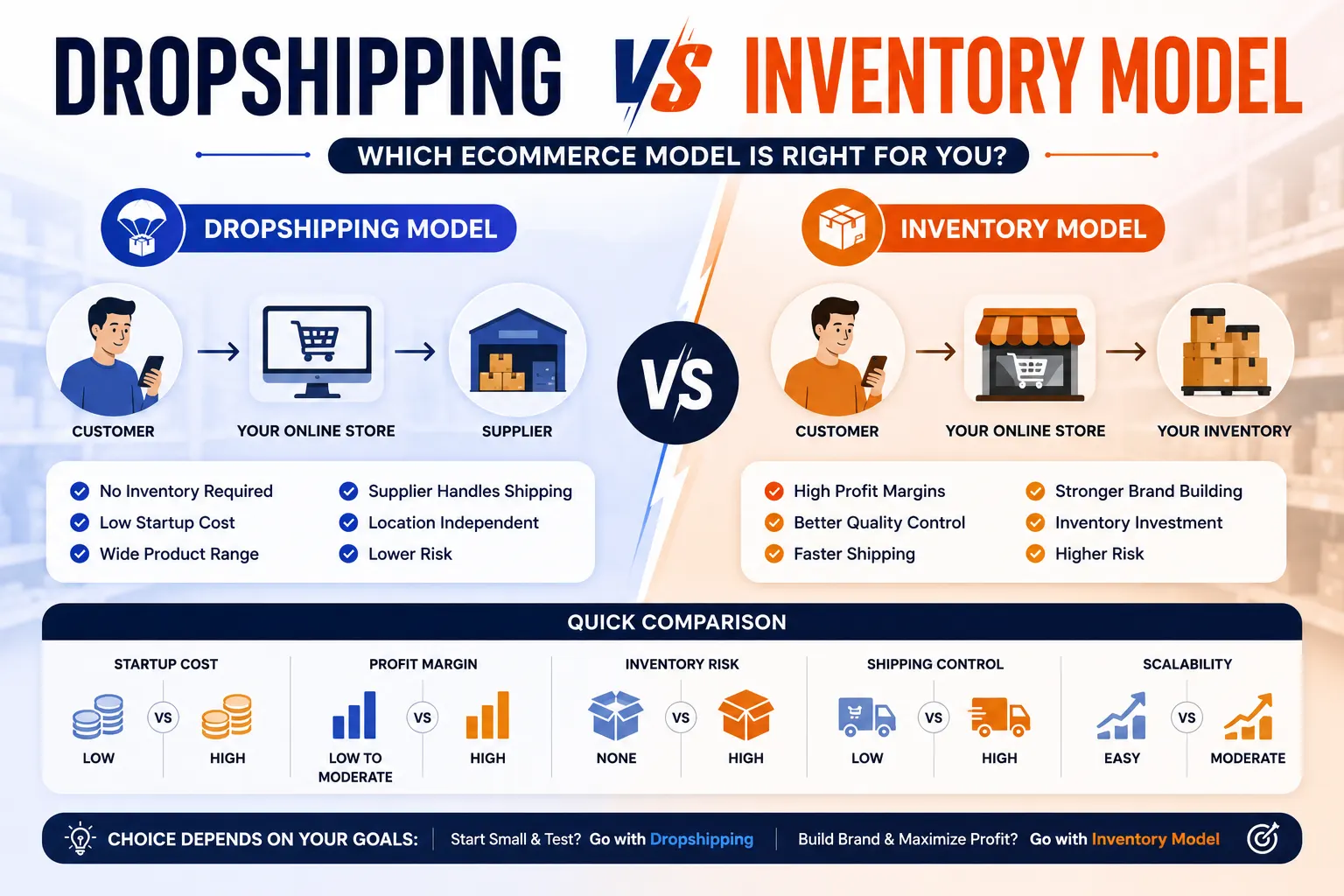
Introduction to Dropshipping vs Inventory Model
Starting an ecommerce business involves several important decisions, but one of the most critical choices entrepreneurs face is selecting the right operational model. Among the most common ecommerce business models today are dropshipping and the inventory-based model. Both approaches allow businesses to sell products online, but they differ significantly in terms of inventory management, logistics, investment requirements, profit margins, branding opportunities, customer experience, operational control, scalability, and long-term business growth potential.
As ecommerce continues expanding rapidly across India and globally, many entrepreneurs are attracted to online business opportunities because digital commerce appears more accessible than traditional retail. However, while launching an ecommerce business is easier today than ever before, choosing the wrong business model can lead to operational challenges, weak customer satisfaction, poor profitability, and long-term scalability limitations.
The dropshipping model is often promoted as a low-investment ecommerce business opportunity because sellers do not maintain inventory physically. Instead, suppliers fulfill customer orders directly. On the other hand, inventory-based ecommerce businesses purchase, store, and manage products themselves before shipping them to customers.
Both models have unique advantages and disadvantages depending on:
- Business goals
- Budget
- Product category
- Branding strategy
- Operational expertise
- Customer experience priorities
Some entrepreneurs prioritize low startup investment and flexibility, while others focus on long-term brand building, better customer control, and higher profit margins. Understanding the differences between dropshipping and inventory-based ecommerce helps businesses make informed strategic decisions aligned with long-term growth objectives.
In 2026, ecommerce competition is becoming increasingly intense. Customers now expect:
- Fast delivery
- Reliable service
- High-quality packaging
- Strong customer support
- Smooth user experience
- Consistent branding
These expectations directly influence how well each ecommerce model performs in real-world business environments.
This comprehensive guide explores dropshipping vs inventory model in depth, including operational structures, advantages, disadvantages, profitability, branding, logistics, SEO considerations, customer experience, scalability, marketing strategies, risk management, and future ecommerce trends shaping modern online businesses.
Understanding the Dropshipping Model
Dropshipping is an ecommerce business model where the seller does not maintain physical inventory. Instead, when customers place orders, the seller forwards the order details to a third-party supplier who handles:
- Inventory storage
- Packaging
- Shipping
The ecommerce business primarily focuses on:
- Website management
- Marketing
- Customer acquisition
- Customer support
In dropshipping, the seller acts as an intermediary between the customer and supplier.
For example:
- A customer places an order on the ecommerce website.
- The seller receives payment.
- The order is forwarded to the supplier.
- The supplier ships the product directly to the customer.
Dropshipping became extremely popular because it allows entrepreneurs to start ecommerce businesses with relatively low upfront investment.
Many beginners choose dropshipping because it eliminates:
- Warehouse costs
- Inventory purchasing
- Bulk product investment
However, while dropshipping reduces startup costs, it also creates operational limitations that businesses must understand carefully.
Understanding the Inventory-Based Ecommerce Model
The inventory-based ecommerce model involves purchasing and storing products before selling them online.
In this model, businesses manage:
- Inventory procurement
- Storage
- Packaging
- Shipping
- Quality control
When customers place orders:
- The business processes the order internally.
- Products are packed and shipped directly.
- Customer service remains fully controlled by the business.
Inventory-based ecommerce businesses may operate through:
- Warehouses
- Retail locations
- Fulfillment centers
- Home storage setups
This model requires higher investment compared to dropshipping but provides significantly greater operational control.
Inventory-based ecommerce works especially well for:
- D2C brands
- Premium product businesses
- Custom product sellers
- Fast-growing ecommerce startups
Businesses prioritizing branding and customer experience often prefer inventory-based operations because they control the entire fulfillment process.
Startup Costs: Dropshipping vs Inventory Model
Startup investment is one of the biggest differences between dropshipping and inventory-based ecommerce.
Dropshipping Startup Costs
Dropshipping usually requires lower initial investment because businesses do not purchase inventory upfront.
Primary dropshipping expenses include:
- Ecommerce website setup
- Marketing
- Domain and hosting
- Advertising campaigns
- Supplier research
Entrepreneurs can often launch dropshipping stores with relatively small budgets.
This makes dropshipping attractive for:
- Beginners
- Students
- Side-hustle entrepreneurs
- Low-budget startups
However, lower startup costs do not guarantee profitability.
Marketing costs can still become significant in competitive ecommerce niches.
Inventory Model Startup Costs
Inventory-based ecommerce requires:
- Product purchasing
- Storage setup
- Packaging materials
- Warehouse expenses
- Inventory management systems
Startup costs are generally higher because businesses invest in physical inventory before generating sales.
However, inventory ownership often improves:
- Profit margins
- Branding opportunities
- Delivery control
Inventory-based businesses may require larger budgets initially but often create stronger long-term brand value.
Operational Control Comparison
Operational control is one of the biggest differences between these ecommerce models.
Operational Control in Dropshipping
Dropshipping businesses have limited control over:
- Product quality
- Shipping speed
- Packaging
- Inventory availability
Because suppliers manage fulfillment, ecommerce businesses rely heavily on third-party operational efficiency.
Common dropshipping challenges include:
- Shipping delays
- Out-of-stock issues
- Quality inconsistencies
- Supplier communication problems
These issues can negatively affect customer trust and brand reputation.
Operational Control in Inventory-Based Ecommerce
Inventory-based businesses maintain full control over:
- Product quality
- Packaging
- Branding
- Shipping speed
- Inventory management
This control improves:
- Customer experience
- Brand consistency
- Fulfillment reliability
Businesses can customize:
- Packaging
- Inserts
- Branding materials
- Shipping workflows
Operational control becomes especially important for businesses prioritizing premium customer experiences.
Branding Opportunities
Branding strongly influences ecommerce success in modern digital commerce environments.
Branding in Dropshipping
Dropshipping businesses often face branding limitations because suppliers control packaging and shipping processes.
Common dropshipping challenges include:
- Generic packaging
- Supplier branding visibility
- Inconsistent customer experiences
Many dropshipping stores struggle to build strong emotional brand connections because they rely on commodity products available through multiple sellers.
Building unique branding in dropshipping requires:
- Strong website UX
- Better marketing
- Niche positioning
- Customer service excellence
Branding in Inventory-Based Ecommerce
Inventory-based ecommerce provides significantly stronger branding opportunities.
Businesses can control:
- Packaging design
- Product presentation
- Brand storytelling
- Customer unboxing experiences
Strong branding improves:
- Customer loyalty
- Repeat purchases
- Brand recognition
- Social media engagement
Inventory-based ecommerce works especially well for:
- D2C brands
- Premium products
- Lifestyle brands
Businesses wanting scalable brand growth often prefer inventory ownership.
Businesses developing branded ecommerce stores frequently work with professional ecommerce UX and branding specialists such as Sri Hayavadhana Solutions to build optimized ecommerce websites focused on branding, mobile UX, SEO performance, and conversion optimization.
Profit Margin Comparison
Profitability differs significantly between dropshipping and inventory-based ecommerce.
Dropshipping Margins
Dropshipping profit margins are often lower because suppliers handle:
- Inventory storage
- Packaging
- Shipping
Additionally, dropshipping markets are often highly competitive, resulting in pricing pressure.
Businesses may spend heavily on:
- Paid advertising
- Customer acquisition
which further reduces profitability.
Successful dropshipping businesses often rely on:
- High sales volume
- Strong marketing
- Niche product selection
Inventory Model Margins
Inventory-based businesses often achieve higher profit margins because they:
- Purchase products in bulk
- Control sourcing costs
- Avoid supplier fulfillment fees
Businesses also gain pricing flexibility and stronger brand positioning.
Higher margins support:
- Better marketing investment
- Improved customer support
- Business scalability
Inventory ownership generally provides stronger long-term profitability potential.
Shipping and Delivery Experience
Delivery experience strongly affects ecommerce customer satisfaction.
Shipping in Dropshipping
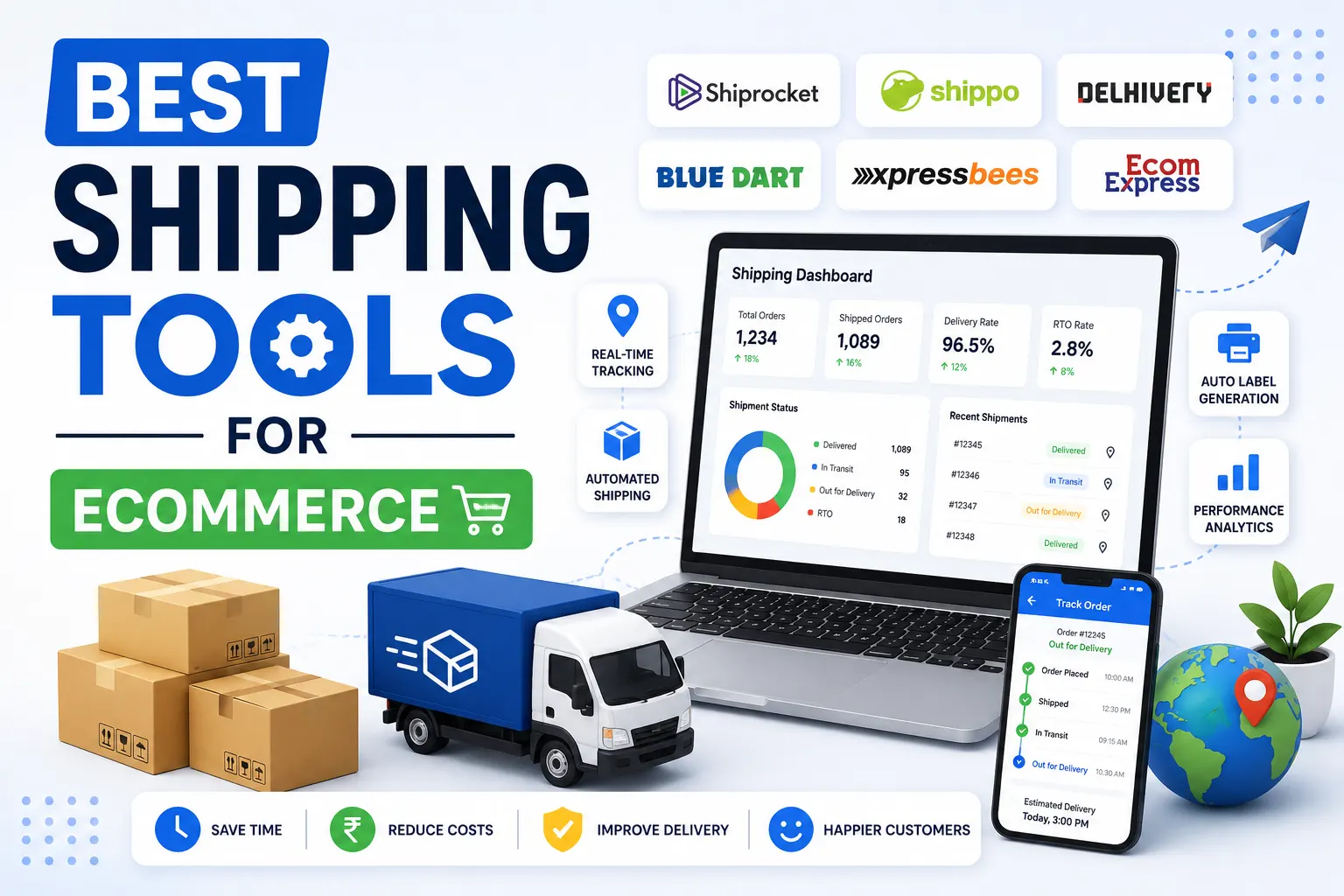
Dropshipping shipping times may vary depending on:
- Supplier location
- Fulfillment efficiency
- International shipping
Long shipping times are common challenges, especially when sourcing products internationally.
Customers increasingly expect:
- Fast delivery
- Real-time tracking
- Reliable fulfillment
Slow shipping negatively affects:
- Reviews
- Retention
- Customer trust
Shipping in Inventory-Based Ecommerce
Inventory-based businesses usually provide:
- Faster fulfillment
- Better shipping reliability
- Improved tracking systems
Businesses can optimize:
- Delivery speed
- Packaging quality
- Logistics workflows
Fast delivery significantly improves customer satisfaction and conversion performance.
Customer Experience Differences
Customer experience is one of the most important competitive advantages in ecommerce.
Customer Experience in Dropshipping
Dropshipping businesses may struggle with:
- Inconsistent product quality
- Delayed shipping
- Limited support control
These issues can negatively affect:
- Customer trust
- Brand reputation
- Repeat purchases
Strong dropshipping businesses compensate through:
- Excellent communication
- Better website UX
- Clear policies
Customer Experience in Inventory-Based Ecommerce
Inventory-based businesses usually deliver more consistent customer experiences because they control:
- Fulfillment
- Packaging
- Product inspection
- Shipping workflows
This improves:
- Trust
- Customer satisfaction
- Brand loyalty
Customer experience quality strongly affects long-term ecommerce growth.
SEO and Content Marketing Considerations
SEO plays a major role in ecommerce traffic generation.
SEO Challenges in Dropshipping
Many dropshipping stores struggle with SEO because they often use:
- Duplicate product descriptions
- Generic supplier images
- Thin content
This reduces search engine differentiation.
Successful dropshipping SEO requires:
- Original content
- Niche-focused strategies
- Strong UX
- Custom product descriptions
Helpful SEO resource:
SEO Advantages in Inventory-Based Ecommerce
Inventory-based businesses often create:
- Original product photography
- Unique descriptions
- Branded content
- Better UX experiences
This improves:
- SEO visibility
- Organic traffic
- Customer trust
Inventory ownership supports stronger long-term SEO strategies.
Product Quality Control
Quality control strongly affects ecommerce reputation.
Quality Control in Dropshipping
Dropshipping sellers often cannot inspect products directly before shipping.
This increases risks such as:
- Defective products
- Packaging inconsistencies
- Product mismatches
Supplier quality problems can damage brand credibility.
Quality Control in Inventory-Based Ecommerce
Inventory-based businesses can inspect products before shipping.
This improves:
- Consistency
- Customer trust
- Return management
Quality control becomes especially important for premium ecommerce brands.
Scalability Comparison
Both ecommerce models offer scalability opportunities, but scalability works differently in each approach.
Scalability in Dropshipping
Dropshipping scales operationally because suppliers handle fulfillment.
Businesses can focus primarily on:
- Marketing
- Customer acquisition
- Website optimization
However, supplier limitations may affect scalability.
Scalability in Inventory-Based Ecommerce
Inventory-based businesses scale through:
- Warehouse expansion
- Inventory systems
- Fulfillment optimization
While operational complexity increases, businesses maintain stronger control over growth quality.
Scalable infrastructure becomes essential as order volume increases.
Risk Factors
Every ecommerce model involves operational and financial risks.
Risks in Dropshipping
Common dropshipping risks include:
- Supplier dependency
- Shipping delays
- Low margins
- Product quality issues
- Marketplace competition
Supplier failures can directly affect customer satisfaction.
Risks in Inventory-Based Ecommerce
Inventory-based risks include:
- Unsold inventory
- Storage costs
- Operational overhead
- Inventory forecasting errors
Businesses must manage inventory carefully to avoid cash flow problems.
Technology and Platform Requirements
Both models require ecommerce platforms, but technical needs differ slightly.
Popular ecommerce platforms include:
- Shopify
- WooCommerce
- Magento
Helpful resources:
Dropshipping Technology Needs
Dropshipping often relies heavily on:
- Supplier integrations
- Product import tools
- Automated fulfillment systems
Automation becomes critical for efficiency.
Inventory Ecommerce Technology Needs
Inventory-based businesses require:
- Inventory tracking systems
- Warehouse management
- Shipping integrations
- ERP connectivity
Technology infrastructure becomes increasingly important as businesses scale.
Which Model is Better for Beginners?
Many beginners choose dropshipping because:
- Startup costs are lower
- Risk appears smaller
- Launch speed is faster
However, dropshipping also involves:
- Intense competition
- Lower margins
- Supplier dependency
Inventory-based ecommerce may require larger investment but often provides:
- Better branding
- Stronger customer experiences
- Higher long-term profitability
The best model depends on:
- Budget
- Goals
- Experience
- Product category
Businesses focused on building sustainable brands often prefer inventory-based ecommerce over time.
Hybrid Ecommerce Approaches
Many modern ecommerce businesses combine both models.
Examples include:
- Testing products through dropshipping first
- Transitioning successful products into inventory ownership
- Combining wholesale and dropshipping operations
Hybrid approaches help businesses:
- Reduce risk
- Test demand
- Improve scalability
This flexibility is increasingly common in ecommerce.
Future Trends in Ecommerce Operations
Ecommerce fulfillment models continue evolving rapidly.
Future trends may include:
- AI-powered inventory forecasting
- Faster fulfillment automation
- Hyperlocal delivery systems
- Sustainable packaging
- Personalized fulfillment experiences
Customer expectations regarding:
- Speed
- Transparency
- Branding
- Reliability
will continue increasing.
Businesses that optimize operational efficiency and customer experience will remain more competitive.
Final Thoughts
Choosing between dropshipping and inventory-based ecommerce is one of the most important strategic decisions for online businesses.
Dropshipping offers:
- Lower startup investment
- Faster launch opportunities
- Reduced operational complexity
Inventory-based ecommerce offers:
- Better branding
- Higher margins
- Greater operational control
- Stronger customer experience
Both models can succeed when aligned properly with:
- Business goals
- Product categories
- Customer expectations
- Operational capabilities
Modern ecommerce customers expect:
- Fast delivery
- Reliable fulfillment
- Professional branding
- Smooth shopping experiences
Businesses prioritizing customer experience, SEO optimization, mobile UX, and operational efficiency often achieve stronger long-term growth regardless of the chosen model.
The future of ecommerce will increasingly revolve around branding, customer trust, personalization, fast fulfillment, and frictionless shopping experiences. Businesses that continuously improve operational quality and customer satisfaction will remain competitive and profitable in the evolving ecommerce industry.