Blog
Ecommerce Branding Strategy

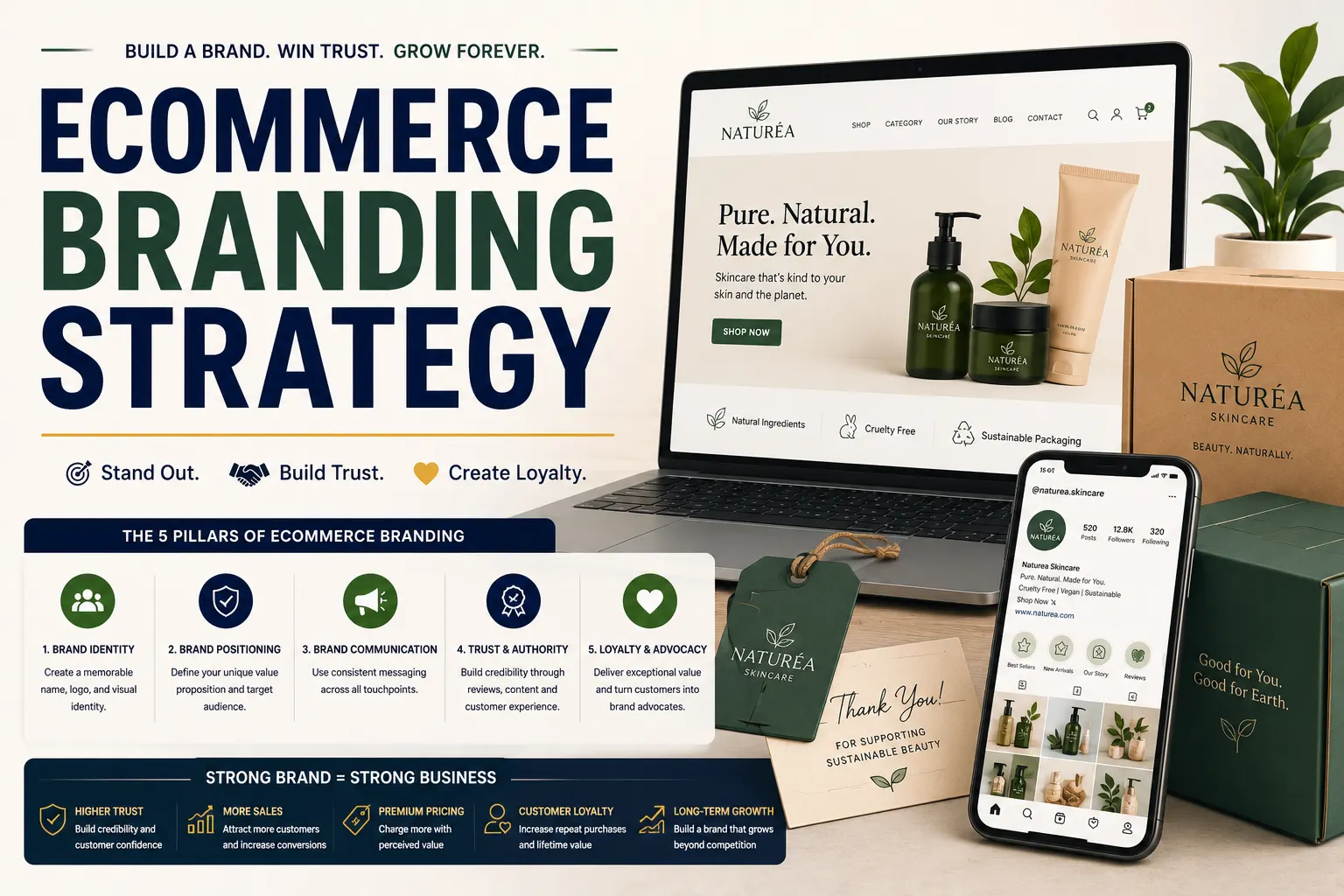
Introduction to Ecommerce Branding Strategy
Ecommerce branding has become one of the most important competitive advantages in modern digital commerce. In earlier stages of ecommerce growth, many businesses focused primarily on pricing, discounts, and marketplace visibility to generate sales. However, as online competition has intensified globally, customers now expect much more than low prices or large product catalogs. Modern ecommerce customers look for memorable brand experiences, emotional connection, trust, authenticity, convenience, and consistency across every interaction.
In 2026, ecommerce branding is no longer limited to logos, colors, or packaging alone. Branding now influences nearly every aspect of ecommerce performance, including:
- Customer trust
- Conversion rates
- Customer retention
- SEO visibility
- Social media engagement
- Pricing power
- Customer loyalty
- Long-term profitability
Strong ecommerce branding helps businesses differentiate themselves in crowded markets where multiple competitors often sell similar products. Customers are increasingly willing to pay higher prices for brands they trust and emotionally connect with, even when cheaper alternatives are available elsewhere.
Successful ecommerce brands create experiences that customers remember. They communicate consistent values, visual identity, messaging, customer service quality, and shopping experiences across websites, mobile devices, social media platforms, email campaigns, and packaging systems.
Weak ecommerce branding often leads to:
- Low customer retention
- Heavy dependence on discounts
- Reduced trust
- Weak social engagement
- Poor differentiation
- Higher advertising costs
Strong branding improves:
- Customer loyalty
- Organic traffic
- Conversion optimization
- Repeat purchases
- Brand authority
Modern ecommerce businesses must think strategically about how customers perceive their brands emotionally and visually throughout the entire shopping journey.
This comprehensive guide explores ecommerce branding strategy in depth, including brand positioning, customer psychology, visual identity, storytelling, D2C branding, social media branding, SEO branding, mobile branding, customer experience strategy, trust-building systems, content marketing, packaging design, and future branding trends shaping ecommerce growth globally.
Understanding Ecommerce Branding
Ecommerce branding refers to how an online business presents itself visually, emotionally, and strategically to customers.
Branding influences:
- Customer perception
- Emotional connection
- Trust levels
- Purchase decisions
- Brand loyalty
Many people mistakenly believe branding refers only to:
- Logos
- Typography
- Colors
While visual identity is important, ecommerce branding also includes:
- Customer experience
- Messaging
- Tone of communication
- Packaging quality
- Website usability
- Product presentation
- Customer support
Successful ecommerce branding creates a recognizable identity that customers associate with:
- Reliability
- Quality
- Emotional value
- Consistency
Strong brands often become memorable because they communicate clear positioning and values repeatedly across every customer touchpoint.
In competitive ecommerce markets, branding frequently becomes more important than product differences themselves.
Why Branding Matters in Ecommerce
Branding directly affects ecommerce profitability because it shapes customer trust and emotional engagement.
Customers often purchase products from brands they:
- Recognize
- Trust
- Feel emotionally connected to
rather than simply choosing the lowest-priced option.
Strong ecommerce branding improves:
- Conversion rates
- Customer retention
- Social sharing
- Word-of-mouth marketing
- Pricing flexibility
Businesses with weak branding often rely heavily on:
- Discounts
- Paid advertising
- Marketplace visibility
to maintain sales volume.
Branding creates long-term competitive advantages because customer trust and emotional connection are difficult for competitors to replicate quickly.
Modern ecommerce customers expect:
- Authenticity
- Transparency
- Consistency
- Professionalism
Branding helps communicate these qualities effectively.
Defining Brand Positioning
Brand positioning defines how an ecommerce business wants customers to perceive the brand compared to competitors.
Strong positioning answers questions such as:
- What makes the brand different?
- Who is the target audience?
- What emotional value does the brand provide?
- Why should customers choose this brand?
Brand positioning affects:
- Pricing strategy
- Visual identity
- Marketing campaigns
- Product messaging
Examples of positioning strategies include:
- Luxury branding
- Affordable convenience
- Eco-friendly products
- Premium craftsmanship
- Youth-focused fashion
Clear positioning improves:
- Marketing consistency
- Customer recognition
- Brand authority
Weak positioning creates confusion and reduces customer trust.
Businesses should define positioning early before investing heavily in ecommerce marketing and website development.
Understanding Target Audience Psychology
Successful ecommerce branding requires deep understanding of customer psychology.
Brands should understand:
- Customer motivations
- Pain points
- Lifestyle preferences
- Shopping behavior
- Emotional triggers
Different audiences respond differently to:
- Pricing
- Messaging
- Colors
- Product presentation
- Marketing tone
For example:
- Luxury customers often value exclusivity
- Budget-conscious shoppers prioritize value
- Eco-conscious consumers value sustainability
Understanding customer psychology helps businesses create stronger emotional brand connections.
Customer research methods include:
- Surveys
- Reviews analysis
- Social listening
- Competitor analysis
- Customer interviews
Brands that deeply understand customer psychology often create stronger loyalty and retention.
Building a Strong Ecommerce Visual Identity
Visual identity is one of the most recognizable aspects of ecommerce branding.
Important visual branding elements include:
- Logo design
- Typography
- Color systems
- Product imagery
- Website layouts
- Packaging design
Strong visual consistency improves:
- Brand recognition
- Professionalism
- Customer trust
Modern ecommerce brands increasingly prioritize:
- Minimalist design
- Mobile-friendly visuals
- Clean layouts
- Fast-loading imagery
Visual branding should align with:
- Target audience expectations
- Product categories
- Brand positioning
For example:
- Luxury brands often use minimalist aesthetics
- Youth-focused brands may use vibrant colors
- Organic brands often use earthy tones
Businesses building strong ecommerce branding systems frequently work with professional ecommerce branding and UX specialists such as Sri Hayavadhana Solutions to create scalable ecommerce experiences optimized for branding, mobile UX, SEO performance, and conversion optimization.
Ecommerce Website Branding Strategy
An ecommerce website is one of the most important brand assets because it acts as the central digital storefront.
Website branding affects:
- First impressions
- Customer trust
- Conversion rates
- Brand perception
Strong ecommerce website branding includes:
- Consistent design language
- Clear messaging
- Strong visual hierarchy
- Mobile responsiveness
- Fast loading speed
Customers often judge ecommerce credibility within seconds of visiting a website.
Poor website branding may create perceptions such as:
- Low quality
- Untrustworthiness
- Weak professionalism
Modern ecommerce websites should feel:
- Intuitive
- Visually clean
- Emotionally engaging
- Conversion-focused
Website UX and branding should work together seamlessly.
Brand Storytelling in Ecommerce
Storytelling helps ecommerce brands create emotional customer connections.
Customers increasingly prefer brands with:
- Authentic stories
- Clear values
- Human connection
Strong ecommerce storytelling may focus on:
- Founder journeys
- Product craftsmanship
- Sustainability missions
- Customer impact
- Community involvement
Storytelling improves:
- Brand memorability
- Customer engagement
- Emotional trust
Successful D2C brands often rely heavily on storytelling because emotional branding differentiates them from generic marketplace sellers.
Storytelling should remain:
- Authentic
- Consistent
- Customer-focused
rather than overly promotional.
Ecommerce Branding Through Product Presentation
Product presentation strongly affects perceived product quality and brand positioning.
Important product branding elements include:
- Product photography
- Product descriptions
- Packaging visuals
- Lifestyle imagery
Premium product presentation improves:
- Customer trust
- Conversion rates
- Brand perception
Modern ecommerce customers expect:
- High-resolution imagery
- Mobile-friendly galleries
- Consistent visual style
Lifestyle photography helps customers emotionally visualize product usage.
Product presentation should align with overall brand identity consistently.
Packaging and Unboxing Experience
Packaging has become an increasingly important ecommerce branding tool.
Strong packaging improves:
- Customer experience
- Brand memorability
- Social sharing
- Customer loyalty
Modern ecommerce brands often invest heavily in:
- Custom packaging
- Branded inserts
- Thank-you cards
- Sustainable materials
The unboxing experience strongly influences:
- Customer satisfaction
- Social media sharing
- Repeat purchases
Packaging should align with:
- Brand positioning
- Customer expectations
- Product category
Premium brands often use minimalist and elegant packaging systems.
Social Media Branding Strategy
Social media is one of the most important branding channels for ecommerce businesses.
Popular ecommerce branding platforms include:
- YouTube
Social media branding helps businesses:
- Build awareness
- Showcase personality
- Engage communities
- Increase trust
Strong social branding requires:
- Visual consistency
- Consistent messaging
- High-quality content
- Audience engagement
Video content increasingly dominates ecommerce branding because it improves emotional engagement and product visibility.
Social media branding should remain aligned with overall ecommerce brand identity.
Influencer Marketing and Branding
Influencer marketing strongly affects ecommerce brand perception.
Collaborating with relevant creators helps brands:
- Reach niche audiences
- Build trust
- Increase visibility
Successful influencer partnerships focus on:
- Authenticity
- Audience alignment
- Brand consistency
Poor influencer selection can damage brand credibility.
Micro-influencers often generate stronger engagement because audiences perceive them as more authentic and relatable.
Influencer branding strategies should prioritize long-term trust over short-term visibility alone.
Mobile Branding in Ecommerce
Mobile branding has become essential because smartphones dominate ecommerce browsing behavior.
Mobile branding should prioritize:
- Simplicity
- Speed
- Readability
- Visual clarity
Important mobile branding elements include:
- Responsive design
- Mobile typography
- Touch-friendly navigation
- Fast-loading visuals
Poor mobile branding reduces:
- Engagement
- Conversions
- Customer trust
Mobile-first ecommerce branding improves:
- User experience
- SEO visibility
- Customer retention
Modern ecommerce brands should design primarily for mobile experiences first.
SEO and Ecommerce Branding
SEO and branding work together closely in ecommerce growth strategies.
Strong branding improves:
- Organic click-through rates
- Customer trust
- Branded search volume
SEO-friendly branding includes:
- Optimized content
- Brand authority building
- Consistent messaging
- High-quality UX
Helpful SEO resources:
Branded ecommerce content often performs strongly in organic search results because users trust recognizable brands more.
Content marketing also supports both SEO growth and brand authority.
Customer Experience as a Branding Strategy
Customer experience is one of the most powerful ecommerce branding tools.
Customers remember:
- Delivery experiences
- Support quality
- Website usability
- Packaging
- Communication quality
Strong customer experiences improve:
- Reviews
- Referrals
- Retention
- Brand advocacy
Important customer experience branding areas include:
- Fast support
- Reliable delivery
- Clear communication
- Smooth checkout UX
Brands should ensure every customer interaction reflects brand values consistently.
Building Trust Through Branding
Trust strongly affects ecommerce conversion rates because customers cannot physically inspect products before purchasing.
Trust-building branding elements include:
- Customer reviews
- Secure payment systems
- Transparent policies
- Professional website design
- Consistent branding
Customers prefer ecommerce brands that feel:
- Authentic
- Reliable
- Professional
Trust-building should remain integrated throughout the ecommerce journey rather than limited to checkout pages alone.
Strong branding often reduces customer hesitation significantly.
Ecommerce Branding for D2C Businesses
D2C brands rely heavily on branding because they compete directly for customer attention without relying entirely on marketplaces.
D2C branding strategies often focus on:
- Emotional storytelling
- Community building
- Social engagement
- Premium UX
Successful D2C brands create highly recognizable digital experiences.
D2C businesses often prioritize:
- Packaging
- Influencer marketing
- Social proof
- Personalized experiences
Strong D2C branding improves:
- Retention
- Customer loyalty
- Word-of-mouth growth
Brand differentiation is especially important in D2C ecommerce.
Analytics and Branding Performance
Branding effectiveness should be measured using data and customer feedback.
Important branding metrics include:
- Repeat purchase rate
- Customer retention
- Brand search volume
- Social engagement
- Conversion rates
Helpful analytics resources include:
Businesses should continuously evaluate:
- Customer perception
- Engagement trends
- UX performance
Brand optimization should remain ongoing rather than static.
Common Ecommerce Branding Mistakes
Many ecommerce businesses struggle with branding because of inconsistent or weak strategies.
Common branding mistakes include:
- Inconsistent visuals
- Weak messaging
- Poor mobile UX
- Generic product presentation
- Excessive discounting
Another major mistake is copying competitors too closely instead of developing unique brand identity.
Strong branding requires:
- Consistency
- Clarity
- Emotional relevance
Businesses should avoid focusing only on aesthetics while ignoring customer experience and trust-building.
Future Trends in Ecommerce Branding
Ecommerce branding continues evolving rapidly.
Future branding trends may include:
- AI-driven personalization
- Interactive shopping experiences
- Voice commerce branding
- Immersive mobile experiences
- Sustainability-focused branding
Customers increasingly expect brands to demonstrate:
- Authenticity
- Transparency
- Ethical responsibility
Personalized customer experiences will likely become even more important in ecommerce branding strategies.
Brands adapting early to evolving customer expectations will remain more competitive.
Final Thoughts
Ecommerce branding is one of the most important long-term growth strategies for online businesses.
Strong branding influences:
- Customer trust
- Conversion rates
- Customer loyalty
- Pricing power
- Brand authority
Successful ecommerce branding combines:
- Visual identity
- Customer psychology
- UX design
- Storytelling
- Mobile optimization
- Customer experience
Modern ecommerce customers expect shopping experiences to feel:
- Authentic
- Personalized
- Trustworthy
- Emotionally engaging
Businesses investing strategically in branding often achieve:
- Higher customer retention
- Better organic growth
- Stronger profitability
- Long-term competitive advantage
Whether building D2C brands, niche ecommerce stores, subscription businesses, or large-scale ecommerce operations, branding should remain a central business priority rather than an afterthought.
The future of ecommerce branding will increasingly revolve around personalization, emotional connection, mobile-first experiences, authenticity, and customer trust. Businesses that continuously improve brand consistency and customer experience will remain competitive and profitable in the rapidly evolving ecommerce industry.