Blog
How to Increase Ecommerce Conversion Rate (Proven Methods That Actually Work)

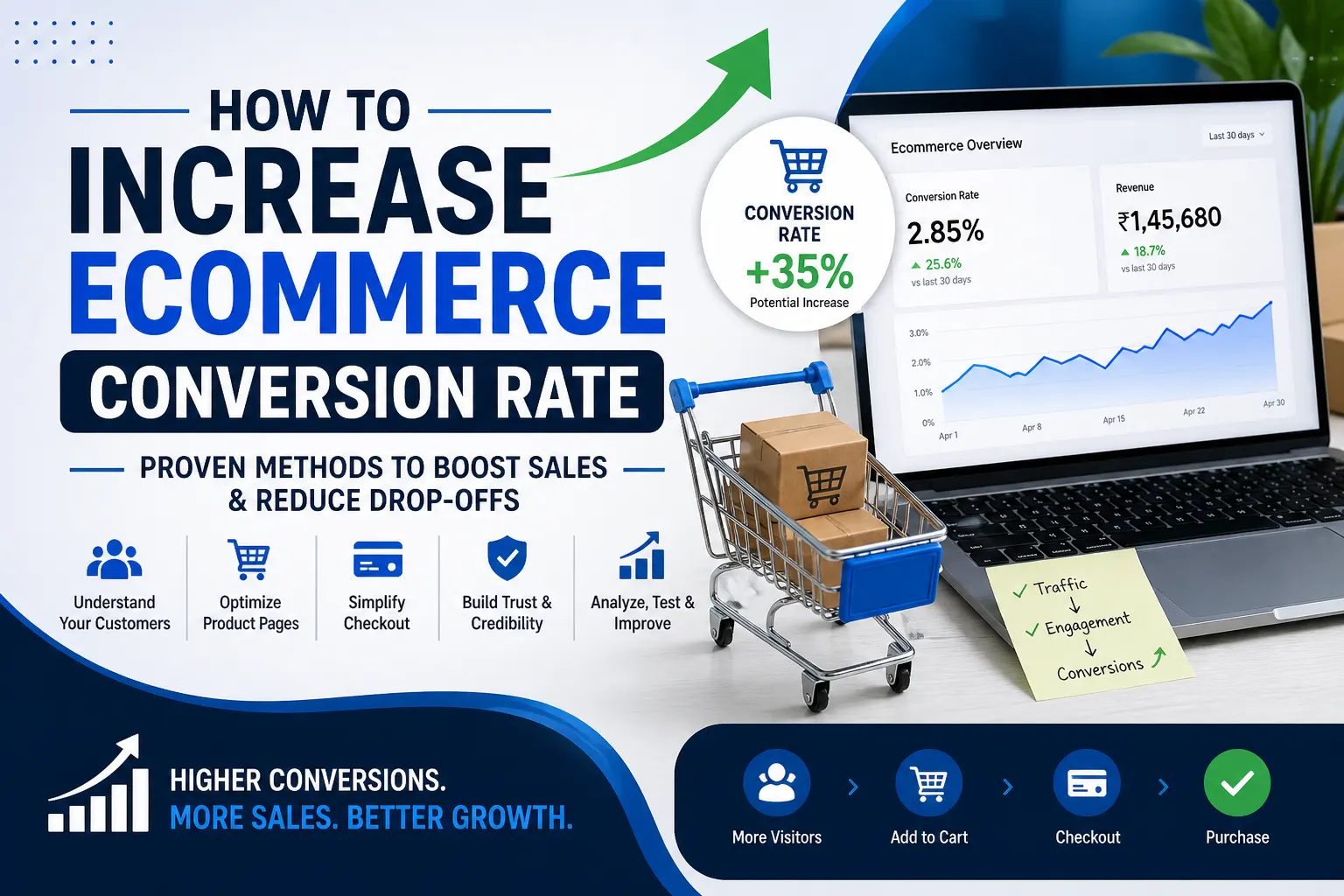
Why Conversion Rate Matters More Than Traffic
Driving traffic to your ecommerce store is only half the battle. The real challenge—and the real profit lever—is converting that traffic into paying customers. You can spend thousands on ads, SEO, and social media campaigns, but if your conversion rate is low, your return on investment will always be limited.
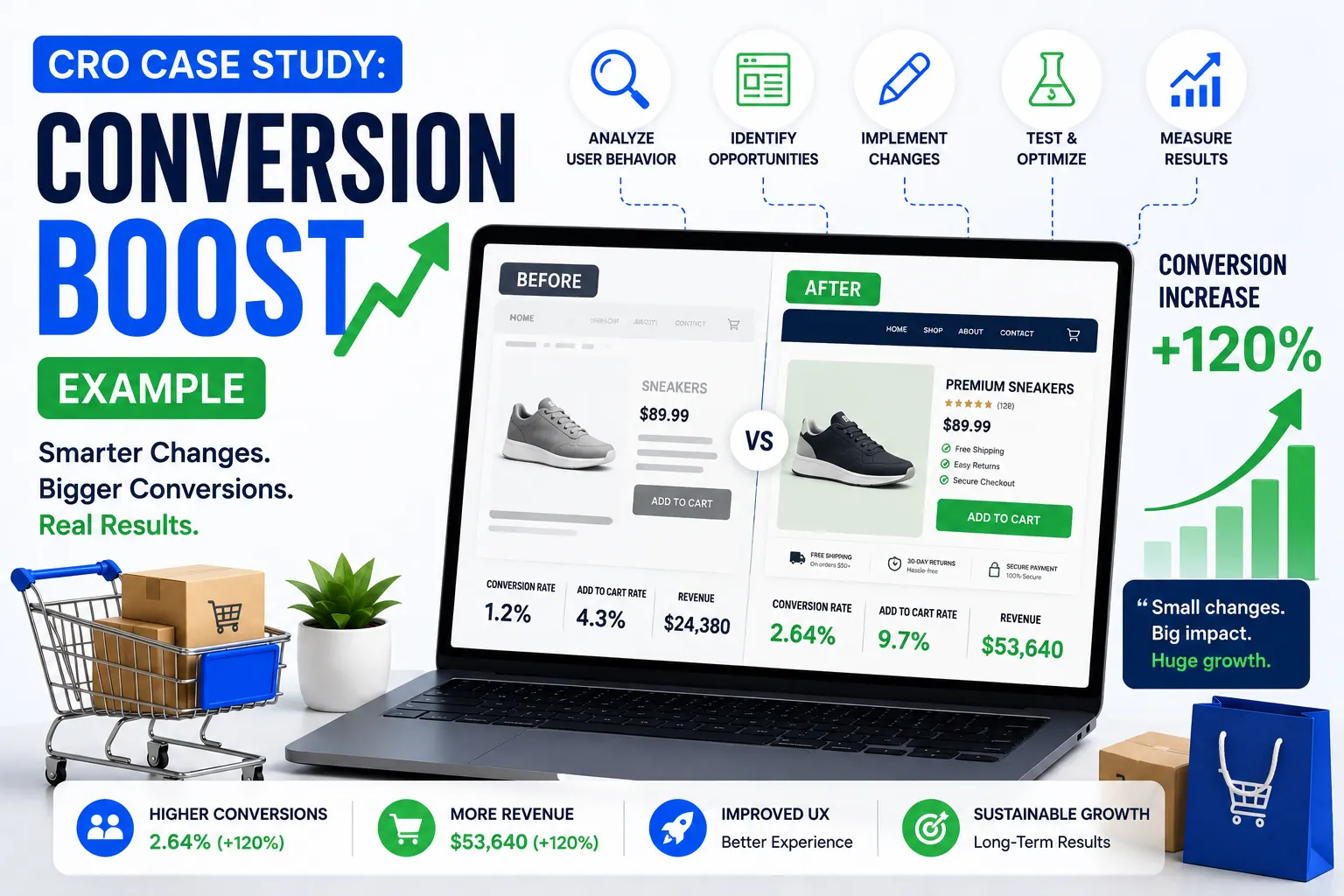
Conversion rate optimization (CRO) is the process of improving your website experience so that a higher percentage of visitors take action—whether that means making a purchase, signing up for a newsletter, or adding products to a cart.
For most ecommerce businesses, the average conversion rate falls between 1% and 3%. That means out of 100 visitors, only 1 to 3 people actually buy. Even a small improvement—from 2% to 3%—can increase revenue by 50% without spending an extra rupee on marketing.
Platforms like Shopify and BigCommerce have repeatedly shown that optimized stores outperform others not because of traffic volume, but because of how well they convert visitors.
This guide will walk you through proven, data-backed methods to increase your ecommerce conversion rate, covering everything from UX design and psychology to checkout optimization and advanced CRO tactics.
Understanding Ecommerce Conversion Rate
Before improving your conversion rate, you need to understand what it actually measures.
What Is Conversion Rate?
Conversion rate is calculated as:
(Number of Conversions ÷ Total Visitors) × 100
A “conversion” can vary depending on your goal:
- Purchase (primary goal)
- Add to cart
- Newsletter signup
- Account creation
Why Conversion Rate Optimization Is Critical
Unlike traffic acquisition, CRO focuses on maximizing the value of existing visitors. This makes it one of the highest ROI activities in ecommerce.
Benefits include:
- Increased revenue without increasing ad spend
- Better user experience
- Improved customer trust
- Lower customer acquisition cost (CAC)
Companies like Amazon continuously optimize their conversion funnel, which is why even small UX improvements can generate millions in additional revenue.
The Psychology Behind Ecommerce Conversions
Understanding human behavior is essential for improving conversion rates. People don’t make purely logical buying decisions—they are influenced by emotions, trust signals, and perceived value.
1. Trust and Credibility
If users don’t trust your website, they won’t buy—no matter how good your product is.
Trust signals include:
- SSL certificates (HTTPS)
- Customer reviews
- Real images
- Clear return policies
2. Social Proof
People rely on the opinions of others before making decisions.
Examples:
- Product reviews
- Ratings
- Testimonials
- User-generated content
3. Scarcity and Urgency
Limited availability or time-based offers encourage faster decisions.
Examples:
- “Only 3 left in stock”
- “Offer ends in 2 hours”
4. Cognitive Load Reduction
The easier it is to understand your site, the higher your conversion rate.
Avoid:
- Cluttered layouts
- Too many choices
- Complex navigation
Optimizing Website Design for Higher Conversions
Your website design directly impacts user behavior. A poorly designed store creates friction, confusion, and drop-offs.
Clean and Focused Layout
Your design should guide users toward taking action—not distract them.
Best practices:
- Use white space effectively
- Highlight CTAs (Call-to-Action)
- Maintain visual hierarchy
Mobile-First Design
More than 60% of ecommerce traffic comes from mobile devices. If your site isn’t optimized for mobile, you’re losing sales.
Key factors:
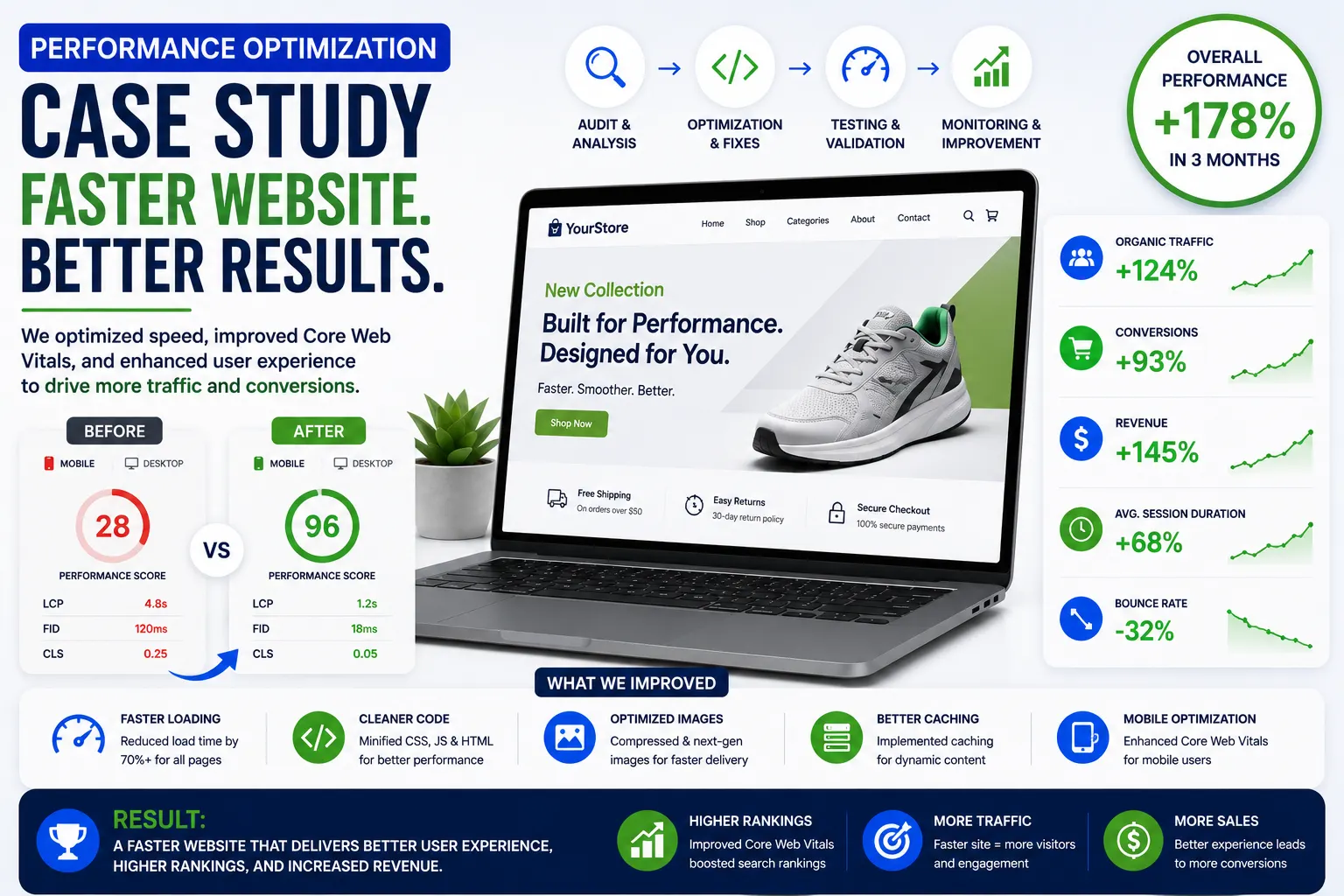
- Fast loading speed
- Easy navigation
- Thumb-friendly buttons
Page Load Speed
Even a 1-second delay can reduce conversions significantly.
Tools like Google PageSpeed Insights help analyze and improve speed.
High-Converting Product Pages
Your product page is where decisions happen. This is the most critical page for conversions.
Product Images
Use high-quality, zoomable images showing multiple angles.
Include:
- Lifestyle images
- Close-ups
- Usage demonstrations
Product Descriptions
Avoid generic descriptions. Instead, focus on benefits.
Bad:
- “100% cotton shirt”
Good:
- “Breathable 100% cotton fabric that keeps you cool in hot weather”
Videos
Product videos can increase conversions by up to 80%.
Clear Pricing
Be transparent about:
- Product price
- Shipping cost
- Discounts
Writing High-Converting CTAs
Your CTA is the final push toward conversion.
Effective CTA examples:
- “Buy Now”
- “Add to Cart”
- “Get Yours Today”
Best practices:
- Use action-oriented language
- Make it visually prominent
- Avoid vague wording
Checkout Optimization (Where Most Sales Are Lost)
The checkout process is where most ecommerce businesses lose customers.
Simplify Checkout
Reduce steps and fields:
- Remove unnecessary form fields
- Enable guest checkout
Multiple Payment Options
Offer flexibility:
- UPI
- Credit/Debit cards
- Wallets
Platforms like Razorpay and PayPal help increase trust and convenience.
Transparent Costs
Hidden fees are the #1 reason for cart abandonment.
Always show:
- Shipping cost upfront
- Taxes clearly
Reducing Cart Abandonment
Cart abandonment rates can be as high as 70%.
Common Reasons:
- Unexpected costs
- Complicated checkout
- Lack of trust
Solutions:
Exit-Intent Popups
Offer discounts when users are about to leave.
Retargeting Ads
Use platforms like Meta Ads to bring users back.
Email Recovery Campaigns
Send reminder emails:
- 1 hour later
- 24 hours later
Using Data and Analytics for CRO
You cannot improve what you don’t measure.
Tools to Use:
- Google Analytics
- Hotjar
Key Metrics:
- Bounce rate
- Exit rate
- Average session duration
- Conversion funnel drop-offs
Heatmaps help you understand:
- Where users click
- Where they scroll
- Where they drop off
A/B Testing for Continuous Improvement
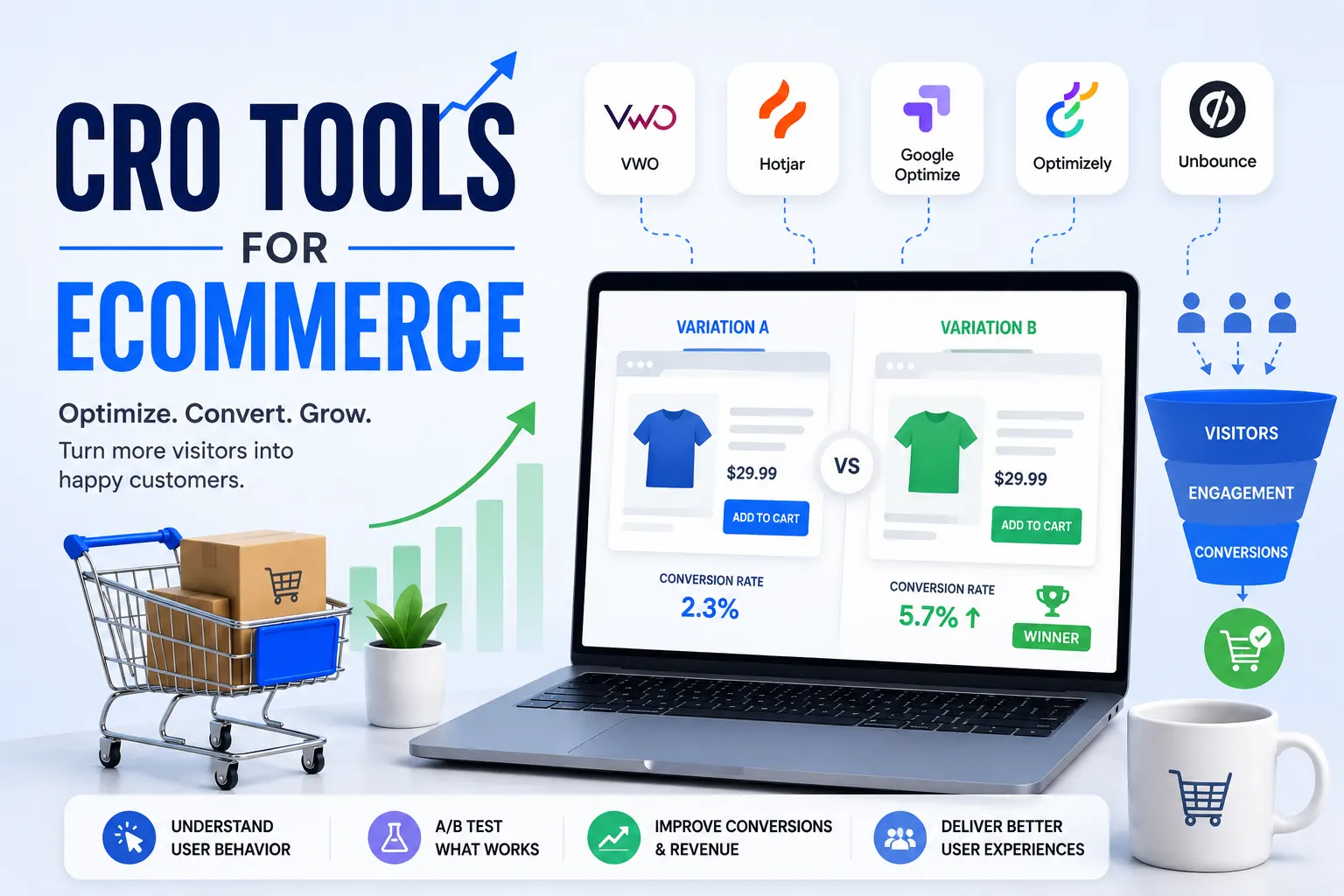
A/B testing allows you to compare two versions of a page.
Test elements like:
- Headlines
- CTA buttons
- Images
- Pricing
Even small changes can produce significant results.
Personalization and AI in Ecommerce
Personalization increases conversions by making the experience more relevant.
Examples:
- Product recommendations
- Personalized emails
- Dynamic content
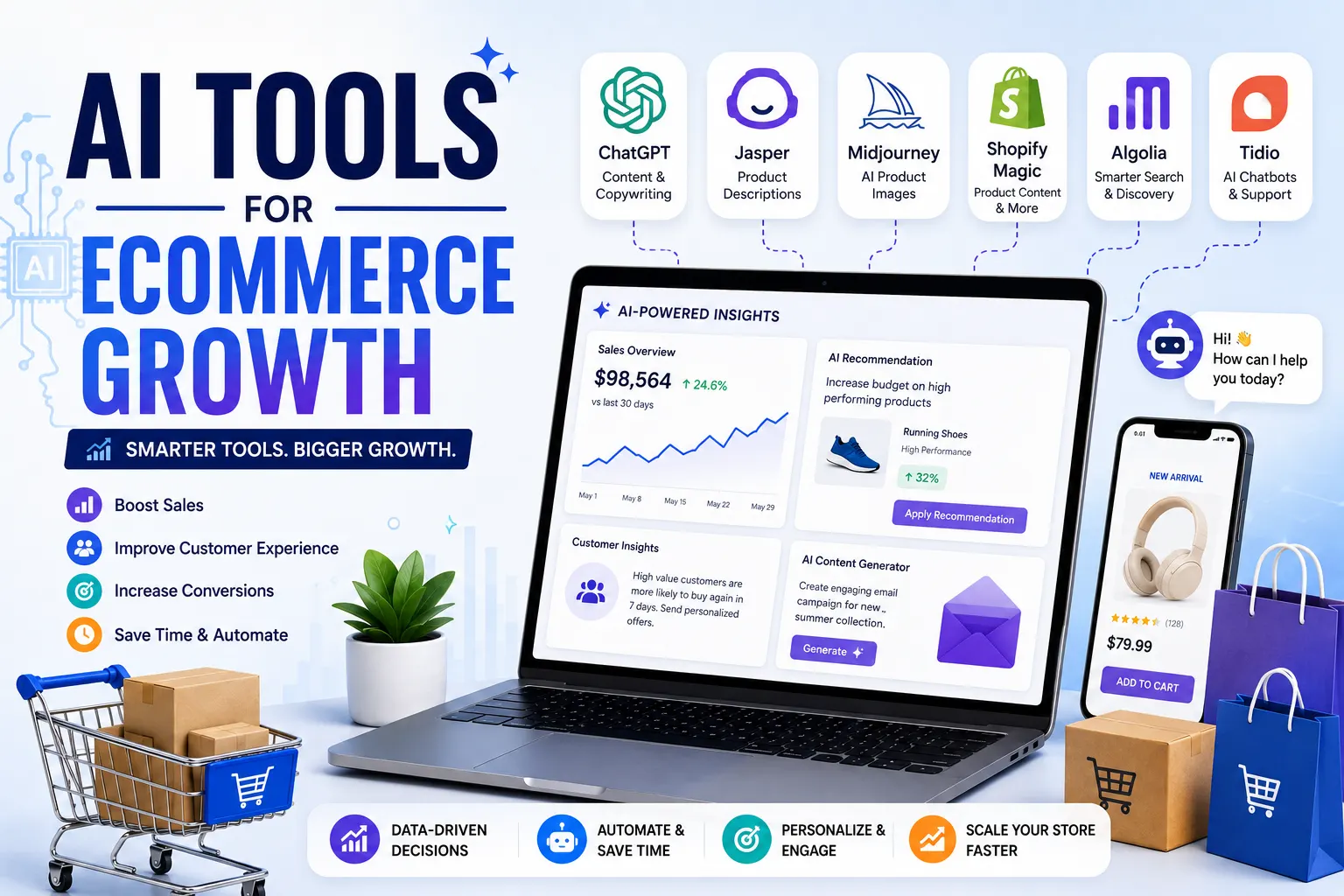
AI tools can:
- Predict user behavior
- Suggest products
- Optimize pricing
Building Trust With Customers
Trust is one of the biggest conversion drivers.
Include:
- Customer reviews
- Testimonials
- Trust badges
Platforms like Trustpilot help build credibility.
Email Marketing for Conversion Growth
Email remains one of the highest ROI channels.
Types of Emails:
- Welcome emails
- Abandoned cart emails
- Post-purchase emails
Automation tools help scale this process.
SEO + CRO: The Winning Combination
SEO brings traffic. CRO converts it.
Your strategy should align both:
- Target high-intent keywords
- Optimize landing pages
- Improve UX
Common Mistakes That Kill Conversions
Avoid these at all costs:
- Slow website
- Poor mobile experience
- Hidden costs
- Weak product descriptions
- No trust signals
Increasing ecommerce conversion rate is not about one tactic—it’s about optimizing every touchpoint in the customer journey.
How to Increase Ecommerce Conversion Rate (Advanced Strategies & Frameworks)
Advanced Funnel Optimization: Fixing Leaks Across the Buyer Journey
Most ecommerce stores focus only on product pages or checkout. That’s a mistake. Conversion rate is influenced by the entire funnel, from the first click to post-purchase experience.
The Full Ecommerce Funnel
A high-performing funnel includes:
- Awareness (Ads, SEO, Social Media)
- Consideration (Landing Pages, Product Pages)
- Decision (Cart + Checkout)
- Retention (Email, Loyalty, Repeat Purchase)
If any stage is weak, your overall conversion rate suffers.
Identifying Funnel Drop-Off Points
Use tools like Google Analytics and Hotjar to identify:
- Pages with high exit rates
- Steps where users abandon
- Scroll depth and interaction patterns
For example:
- High bounce on landing page → poor targeting or weak headline
- Drop-off at cart → pricing or trust issues
- Checkout abandonment → friction or lack of payment options
Fixing Each Funnel Stage
Instead of guessing, optimize stage-by-stage:
- Landing Page → Improve relevance + clarity
- Product Page → Strengthen value proposition
- Cart → Reinforce trust + remove surprises
- Checkout → Simplify and speed up
Landing Page Optimization for Paid Traffic
If you’re running ads (Google, Meta), your landing page determines whether you make or lose money.
Platforms like Google Ads and Meta Ads can drive massive traffic—but without optimized landing pages, your cost per acquisition will skyrocket.
Message Match Principle
Your landing page must match the ad:
- Same headline intent
- Same offer
- Same audience targeting
If your ad says:
“Flat 50% Off Shoes”
Your landing page must immediately show:
- The same offer
- Relevant products
- Clear CTA
Above-the-Fold Optimization
This is the most important section of your page.
Include:
- Clear headline
- Strong value proposition
- Primary CTA
- Trust indicators
Users should understand your offer in under 5 seconds.
Pricing Psychology: How to Make Users Say “Yes”
Pricing is not just about numbers—it’s about perception.
1. Charm Pricing
Instead of ₹1000 → use ₹999
This makes the product feel cheaper psychologically.
2. Anchoring Effect
Show higher price first:
- Original price: ₹1999
- Discounted price: ₹999
This creates perceived value.
3. Bundle Pricing
Combine products:
- Buy 1 → ₹500
- Buy 2 → ₹800
Users feel they’re getting a better deal.
4. Free Shipping Threshold
Example:
- Free shipping above ₹999
This increases average order value (AOV).
Using Urgency & Scarcity (Without Looking Fake)
Urgency works—but only when it feels real.
Effective Methods
- Limited stock indicators
- Time-bound discounts
- Seasonal offers
What to Avoid
Fake timers reset on refresh → reduces trust
Overuse of “Only 1 left” → feels manipulative
Personalization: Turning Visitors Into Buyers
Personalization can significantly improve conversion rates by making users feel understood.
Types of Personalization
1. Product Recommendations
- “You may also like”
- “Frequently bought together”
2. Behavioral Targeting
Show different content based on:
- Browsing history
- Location
- Device
3. Email Personalization
Use:
- Name
- Purchase history
- Preferences
Tools powered by AI can automate this process.
Conversion Rate Optimization for Mobile Users
Mobile commerce dominates in India, especially with platforms like Flipkart and Amazon India leading the way.
Mobile-Specific Challenges
- Smaller screens
- Slower internet
- Shorter attention spans
Mobile Optimization Tips
- Sticky “Add to Cart” button
- Fast loading pages
- Minimal popups
- Easy navigation
Trust-Building Strategies That Increase Sales
Trust is the invisible factor behind every purchase decision.
Add These Elements:
- Customer reviews
- Verified badges
- Secure payment icons
- Return/refund policy
Platforms like Trustpilot help showcase authentic reviews.
Leveraging Social Proof for Higher Conversions
People trust people more than brands.
Types of Social Proof
- Reviews & ratings
- Testimonials
- Influencer endorsements
- User-generated content
Example Strategy
Show:
“5000+ Happy Customers”
or
“Rated 4.8/5 by 1200 users”
This reduces hesitation.
Advanced A/B Testing Strategy
Basic testing is not enough. You need structured experimentation.
What to Test
- Headlines
- Pricing
- CTA colors
- Page layouts
Testing Framework
- Hypothesis
- Test variation
- Run experiment
- Analyze results
Consistency is key—CRO is ongoing.
Retargeting: Bringing Back Lost Visitors
Most users don’t convert on the first visit.
Retargeting helps you bring them back.
Platforms to Use
- Meta Ads
- Google Ads
Strategies
- Show previously viewed products
- Offer limited-time discounts
- Use dynamic ads
Email Automation for Revenue Growth
Email is still one of the highest converting channels.
Must-Have Flows
- Welcome series
- Abandoned cart emails
- Post-purchase upsell
- Re-engagement campaigns
Well-optimized email flows can recover 10–20% of lost revenue.
Conversion Optimization for Indian Ecommerce Market
India has unique buying behavior.
Key Factors
- Price sensitivity
- Preference for discounts
- Trust issues with new brands
What Works in India
- Cash on Delivery (COD)
- Strong return policy
- Regional language support
- WhatsApp support
Payment solutions like Razorpay play a key role in improving conversions.
Post-Purchase Optimization (Most Ignored Growth Lever)
Conversion doesn’t end after purchase.
Why It Matters
Repeat customers convert faster and spend more.
Strategies
- Upsell after purchase
- Loyalty programs
- Referral incentives
CRO Framework You Can Implement Today
Here’s a practical system:
Step 1: Audit Your Funnel
Identify weak points.
Step 2: Prioritize Fixes
Focus on high-impact areas.
Step 3: Test Changes
Run A/B tests.
Step 4: Scale Winners
Implement successful variations.
Real-World Case Study Insight
Many ecommerce brands increase revenue by:
- Improving page speed → +20% conversions
- Adding reviews → +15% conversions
- Simplifying checkout → +25% conversions
These are not assumptions—they’re proven across platforms like Shopify.
Advanced Mistakes That Kill Conversions
Even experienced businesses make these mistakes:
- Overloading pages with popups
- Ignoring mobile UX
- Weak product positioning
- No data-driven decisions
Conversion rate optimization is not a one-time task. It’s a continuous process of testing, learning, and improving.
The biggest gains come from:
- Understanding user behavior
- Removing friction
- Building trust
- Using data effectively
How to Increase Ecommerce Conversion Rate (Expert-Level Strategies, Case Insights & Scalable Systems)
Deep-Dive Case Study Scenarios (Real-World CRO Thinking)
Instead of vague “tips,” let’s break down how real ecommerce improvements happen in practice.
Case 1: Low Conversion Despite High Traffic
Problem:
A store gets 50,000 monthly visitors but converts at only 1%.
Diagnosis:
Using Google Analytics:
- High bounce rate (65%)
- Low time on page
- Weak product engagement
Using Hotjar:
- Users not scrolling
- CTA ignored
Solution Implemented:
- Rewrote headline to match user intent
- Added benefit-driven product descriptions
- Introduced trust badges + reviews
Result:
Conversion rate increased from 1% → 2.4%
Revenue more than doubled without increasing traffic.
Case 2: High Cart Abandonment (70%+)
Problem:
Users add to cart but don’t complete purchase.
Root Causes:
- Unexpected shipping costs
- Forced account creation
- Limited payment methods
Fixes:
- Transparent pricing upfront
- Guest checkout enabled
- Integrated Razorpay for multiple payment options
Result:
Cart abandonment reduced by 25%
Checkout completion increased significantly.
Case 3: Strong Desktop Sales, Weak Mobile Conversions
Problem:
Mobile traffic = 70%, but conversions very low.
Issues Identified:
- Slow mobile speed
- Hard-to-click buttons
- Poor layout
Fixes:
- Mobile-first redesign
- Sticky “Add to Cart”
- Optimized page load
Result:
Mobile conversion rate increased by 40%
CRO + SEO: Building High-Converting Organic Traffic
Most businesses treat SEO and CRO separately. That’s a mistake.
The Right Approach
SEO brings intent-driven users
CRO converts them into customers
Example
If someone searches:
“best running shoes under 2000”
Your page should:
- Match intent (budget-focused)
- Show filtered products
- Highlight offers
- Include comparison
High-Converting SEO Pages
To rank AND convert:
- Use clear headings
- Add internal linking
- Include FAQs
- Optimize for speed
Tools like Google PageSpeed Insights help improve both rankings and conversions.
Content-Led Conversion Strategy (Underrated Growth Lever)
Content is not just for traffic—it’s for conversion.
Types of Content That Convert
- Buying guides
- Comparison articles
- Product roundups
- Use-case content
Example Strategy
Article:
“Best Protein-Rich Dry Fruits”
Then:
- Link to product pages
- Add “Shop Now” CTAs
- Include product bundles
This works extremely well for SEO-driven ecommerce sites.
Conversion-Focused UX Design Framework
Instead of random design decisions, use a structured UX model.
The 5 Principles
1. Clarity
User should instantly understand:
- What you sell
- Why it matters
2. Relevance
Content must match user intent.
3. Value
Clearly communicate benefits.
4. Trust
Use proof and credibility signals.
5. Urgency
Encourage action without pressure.
Advanced CRO Tools Stack (What Serious Brands Use)
Here’s a practical stack you can implement:
Analytics & Tracking
- Google Analytics
- Hotjar
A/B Testing
- Google Optimize alternatives
- VWO (Visual Website Optimizer)
Email Automation
- Klaviyo
- Mailchimp
Personalization
- Dynamic recommendation engines
Ecommerce Platforms
- Shopify
- BigCommerce
Conversion Rate Benchmarks (What You Should Aim For)
While benchmarks vary by industry, here’s a general guide:
- 1% → Poor
- 2–3% → Average
- 4–5% → Good
- 6%+ → Excellent
Top brands like Amazon achieve even higher due to continuous optimization.
Advanced Persuasion Techniques (Neuromarketing)
1. Loss Aversion
People fear losing more than gaining.
Example:
“Don’t miss this deal”
2. Authority Bias
Show credibility:
- Certifications
- Expert endorsements
3. Reciprocity
Give value first:
- Free guide
- Discount
4. Commitment & Consistency
Small actions → big conversions:
- Add to wishlist
- Signup
Conversion Optimization for Repeat Purchases
Acquiring a new customer is expensive. Retaining one is cheaper.
Strategies
- Loyalty programs
- Subscription models
- Exclusive offers
Example:
“Subscribe & Save 10%”
WhatsApp & Conversational Commerce
In India, WhatsApp plays a huge role in conversions.
Why It Works
- Instant communication
- Personalized support
- High open rates
Use Cases
- Order confirmation
- Product queries
- Cart recovery
Scaling CRO: From Tactics to System
Most businesses fail because they apply random tactics.
Build a CRO System
Step 1: Data Collection
Use analytics tools.
Step 2: Insight Generation
Identify patterns.
Step 3: Hypothesis Creation
Example:
“Adding reviews will increase conversions”
Step 4: Testing
Run A/B experiments.
Step 5: Implementation
Scale winning changes.
Common CRO Myths (That Hurt Growth)
Myth 1: More Traffic = More Sales
Wrong. Conversion matters more.
Myth 2: Discounts Always Increase Conversions
Too many discounts reduce perceived value.
Myth 3: CRO Is One-Time
It’s continuous.
High-Impact Quick Wins (Immediate ROI)
If you want fast improvements:
- Add reviews to product pages
- Improve page speed
- Simplify checkout
- Use clear CTAs
- Show trust badges
These alone can increase conversions by 20–50%
Ecommerce success is not about:
- Just ads
- Just SEO
- Just design
It’s about optimizing the entire user journey.
The Winning Formula
Traffic + Experience + Trust + Optimization = Conversions