Blog
AI Integration in Ecommerce Development (2026 Complete Deep-Dive Guide)

📘 Introduction: The Shift from Traditional Ecommerce to Intelligent Commerce
Ecommerce has undergone a massive transformation over the past decade. What began as simple online catalogs has now evolved into highly dynamic, personalized, and data-driven ecosystems. Today’s customers expect more than just a place to browse products—they expect curated experiences, instant responses, intelligent recommendations, and frictionless journeys across devices.
This shift has been made possible by the integration of Artificial Intelligence (AI).
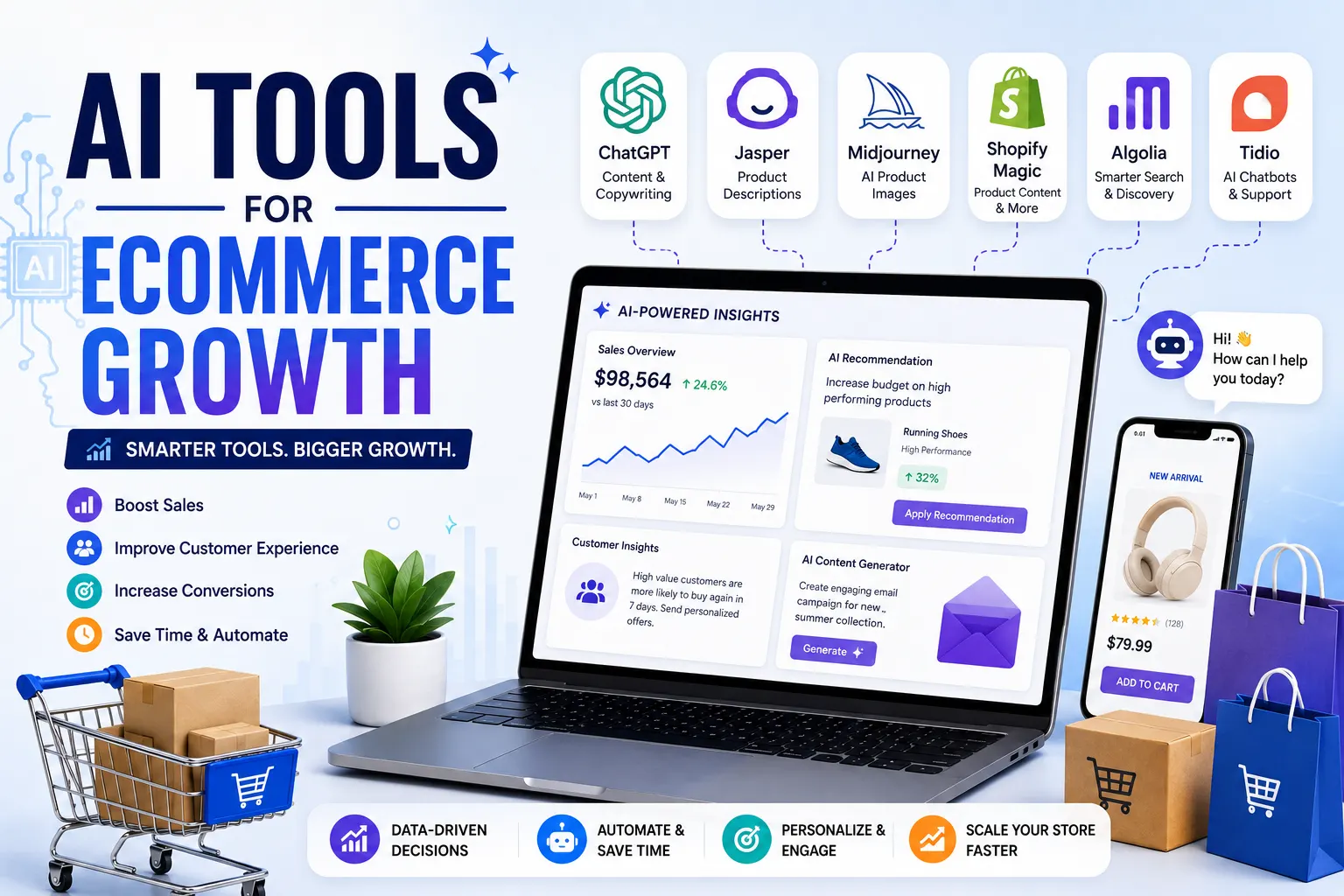
AI is no longer a futuristic concept reserved for tech giants. It has become an essential component of modern ecommerce platforms, enabling businesses of all sizes to compete in a crowded digital marketplace. From predicting customer preferences to automating backend operations, AI is redefining how ecommerce systems are built and optimized.
In this guide, we will explore AI integration in ecommerce development at a deep technical and strategic level. We will go beyond surface-level explanations and examine how AI systems work, how they are implemented, and how they drive measurable business outcomes.
🧠 What AI Really Means in Ecommerce (Beyond the Buzzword)
Artificial Intelligence in ecommerce is not just about chatbots or recommendation engines. It is about building systems that can learn from data, adapt to user behavior, and make decisions in real time.
At its core, AI in ecommerce operates through:
- Machine Learning (ML): Models trained on data to predict outcomes
- Natural Language Processing (NLP): Understanding human language
- Computer Vision: Interpreting visual data
- Deep Learning: Advanced neural networks for complex tasks
👉 Learn foundational AI concepts:
https://cloud.google.com/learn/what-is-artificial-intelligence
🔍 Real Example: How AI Works in a Single Customer Journey
When a user visits an ecommerce website:
- AI tracks browsing behavior
- Predicts preferences
- Adjusts product recommendations
- Optimizes pricing dynamically
- Triggers personalized offers
This entire process happens in milliseconds.
⚙️ Why AI is No Longer Optional in Ecommerce
The biggest reason AI adoption is accelerating is scale.
Modern ecommerce platforms deal with:
- Thousands of products
- Millions of users
- Billions of data points
Manual optimization is impossible at this scale.
🚀 AI Solves Key Ecommerce Challenges
1. Information Overload
AI filters relevant products for users.
2. Customer Retention
AI predicts churn and triggers engagement.
3. Conversion Optimization
AI removes friction in the buying process.
4. Operational Efficiency
AI automates backend workflows.
🧩 Core AI Use Cases in Ecommerce
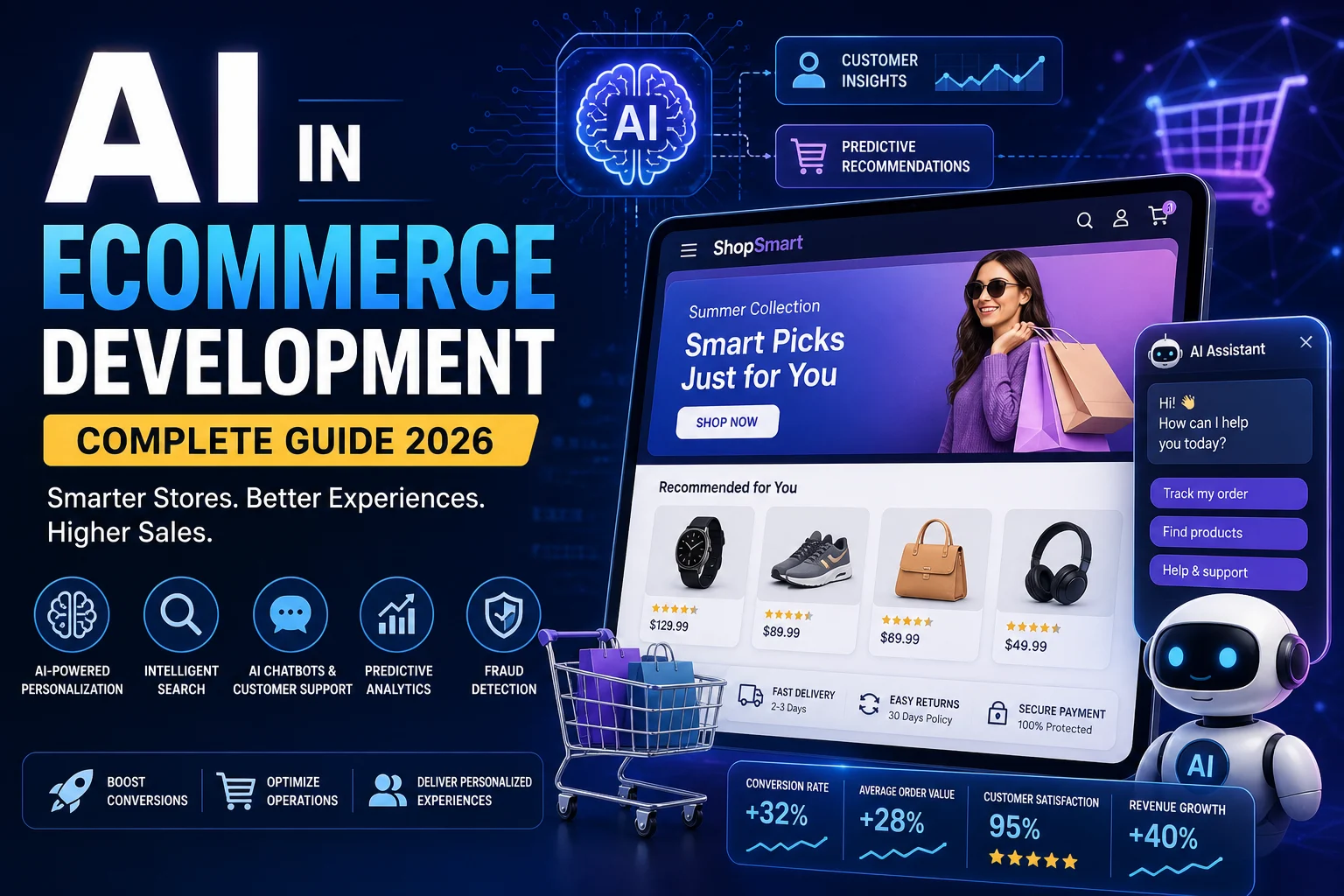
🎯 1. Hyper-Personalized Product Recommendations
Recommendation engines are one of the most visible applications of AI in ecommerce.
🧠 How It Works
AI analyzes:
- Browsing history
- Purchase patterns
- User demographics
- Real-time interactions
It then uses algorithms like:
- Collaborative filtering
- Content-based filtering
- Deep learning models
💡 Real Impact
- Increased Average Order Value (AOV)
- Higher conversion rates
- Improved customer satisfaction
🔍 2. AI-Powered Search and Discovery
Traditional keyword-based search is limited. AI-powered search understands intent, not just keywords.
🧠 Technologies Used
- NLP (Natural Language Processing)
- Semantic search
- Query understanding
💡 Example
User searches:
👉 “comfortable running shoes under 2000”
AI understands:
- Category → shoes
- Type → running
- Attribute → comfort
- Price → under 2000
💬 3. Conversational AI (Chatbots & Assistants)
AI chatbots simulate human conversations and assist users throughout their journey.
🧠 Capabilities
- Answer FAQs
- Recommend products
- Assist checkout
- Handle support queries
💡 Business Benefits
- 24/7 support
- Reduced operational cost
- Faster response times
📦 4. AI in Inventory & Supply Chain Optimization
Inventory mismanagement is one of the biggest challenges in ecommerce.
🧠 How AI Helps
- Predict demand patterns
- Optimize stock levels
- Reduce wastage
- Improve warehouse efficiency
💡 Advanced Use Case
AI can predict seasonal demand spikes and adjust procurement automatically.
💳 5. Fraud Detection & Risk Management
AI plays a critical role in securing ecommerce transactions.
🧠 How It Works
AI models analyze:
- Transaction patterns
- User behavior
- Device fingerprints
- Location anomalies
💡 Outcome
- Reduced fraud
- Safer transactions
- Improved trust
📊 6. Predictive Analytics for Business Growth
Predictive analytics enables businesses to make data-driven decisions.
🧠 AI Predicts
- Sales trends
- Customer lifetime value
- Marketing ROI
- Product demand
🏗️ AI Architecture in Ecommerce (Deep Technical Section)
🧩 1. Data Layer
AI depends on data.
Data sources include:
- User interactions
- Orders
- Reviews
- Clickstreams
🧩 2. Data Processing Layer
Raw data is cleaned and structured for AI models.
🧩 3. Model Layer
Machine learning models are trained and deployed.
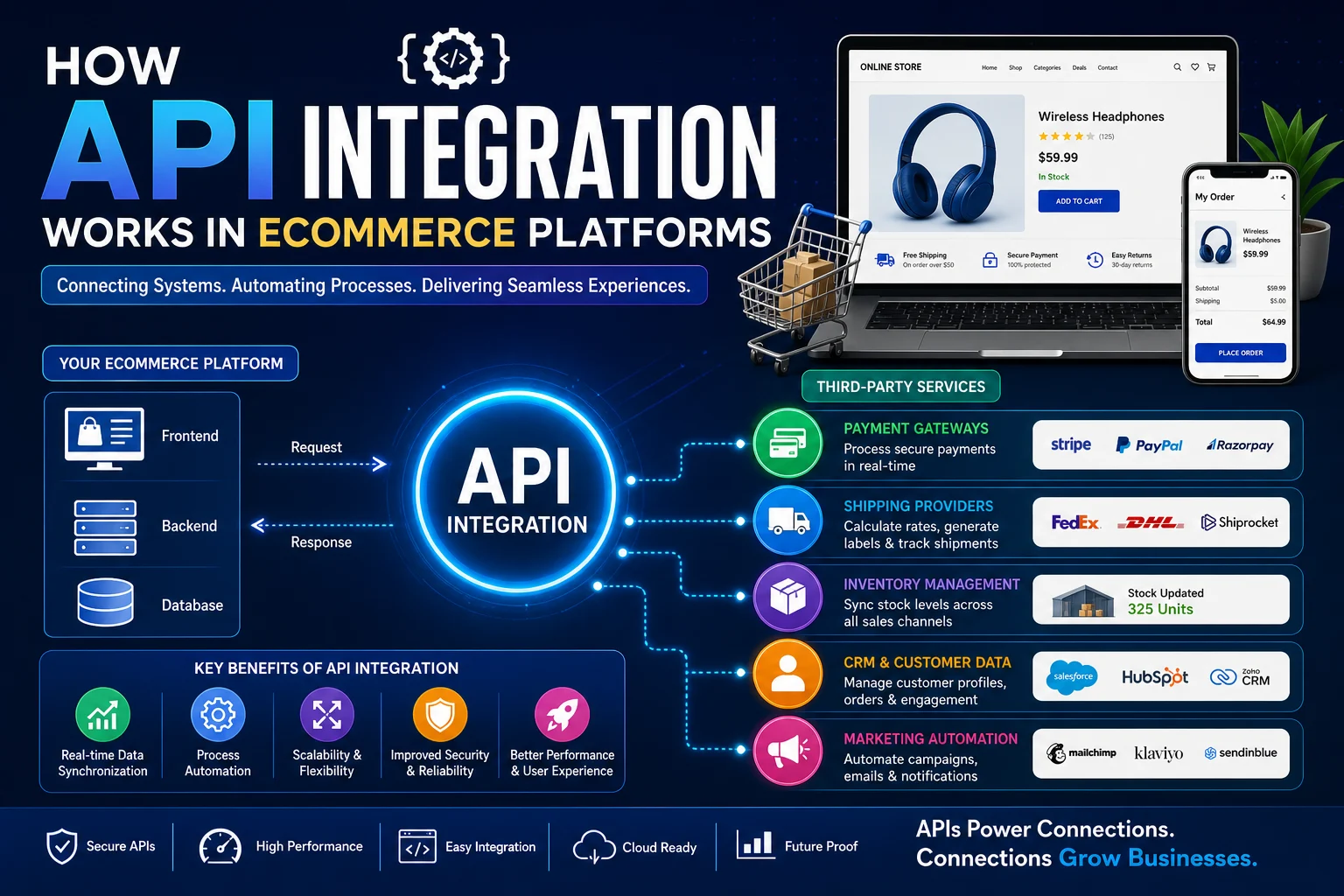
🧩 4. API Layer
APIs connect AI models to ecommerce systems.
🧩 5. Frontend Layer
Displays AI-driven insights to users.
☁️ Cloud Infrastructure
AI systems run on cloud platforms like:
- Amazon Web Services → https://aws.amazon.com/machine-learning/
- Google Cloud Platform → https://cloud.google.com/ai
🔄 Step-by-Step AI Integration Process
🧩 Step 1: Identify Use Cases
Focus on areas with maximum impact.
🧩 Step 2: Collect Data
Ensure high-quality datasets.
🧩 Step 3: Choose AI Tools
Select frameworks and platforms.
🧩 Step 4: Build Models
Train models using ML techniques.
🧩 Step 5: Integrate via APIs
Connect AI with ecommerce systems.
🧩 Step 6: Monitor & Optimize
Continuously improve performance.
⚡ Performance Optimization in AI Systems
🚀 Model Optimization
Use lightweight models.
🚀 Caching
🚀 Edge Computing
Reduce latency.
🔐 Security in AI Ecommerce Systems
🔒 Data Privacy
Protect user data.
🔒 Authentication
🔒 OWASP Practices
Follow OWASP guidelines.
👉 https://owasp.org/www-project-top-ten/
📈 SEO Benefits of AI Integration
AI indirectly boosts SEO by:
- Improving user experience
- Increasing dwell time
- Reducing bounce rate
🔮 Future of AI in Ecommerce
🔹 Voice commerce
🔹 Visual search
🔹 AI-generated content
🔹 Autonomous commerce
🏁 Conclusion
AI integration is not just an enhancement—it is the foundation of modern ecommerce development. Businesses that leverage AI effectively can deliver superior customer experiences, optimize operations, and achieve sustainable growth.
To build AI-powered ecommerce platforms, partner with
Sri Hayavadhana Info Tech and create scalable, intelligent digital commerce systems