Blog
Payment Gateway Integration Guide for Ecommerce Websites (Complete 2026 Deep-Dive Guide)

📘 Introduction: Why Payment Gateway Integration is the Core of Ecommerce Success
In ecommerce, every interaction eventually leads to a single decisive moment—the transaction. Regardless of how well your website is designed or how effective your marketing strategies are, the success of your online business ultimately depends on whether customers can complete their purchases smoothly and securely. This is where payment gateway integration becomes critically important.
A payment gateway is not just a tool for accepting payments; it is a complex system that connects your ecommerce platform with financial institutions, verifies transactions, ensures data security, and manages the flow of money between customers and merchants. Without a reliable and optimized payment integration, even the most advanced ecommerce platform can fail due to abandoned carts, failed transactions, or security concerns.
Modern consumers expect payment experiences that are fast, frictionless, and secure. They want multiple payment options, instant confirmations, and confidence that their financial data is protected. To meet these expectations, businesses must go beyond basic integrations and implement robust, scalable payment systems that can handle high transaction volumes while maintaining performance and security.
This comprehensive guide explores payment gateway integration in depth, explaining how it works, the different types of gateways available, technical implementation details, security considerations, performance optimization strategies, and best practices for building a future-ready ecommerce payment system.
🧠 What is a Payment Gateway? (Detailed Explanation)
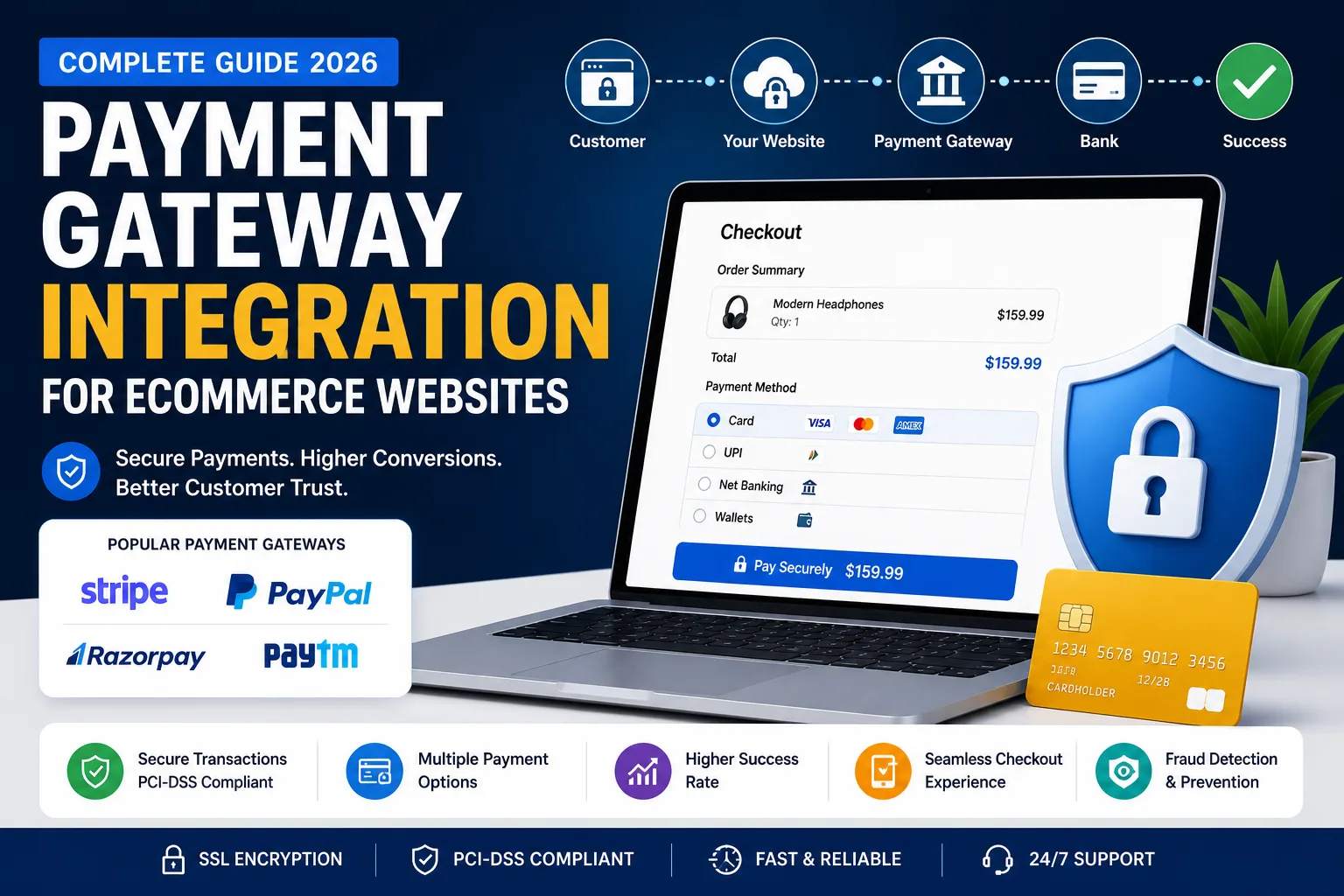
A payment gateway is a technology that facilitates online transactions by acting as an intermediary between your ecommerce website and the financial institutions involved in processing payments. It securely captures payment information, encrypts it, and sends it to the payment processor or acquiring bank for authorization.
When a customer enters their payment details on your website, the gateway ensures that this sensitive data is transmitted securely. It then communicates with the issuing bank (the customer’s bank) to verify whether the transaction can be approved. Once approved, the gateway sends a confirmation back to your ecommerce platform, allowing the order to be completed.
🔍 How Payment Gateways Work (Step-by-Step Deep Flow)
The process of a payment transaction involves multiple stages and systems working together seamlessly.
First, the customer selects a product and proceeds to checkout. At this stage, they enter their payment details, such as credit card information, UPI credentials, or digital wallet data. This information is immediately encrypted using secure protocols to prevent interception.
Next, the encrypted data is sent to the payment gateway, which acts as a bridge between your ecommerce platform and the payment processor. The gateway forwards the transaction request to the acquiring bank, which then communicates with the issuing bank to verify the customer’s funds and authorize the payment.
If the transaction is approved, the issuing bank sends a confirmation back through the acquiring bank and payment gateway to your website. The customer sees a success message, and the order is processed. If the transaction fails, an error message is displayed, prompting the user to try again.
This entire process typically takes only a few seconds, but it involves multiple layers of communication, security checks, and validations.
👉 Learn more about payment processing basics:
https://stripe.com/resources/more/payment-processing-explained
⚙️ Types of Payment Gateways in Ecommerce
Understanding the different types of payment gateways is essential for choosing the right integration approach for your business.
🔹 Hosted Payment Gateways
Hosted gateways redirect customers to an external payment page where they complete the transaction. After the payment is processed, the customer is redirected back to your website.
Examples include PayPal and Razorpay Checkout.
Hosted gateways are easier to implement and provide built-in security, but they can disrupt the user experience due to redirection.
🔹 Self-Hosted Payment Gateways
In this model, the payment details are collected directly on your website and then sent to the gateway for processing.
This approach offers more control over the user experience but requires stronger security measures and compliance with industry standards.
🔹 API-Based (Integrated) Gateways
API-based gateways provide the most flexibility and control. The entire payment process happens within your website, creating a seamless checkout experience.
A leading example is Stripe, which offers powerful APIs for custom payment flows.
👉 Stripe API documentation:
https://stripe.com/docs/api
💳 Popular Payment Gateways Explained (With Use Cases)
💳 Stripe
Stripe is widely used for its developer-friendly APIs and global reach. It supports multiple payment methods, recurring billing, and advanced customization.
💳 PayPal
PayPal is trusted worldwide and provides a familiar checkout experience for users, which can increase conversion rates.
👉 https://developer.paypal.com/docs/api/overview/
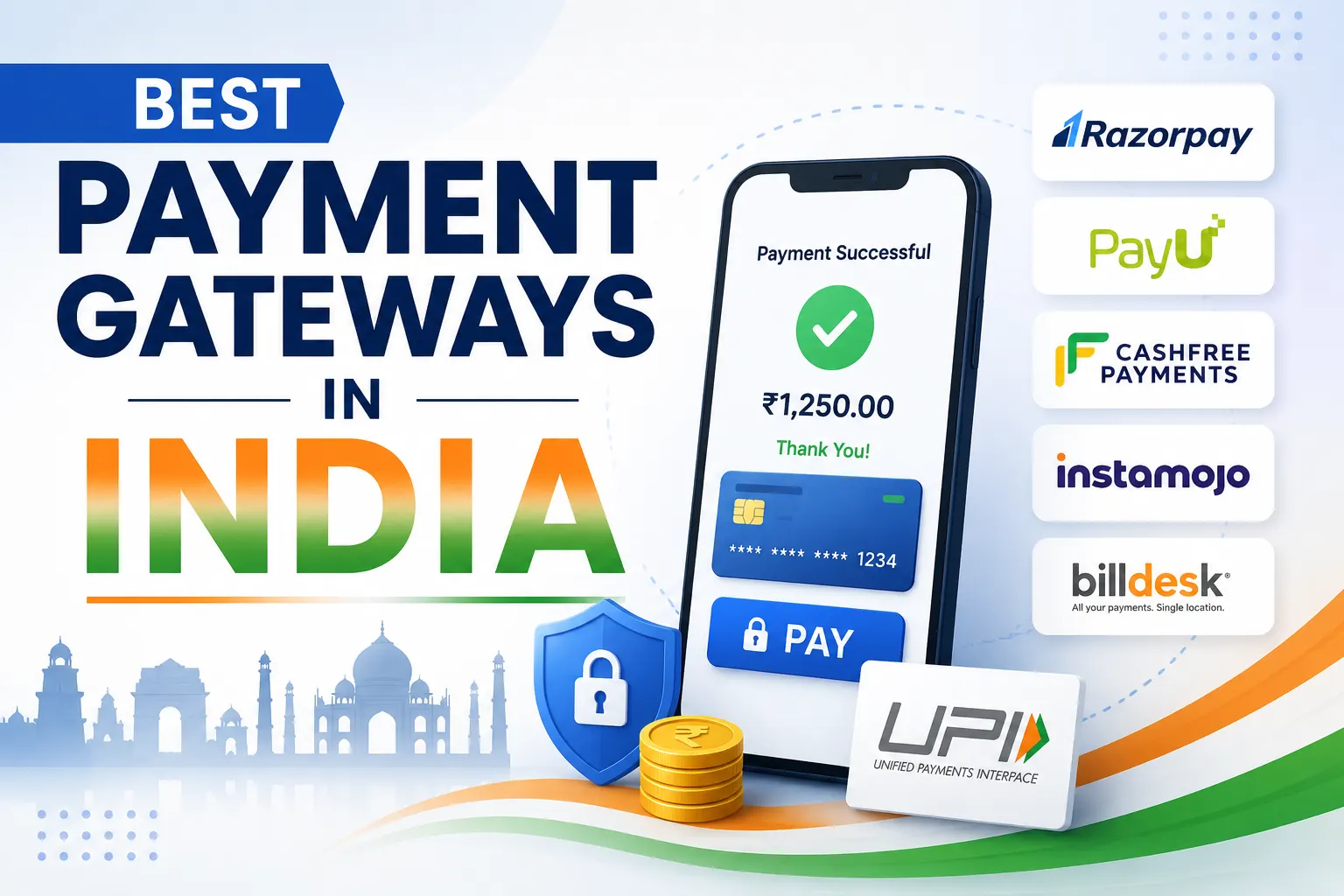
💳 Razorpay
Razorpay is optimized for Indian businesses and supports UPI, wallets, and local payment methods.
👉 https://razorpay.com/docs/api/
🔐 Security in Payment Gateway Integration (Critical Deep Section)
Security is the most important aspect of payment integration because it involves handling sensitive financial data.
🔒 PCI-DSS Compliance
Payment systems must comply with PCI-DSS standards to ensure secure handling of card data.
👉 https://www.pcisecuritystandards.org/
🔒 Tokenization
Tokenization replaces sensitive card details with unique tokens, ensuring that actual data is never stored on your servers.
🔒 Encryption
All payment data must be transmitted using HTTPS encryption to prevent interception.
🔒 Fraud Detection
Modern gateways include AI-based fraud detection systems that analyze transaction patterns to identify suspicious activity.
⚡ Performance Optimization in Payment Integration
A slow or unreliable payment system can lead to cart abandonment.
🚀 Key Optimization Strategies
- Reduce API latency
- Use caching where applicable
- Optimize checkout flow
- Minimize redirects
🚀 Why Speed Matters
According to Google:
👉 https://developers.google.com/speed/docs/insights/v5/about
Faster websites lead to higher conversion rates.
🧩 Payment Gateway Integration Process (Technical Guide)
Step 1: Choose Gateway
Select based on:
- Geography
- Payment methods
- Fees
Step 2: Create Merchant Account
Register with the gateway provider.
Step 3: Obtain API Keys
Used for authentication.
Step 4: Integrate API
Connect frontend and backend with gateway.
Step 5: Test Integration
Use sandbox environment.
Step 6: Go Live
Enable real transactions.
🔗 Role of APIs in Payment Integration
Payment gateways rely heavily on APIs to function.
APIs enable:
- Secure communication
- Real-time processing
- Integration with other systems
☁️ Cloud & Payment Integration
Payment systems perform best when integrated with cloud infrastructure.
Platforms:
- Amazon Web Services → https://aws.amazon.com/fintech/
- Google Cloud Platform → https://cloud.google.com/solutions/financial-services
📈 SEO & Conversion Impact of Payment Experience
A smooth payment experience directly affects:
- Conversion rate
- Bounce rate
- Customer trust
🔮 Future Trends in Payment Gateways
🔹 AI Fraud Detection
🔹 Biometric Payments
🔹 Crypto Payments
🔹 One-click Checkout
🏁 Conclusion
Payment gateway integration is not just a technical requirement—it is a strategic component that directly impacts user experience, trust, and revenue.
A well-integrated payment system ensures:
- Secure transactions
- Faster checkout
- Higher conversions
- Better scalability
To build a secure and scalable ecommerce payment system, partner with Sri Hayavadhana Info Tech and create a future-ready platform optimized for performance and growth.
Say: