Blog
Ecommerce Website Development: Complete Guide for 2026

Ecommerce Website Development
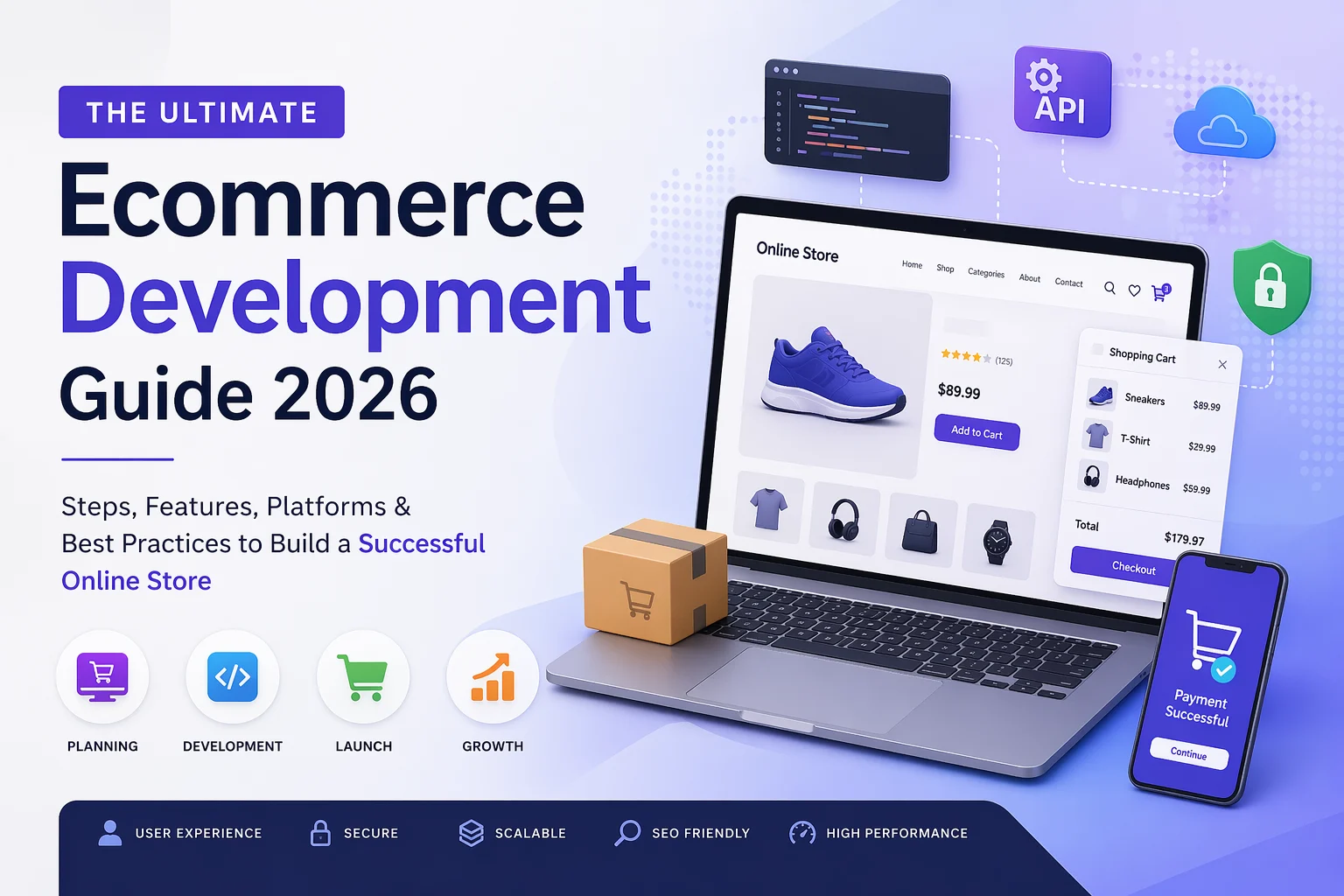
With approximately 27.2 million ecommerce websites operating globally as of 2024, the online marketplace has become highly competitive. In such a saturated environment, simply having an online store is not enough — businesses must focus on differentiation to truly stand out.
The key lies in exceptional ecommerce website development. This goes beyond visual appeal and extends into creating a platform that delivers seamless functionality, intuitive navigation, and a superior shopping experience. Ecommerce development involves optimizing the technical backbone of your website — including how it performs, processes payments, handles user interactions, and presents products to potential customers.
At the same time, the global web development industry is witnessing rapid expansion, growing from $65.35 billion in 2023 and expected to reach $130.9 billion by 2032. This growth highlights the immense opportunity for businesses to innovate, scale, and strengthen their digital presence.
Professional web development services enable businesses to build efficient, user-focused ecommerce websites that effectively solve key challenges, such as:
- Identifying the right features and functionalities for your ecommerce project
- Choosing the most suitable ecommerce platform or framework
- Integrating ecommerce capabilities into an existing website or design
In today’s digital-first landscape, ecommerce websites have become essential for businesses aiming to attract, engage, and convert online audiences into customers.
Companies like Sri Hayavadhana provide tailored, scalable solutions that empower businesses to build high-performing ecommerce platforms aligned with their growth goals.
What is Ecommerce Website Development?
Ecommerce website development is the process of building the complete technical foundation of an online store, enabling businesses to sell products or services digitally. It involves designing, structuring, and integrating multiple systems that work together to deliver a seamless shopping experience for users.
At a high level, ecommerce development is divided into two major components: the frontend, which represents everything a customer sees and interacts with, and the backend, which powers all the operations behind the scenes. However, in practice, it is far more complex than simply connecting these two layers. It requires creating a fully functional ecosystem where design, performance, data handling, and user experience are all optimized to drive conversions.
The frontend of an ecommerce website includes all visible elements such as product listings, images, navigation menus, and checkout interfaces. This layer is responsible for guiding users through the buying journey—from discovering products to completing a purchase. A well-developed frontend focuses not only on visual appeal but also on usability, speed, and responsiveness across devices.
The backend, on the other hand, manages the logic and operations that make the store function smoothly. It handles critical processes such as storing product data, managing inventory levels, processing orders, calculating pricing, and maintaining customer information. The backend ensures that every action taken by a user on the frontend—such as adding a product to the cart or completing a payment—is processed accurately and efficiently.
Another essential aspect of ecommerce website development is system integration. Modern ecommerce platforms rarely operate in isolation; instead, they connect with various third-party tools and services to extend functionality. These integrations may include payment gateways for secure transactions, shipping providers for order fulfillment, analytics tools for tracking performance, and customer relationship management systems to manage user data and engagement. Without proper integration, an ecommerce website cannot operate at scale or deliver a smooth end-to-end experience.
As the ecommerce industry continues to evolve, development approaches are also becoming more advanced. One of the most significant trends is headless commerce, where the frontend and backend are decoupled. This allows businesses to deliver content and shopping experiences across multiple channels—such as websites, mobile apps, and even smart devices—while maintaining a single backend system. This architecture offers greater flexibility, faster updates, and improved performance.
In addition to architectural advancements, AI-driven personalization is transforming how ecommerce websites interact with users. By analyzing customer behavior, preferences, and purchase history, AI enables online stores to deliver highly tailored experiences. This includes personalized product recommendations, dynamic pricing, targeted offers, and customized content. Such personalization not only improves user satisfaction but also significantly increases conversion rates and customer loyalty.
In essence, ecommerce website development is not just about building an online store—it is about creating a scalable, high-performing digital platform that combines technology, design, and data to deliver exceptional shopping experiences and drive long-term business growth.
Options for Building an Ecommerce Website
Choosing the right approach to build your ecommerce website is a critical decision that directly impacts your business’s scalability, performance, user experience, and long-term costs. There is no one-size-fits-all solution—each method comes with its own advantages, limitations, and technical requirements.
Broadly, businesses can choose from three primary approaches when developing an ecommerce website:
- Building a website from scratch using open-source technologies
- Customizing a SaaS (Software-as-a-Service) ecommerce platform
- Adopting a modern architecture such as MACH (Microservices, API-first, Cloud-native, Headless)
Each of these options represents a different level of control, flexibility, and complexity. Understanding how they work—and when to use them—is essential for making an informed decision that aligns with your business goals, technical capabilities, and growth plans.
Building an Ecommerce Website from Scratch (Open Source Approach)
For businesses that have access to a skilled development team or in-house technical expertise, building an ecommerce website from scratch using open-source platforms can be an extremely powerful option. This approach provides complete control over every aspect of the website, from design and functionality to integrations and performance optimization.
Open-source ecommerce development means that the underlying codebase is fully accessible and customizable. Unlike pre-built solutions, there are virtually no restrictions on how your website can be designed or how features can be implemented. This makes it particularly suitable for businesses that require unique workflows, specialized features, or advanced integrations that standard platforms cannot support.
Advantages of Building from Scratch
One of the biggest advantages of this approach is unlimited flexibility. Businesses can:
- Design highly customized user experiences
- Build unique product configurations or pricing models
- Integrate complex third-party systems
- Optimize performance based on specific requirements
This level of control is especially valuable for enterprises that operate in niche markets or have complex operational needs.
Another key benefit is ownership and independence. Since you are not relying on a third-party platform, you have full control over your data, infrastructure, and future development roadmap. This eliminates platform limitations and vendor dependency.
Challenges and Responsibilities
While the flexibility of open-source development is appealing, it also comes with significant responsibilities.
When you build an ecommerce website from scratch, your business is responsible for managing every technical aspect of the platform, including:
- Web hosting and server infrastructure
- Security implementation and monitoring
- PCI compliance for handling payment data
- Regular updates and bug fixes
- Performance optimization and scaling
As your business grows, these responsibilities become more complex and resource-intensive. For example, handling increased traffic during peak sales periods requires robust infrastructure planning and load management strategies.
Security is another critical concern. Since you are managing the system yourself, you must ensure that your website is protected against vulnerabilities, data breaches, and fraud. This requires ongoing monitoring and expertise.
Who Should Choose This Approach?
Building from scratch is best suited for:
- Large enterprises with dedicated development teams
- Businesses requiring highly customized functionality
- Companies with unique workflows or integration needs
- Organizations planning long-term scalability with full control
For example, a business that needs custom pricing logic, advanced inventory systems, or integration with proprietary software may find open-source development to be the most viable option.
Cost and Resource Considerations
Although open-source platforms may not have licensing fees, they are not necessarily “low-cost.” In fact, the total cost of ownership can be higher due to:
- Development time and expertise
- Infrastructure setup and maintenance
- Ongoing updates and support
- Security and compliance management
This makes it essential to evaluate not just the initial setup cost, but also the long-term investment required to maintain and scale the platform.
Strategic Perspective
From a strategic standpoint, building an ecommerce website from scratch offers maximum control and customization, but it also demands a high level of technical commitment. It is a powerful option for businesses that view their ecommerce platform as a core competitive advantage and are willing to invest in building and maintaining it over time.
Customizing a SaaS Ecommerce Solution
For businesses that do not have extensive technical expertise or the resources required to build a fully custom ecommerce platform, SaaS (Software-as-a-Service) solutions offer a practical and efficient alternative. Platforms like Wix and others have made it possible for businesses to launch online stores quickly without needing advanced coding knowledge.
A SaaS ecommerce platform is a subscription-based solution hosted in the cloud, where the entire infrastructure, software, and maintenance are managed by a third-party provider. Instead of building and maintaining a platform from scratch, businesses essentially “rent” the software and use it to run their online store.
How SaaS Ecommerce Platforms Work
In a SaaS model, the provider handles all the complex technical responsibilities involved in running an ecommerce system. This includes:
- Hosting and server management
- Security updates and threat protection
- Payment compliance (such as PCI standards)
- Platform updates and feature enhancements
- Performance optimization and uptime monitoring
This allows business owners to focus on what truly matters—products, marketing, and customer experience—instead of dealing with technical infrastructure.
Advantages of Using a SaaS Ecommerce Solution
One of the biggest advantages of SaaS platforms is speed to market. Businesses can set up and launch an online store within days or even hours, compared to weeks or months required for custom development.
Another major benefit is cost efficiency. Since there is no need for heavy development or infrastructure investment, SaaS solutions significantly reduce upfront costs. The subscription model also makes expenses predictable and easier to manage.
SaaS platforms are also designed with user-friendliness in mind. Most offer drag-and-drop interfaces, pre-built templates, and intuitive dashboards, making them accessible even for non-technical users.
Additionally, SaaS platforms are scalable. As your business grows, you can upgrade your plan or add features without rebuilding the entire system.
Limitations of SaaS Platforms
While SaaS solutions offer convenience, they also come with certain limitations.
Since the platform is controlled by a third-party provider, businesses may face restrictions in:
- Customizing core functionalities
- Accessing the underlying code
- Implementing highly specific workflows
This can become a challenge for businesses with complex requirements or unique operational needs.
Open SaaS: Combining Flexibility and Convenience
To bridge the gap between traditional SaaS and open-source platforms, a newer approach known as open SaaS has emerged.
Open SaaS platforms combine the ease of SaaS with the flexibility of open-source systems. They provide:
- Cloud hosting and managed infrastructure
- Lower total cost of ownership
- Faster deployment
At the same time, they allow developers to:
- Use APIs for custom integrations
- Extend functionality
- Build tailored user experiences
Companies like Sri Hayavadhana leverage such flexible architectures to help businesses build scalable and customized ecommerce solutions without the heavy burden of managing everything from scratch.
Strategic Perspective on SaaS
From a business standpoint, SaaS ecommerce platforms are ideal for:
- Startups and small businesses
- Brands looking for quick deployment
- Businesses with limited technical resources
- Companies prioritizing cost efficiency and speed
However, as businesses grow and require more customization, they may eventually need to explore more flexible architectures.
Understanding MACH Architecture in Ecommerce Development
For many years, ecommerce platforms were built using a monolithic architecture, where the frontend (user interface) and backend (server-side logic) were tightly connected in a single system.
While this approach works well for small and mid-sized businesses with basic requirements, it becomes increasingly restrictive as businesses scale, expand into new markets, or require advanced features.
This is where MACH architecture comes into play.
What is MACH Architecture?
MACH stands for:
- Microservices
- API-first
- Cloud-native
- Headless
It represents a modern approach to building ecommerce systems using a modular and flexible technology stack, allowing businesses to choose the best tools for each function rather than relying on a single, all-in-one platform.
Microservices (Detailed Explanation)
Microservices architecture breaks down a large application into smaller, independent services. Each service is designed to perform a specific function, such as:
- Product management
- Payment processing
- User authentication
- Inventory handling
These services operate independently, meaning they can be:
- Developed separately
- Updated without affecting other components
- Scaled individually
This improves flexibility and reduces system complexity over time.
API-First Approach
APIs (Application Programming Interfaces) act as communication bridges between different systems.
In an API-first approach, every component of the ecommerce system is built to communicate through APIs from the beginning. This ensures:
- Seamless integration between tools
- Faster development cycles
- Easier expansion into new platforms (mobile apps, marketplaces, etc.)
For example, your ecommerce backend can connect to:
- Mobile apps
- Third-party marketplaces
- Marketing tools
—all through APIs.
Cloud-Native Infrastructure
Cloud-native systems are built to fully utilize cloud environments. Instead of relying on physical servers, they operate on scalable cloud platforms.
Benefits include:
- Automatic scaling during high traffic
- Reduced infrastructure management
- High availability and reliability
- Subscription-based cost models
This makes cloud-native architecture ideal for modern ecommerce businesses that need flexibility and performance.
Headless Commerce (Deep Explanation)
Headless commerce separates the frontend (what users see) from the backend (how the system works).
This allows businesses to:
- Design unique user experiences
- Deliver content across multiple channels
- Update frontend without affecting backend
For example, the same backend system can power:
- Website
- Mobile app
- Smart devices
- Kiosks
This provides unmatched flexibility in delivering consistent experiences across platforms.
Why MACH is Important for Scaling Ecommerce
As ecommerce businesses grow, they often face challenges such as:
- Expanding into new regions
- Managing multiple storefronts
- Integrating advanced technologies
MACH architecture solves these challenges by offering:
- Flexibility in technology selection
- Faster innovation cycles
- Better scalability
- Future-ready infrastructure
Strategic Conclusion
Choosing between SaaS, open-source, or MACH architecture depends on your business stage and goals.
- SaaS → Best for speed and simplicity
- Open-source → Best for full control
- MACH → Best for scalability and innovation
Businesses working with experts like Sri Hayavadhana can evaluate these options strategically and implement the most suitable approach based on long-term growth plans.
In this comprehensive guide, we’ll cover everything you need to know about ecommerce website development — helping you create, launch, and scale a world-class online store.
Choosing the Right Ecommerce Website Developer
Selecting the right ecommerce website developer is one of the most critical decisions you will make when building or scaling your online store. The developer you choose is not just responsible for writing code—they play a central role in shaping the entire shopping experience, influencing how users interact with your website, how smoothly transactions are processed, and ultimately how effectively your store converts visitors into customers.
A well-developed ecommerce website creates a seamless journey for users, from browsing products to completing purchases. It ensures that the website is visually appealing, technically robust, and aligned with modern user expectations. On the other hand, a poorly developed site can lead to slow performance, broken functionality, and a lack of trust—resulting in lost sales and reduced customer loyalty.
Consumer behavior strongly supports this. Research indicates that a significant percentage of users abandon purchases if a website appears outdated, difficult to navigate, or unreliable. At the same time, users are far more likely to trust and engage with businesses whose websites are fast, professional, and easy to use. This highlights the direct connection between quality development and business performance.
Why Hiring an Experienced Ecommerce Developer Matters
Not all web developers are equipped to handle ecommerce projects. Ecommerce websites are fundamentally different from standard websites because they involve:
- Real-time transactions
- Secure payment processing
- Inventory and order management systems
- Dynamic product data handling
- Integration with multiple third-party tools
An experienced ecommerce developer understands these complexities and knows how to build systems that are both scalable and secure. They are also familiar with industry best practices, including performance optimization, conversion-focused design, and compliance requirements.
Working with experts such as Sri Hayavadhana can help ensure that your ecommerce website is built not just for functionality, but for long-term growth and success.
Understanding Different Developer Strengths
Ecommerce development involves multiple skill sets, and developers often specialize in specific areas. Understanding these strengths is essential when choosing the right professional or team for your project.
Frontend-Focused Developers
Frontend developers specialize in creating the visual and interactive aspects of your website. Their responsibilities include:
- Designing layouts and user interfaces
- Ensuring responsiveness across devices
- Improving navigation and usability
- Enhancing overall user experience
They play a crucial role in how your brand is perceived and how easily users can browse and purchase products.
Backend-Focused Developers
Backend developers focus on the technical engine that powers your ecommerce store. They handle:
- Database management
- Server-side logic
- Payment processing systems
- Order and inventory management
- API integrations
Their work ensures that all processes run smoothly behind the scenes.
Full-Stack Developers
Some developers are skilled in both frontend and backend development. While they can handle end-to-end projects, they often still have a primary area of expertise. It is important to evaluate whether their strengths align with your specific requirements.
Key Technical Factors to Evaluate in an Ecommerce Developer
When selecting a developer, you should assess their expertise in critical areas that directly impact your website’s performance and success.
1. Security and PCI Compliance
Ecommerce websites handle sensitive customer data, including payment information. A competent developer must understand how to implement secure systems and ensure compliance with industry standards such as PCI-DSS.
2. Search Engine Optimization (SEO)
An ecommerce website must be built with SEO in mind from the ground up. This includes:
- Clean URL structures
- Fast loading speeds
- Mobile optimization
- Proper use of metadata and schema
Without SEO-friendly development, even the best-designed store may struggle to attract organic traffic.
3. Payment Gateway Integration
Your developer should be able to integrate multiple payment options, including:
- UPI
- Credit/debit cards
- Digital wallets
Providing flexible payment options improves user convenience and increases conversion rates.
4. CMS Integration
A Content Management System (CMS) allows you to manage products, content, and updates without technical expertise. The developer should ensure that the CMS is:
- Easy to use
- Scalable
- Integrated with your ecommerce system
5. Mobile Responsiveness
With the majority of users shopping on mobile devices, your website must perform flawlessly across different screen sizes. This requires responsive design and mobile-first development strategies.
6. Shopping Cart and Checkout Design
The shopping cart and checkout process must be optimized for conversions. A developer should ensure:
- Minimal steps
- Fast loading
- Clear pricing and transparency
7. Product Filtering and Search Functionality
Advanced filtering and search features help users find products quickly. This improves user experience and reduces bounce rates.
Aligning Developer Choice with Business Needs
Before selecting a developer or development company, it is essential to clearly define your business requirements. Without this clarity, you risk choosing a developer whose skills do not match your needs.
For Open-Source Ecommerce Projects
If you are using an open-source platform, your priority should be a developer with strong backend expertise. They should be capable of:
- Customizing core functionalities
- Managing server infrastructure
- Handling complex integrations
However, frontend design should not be neglected, as user experience remains critical.
For SaaS-Based Ecommerce Platforms
If you are using a SaaS platform, the focus may shift more toward frontend development and customization. However, technical expertise is still important for:
- API integrations
- Advanced custom features
- Performance optimization
Evaluating Developer Portfolio and Expertise
A developer’s past work provides valuable insight into their capabilities. When reviewing portfolios, consider:
- Types of ecommerce projects completed
- Design quality and usability
- Performance and speed of websites
- Industries they have worked with
Additionally, assess their familiarity with relevant technologies and platforms to ensure they can meet your project requirements.
Final Thoughts
Choosing the right ecommerce developer is not just a technical decision—it is a strategic investment in your business’s future. The right partner will not only build your website but also contribute to its performance, scalability, and long-term success.
By carefully evaluating developer strengths, technical expertise, and alignment with your business goals, you can find a partner who can transform your ecommerce vision into a high-performing, conversion-driven online store.
Key Functionality to Consider When Developing an Ecommerce Website
When building an ecommerce website, one of the most important steps is identifying the right set of features and functionalities that will support your business operations and deliver a seamless shopping experience to your customers.
It is important to understand that ecommerce functionality is not universal. The features required for your website will vary significantly depending on your business model, target audience, product type, and growth strategy. A startup selling locally may require a simple setup, whereas a global ecommerce business may need advanced capabilities such as multi-currency support, international shipping logic, and localization features.
Therefore, instead of randomly selecting features, businesses should take a structured approach by aligning functionality with the customer journey—from discovery to purchase and post-purchase engagement.
How to Identify the Right Features for Your Ecommerce Website
A practical way to define your ecommerce functionality is to start from broad requirements and gradually move toward specific features.
First, identify your core business needs. These include essential functionalities such as:
- Payment gateway integration
- Product catalog management
- Order processing systems
- Basic shipping and delivery setup
These are non-negotiable elements required for any ecommerce website to function properly.
Next, you can layer in advanced or operational features that improve efficiency and scalability. These may include:
- Automated tax calculations
- Real-time shipping rate estimations
- Inventory synchronization across channels
Finally, prioritize your features based on business impact. Not every feature needs to be implemented at once. Assigning priority levels helps you focus on what directly contributes to revenue and customer experience.
For example:
- High priority → Features that affect conversions (checkout, payments)
- Medium priority → Features that improve operations (automation tools)
- Low priority → Enhancements that improve convenience
This structured approach ensures that your ecommerce website is both functional and strategically aligned with your goals.
Responsive Design: Building for a Mobile-First World
Modern ecommerce is heavily driven by mobile users. A significant portion of online shopping now happens through smartphones, making responsive design a critical requirement rather than an optional feature.
Responsive design ensures that your website automatically adapts to different screen sizes, providing a consistent experience across devices such as desktops, tablets, and mobile phones.
A mobile-optimized ecommerce website improves:
- User experience
- Engagement
- Conversion rates
If users struggle to navigate your site on mobile, they are highly likely to leave without making a purchase.
To address this, ecommerce websites must follow a mobile-first design approach, where the interface is initially designed for smaller screens and then scaled up for larger devices. This ensures clarity, simplicity, and usability.
Additionally, businesses can enhance mobile experiences further by:
- Developing dedicated mobile apps
- Enabling push notifications
- Simplifying mobile checkout flows
SEO Capabilities: Driving Organic Traffic and Sales
Search engine optimization (SEO) is one of the most powerful and cost-effective ways to drive traffic to an ecommerce website. Unlike paid advertising, SEO brings in users who are actively searching for products, making them more likely to convert.
A well-developed ecommerce website should include strong SEO capabilities at both the technical and content levels.
Technical SEO Elements
- Clean and structured URLs
- Fast page loading speed
- Mobile optimization
- Secure HTTPS protocol
On-Page SEO Elements
- Optimized product titles and descriptions
- Meta tags (title and description)
- Image alt text
- Internal linking
Why SEO Matters for Ecommerce
When your website ranks higher on search engines, it gains:
- Increased visibility
- More targeted traffic
- Higher conversion potential
SEO is not just about traffic—it is about attracting high-intent users who are already interested in your products.
Site Speed: A Critical Performance Factor
Website speed plays a crucial role in ecommerce success. A slow-loading website can negatively impact user experience, search engine rankings, and conversion rates.
Users expect ecommerce pages to load quickly. Even a delay of a few seconds can lead to:
- Increased bounce rates
- Abandoned carts
- Loss of trust
From an SEO perspective, search engines prioritize fast-loading websites, making speed optimization essential for visibility.
Factors That Affect Site Speed
- Image sizes and optimization
- Server performance
- Code efficiency
- Use of caching and CDNs
How to Optimize Site Speed
- Compress images without losing quality
- Minimize unnecessary scripts
- Use fast hosting infrastructure
- Implement caching mechanisms
A fast website not only improves user satisfaction but also increases the likelihood of conversions.
Content Management System (CMS): Managing Dynamic Content
A content management system (CMS) is an essential component of an ecommerce website. It allows businesses to manage and update content without requiring technical expertise.
A CMS enables you to:
- Add and edit product descriptions
- Publish blog content
- Update banners and landing pages
- Manage multimedia content
This flexibility ensures that your website remains dynamic and up-to-date.
For ecommerce businesses, content plays a significant role in:
- SEO performance
- Customer education
- Brand storytelling
Product Management: Handling Inventory and Listings
Effective product management is at the core of ecommerce operations. Your website must be capable of handling product data efficiently to ensure a smooth shopping experience.
This includes:
- Adding new products
- Updating prices and descriptions
- Managing stock levels
- Handling product variants (size, color, etc.)
A well-structured product management system ensures that customers can easily find what they are looking for and that your inventory remains accurate.
Payments and Checkout: Enabling Seamless Transactions
The payment and checkout process is one of the most critical stages in the ecommerce journey. It directly impacts whether a user completes a purchase or abandons their cart.
Modern ecommerce websites must support multiple payment options, including:
- Credit and debit cards
- UPI and digital wallets
- Net banking
- Buy-now-pay-later options
Providing flexible payment methods improves convenience and increases conversion rates.
Checkout Optimization
A well-designed checkout process should:
- Minimize steps
- Offer guest checkout
- Provide clear pricing
- Ensure fast processing
The goal is to reduce friction and make it as easy as possible for users to complete their purchase.
Security: Protecting Customer Data and Transactions
Security is a fundamental requirement in ecommerce development. Since online stores handle sensitive customer information, they must implement strong security measures to protect data and maintain trust.
Key security requirements include:
- SSL encryption
- Secure payment processing
- PCI compliance
Failure to maintain proper security can lead to:
- Financial losses
- Legal issues
- Damage to brand reputation
Integrations: Expanding Functionality
No ecommerce platform can provide every feature out of the box. Integrations allow businesses to connect their website with external tools and systems to enhance functionality.
Common integrations include:
- ERP systems (enterprise resource planning)
- CRM systems (customer relationship management)
- Email marketing tools
- Analytics platforms
- Marketplaces like Amazon or eBay
Integrations enable businesses to automate processes, improve efficiency, and deliver better customer experiences.
Marketing Strategy: Building for Growth
Ecommerce development should always align with your marketing strategy. Your website must support the channels and campaigns you plan to use.
For example:
- If you rely on social media marketing → include sharing features
- If mobile commerce is important → optimize for mobile and apps
- If email marketing is key → integrate email automation tools
Planning your marketing strategy early ensures that your website is built to support long-term growth.
📘 6 Steps for Developing a Custom Ecommerce Website
Step 1: Clearly Define Your Business Goals and Ecommerce Strategy
Before starting the development of your ecommerce website, it is essential to establish a clear understanding of your business goals. This is not just a planning step—it is the foundation upon which your entire ecommerce ecosystem will be built.
Many businesses make the mistake of jumping directly into design or platform selection without defining why they are entering ecommerce. This often leads to poor decision-making, mismatched features, and ultimately, underperforming websites.
Understanding the “Why” Behind Your Ecommerce Business
Ask yourself:
- Are you launching ecommerce to generate a new revenue stream?
- Are you trying to expand your existing offline business into digital channels?
- Do you want to build a direct-to-consumer (D2C) brand?
- Are you aiming to enter global markets?
Each of these goals requires a different development approach.
For example, a business focused on D2C growth will prioritize branding, storytelling, and customer experience, whereas a wholesale B2B model will require bulk pricing systems, account-based access, and complex ordering workflows.
Defining Measurable Ecommerce Metrics
Once your goals are clear, you must translate them into measurable outcomes. Ecommerce success is driven by data, not assumptions.
Key metrics to define include:
- Expected monthly or weekly sales volume
- Conversion rate targets
- Average order value (AOV)
- Customer lifetime value (CLV)
- Traffic acquisition goals
Without clearly defined metrics, it becomes difficult to measure performance or optimize your store effectively.
Planning for Scale
You should also think beyond launch. Consider:
- How many products you plan to sell initially and in the future
- Whether you will expand internationally
- How you will increase repeat purchases
A well-planned ecommerce strategy ensures that your website is built not just for today, but for long-term growth.
Step 2: Design the Intended Shopping Experience
Ecommerce success is heavily influenced by the quality of the shopping experience you deliver. This step involves defining how users will interact with your website and how easily they can move from product discovery to purchase.
Understanding Customer Behavior
Different types of products require different shopping experiences.
For example:
- Everyday essentials → Quick, frictionless purchase journey
- Luxury or high-value products → Detailed browsing and comparison
Your website structure must align with how your customers prefer to shop.
Key Experience Features to Consider
A well-designed ecommerce experience may include:
- Advanced product filtering (by size, price, color, etc.)
- Product comparison tools
- Personalized recommendations
- One-page or simplified checkout
- Discounts, offers, and promotional banners
However, these features should not be added blindly. Each feature must serve a purpose and enhance usability.
Customer Journey Mapping
You should map out the complete journey:
- Landing on the website
- Browsing products
- Evaluating options
- Adding to cart
- Completing checkout
At each stage, identify potential friction points and eliminate them.
Step 3: Evaluate and Choose the Right Ecommerce Platform
Selecting the right ecommerce platform is one of the most important technical decisions you will make. It determines how your website functions, how easily it can scale, and how much control you have over customization.
Popular Ecommerce Platforms
Commonly used platforms include:
- Shopify
- WooCommerce
- Magento
Each platform has its own strengths:
- Shopify → Ease of use and quick setup
- WooCommerce → Flexibility and SEO control
- Magento → Enterprise-level scalability
Platform Selection Criteria
Your choice should depend on:
- Business size
- Budget
- Technical expertise
- Customization needs
For content-heavy websites, platforms like WordPress combined with ecommerce integrations can provide a balance between content marketing and online selling.
Long-Term Considerations
Choosing the wrong platform can lead to:
- Migration challenges
- Increased costs
- Limited scalability
Therefore, always evaluate platforms based on your future growth plans, not just current needs.
Step 4: Add and Optimize Product Listings
Products are the core of your ecommerce website. How you present them directly impacts user trust, engagement, and conversions.
Product Data Management
Your ecommerce system must allow you to:
- Easily add and update products
- Manage inventory in real time
- Sync products across multiple channels
This ensures operational efficiency and prevents issues like overselling.
High-Quality Product Images
Visual presentation is critical in ecommerce.
Customers cannot physically touch products, so images must:
- Be high resolution
- Show multiple angles
- Highlight details
Good visuals build confidence and reduce return rates.
Detailed Product Descriptions
Descriptions should not just list features—they should:
- Explain benefits
- Address customer questions
- Include specifications (size, material, usage)
For high-consideration products, detailed descriptions are essential for decision-making.
Step 5: Configure Payments and Shipping Systems
Payments and shipping are the backbone of ecommerce transactions. Any friction here can lead to lost sales.
Payment Gateway Integration
Modern customers expect multiple payment options, including:
- Cards
- UPI
- Wallets
- Buy Now Pay Later (BNPL)
Offering flexible payment methods increases conversion rates and customer satisfaction.
Shipping Setup
Shipping strategy should include:
- Delivery timelines
- Cost calculation
- Regional availability
For international businesses, it is important to support multiple currencies and region-specific payment gateways.
Checkout Optimization
The checkout process must be:
- Fast
- Simple
- Transparent
Avoid unnecessary steps and ensure users can complete purchases quickly.
Step 6: Quality Assurance (QA) and Website Launch
Before launching your ecommerce website, thorough testing is essential to ensure everything works as expected.
What is QA in Ecommerce Development?
Quality assurance involves testing every aspect of your website to identify and fix issues before users encounter them.
Comprehensive Testing Checklist
Before going live, you should:
- Test all calls-to-action and buttons
- Verify checkout flow and payment processing
- Ensure all images are optimized
- Check product categories and descriptions
- Validate links and forms
- Confirm tax and shipping settings
- Test promo codes and discounts
Cross-Device Testing
Your website must perform consistently across:
- Desktop
- Mobile
- Tablets
A poor experience on any device can lead to lost customers.
Final Launch Considerations
Launching your ecommerce website is not the end—it is the beginning. After launch, continuous monitoring and optimization are required to:
- Improve performance
- Increase conversions
- Fix emerging issues
How Sri Hayavadhana Simplifies Ecommerce Website Development
Building a high-performing ecommerce website often involves navigating multiple layers of complexity—from choosing the right technology stack to managing integrations, security, performance, and scalability. For many businesses, this process can quickly become overwhelming, especially without the right technical expertise or strategic guidance.
This is where Sri Hayavadhana simplifies the journey.
By combining powerful out-of-the-box capabilities with flexible customization options, Sri Hayavadhana enables businesses to create, launch, and scale ecommerce websites efficiently—without compromising on performance or user experience. Instead of forcing businesses into rigid frameworks, it provides a balanced approach that supports both standard requirements and advanced customization needs.
Advanced API Capabilities for Customization
One of the key strengths of Sri Hayavadhana lies in its robust API-driven approach, which allows businesses to build highly customized ecommerce experiences tailored to their unique requirements.
APIs (Application Programming Interfaces) act as bridges that connect your ecommerce website with external tools and services. With strong API support, businesses gain the flexibility to extend their platform beyond default capabilities.
For example, businesses can:
- Integrate custom shipping logic that dynamically calculates delivery costs based on location, weight, or urgency
- Add region-specific or niche payment gateways to cater to diverse customer segments
- Connect advanced analytics tools for deeper insights into customer behavior
- Implement personalized recommendation engines
These customizations are not just technical enhancements—they directly impact user experience and operational efficiency. By tailoring the ecommerce platform to match business workflows, companies can streamline processes and deliver more relevant, engaging experiences to their customers.
Robust Security and Scalable Infrastructure
Security is a fundamental requirement in ecommerce, as websites handle sensitive customer data such as personal details and payment information. Sri Hayavadhana prioritizes this by implementing strong security frameworks designed to protect both businesses and their customers.
A critical aspect of this is PCI compliance, which ensures that all payment transactions meet industry-standard security protocols. This reduces the risk of data breaches and builds trust among customers, which is essential for driving conversions.
In addition to security, scalability is equally important. As your business grows, your ecommerce platform must be capable of handling:
- Increased traffic
- Higher transaction volumes
- Expanding product catalogs
Sri Hayavadhana’s infrastructure is designed to scale seamlessly, ensuring consistent performance even during peak traffic periods such as sales events or festive seasons. This allows businesses to grow confidently without worrying about technical limitations.
Built-In SEO Optimization for Better Visibility
In ecommerce, visibility is everything. Even the most well-designed website will struggle to generate sales if it cannot be discovered by potential customers. Recognizing this, Sri Hayavadhana incorporates built-in SEO capabilities that help improve search engine rankings and drive organic traffic.
These features include:
- Customizable URLs that align with target keywords
- Editable meta titles and descriptions for better click-through rates
- Automated sitemap generation for efficient indexing
- Optimized robots.txt management
Additionally, websites developed with Sri Hayavadhana follow mobile-first design principles, ensuring they perform well across devices. This is particularly important as search engines prioritize mobile-friendly websites in their rankings.
By combining technical SEO with performance optimization, Sri Hayavadhana helps businesses attract high-intent users who are more likely to convert into customers.
High-Performance Infrastructure and Fast Load Speeds
Website performance plays a crucial role in ecommerce success. Slow-loading websites not only frustrate users but also negatively impact search engine rankings and conversion rates.
Sri Hayavadhana addresses this by delivering high-performance ecommerce solutions supported by:
- Optimized hosting environments
- Global Content Delivery Network (CDN) integration
- Efficient caching mechanisms
These technologies ensure that pages load quickly, regardless of user location. Faster load times lead to:
- Improved user engagement
- Lower bounce rates
- Higher conversion rates
Consistent uptime is another critical factor. A website that frequently experiences downtime can result in lost revenue and reduced customer trust. Sri Hayavadhana ensures high availability, allowing businesses to operate smoothly without interruptions.
Seamless Integrations for Enhanced Functionality
Modern ecommerce businesses rely on a variety of tools to manage operations, marketing, and customer relationships. Sri Hayavadhana simplifies this by offering seamless integration capabilities with essential business systems.
These integrations may include:
- CRM systems for managing customer data and interactions
- ERP systems for inventory and financial management
- Marketing automation platforms for personalized campaigns
- Analytics tools for performance tracking
For instance, integrating a CRM system allows businesses to unify customer data across different departments, improving communication and enabling more personalized engagement strategies. Similarly, ERP integration ensures accurate inventory tracking and efficient order fulfillment.
By connecting these systems, businesses can automate workflows, reduce manual effort, and improve overall operational efficiency.
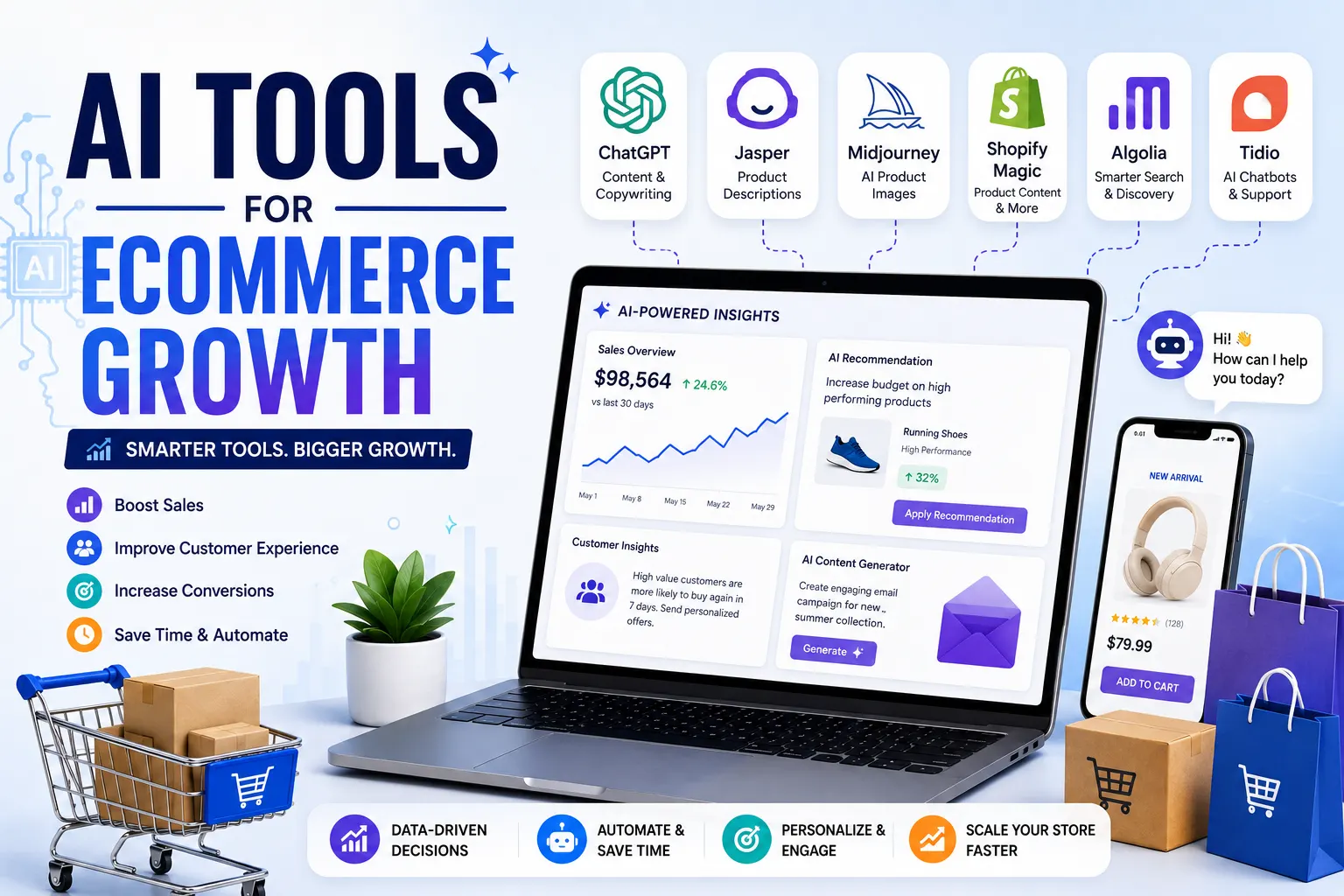
Leveraging AI for Enhanced Customer Experience
Artificial intelligence is rapidly transforming ecommerce, and Sri Hayavadhana embraces this shift by enabling AI-driven capabilities that enhance the shopping experience.
AI can be used to:
- Deliver personalized product recommendations
- Analyze customer behavior and preferences
- Automate customer support through chatbots
- Optimize pricing and promotions dynamically
These features help businesses create more engaging and relevant experiences, which not only improve customer satisfaction but also increase conversion rates and long-term loyalty.
Final Thoughts: Building for Long-Term Ecommerce Success
Launching an ecommerce website involves multiple layers of decision-making, from choosing the right platform to implementing the right features and ensuring long-term scalability. The complexity of this process makes it essential to work with a solution that simplifies development while still offering flexibility and control.
Sri Hayavadhana provides a comprehensive approach to ecommerce development, combining ease of use with advanced capabilities. Whether you are a startup looking to launch quickly or an established business aiming to scale, it offers the tools and support needed to build a high-performing online store.
With access to experienced professionals, scalable infrastructure, and modern development practices, businesses can confidently move from idea to execution—and ultimately achieve sustainable growth in the competitive ecommerce landscape.
FAQs About Ecommerce Website Development
How do you choose the right ecommerce platform for your business?
Selecting the right ecommerce platform is a foundational decision that directly impacts your website’s performance, scalability, and long-term success. There is no universal “best platform”—the right choice depends entirely on your business requirements, technical capabilities, and growth ambitions.
To make an informed decision, start by evaluating your business size and operational complexity. A small startup with a limited product catalog may benefit from a simple, easy-to-use platform, while a growing or enterprise-level business may require advanced customization, scalability, and integration capabilities.
Another key factor to consider is budget, not just in terms of initial setup but also ongoing costs. These may include subscription fees, development expenses, transaction charges, and maintenance costs. Understanding the total cost of ownership helps prevent unexpected financial strain as your business grows.
You should also assess your technical expertise. If you lack a dedicated development team, a user-friendly SaaS platform may be more suitable. On the other hand, if you require full control and customization, an open-source or advanced architecture might be the better option.
Additionally, focus on:
- Customization capabilities — Can the platform adapt to your unique business needs?
- Scalability — Will it support your growth over time?
- Integration options — Can it connect with tools like CRM, ERP, and marketing systems?
- Ease of use — Is it manageable for your team?
- Support and community — Does it offer reliable assistance and resources?
Taking the time to compare these aspects ensures that you choose a platform aligned with your long-term business goals, rather than one that only meets your immediate needs.
What features are essential for a successful ecommerce website in 2026?
As ecommerce continues to evolve, customer expectations are becoming more sophisticated. To remain competitive in 2026, your ecommerce website must include features that not only meet current standards but also anticipate future trends.
One of the most critical requirements is mobile optimization. With a significant portion of online shopping happening on mobile devices, your website must deliver a seamless experience across all screen sizes. A mobile-first design approach ensures faster navigation, better usability, and higher conversion rates.
Another essential feature is flexible payment integration. Modern consumers expect multiple payment options, including digital wallets, UPI, and Buy Now, Pay Later (BNPL) services. Providing these options reduces friction during checkout and increases the likelihood of completed transactions.
AI-driven personalization has also become a major differentiator. By analyzing user behavior and preferences, ecommerce websites can deliver tailored product recommendations, dynamic content, and personalized offers. This enhances user engagement and encourages repeat purchases.
Security remains a top priority. Implementing measures such as SSL encryption, secure payment gateways, and two-factor authentication helps protect sensitive customer data and builds trust.
Finally, multi-channel integration is increasingly important. Customers now interact with brands across multiple touchpoints, including websites, mobile apps, social media, and marketplaces. A successful ecommerce platform must provide a consistent and seamless experience across all these channels.
Together, these features create a modern ecommerce experience that not only meets customer expectations but also drives higher engagement, conversions, and long-term loyalty.
What role do ecommerce web developers play in building a successful online store?
Ecommerce web developers play a central role in transforming your business idea into a fully functional and high-performing online store. Their work goes far beyond writing code—they are responsible for ensuring that every aspect of your website works seamlessly and delivers an exceptional user experience.
From a technical perspective, developers handle both frontend and backend development. On the frontend, they design and build the user interface, ensuring that the website is visually appealing, easy to navigate, and responsive across devices. On the backend, they manage the systems that power the website, including databases, order processing, payment integration, and inventory management.
However, their role is not limited to technical execution. Skilled ecommerce developers also contribute to strategic decision-making by recommending features, tools, and technologies that align with your business goals.
A capable developer or development team can:
- Create a visually engaging and user-friendly storefront that reflects your brand identity
- Implement intuitive navigation and filtering systems, helping customers quickly find the products they need
- Optimize the shopping experience to reduce friction and improve conversion rates
- Integrate essential tools such as payment gateways, shipping systems, and analytics platforms
- Ensure that your website is secure, scalable, and capable of handling growth
Ultimately, the right developer ensures that your ecommerce website is not only functional but also optimized for performance, usability, and long-term success.
Final Thoughts on Ecommerce Development
Ecommerce website development is a dynamic and multi-layered process that requires the right combination of technology, strategy, and user experience design. By choosing the right platform, implementing essential features, and working with skilled developers, businesses can create online stores that stand out in a competitive digital landscape.
Partnering with experts like Sri Hayavadhana can further simplify this journey, providing the expertise and tools needed to build, launch, and scale a high-performing ecommerce business with confidence.