Blog
A/B Testing for Ecommerce (Complete Guide to Increasing Conversions in 2026)

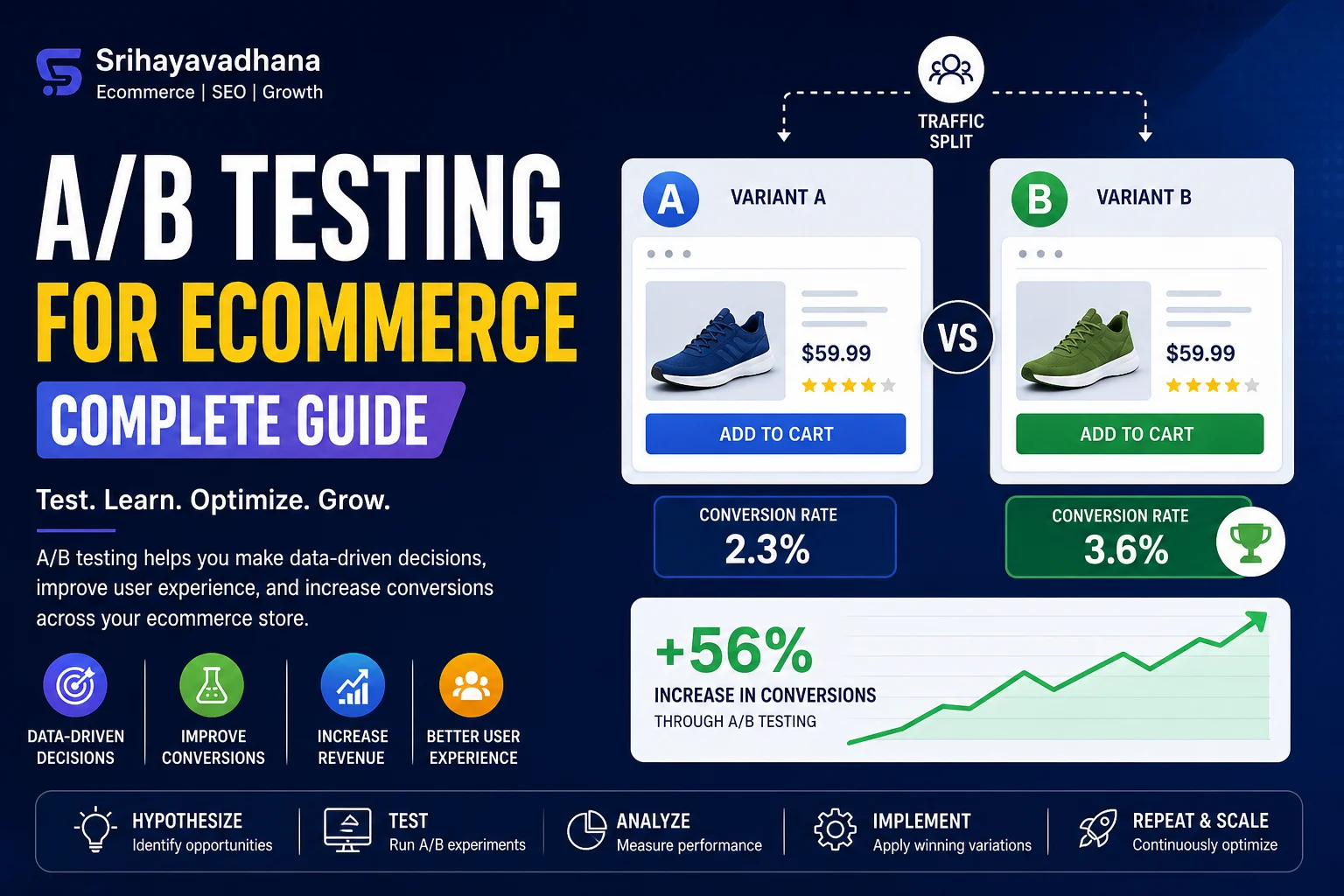
Why A/B Testing Is the Backbone of Ecommerce Growth
In ecommerce, decisions based on assumptions often lead to lost revenue. You might think a red “Buy Now” button converts better than a blue one, or that a shorter checkout flow improves conversions—but without data, these are just guesses.
A/B testing removes guesswork and replaces it with evidence.
A/B testing, also known as split testing, is the process of comparing two versions of a webpage, element, or user experience to determine which performs better. Instead of relying on opinions, businesses rely on real user behavior to drive decisions.
Leading ecommerce platforms like Shopify and BigCommerce emphasize continuous experimentation because even small improvements—such as a 1% increase in conversion rate—can result in massive revenue growth.
For example:
- 100,000 visitors
- 2% conversion rate → 2,000 orders
If A/B testing increases conversion rate to 2.5%:
- 2,500 orders
That’s a 25% revenue increase without increasing traffic.
This guide will walk you through:
- What A/B testing is and how it works
- Why it is critical for ecommerce
- What elements you should test
- Step-by-step implementation
- Tools, frameworks, and strategies
- Common mistakes and advanced techniques
What Is A/B Testing in Ecommerce?
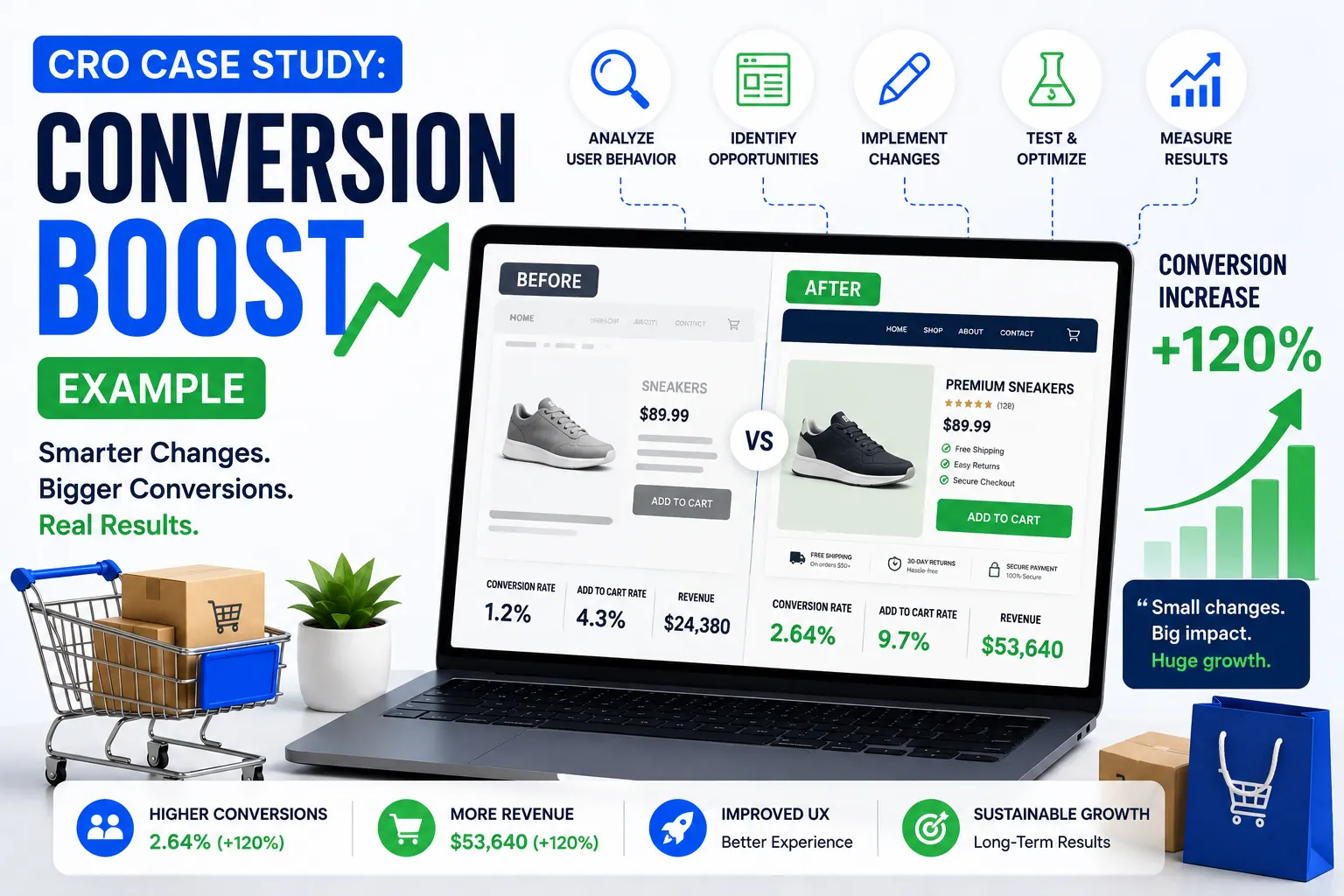
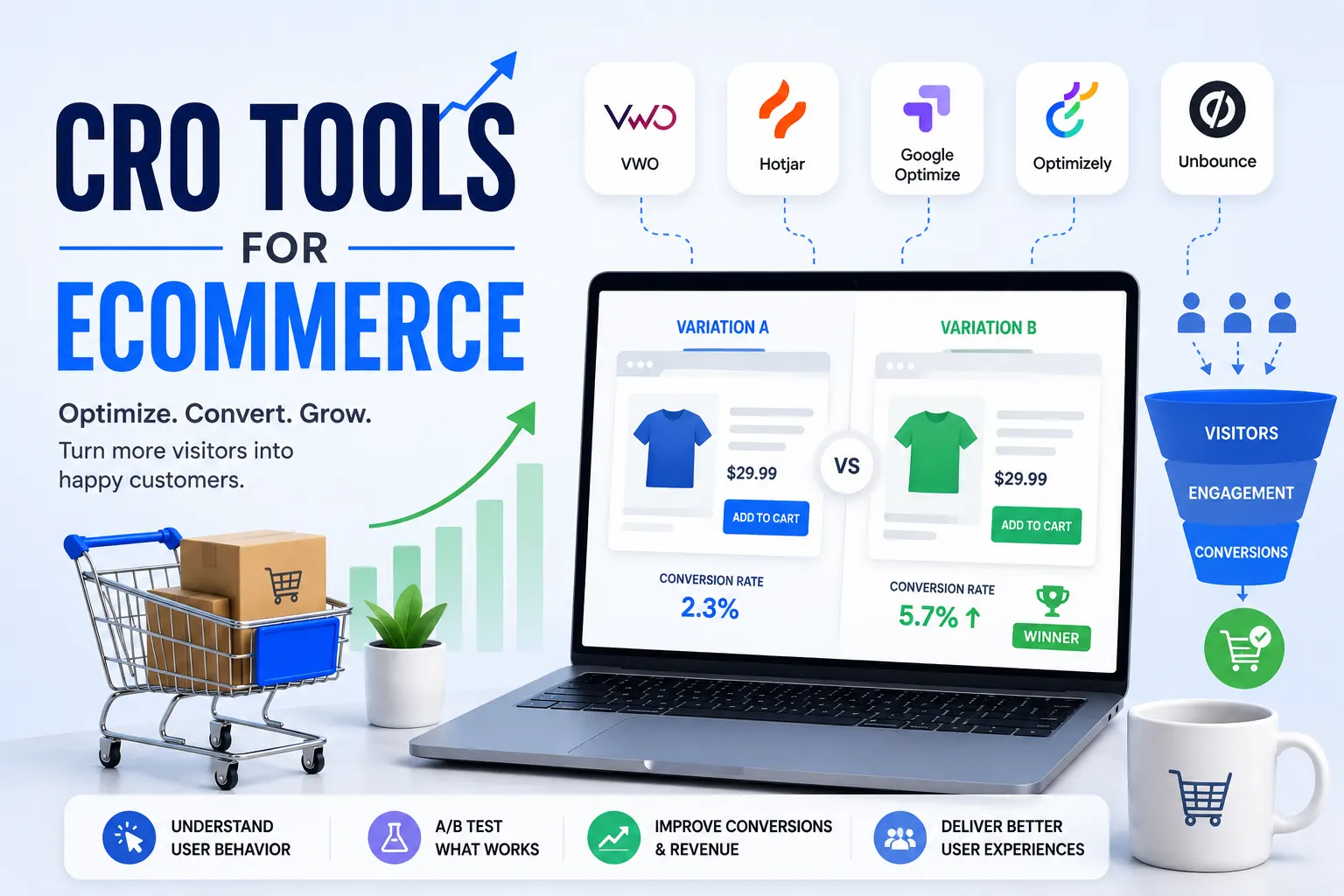
A/B testing is a controlled experiment where you compare two versions of a page or element:
- Version A → Original
- Version B → Modified
Traffic is split between both versions, and performance is measured based on a specific goal.
Example
Version A:
- “Add to Cart” button (blue)
Version B:
- “Buy Now” button (green)
The version that generates more conversions becomes the winner.
Why A/B Testing Is Essential for Ecommerce
1. Eliminates Guesswork
Instead of relying on assumptions, you make decisions based on data.
2. Improves Conversion Rate
Small improvements compound over time, leading to significant growth.
3. Enhances User Experience
Testing helps identify what users prefer, leading to smoother journeys.
4. Maximizes ROI
You get more revenue from existing traffic without increasing ad spend.
Platforms like Amazon run thousands of experiments continuously to optimize their user experience.
Where A/B Testing Fits in the Ecommerce Funnel
A/B testing is not limited to one page—it applies across the entire funnel.
Funnel Stages You Can Test
- Landing pages
- Product pages
- Cart page
- Checkout flow
- Emails
- Ads
Each stage has different optimization opportunities.
Types of A/B Testing
1. Split URL Testing
Two completely different pages are tested.
2. Element Testing
Testing specific elements:
- Headlines
- Images
- Buttons
3. Multivariate Testing
Testing multiple variables simultaneously.
4. Server-Side Testing
Backend-level changes (advanced).
Key Metrics to Measure in A/B Testing
Primary Metrics
- Conversion rate
- Revenue per visitor
- Average order value
Secondary Metrics
- Bounce rate
- Time on page
- Click-through rate
Tools for Measurement
- Google Analytics
- Hotjar
What to A/B Test in Ecommerce
1. Landing Pages
Elements to Test
- Headlines
- Images
- CTAs
- Layout
Example
Headline A:
“Best Shoes for Running”
Headline B:
“Run Faster with Premium Shoes”
2. Product Pages
High-Impact Elements
- Product images
- Descriptions
- Reviews
- Pricing display
Example
Test:
- With vs without product video
3. Add-to-Cart Buttons
Variables to Test
- Color
- Text
- Size
- Placement
4. Checkout Process
Key Areas
- Number of steps
- Form fields
- Payment options
Payment tools like Razorpay impact success rates.
5. Pricing & Offers
What to Test
- Discounts
- Bundles
- Free shipping thresholds
6. Email Campaigns
Test Elements
- Subject lines
- CTA
- Content
Step-by-Step A/B Testing Process
Step 1: Identify Problem Areas
Use data to find weak points.
Step 2: Create Hypothesis
Example:
“Changing CTA text will increase conversions”
Step 3: Design Variations
Create version B.
Step 4: Run Test
Split traffic between versions.
Step 5: Analyze Results
Determine winner.
Step 6: Implement & Scale
Apply winning changes.
Statistical Significance (Critical Concept)
Results must be statistically valid.
Why It Matters
Small sample sizes lead to incorrect conclusions.
Best Practices
- Run tests long enough
- Ensure sufficient traffic
- Avoid early conclusions
A/B Testing Tools for Ecommerce
Popular Tools
- Google Optimize
- VWO
- Optimizely
Analytics Tools
- Google Analytics
- Hotjar
Common A/B Testing Mistakes
1. Testing Too Many Variables
Leads to confusion.
2. Ending Tests Too Early
Results become unreliable.
3. Ignoring Data
Decisions must be data-driven.
4. Testing Low-Impact Elements
Focus on high-impact changes.
A/B testing is one of the most powerful tools for ecommerce growth.
It allows you to:
- Make data-driven decisions
- Improve conversions
- Increase revenue
A/B Testing for Ecommerce (Advanced Strategies, Frameworks & Scaling)
Moving Beyond Basic A/B Testing
Most ecommerce businesses test surface-level elements like button colors or headlines. While these can produce incremental gains, they rarely create breakthrough growth.
Advanced A/B testing focuses on high-impact areas across the entire funnel:
- User experience (UX)
- Pricing strategy
- Checkout flow
- Personalization
- Customer journey
This is where real revenue growth happens.
High-Impact A/B Testing Areas (Where You Get Maximum ROI)
1. Funnel-Level Testing (Big Wins)
Instead of testing individual elements, test entire funnel stages.
Example
Version A:
- Multi-step checkout
Version B:
- Single-page checkout
Why It Works
You’re not optimizing a small element—you’re optimizing the entire user experience.
Platforms like Amazon continuously experiment with funnel-level changes.
2. Pricing & Offer Testing
Pricing is one of the most powerful conversion levers.
What to Test
- Discount percentages
- Bundle offers
- Free shipping thresholds
Example
Version A:
- ₹999 product
Version B:
- ₹1299 → ₹999 (discount shown)
Psychological Impact
Anchoring increases perceived value.
3. Product Page Experience Testing
Product pages directly influence buying decisions.
Test Variations
- With vs without product video
- Long vs short descriptions
- Image placement
Example
Adding video demonstrations often increases conversions significantly.
4. Checkout Flow Testing
Checkout is where most revenue is lost.
Key Variables
- Number of steps
- Guest checkout vs login
- Payment options
Payment gateways like Razorpay can improve success rates by offering multiple options.
5. Personalization Testing
Not all users behave the same way.
Test Personalization
- New vs returning users
- Mobile vs desktop users
- Location-based offers
Example
Returning users:
- Show recently viewed products
New users:
- Show bestsellers
Advanced Experimentation Frameworks
ICE Framework (Simple & Effective)
Prioritize tests based on:
- Impact
- Confidence
- Ease
PIE Framework
Focus on:
- Potential
- Importance
- Ease
LIFT Model (Conversion-Focused)
Optimize based on:
- Value proposition
- Clarity
- Relevance
- Urgency
- Anxiety reduction
Multivariate Testing (Advanced Optimization)
Unlike A/B testing, multivariate testing analyzes multiple variables at once.
Example
Test combinations of:
- Headline
- Image
- CTA
When to Use It
- High traffic websites
- Complex optimization
Behavioral Testing Using User Data
Tools
- Hotjar
- Google Analytics
Insights You Can Gain
- Where users click
- Where they drop off
- What they ignore
How to Use Data
Instead of guessing:
- Identify friction
- Test solutions
A/B Testing for Mobile Ecommerce
Mobile behavior differs from desktop.
Challenges
- Small screens
- Slower speed
- Less patience
What to Test
- Button size
- Layout simplicity
- Navigation
Companies like Flipkart heavily optimize mobile experiences.
A/B Testing for Indian Ecommerce Market
India has unique user behavior.
Key Factors
- Price sensitivity
- Trust concerns
- Preference for COD
What to Test
- COD availability
- Discount messaging
- Local language content
A/B Testing for Email Marketing
Email is one of the highest ROI channels.
Test Elements
- Subject lines
- CTA buttons
- Send timing
Example
Subject A:
“Your Cart Is Waiting”
Subject B:
“Complete Your Purchase & Save 10%”
A/B Testing for Retargeting Ads
Platforms
- Meta Ads
- Google Ads
What to Test
- Ad creatives
- Copy
- Offers
Real-World A/B Testing Case Insights
Case 1: CTA Change → +18% Conversion
Changing:
“Add to Cart” → “Get Yours Now”
Result:
- Increased urgency
- Higher conversions
Case 2: Simplified Checkout → +25% Sales
Reducing form fields improved completion rates.
Case 3: Adding Reviews → +20% Conversion
Social proof builds trust.
Scaling A/B Testing (From Experiments to System)
Most businesses fail because they test randomly.
Build a Testing System
Step 1: Continuous Testing
Never stop experimenting.
Step 2: Prioritize High-Impact Areas
Focus on revenue-driving elements.
Step 3: Document Results
Learn from every test.
Step 4: Scale Winning Experiments
Apply across funnel.
Common Advanced Mistakes
1. Testing Without Hypothesis
Every test must have a reason.
2. Ignoring Segmentation
Different users behave differently.
3. Overlooking Revenue Metrics
Focus on revenue—not just clicks.
4. Not Scaling Winners
Winning tests must be implemented fully.
Advanced A/B testing is about:
- Testing entire experiences
- Using data effectively
- Focusing on high-impact changes
A/B Testing for Ecommerce (Case Studies, Tools, Benchmarks & Scaling)
Real-World A/B Testing Case Studies (What Actually Drives Revenue)
Let’s move beyond theory and look at how A/B testing impacts real ecommerce performance.
Case Study 1: Headline Optimization → +32% Conversion Rate
Scenario:
An ecommerce brand had strong traffic but low engagement on landing pages.
Problem Identified Using Google Analytics:
- High bounce rate
- Low time on page
Experiment:
Version A:
“Buy Premium Shoes Online”
Version B:
“Run Faster with High-Performance Shoes”
Result:
- 32% increase in conversions
- Improved engagement
Case Study 2: Checkout Simplification → +27% Revenue
Problem:
Users dropped off during checkout.
Insight from Hotjar:
- Users struggled with long forms
Experiment:
- Reduced form fields
- Enabled guest checkout
Result:
- 27% increase in completed purchases
Case Study 3: Pricing Display → +18% Sales
Experiment:
Version A:
- ₹1000
Version B:
- ₹1500 → ₹999
Result:
- Higher perceived value
- Increased conversions
A/B Testing Benchmarks (What Good Performance Looks Like)
Conversion Rate Benchmarks
- 1% → Poor
- 2–3% → Average
- 4–5% → Good
- 6%+ → Excellent
Testing Impact Expectations
- Small UI changes → 5–10% improvement
- UX improvements → 15–30%
- Funnel-level changes → 30%+
Companies like Amazon continuously achieve gains through experimentation.
A/B Testing Tools Stack (What to Use)
Experimentation Tools
- Google Optimize
- VWO (Visual Website Optimizer)
- Optimizely
Analytics Tools
- Google Analytics
- Hotjar
Ecommerce Platforms
- Shopify
- BigCommerce
Advertising Platforms
- Google Ads
- Meta Ads
CRO + A/B Testing Integration (Powerful Growth Combo)
A/B testing is a core part of Conversion Rate Optimization (CRO).
How They Work Together
CRO identifies problems
A/B testing validates solutions
Example
Problem:
- Low add-to-cart rate
Hypothesis:
- Better product images will improve conversions
Test:
- Run A/B experiment
SEO + A/B Testing (Underrated Strategy)
Most people ignore this powerful combination.
Why It Works
SEO brings high-intent traffic
A/B testing improves conversion
Example
Keyword:
“Best running shoes under ₹2000”
Test:
- Different landing page layouts
- Different product arrangements
Advanced Experimentation Roadmap
Phase 1: Foundation
- Set up analytics
- Identify funnel leaks
Phase 2: Basic Testing
- Headlines
- CTAs
- Layout
Phase 3: Advanced Testing
- Funnel optimization
- Pricing strategy
- Personalization
Phase 4: Scaling
- Continuous experimentation
- Automation
- AI integration
Personalization + A/B Testing (Next-Level Strategy)
Why It Matters
Different users behave differently.
Example
Test:
Version A:
- Generic homepage
Version B:
- Personalized recommendations
Result
Personalization often increases conversions significantly.
Revenue-Focused Testing (What Actually Matters)
Many businesses focus on clicks—but revenue is the real goal.
Metrics That Matter
- Revenue per visitor
- Average order value
- Customer lifetime value
Scaling A/B Testing Across Business
Build an Experimentation Culture
Encourage:
- Data-driven decisions
- Continuous testing
Create Testing Calendar
Plan:
- Weekly tests
- Monthly reviews
Document Learnings
Maintain:
- Test results
- Insights
- Best practices
Common Myths About A/B Testing
Myth 1: Small Changes Don’t Matter
Even 1% improvement can mean huge revenue.
Myth 2: One Test Is Enough
Testing is continuous.
Myth 3: More Traffic Is Always Better
Conversion matters more than traffic.
High-Impact Quick Wins (Immediate ROI)
If you want fast results:
- Test CTA text
- Add product reviews
- Simplify checkout
- Improve page speed
- Optimize mobile UX
Final Conclusion: The Real Growth Formula
A/B testing is not a tactic—it’s a system.
The Winning Formula
Data + Testing + Optimization = Scalable Ecommerce Growth