Blog
🧠 Frontend vs Backend in Ecommerce Development (Detailed 2026 Guide)

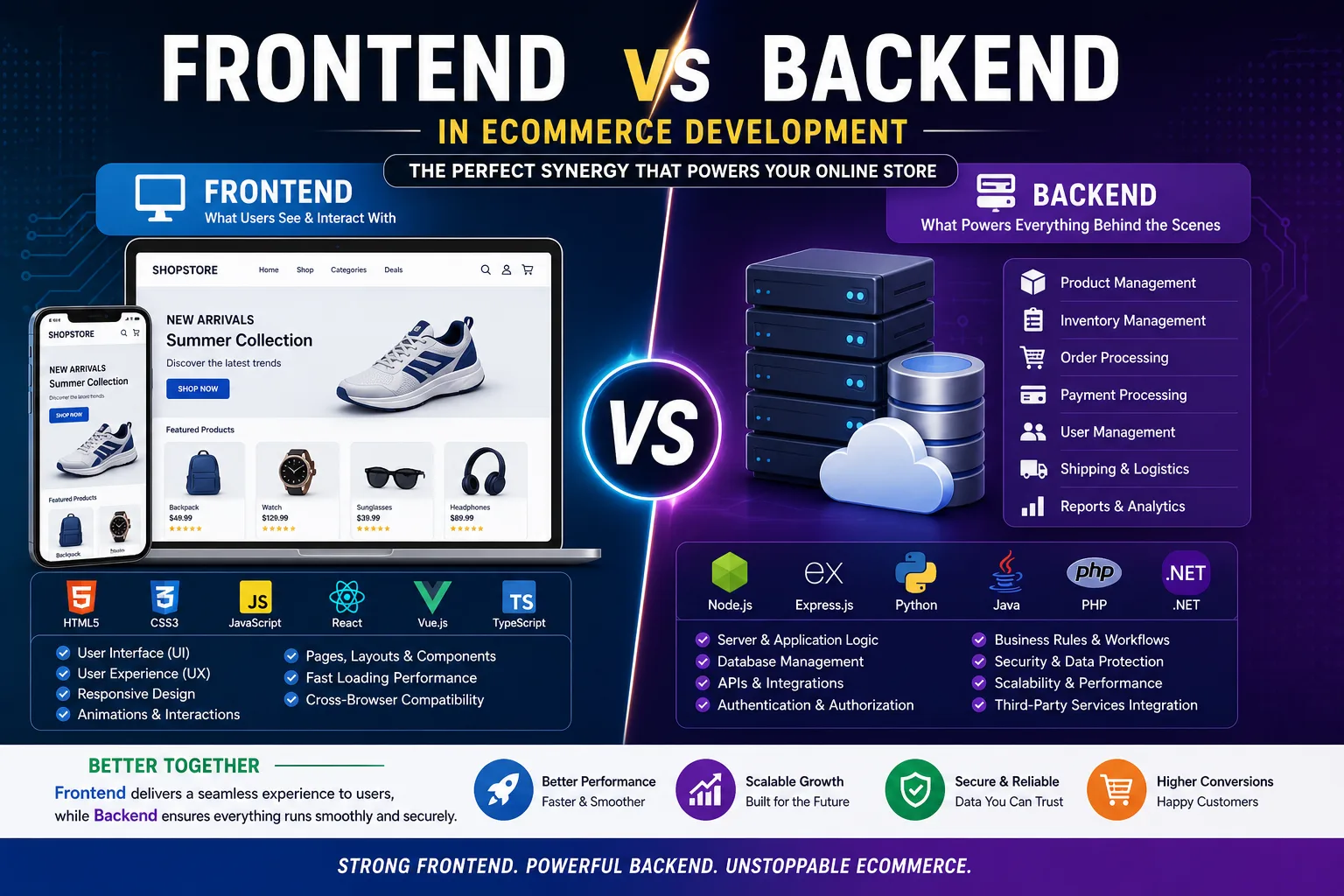
📘 Introduction: Why Understanding Frontend and Backend is Critical in Ecommerce
Ecommerce has evolved into a highly sophisticated digital ecosystem where user experience, performance, and scalability determine success. Businesses today are not just selling products online—they are delivering complete digital experiences that must be fast, intuitive, secure, and reliable.
At the core of every successful ecommerce platform lies two critical components:
- Frontend (what users see and interact with)
- Backend (what powers everything behind the scenes)
Understanding the difference between frontend and backend—and more importantly, how they work together—is essential for building scalable and high-performing ecommerce platforms.
Whether you are a business owner, developer, or digital strategist, this guide will help you understand both layers in depth and make better decisions for your ecommerce system.
🧠 What is Frontend in Ecommerce? (Deep Explanation)
The frontend is the part of an ecommerce website that users directly interact with. It includes everything visible on the screen, from product pages to navigation menus and checkout forms.
Role of Frontend in Ecommerce
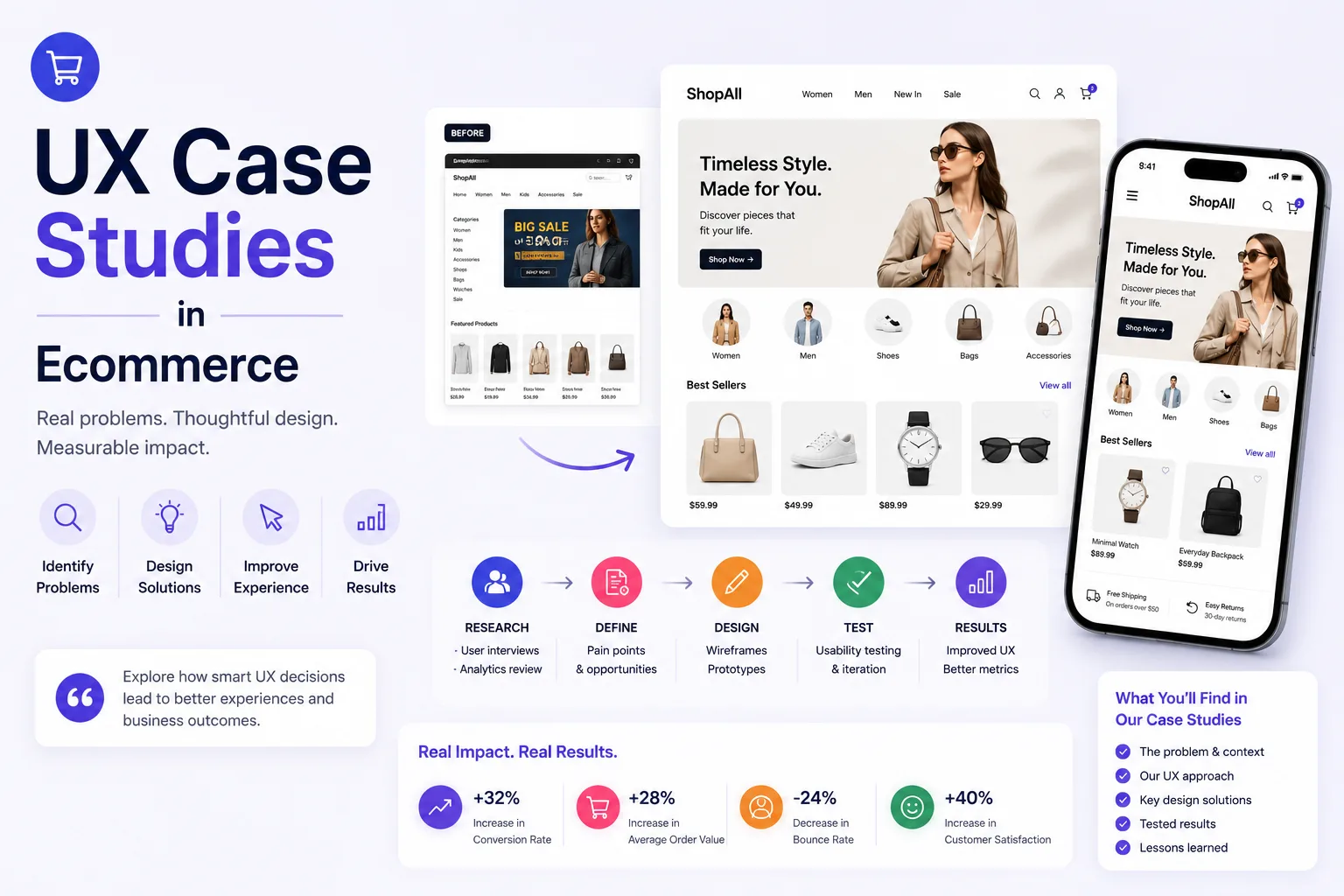
The frontend is responsible for delivering a seamless user experience. It determines how users interact with your store and plays a critical role in influencing conversions.
A well-designed frontend ensures:
- Easy navigation
- Fast loading
- Engaging visuals
- Smooth checkout process
Core Components of Frontend
1. User Interface (UI)
The UI includes all visual elements such as:
- Buttons
- Images
- Layouts
- Typography
2. User Experience (UX)
UX focuses on how users interact with the website. It ensures that users can easily find products, add them to cart, and complete purchases.
3. Product Pages
Product pages display detailed information about products, including images, descriptions, and pricing.
4. Checkout Interface
The checkout process is one of the most critical frontend components, as it directly impacts conversion rates.
Frontend Technologies (Detailed Explanation)
Frontend development relies on:
- HTML (structure)
- CSS (styling)
- JavaScript (interactivity)
Modern frameworks such as React and Vue enable dynamic and responsive interfaces.
Frontend Performance and Its Impact
Frontend performance directly affects:
- Page load speed
- User engagement
- SEO rankings
Slow websites lead to higher bounce rates and lower conversions.
Frontend Optimization Techniques
Lazy Loading
Loads images only when needed.
Code Splitting
Breaks code into smaller parts to improve loading speed.
CDN Usage
Content Delivery Networks distribute content globally.
⚙️ What is Backend in Ecommerce? (Deep Explanation)
The backend is the part of the ecommerce system that users do not see. It handles all business logic, data processing, and system operations.
Role of Backend
The backend is responsible for:
- Managing products and inventory
- Processing orders
- Handling payments
- Storing customer data
Core Components of Backend
1. Server
The server processes requests and sends responses.
2. Database
The database stores information such as:
- Products
- Customers
- Orders
3. Application Logic
This defines how the system behaves, such as calculating prices or processing payments.
Backend Technologies
Common backend technologies include:
- Node.js
- Python
- Java
Database Systems
SQL Databases
Structured and reliable.
NoSQL Databases
Flexible and scalable.
Backend Performance Optimization
Caching
Stores frequently accessed data.
Load Balancing
Distributes traffic across servers.
Database Optimization
Improves query efficiency.
🔗 How Frontend and Backend Work Together
Frontend and backend communicate through APIs.
Typical Flow
- User interacts with frontend
- Frontend sends request to backend
- Backend processes request
- Response is returned to frontend
⚔️ Frontend vs Backend: Key Differences (Deep Comparison)
Functionality
Frontend focuses on user interaction, while backend handles business logic.
Technologies
Frontend uses HTML, CSS, JavaScript, while backend uses server-side languages.
Performance Impact
Frontend affects user experience, while backend affects system performance.
Security
Backend is responsible for data security.
🧩 Real-World Ecommerce Example
When a user clicks “Add to Cart”:
- Frontend captures the action
- Backend updates the cart
- API sends response
- Frontend updates UI
🧠 Modern Ecommerce Architecture
Monolithic Architecture
Frontend and backend are tightly connected.
Headless Commerce
Frontend and backend are separated.
MACH Architecture
- Microservices
- API-first
- Cloud-native
- Headless
⚡ Performance Optimization Across Both Layers
Frontend Optimization
- Minify code
- Optimize images
Backend Optimization
- Efficient queries
- Caching
🔐 Security in Frontend and Backend
Frontend Security
- Input validation
- Secure forms
Backend Security
- Authentication
- Data encryption
📈 SEO Impact of Frontend and Backend
Frontend affects page speed and UX, while backend affects technical SEO.
🚀 Scaling Ecommerce Systems
Frontend Scaling
- CDN
- Static assets
Backend Scaling
- Cloud infrastructure
- Microservices
🔮 Future Trends
- Headless commerce
- AI personalization
- API-driven systems
🏁 Conclusion
Understanding frontend and backend in ecommerce development is essential for building scalable, high-performing platforms. Both layers must work together seamlessly to deliver excellent user experiences and support business growth
To build a scalable ecommerce platform with the right frontend and backend architecture, working with experts like Sri Hayavadhana Info Tech ensures your system is optimized for performance, scalability, and long-term success.