Blog
🧠 Custom Ecommerce Development vs SaaS Platforms: Which to Choose? (Ultimate 2026 Guide)

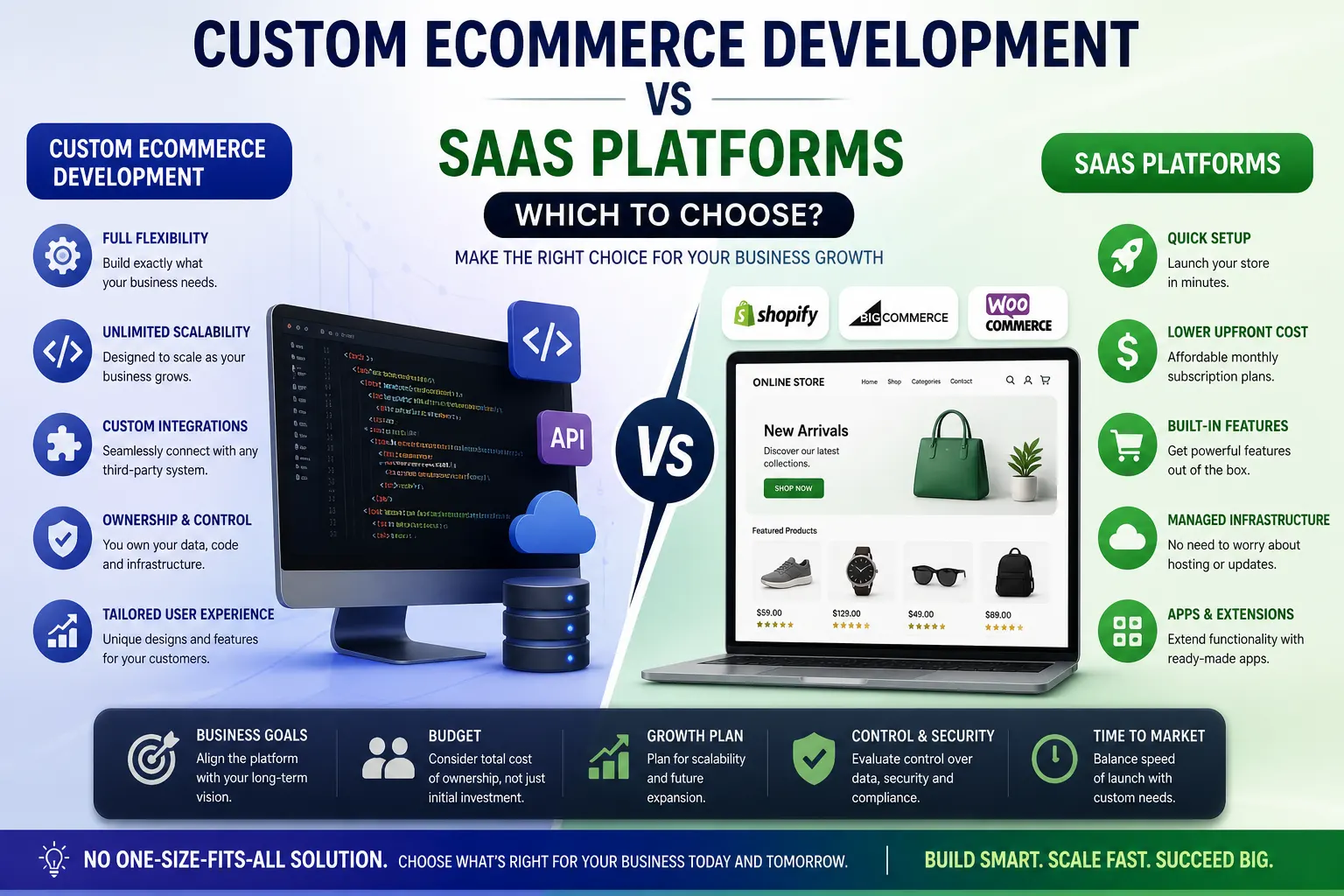
📘 Introduction: The Foundation of Your Ecommerce Future
In the modern digital economy, launching an ecommerce business is no longer the challenge—building a scalable, flexible, and high-performing ecommerce system is. Businesses today operate in a highly competitive environment where customer expectations are constantly evolving, and technology plays a central role in shaping user experience, operational efficiency, and long-term growth.
One of the most critical decisions a business must make early on is choosing between:
- Custom Ecommerce Development
- SaaS Ecommerce Platforms such as Shopify or BigCommerce
This decision is not just technical—it is strategic. It affects how your business scales, how quickly you can innovate, how much control you have over your platform, and how effectively you can compete in the market.
A poorly chosen platform can lead to limitations in customization, performance bottlenecks, or high long-term costs. On the other hand, the right approach can enable rapid growth, seamless customer experiences, and long-term success.
This comprehensive guide explores both options in depth, providing clarity on which approach is best suited for different business scenarios.
🧠 Understanding Custom Ecommerce Development (Deep Explanation)
Custom ecommerce development refers to building an ecommerce platform from scratch or using frameworks where every component is designed specifically for your business.
Unlike ready-made solutions, custom development allows you to control every aspect of the system, including:
- User experience
- Backend logic
- Integrations
- Infrastructure
How Custom Ecommerce Development Works
In a custom-built ecommerce platform, the system is typically divided into multiple layers:
Frontend Layer
The frontend is responsible for user interaction. It is built using modern frameworks such as React or Vue and focuses on delivering a fast, engaging user experience.
Backend Layer
The backend handles business logic, including:
- Product management
- Order processing
- Customer data
API Layer
APIs connect the frontend and backend, enabling seamless communication between components.
Infrastructure Layer
Cloud platforms such as AWS or Google Cloud provide scalability and reliability.
Modern Architectures in Custom Development
Many custom ecommerce systems use advanced architectures such as:
- <a href=”/headless-commerce-explained” target=”_blank”>Headless commerce</a>
- <a href=”/mach-architecture-ecommerce” target=”_blank”>MACH architecture</a>
These approaches allow businesses to build flexible, scalable systems that can adapt to changing requirements.
Key Advantages of Custom Ecommerce Development
1. Complete Flexibility
Custom development allows businesses to build exactly what they need without limitations.
For example, you can create:
- Unique checkout processes
- Advanced pricing rules
- Custom workflows
2. Unlimited Scalability
Custom platforms can scale horizontally using cloud infrastructure.
3. Tailored User Experience
Businesses can design experiences that align with their brand identity.
4. Integration Capabilities
Custom platforms can integrate with:
- ERP systems
- CRM tools
- Marketing platforms
⚙️ Understanding SaaS Ecommerce Platforms (Deep Explanation)
SaaS ecommerce platforms are ready-made solutions that allow businesses to create online stores quickly.
Popular platforms include:
- Shopify
- BigCommerce
How SaaS Platforms Work
SaaS platforms provide:
- Hosting
- Security
- Pre-built features
Users interact with the platform through a dashboard.
Key Characteristics of SaaS Platforms
1. Ease of Use
SaaS platforms are designed for beginners.
2. Faster Time to Market
Stores can be launched quickly.
3. Managed Infrastructure
No need to manage servers or updates.
4. App Ecosystem
Extend functionality using apps.
⚔️ Custom Ecommerce vs SaaS Platforms: Deep Comparison
Flexibility
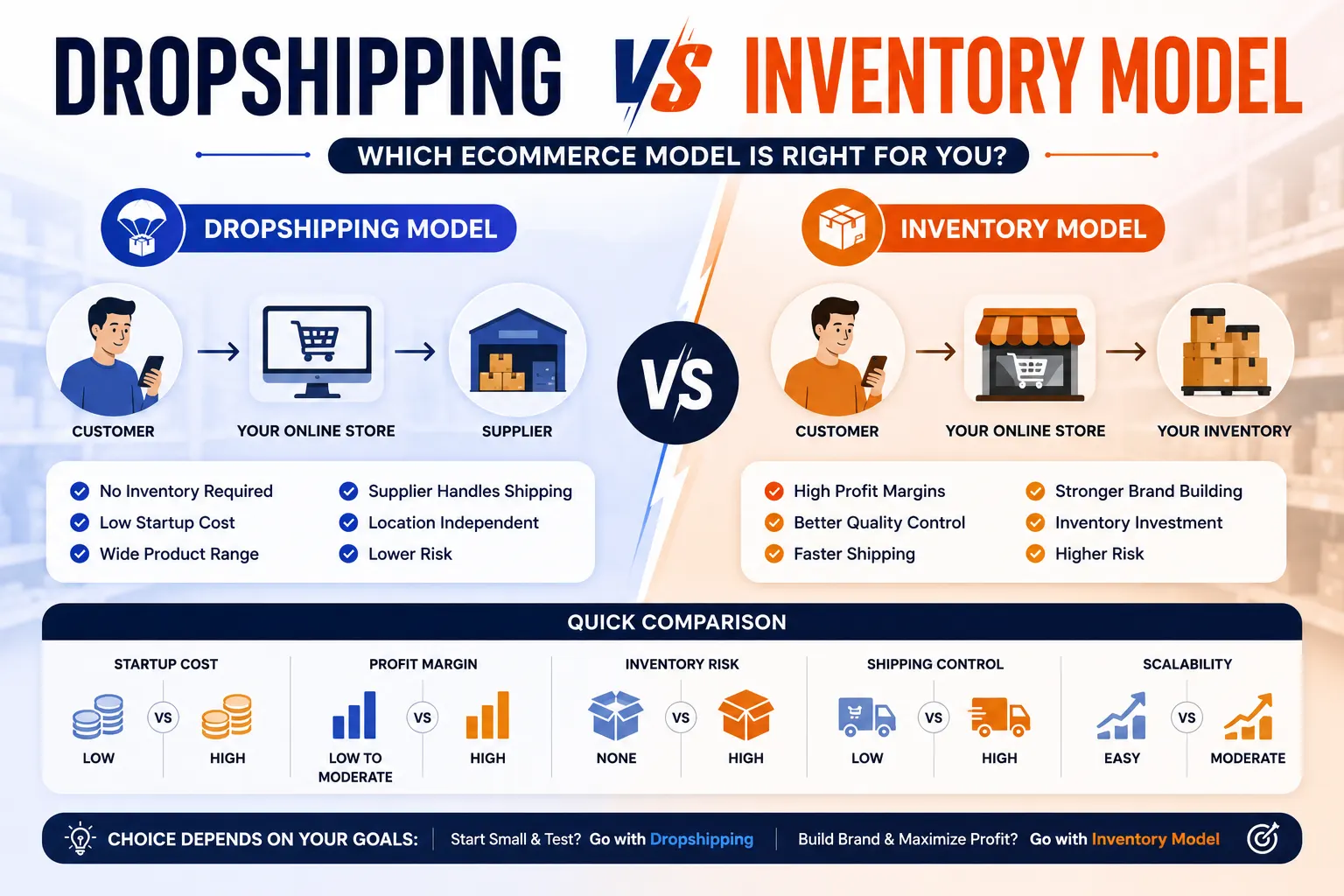
Custom development offers complete flexibility, while SaaS platforms are limited.
Scalability
Custom platforms scale better for large businesses.
Cost
SaaS has lower upfront cost but recurring fees.
Performance
Custom platforms can be optimized for performance.
Time to Market
SaaS platforms are faster to launch.
🧩 Cost Analysis (Detailed Breakdown)
Custom Development Costs
- Development
- Hosting
- Maintenance
SaaS Costs
- Subscription
- Apps
- Transaction fees
📈 SEO and Marketing Capabilities
Custom platforms provide full control over SEO, while SaaS platforms offer built-in tools.
🔐 Security Considerations
SaaS platforms handle security, while custom platforms require implementation.
🚀 When to Choose Custom Ecommerce Development
Choose custom development if:
- You need unique features
- You are scaling rapidly
- You require deep integrations
🚀 When to Choose SaaS Platforms
Choose SaaS if:
- You want quick launch
- You have limited budget
- You prefer simplicity
🔗 Hybrid Approach: Headless Commerce
Many businesses combine both approaches using:
- <a href=”/headless-commerce-explained” target=”_blank”>Headless commerce architecture</a>
🔮 Future Trends
- AI personalization
- API-driven systems
- Omnichannel commerce
🏁 Conclusion
Choosing between custom ecommerce development and SaaS platforms depends on your business goals, budget, and technical capabilities.
To choose the right approach and build a scalable ecommerce platform, working with experts like Sri Hayavadhana Info Tech ensures your system is optimized for performance, scalability, and long-term succes