Blog
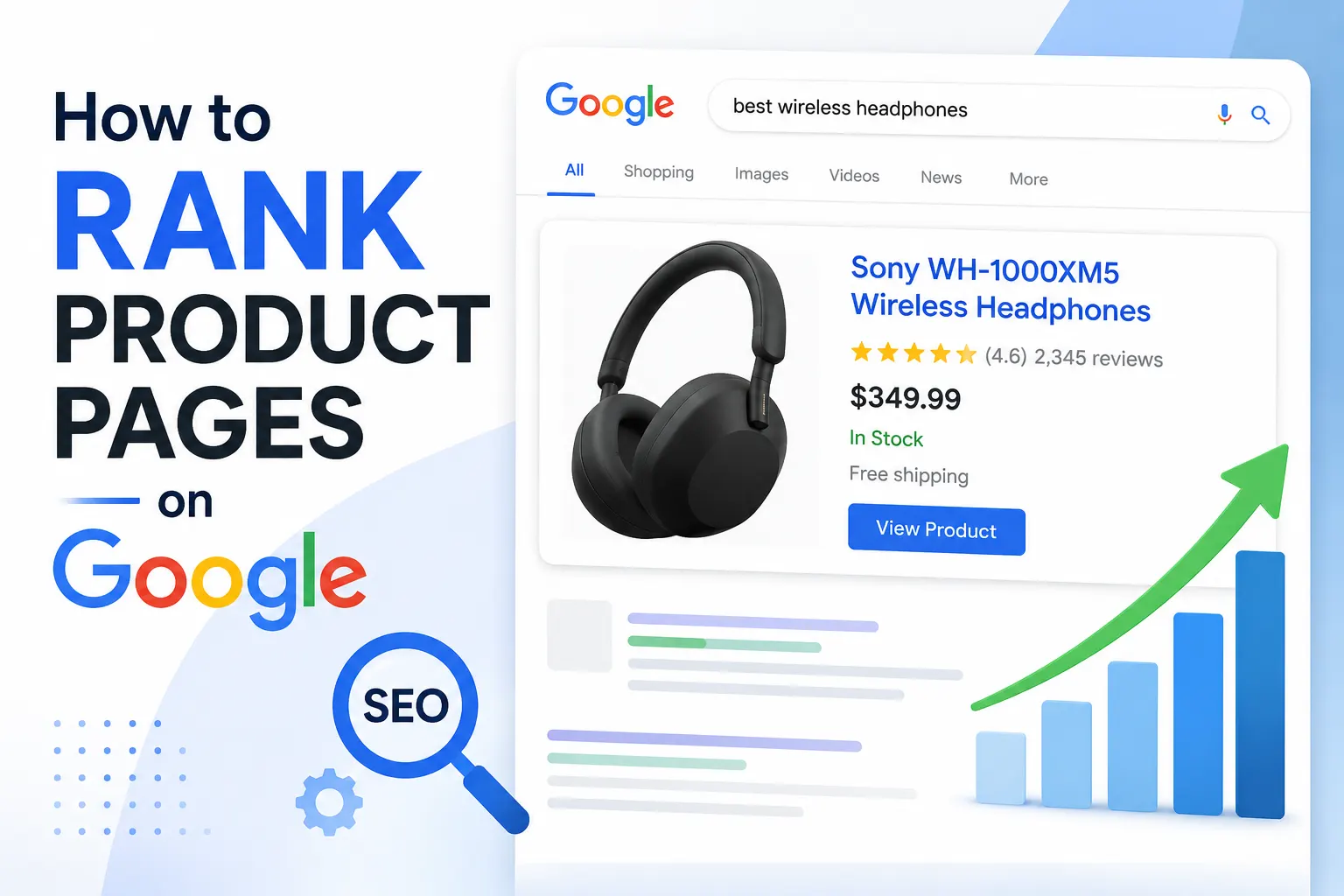
How to Rank Product Pages on Google

The Complete Ecommerce SEO Guide for Higher Rankings, More Traffic, and Increased Sales
Introduction
Ranking product pages on Google has become one of the most important goals for ecommerce businesses. Product pages are the core revenue-generating assets of online stores because they directly connect users searching for products with purchasing opportunities. When optimized properly, product pages can attract highly targeted organic traffic from users with strong buying intent, resulting in better conversions and sustainable ecommerce growth.
However, ranking ecommerce product pages has become increasingly competitive. Thousands of online stores now compete for the same transactional keywords, and Google’s algorithms have evolved significantly to prioritize user experience, helpful content, technical performance, semantic relevance, and trustworthiness.
Many ecommerce businesses make the mistake of treating product pages as simple catalogs with short descriptions, low-quality images, and minimal optimization. Unfortunately, thin or poorly optimized product pages struggle to rank because search engines now expect comprehensive product information, strong user experiences, structured data, mobile optimization, and clear search intent alignment.
Official Resources:
- https://developers.google.com/search/docs
- https://www.bigcommerce.com/articles/ecommerce/ecommerce-seo/
- https://www.shopify.com/blog/ecommerce-seo
In 2026, successful product page SEO requires a combination of:
- Keyword optimization
- Search intent targeting
- Technical SEO
- Mobile-first experiences
- Core Web Vitals optimization
- Structured data
- Internal linking
- User-generated content
- Conversion optimization
- AI-aware SEO strategies
This comprehensive guide explains everything ecommerce businesses need to know about ranking product pages on Google, including keyword research, product page optimization, technical SEO, image SEO, schema markup, content strategy, conversion optimization, mobile usability, internal linking, AI-driven search trends, and future ecommerce SEO strategies.
Understanding Product Page SEO
What Is Product Page SEO?
Product page SEO is the process of optimizing ecommerce product pages to improve visibility in search engine results pages (SERPs).
The goal is to help product pages rank for:
- Product-specific keywords
- Transactional searches
- Long-tail buying queries
- Comparison searches
- Brand-related searches
Why Product Pages Matter
Product pages directly influence:
- Organic traffic
- Conversions
- Revenue
- Customer trust
- Search visibility
Unlike blog content that primarily attracts informational traffic, product pages often target users ready to purchase.
Challenges of Ranking Product Pages
Ecommerce product pages face several SEO challenges:
- Duplicate manufacturer descriptions
- Thin content
- Weak internal linking
- Poor mobile experiences
- Slow loading speeds
- Weak search intent alignment
- High competition
Modern SEO strategies must address all these factors together.
Understanding Search Intent for Product Pages
Why Search Intent Matters
Google prioritizes pages that best satisfy user intent.
Product pages usually target transactional intent.
Examples:
- Buy wireless gaming headset online
- Best running shoes for marathon training
- Organic skincare products price
Transactional Keywords
Transactional searches indicate strong buying intent.
Examples include:
- Buy
- Shop
- Discount
- Price
- Online
- Best deal
Commercial Investigation Keywords
Some users compare products before purchasing.
Examples:
- iPhone vs Samsung
- Best protein powder reviews
These searches may require:
- Comparison pages
- Buying guides
- Review content
Ecommerce Keyword Research for Product Pages
Importance of Keyword Research
Keyword research helps identify what customers search for before buying.
Types of Keywords for Product Pages
Primary Keywords
Main target terms.
Example:
- Wireless gaming headset
Long-Tail Keywords
More specific searches.
Example:
- Wireless gaming headset with noise cancellation
Feature-Based Keywords
Examples:
- Waterproof running shoes
- Lightweight laptop backpack
Problem-Solving Keywords
Examples:
- Best chair for back pain
- Acne treatment serum
Keyword Research Tools
Google Keyword Planner
Official Tool:
Ahrefs
Official Website:
Semrush
Official Website:
Google Autocomplete
Autocomplete suggestions reveal real user searches.
People Also Ask
Google question boxes help identify search intent.
Product Title Optimization
Why Product Titles Matter
Titles strongly influence:
- Rankings
- Click-through rates
- User understanding
Best Practices for Product Titles
Include Primary Keywords
Place important keywords naturally near the beginning.
Add Important Modifiers
Examples include:
- Lightweight
- Waterproof
- Organic
- Premium
Keep Titles Readable
Avoid keyword stuffing.
Example
Good Title:
“Men’s Waterproof Running Shoes – Lightweight Marathon Sneakers”
Bad Title:
“Running Shoes Buy Running Shoes Waterproof Running Shoes”
Product URL Optimization
Importance of Clean URLs
SEO-friendly URLs improve:
- Readability
- Crawlability
- Relevance
Best Practices
Use Descriptive URLs
Good Example:
https://example.com/wireless-gaming-headset
Avoid Dynamic Parameters
Bad Example:
https://example.com/product?id=12345
Keep URLs Short
Simpler URLs perform better.
Writing SEO-Friendly Product Descriptions
Why Product Descriptions Matter
Descriptions help search engines understand products while improving conversions.
Avoid Duplicate Manufacturer Content
Many ecommerce stores copy manufacturer descriptions.
This creates duplicate content problems.
Write Unique Descriptions
Focus on:
- Benefits
- Features
- Use cases
- Emotional triggers
- Customer pain points
Structure Product Descriptions Properly
Short Intro Paragraph
Explain the core value quickly.
Bullet Points
Highlight features clearly.
Detailed Sections
Include specifications and benefits.
Semantic SEO for Product Pages
What Is Semantic SEO?
Semantic SEO focuses on contextual relevance rather than exact keyword repetition.
Google understands related concepts and entities.
Examples
Instead of repeating:
“Running shoes”
Include related terms:
- Marathon shoes
- Athletic footwear
- Breathable sneakers
- Running support
Benefits
Semantic optimization improves:
- Relevance
- Topical understanding
- Long-tail rankings
Product Image SEO
Importance of Images
Images strongly influence ecommerce conversions.
They also contribute to image search visibility.
Best Practices for Image SEO
Use High-Quality Images
Customers expect professional visuals.
Compress Images
Use modern formats:
- WebP
- AVIF
Optimize File Names
Good Example:
black-wireless-gaming-headset.webp
Add Alt Text
Example:
“Black wireless gaming headset with RGB lighting”
Alt text improves:
- Accessibility
- SEO
- Image understanding
Product Videos and Multimedia
Why Videos Improve Rankings and Conversions
Videos increase:
- Engagement
- Time on page
- Product understanding
Types of Product Videos
Demonstration Videos
Show products in action.
Unboxing Videos
Create authenticity.
Tutorials
Help customers understand usage.
Customer Testimonials
Build trust and social proof.
Structured Data and Product Schema
Why Schema Markup Matters
Structured data helps search engines understand product information.
Benefits of Product Schema
Schema can display:
- Ratings
- Prices
- Availability
- Reviews
These rich results improve click-through rates.
Product Schema Types
Product Schema
Includes:
- Name
- Price
- Brand
- Availability
Review Schema
Displays star ratings.
FAQ Schema
Improves SERP visibility.
Official Resource:
Product Reviews and User-Generated Content
Why Reviews Matter
Reviews improve:
- Trust
- SEO freshness
- Long-tail keyword relevance
- Conversion rates
Encourage Customer Reviews
Request reviews after purchases.
Add Verified Buyer Badges
Increase review credibility.
User-Generated Content
UGC includes:
- Photos
- Videos
- Social content
UGC creates authenticity.
Internal Linking for Product Pages
Importance of Internal Linking
Internal links help:
- Search engines discover pages
- Distribute authority
- Improve navigation
Best Internal Linking Strategies
Link Related Products
Examples:
- Similar products
- Accessories
- Complementary items
Use Breadcrumb Navigation
Breadcrumbs improve:
- UX
- Crawlability
- Contextual understanding
Category Page Support for Product Rankings
Why Category Pages Matter
Category pages distribute authority to products.
Best Practices
Optimize Category Content
Include useful descriptions.
Link Important Products
Highlight high-priority products strategically.
Mobile Optimization for Product Pages
Importance of Mobile SEO
Most ecommerce traffic comes from smartphones.
Official Resource:
Mobile Best Practices
Responsive Design
Ensure compatibility across devices.
Fast Loading Speeds
Optimize performance carefully.
Touch-Friendly Buttons
Improve usability.
Simplified Checkout
Reduce friction during purchases.
Core Web Vitals and Product Page Performance
Why Core Web Vitals Matter
Google evaluates user experience performance.
Official Resource:
Key Metrics
Largest Contentful Paint (LCP)
Measures loading speed.
Interaction to Next Paint (INP)
Measures responsiveness.
Cumulative Layout Shift (CLS)
Measures visual stability.
Performance Optimization Techniques
Compress Images
Reduce file sizes.
Enable Lazy Loading
Improve initial load times.
Minify CSS and JavaScript
Reduce unnecessary code.
Use CDNs
Examples:
Ecommerce Technical SEO for Product Pages
Crawlability Optimization
Ensure search engines can access important pages.
XML Sitemaps
Submit product URLs properly.
Official Resource:
Canonical Tags
Prevent duplicate content problems.
Fix Broken Links
Broken URLs reduce SEO quality.
Product Page Conversion Optimization
SEO Traffic Must Convert
High rankings alone are not enough.
Add Strong CTAs
Examples:
- Buy Now
- Add to Cart
- Get Free Shipping
Display Trust Signals
Include:
- Reviews
- Security badges
- Return policies
- Delivery information
Simplify Checkout
Reduce friction during purchases.
Content Depth and Helpful Content
Why Helpful Content Matters
Google prioritizes content that genuinely helps users.
Official Resource:
Add Useful Information
Examples include:
- Sizing guides
- Usage instructions
- FAQs
- Care tips
Answer Customer Questions
Address common concerns directly.
AI and Product Page SEO in 2026
AI Search Evolution
Search engines increasingly use AI-generated summaries.
Optimize for AI Search
Businesses should:
- Use structured content
- Provide concise answers
- Improve semantic relevance
- Build trust signals
Entity Optimization
Google understands brands, products, and relationships between concepts.
Voice Search Optimization
Growth of Voice Commerce
Voice searches are becoming more conversational.
Optimization Strategies
Use Natural Language
Examples:
- What are the best running shoes for flat feet?
Add FAQ Sections
FAQ content improves conversational relevance.
Visual Search Optimization
Importance of Visual Commerce
Image-based shopping continues growing.
Optimize Product Images for Visual Search
Use:
- High-quality images
- Descriptive alt text
- Structured image data
Ecommerce Link Building for Product Pages
Importance of Backlinks
Backlinks strengthen authority and rankings.
Product-Focused Link Building Strategies
Influencer Reviews
Collaborate with creators.
Digital PR
Earn media mentions.
Product Roundups
Get featured in buying guides.
Common Product Page SEO Mistakes
Thin Content
Weak descriptions struggle to rank.
Duplicate Descriptions
Manufacturer content creates duplication problems.
Poor Mobile UX
Bad mobile experiences reduce conversions.
Slow Loading Pages
Performance issues harm rankings.
Missing Schema Markup
Lack of structured data reduces visibility opportunities.
Ecommerce Analytics and Product Page Tracking
Important Metrics to Monitor
Track:
- Organic traffic
- Conversion rates
- Bounce rates
- Rankings
- Click-through rates
Recommended Tools
Google Analytics
Google Search Console
Hotjar
Microsoft Clarity
Future Trends in Product Page SEO
AI-Powered Search Experiences
AI summaries will continue evolving.
Visual Commerce Expansion
Image-based discovery will grow further.
Personalized Search Results
Results may vary more by user behavior.
Voice Shopping Growth
Voice commerce optimization will become increasingly important.
Product Page SEO Checklist
Keyword Optimization
- Research transactional keywords
- Target long-tail searches
- Match search intent
Content Optimization
- Write unique descriptions
- Add FAQs
- Use semantic SEO
Technical SEO
- Improve crawlability
- Add schema markup
- Fix duplicate content
Mobile Optimization
- Improve responsive design
- Optimize speed
- Simplify UX
Conversion Optimization
- Add trust signals
- Improve CTAs
- Simplify checkout
Conclusion
Ranking product pages on Google requires much more than basic keyword optimization. In 2026, successful ecommerce SEO strategies combine technical performance, search intent alignment, semantic relevance, structured data, mobile usability, helpful content, and strong user experiences.
Modern search engines prioritize product pages that genuinely help users make informed purchasing decisions through:
- Comprehensive product information
- Fast loading speeds
- Mobile-friendly experiences
- Structured data
- Customer reviews
- Visual content
- Helpful FAQs
- Clear trust signals
Businesses that invest in high-quality product page optimization benefit from:
- Higher organic rankings
- Increased transactional traffic
- Better conversion rates
- Improved customer trust
- Stronger brand authority
- Higher ecommerce revenue
Rather than treating product pages as simple catalogs, successful ecommerce brands build rich, user-focused experiences that combine SEO, UX, content marketing, and conversion optimization together.
As AI-driven search, visual commerce, voice search, and semantic SEO continue evolving, businesses that prioritize quality, usability, trust, and relevance will remain competitive in the future of ecommerce search.
Product page SEO is not a one-time project. It requires continuous testing, optimization, updating, and improvement to maintain strong visibility and conversion performance in highly competitive ecommerce markets.
Additional Resources: