Blog
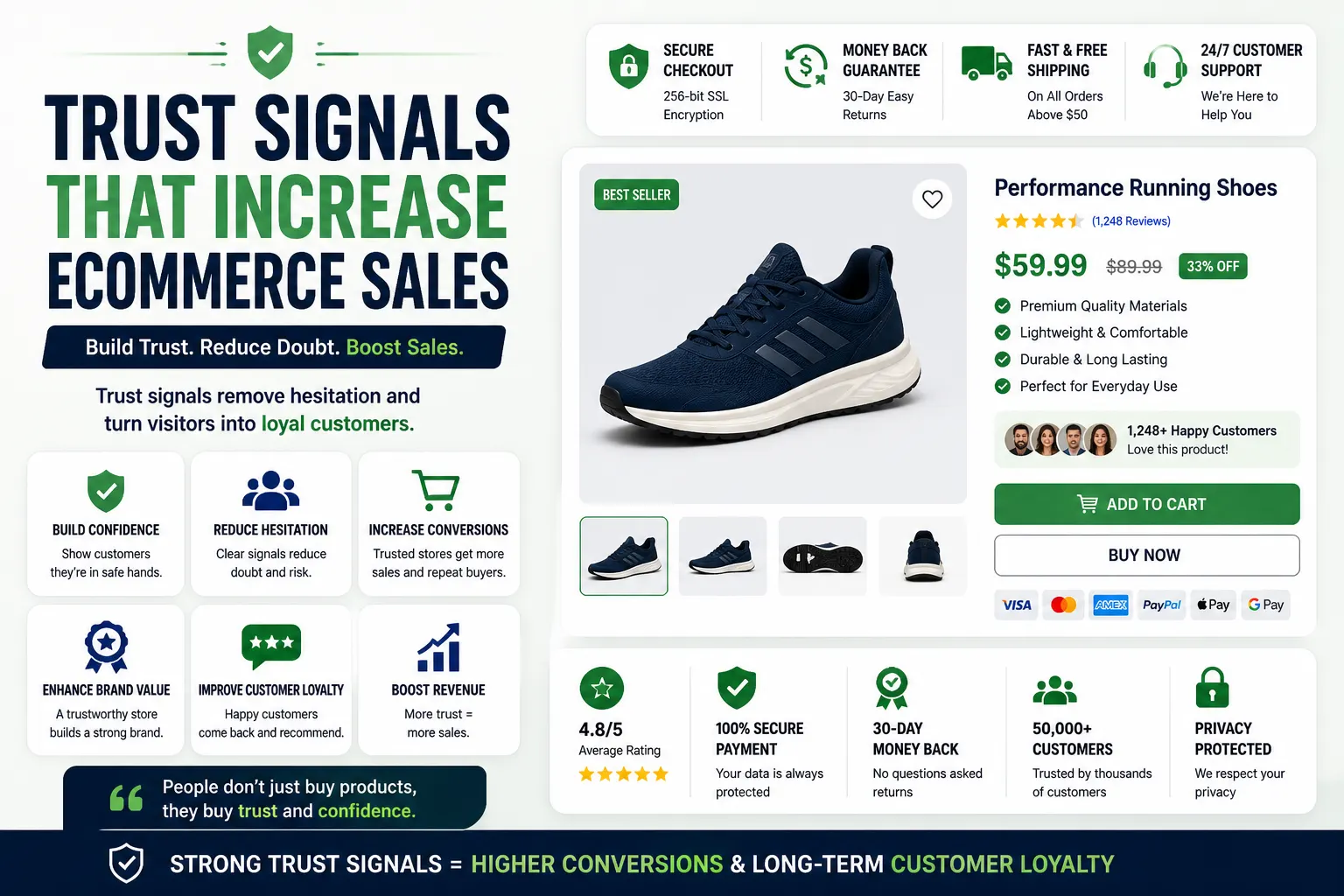
Trust Signals That Increase Ecommerce Sales

The Complete Guide to Building Customer Confidence Online
Introduction
Trust is one of the most powerful factors influencing ecommerce success. Unlike physical retail stores where customers can see products in person, interact with staff, and evaluate the shopping environment directly, ecommerce businesses must convince users to trust their websites entirely through digital experiences. Every design element, product page, payment method, review, security feature, and customer interaction contributes to how trustworthy an ecommerce brand appears.
Modern consumers are more cautious than ever before when shopping online. With increasing concerns about scams, counterfeit products, payment fraud, fake reviews, poor customer support, and delayed deliveries, customers carefully evaluate ecommerce stores before making purchasing decisions. Even if an ecommerce store offers excellent products and competitive prices, a lack of trust signals can significantly reduce conversions.
Trust signals are visual, technical, social, and psychological indicators that reassure users a business is legitimate, secure, reliable, and capable of delivering a positive shopping experience. Strong trust signals reduce purchase anxiety, increase buyer confidence, improve customer retention, and drive higher ecommerce conversion rates.
According to research from Baymard Institute, Shopify, and BigCommerce, trust-related concerns are among the biggest reasons for cart abandonment and low ecommerce conversions. Customers want reassurance about payment security, return policies, product authenticity, shipping reliability, and customer support before they commit to a purchase.
Official Resources:
- https://baymard.com/
- https://www.bigcommerce.com/articles/ecommerce/customer-trust/
- https://www.shopify.com/blog/customer-trust
This comprehensive guide explains the most effective trust signals that increase ecommerce sales, how they influence customer psychology, and how ecommerce businesses can implement them strategically to improve conversions, SEO performance, and long-term customer loyalty.
Understanding Trust in Ecommerce
Why Trust Matters in Online Shopping
Trust is the foundation of ecommerce. Customers share sensitive information such as credit card details, addresses, phone numbers, and personal preferences during online purchases. Without trust, users hesitate to complete transactions.
Unlike physical retail stores where customers can directly examine products, ecommerce shopping involves uncertainty. Buyers cannot physically inspect products before purchasing, which creates psychological risk.
Customers often ask themselves questions such as:
- Is this website legitimate?
- Will I receive the product?
- Is the payment secure?
- Can I return the product?
- Are the reviews genuine?
- Will customer support respond if there is a problem?
Trust signals help answer these concerns and reduce buyer hesitation.
The Psychology Behind Trust Signals
Trust signals work because they reduce uncertainty and create familiarity. Human decision-making is heavily influenced by social proof, authority, consistency, transparency, and perceived safety.
When users encounter positive trust indicators, they feel:
- Safer entering payment information
- More confident buying products
- More willing to spend higher amounts
- More comfortable returning later
- More likely to recommend the brand
Trust signals influence both conscious and subconscious purchasing decisions.
Professional Website Design as a Trust Signal
First Impressions Matter
Users judge ecommerce websites within seconds of landing on them. Poor design immediately reduces credibility.
A professional ecommerce website communicates:
- Reliability
- Stability
- Brand quality
- Attention to detail
- Customer commitment
Official Resource:
Elements of a Trustworthy Ecommerce Design
Clean Layouts
Cluttered websites create confusion and distrust.
Professional ecommerce stores use:
- Organized layouts
- Clear spacing
- Visual hierarchy
- Consistent typography
- Balanced colors
Responsive Mobile Design
Mobile-friendly websites improve trust because users expect modern ecommerce stores to work perfectly on smartphones.
Google prioritizes mobile usability as part of mobile-first indexing.
Official Resource:
Fast Loading Speed
Slow websites reduce trust dramatically.
Customers often associate slow performance with:
- Outdated businesses
- Security risks
- Technical instability
Page speed optimization improves both trust and SEO.
Professional Branding
Consistent branding across logos, colors, fonts, and imagery helps ecommerce stores appear established and reliable.
HTTPS and Website Security Signals
Importance of Secure Connections
Security is one of the strongest trust signals in ecommerce.
Customers expect websites to protect their payment information and personal data.
HTTPS encryption ensures secure communication between browsers and websites.
Official Resource:
SSL Certificates
SSL certificates display secure padlock icons in browsers.
Benefits include:
- Data encryption
- Improved trust
- Better SEO rankings
- Safer transactions
Google considers HTTPS a ranking signal.
Official Resource:
Security Badges and Certifications
Displaying trusted security badges reassures customers.
Examples include:
- Norton Secured
- McAfee Secure
- PCI DSS compliance
- SSL Secure
These badges reduce concerns about fraud and payment theft.
Secure Payment Gateways
Trusted payment providers increase customer confidence.
Examples:
- PayPal
- Stripe
- Razorpay
- Apple Pay
- Google Pay
Official Websites:
Customer Reviews and Ratings
Why Reviews Increase Ecommerce Sales
Customer reviews are among the most influential trust signals in ecommerce.
Consumers rely heavily on reviews before purchasing products online.
Reviews provide:
- Social proof
- Real-world experiences
- Product validation
- Transparency
Research shows that products with reviews convert significantly better than products without reviews.
Types of Reviews That Build Trust
Written Reviews
Detailed written reviews help customers understand:
- Product quality
- Durability
- Sizing accuracy
- Ease of use
- Delivery experiences
Star Ratings
Star ratings provide quick trust indicators.
High ratings improve click-through rates and conversions.
Photo Reviews
User-generated photos increase authenticity.
Customers trust real images more than professional studio photography.
Video Testimonials
Video reviews create stronger emotional trust.
They help buyers see products in real-world situations.
Best Practices for Ecommerce Reviews
Display Verified Buyer Labels
Verified purchase badges improve review credibility.
Show Positive and Negative Reviews
Displaying only perfect reviews may appear suspicious.
Balanced feedback increases authenticity.
Allow Review Filtering
Customers should easily filter reviews by:
- Rating
- Product size
- Product variant
- Most recent
Respond to Reviews
Businesses that reply to reviews demonstrate accountability and customer care.
Social Proof and User-Generated Content
Understanding Social Proof
Social proof is a psychological principle where people follow the behavior and opinions of others.
In ecommerce, social proof reassures customers that other buyers trust the brand.
Types of Social Proof
Customer Testimonials
Testimonials highlight real customer experiences.
Effective testimonials include:
- Full names
- Photos
- Locations
- Specific product experiences
User-Generated Content (UGC)
UGC includes:
- Customer photos
- Social media posts
- Unboxing videos
- Product usage videos
UGC appears more authentic than branded advertising.
Influencer Collaborations
Influencer endorsements increase brand credibility.
Customers trust recommendations from creators they follow.
Social Media Presence
Active social profiles improve trust.
Customers often check:
- TikTok
- YouTube
Official Resources:
Transparent Return and Refund Policies
Why Return Policies Matter
Customers want reassurance that they can return products if necessary.
Unclear return policies create hesitation.
Transparent policies reduce purchase anxiety and increase conversions.
Elements of a Strong Return Policy
Clear Timeframes
Specify return windows clearly.
Example:
- 7-day returns
- 30-day returns
- 100-day guarantees
Easy-to-Understand Language
Avoid complicated legal wording.
Visible Return Information
Display return policies prominently on:
- Product pages
- Checkout pages
- Footer sections
Free Return Shipping
Free returns improve customer confidence.
Contact Information and Customer Support
Why Contact Transparency Builds Trust
Customers trust businesses that provide accessible communication channels.
Visible contact information reassures buyers that real people support the business.
Important Contact Elements
Phone Numbers
Phone support improves legitimacy.
Business Email Addresses
Professional domain emails increase trust.
Example:
Physical Addresses
Displaying company locations improves authenticity.
Live Chat Support
Live chat provides instant assistance.
Popular Tools:
Customer Support Availability
Clearly display support hours.
High-Quality Product Photography
Why Product Images Matter
Customers cannot physically inspect products online.
Images help bridge that gap.
Poor-quality product images reduce trust immediately.
Best Practices for Ecommerce Product Photography
Multiple Angles
Show products from different perspectives.
Zoom Functionality
Allow customers to inspect details closely.
Lifestyle Photography
Lifestyle images show products in real-world usage.
Consistent Image Quality
Professional, consistent photography improves brand credibility.
360-Degree Product Views
Interactive product views in