The Complete Guide to Common Ecommerce SEO Problems and How to Fix Them
Introduction
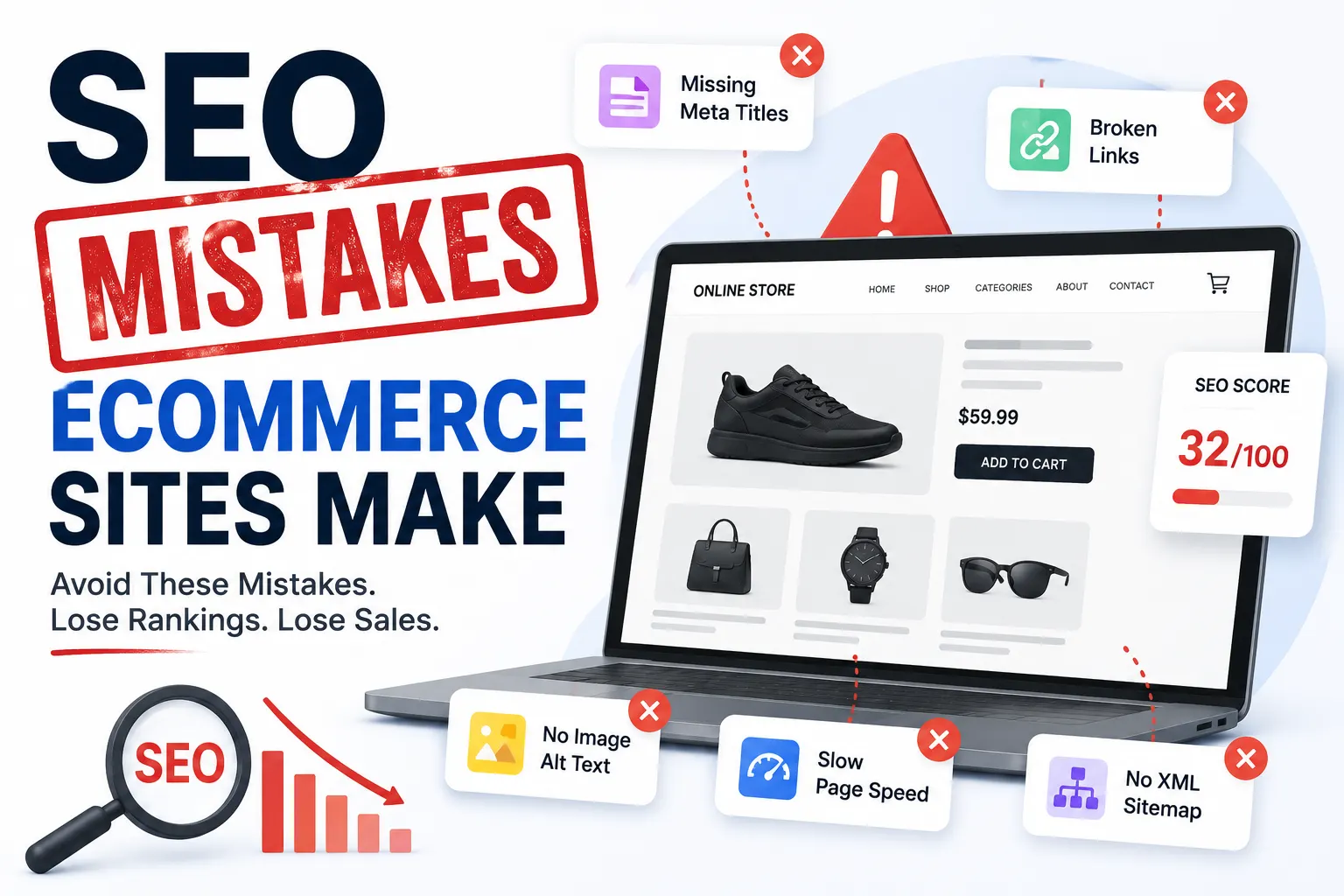
Search engine optimization has become one of the most important long-term growth strategies for ecommerce businesses. Organic search traffic consistently delivers high-intent visitors, sustainable customer acquisition, stronger brand trust, and better long-term return on investment compared to many short-term advertising methods. However, despite investing in ecommerce websites, product catalogs, and digital marketing campaigns, many ecommerce businesses struggle to achieve strong search visibility because they unknowingly make critical SEO mistakes.
Ecommerce SEO is significantly more complex than SEO for standard business websites or blogs. Online stores often contain thousands of pages, dynamic product variations, filtering systems, category structures, pagination, inventory changes, and technical complexities that can create serious search engine optimization challenges if not managed correctly.
Even small SEO mistakes can cause major problems such as:
- Poor rankings
- Crawl inefficiencies
- Duplicate content
- Indexing issues
- Slow page speeds
- Weak user experiences
- Low conversion rates
- Reduced organic traffic
Modern search engines like Google now evaluate ecommerce websites using advanced systems focused on:
- Search intent satisfaction
- User experience
- Mobile usability
- Semantic relevance
- Technical performance
- Trustworthiness
- Helpful content quality
- Core Web Vitals
- Brand authority
Official Resources:
In 2026, successful ecommerce SEO requires businesses to balance technical optimization, content quality, usability, conversion optimization, structured data, mobile-first design, and AI-driven search trends together.
This comprehensive guide explains the most common SEO mistakes ecommerce websites make, why these mistakes harm rankings and conversions, and how businesses can fix them to improve organic visibility, user experience, and ecommerce growth.
Ignoring Search Intent
Why Search Intent Matters
One of the biggest ecommerce SEO mistakes is focusing only on keywords without understanding user intent. Modern search engines prioritize pages that best satisfy what users actually want when they search.
Many ecommerce websites attempt to rank product pages for informational queries or publish blog articles targeting transactional keywords. This mismatch confuses search engines and reduces ranking potential.
For example:
- A user searching “best gaming laptop for students” expects comparisons, recommendations, and buying guidance.
- A user searching “buy gaming laptop online” expects product listings and ecommerce pages.
If an ecommerce website serves the wrong type of page for the query, rankings and conversions suffer.
How to Fix It
Businesses should align page types with search intent:
- Product pages for transactional keywords
- Category pages for broader commercial keywords
- Blog articles for informational searches
- Comparison pages for commercial investigation queries
Search intent optimization improves both rankings and user satisfaction because visitors immediately find the information they expect.
Using Duplicate Manufacturer Product Descriptions
Why Duplicate Content Hurts Ecommerce SEO
Many ecommerce stores copy product descriptions directly from manufacturers or suppliers. While this approach saves time, it creates duplicate content problems because multiple websites end up publishing identical descriptions.
Google prefers unique and valuable content. If dozens of websites use the same manufacturer descriptions, search engines struggle to determine which page deserves higher rankings.
Duplicate content weakens:
- Uniqueness
- Relevance
- Authority
- Search visibility
In competitive industries, duplicate product descriptions significantly reduce ranking opportunities.
How to Fix It
Ecommerce businesses should create original product descriptions focused on:
- Benefits
- Features
- Use cases
- Emotional triggers
- Customer pain points
- Product comparisons
- FAQs
Instead of simply listing technical specifications, businesses should explain how products improve customer experiences and solve real problems.
Creating Thin Product Pages
Why Thin Content Is a Major SEO Problem
Many ecommerce websites publish product pages containing only:
- Product names
- Prices
- One image
- Short descriptions
These pages often fail to provide enough information for search engines or users.
Thin content creates several problems:
- Low search relevance
- Weak user engagement
- High bounce rates
- Lower conversion rates
- Poor semantic depth
Google increasingly prioritizes comprehensive content that genuinely helps users make informed purchasing decisions.
How to Fix It
High-performing product pages should include:
- Detailed descriptions
- Feature explanations
- Usage guidance
- Product specifications
- FAQs
- Customer reviews
- Product videos
- Comparison information
- Delivery details
- Return policies
Comprehensive product pages improve both SEO and conversions.
Poor Ecommerce Site Architecture
Why Site Structure Matters
Many ecommerce websites grow without proper planning, leading to confusing category structures, deep navigation hierarchies, and poor internal linking systems.
A poorly organized website makes it difficult for:
- Users to navigate
- Search engines to crawl pages
- Authority to flow properly
- Important pages to rank effectively
Search engines prefer websites with logical, well-structured hierarchies.
Common Architecture Problems
Examples include:
- Too many nested categories
- Orphan pages
- Weak internal linking
- Duplicate categories
- Inconsistent navigation
How to Fix It
Businesses should create flat, organized site structures where important pages remain accessible within a few clicks.
Example:
Home → Electronics → Laptops → Gaming Laptops
Clear architecture improves crawlability, user experience, and SEO efficiency.
Ignoring Mobile Optimization
Mobile Commerce Dominates Ecommerce
Most ecommerce traffic now comes from smartphones. Google also uses mobile-first indexing, meaning the mobile version of websites determines rankings.
Official Resource:
Despite this, many ecommerce websites still provide poor mobile experiences.
Common Mobile SEO Mistakes
Examples include:
- Slow loading speeds
- Tiny buttons
- Difficult navigation
- Broken layouts
- Complicated checkouts
- Poor font readability
Bad mobile experiences reduce:
- Rankings
- Engagement
- Conversions
How to Fix It
Mobile optimization should focus on:
- Responsive design
- Fast page speeds
- Simplified navigation
- Touch-friendly buttons
- Streamlined checkout processes
Mobile usability directly impacts both SEO performance and ecommerce sales.
Slow Loading Speeds
Why Speed Matters
Page speed strongly influences:
- User experience
- Bounce rates
- Conversion rates
- Search rankings
Users expect ecommerce websites to load quickly. Slow websites frustrate visitors and increase abandonment rates.
Google evaluates performance using Core Web Vitals.
Official Resource:
Common Ecommerce Speed Problems
Examples include:
- Uncompressed images
- Heavy JavaScript
- Excessive plugins
- Poor hosting
- Render-blocking scripts
How to Fix It
Businesses should:
- Compress images
- Use WebP or AVIF formats
- Enable lazy loading
- Minify CSS and JavaScript
- Use CDNs
- Improve server response times
Fast websites improve SEO, engagement, and revenue.
Poor Internal Linking
Why Internal Linking Matters
Internal links help search engines understand relationships between pages while distributing authority throughout ecommerce websites.
Many ecommerce stores fail to link strategically between:
- Products
- Categories
- Blogs
- Buying guides
- Landing pages
Weak internal linking reduces discoverability and ranking potential.
How to Fix It
Businesses should create strong contextual internal linking systems by:
- Linking related products
- Connecting blogs to products
- Using breadcrumb navigation
- Highlighting important categories
Good internal linking improves crawlability and user engagement.
Ignoring Structured Data and Schema Markup
Why Schema Markup Matters
Structured data helps search engines understand product information clearly.
Without schema markup, ecommerce websites miss opportunities for rich results such as:
- Star ratings
- Product prices
- Availability
- FAQs
- Reviews
Rich results improve click-through rates significantly.
Official Resource:
How to Fix It
Businesses should implement:
- Product schema
- Review schema
- FAQ schema
- Breadcrumb schema
Structured data improves visibility and search appearance.
Weak Category Page Optimization
Why Category Pages Matter
Category pages often target high-volume commercial keywords and play a major role in ecommerce SEO.
However, many ecommerce websites treat category pages as simple product grids without useful content.
Common Problems
Examples include:
- Thin content
- Weak metadata
- Poor keyword targeting
- Duplicate titles
- Weak internal linking
How to Fix It
Optimized category pages should include:
- Introductory descriptions
- Helpful buying guidance
- Internal links
- FAQs
- Clear headings
- Semantic keyword optimization
Well-optimized category pages improve rankings and user navigation.
Keyword Stuffing and Over-Optimization
Why Keyword Stuffing Hurts SEO
Some ecommerce businesses excessively repeat keywords hoping to improve rankings.
Examples:
- Repeating keywords unnaturally
- Stuffing titles excessively
- Using awkward anchor text
Google now prioritizes natural, user-focused content rather than keyword repetition.
How to Fix It
Businesses should:
- Write naturally
- Focus on readability
- Use semantic variations
- Prioritize helpfulness
Semantic SEO and topical relevance matter far more than keyword density.
Ignoring User Experience Signals
UX and SEO Are Closely Connected
Google increasingly evaluates user experience signals such as:
- Engagement
- Bounce rates
- Navigation quality
- Mobile usability
- Visual stability
Poor UX reduces rankings indirectly because users abandon frustrating websites quickly.
Common UX Problems
Examples include:
- Pop-up overload
- Confusing navigation
- Difficult filtering
- Poor search functionality
- Visual clutter
How to Fix It
Businesses should simplify ecommerce experiences through:
- Clear navigation
- Fast interfaces
- Better readability
- Improved search systems
- Streamlined design
Strong UX improves both SEO and conversions.
Failing to Optimize Images
Image SEO Is Often Ignored
Images are critical for ecommerce because visual presentation strongly influences purchasing decisions.
Poor image optimization causes:
- Slow loading speeds
- Weak image search visibility
- Accessibility issues
Common Mistakes
Examples include:
- Large file sizes
- Missing alt text
- Generic file names
- Poor-quality visuals
How to Fix It
Businesses should:
- Compress images
- Use descriptive file names
- Add alt text
- Use modern formats
- Improve visual quality
Optimized images improve performance and SEO visibility.
Ignoring User-Generated Content
Why Reviews Matter
Customer reviews improve:
- Trust
- Fresh content
- Long-tail keyword relevance
- Conversion rates
Many ecommerce websites fail to encourage or display reviews effectively.
How to Fix It
Businesses should:
- Request reviews after purchases
- Encourage customer photos
- Highlight verified buyers
- Respond to feedback
User-generated content strengthens both SEO and customer trust.
Poor URL Structures
Why URLs Matter
Messy URLs create crawl inefficiencies and poor user experiences.
Common Problems
Examples include:
- Long parameter strings
- Random IDs
- Duplicate URL variations
Bad Example:
https://example.com/product?id=12345&ref=abc
How to Fix It
Use clean descriptive URLs such as:
https://example.com/wireless-gaming-headset
SEO-friendly URLs improve relevance and usability.
Not Using Canonical Tags Properly
Duplicate URL Problems in Ecommerce
Filters, sorting systems, and product variations often create duplicate URLs.
Without proper canonicalization, search engines may:
- Waste crawl budget
- Split ranking signals
- Index duplicate pages
Official Resource:
How to Fix It
Businesses should implement canonical tags carefully to indicate preferred versions of pages.
Weak Content Marketing Strategies
Why Content Matters
Many ecommerce businesses rely only on product pages and ignore content marketing completely.
Without informational content, businesses miss opportunities to rank for:
- Buying guides
- Comparisons
- Tutorials
- Educational searches
How to Fix It
Create content such as:
- Buying guides
- Product comparisons
- Tutorials
- Industry trends
- FAQs
Content marketing builds topical authority and supports product rankings.
Ignoring Analytics and SEO Monitoring
Why Tracking Matters
SEO requires continuous monitoring and optimization.
Many ecommerce websites fail to track:
- Rankings
- Traffic
- Conversions
- Technical issues
- User behavior
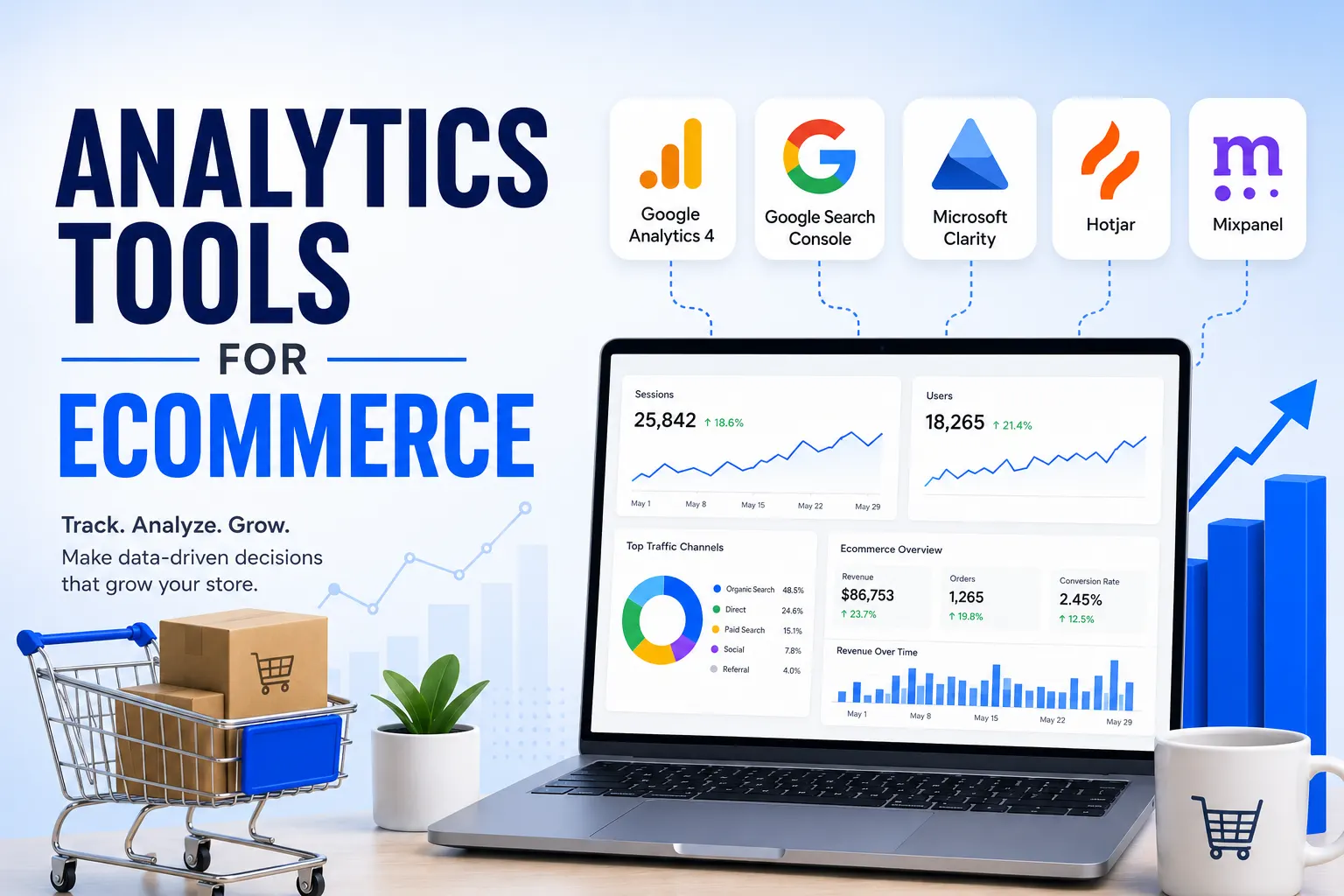
Recommended Tools
Google Analytics
Google Search Console
Ahrefs
Semrush
Tracking helps businesses identify opportunities and problems early.
Using Spammy Link Building Tactics
Why Low-Quality Links Are Dangerous
Some ecommerce websites still purchase spammy backlinks or use manipulative SEO tactics.
Examples include:
- Link farms
- Automated backlinks
- Private blog networks
- Spam comments
Official Resource:
How to Fix It
Focus on white-hat SEO strategies such as:
- Content marketing
- Digital PR
- Influencer outreach
- Resource creation
- Guest posting on quality websites
Sustainable link building improves long-term authority safely.
Ignoring AI and Semantic Search Trends
Search Engines Have Evolved
Modern search engines understand:
- Context
- Entities
- User intent
- Semantic relationships
Businesses still relying on outdated keyword-only strategies often struggle.
How to Fix It
Focus on:
- Semantic SEO
- Helpful content
- Topical authority
- Contextual relevance
- Structured data
AI-driven search increasingly rewards expertise and usefulness.
Conclusion
Ecommerce SEO is far more complex than simply adding keywords to product pages or building backlinks. Modern search engines evaluate ecommerce websites using advanced systems focused on user experience, technical performance, content quality, semantic relevance, trustworthiness, and search intent satisfaction.
The most common ecommerce SEO mistakes include:
- Ignoring search intent
- Using duplicate content
- Publishing thin product pages
- Poor site architecture
- Weak mobile experiences
- Slow loading speeds
- Weak internal linking
- Missing structured data
- Poor category optimization
- Spammy SEO tactics
These mistakes reduce rankings, organic traffic, engagement, and conversions.
Successful ecommerce businesses focus on creating comprehensive, user-focused experiences that combine:
- Technical SEO
- Helpful content
- Mobile optimization
- Structured data
- Internal linking
- Conversion optimization
- Strong UX
- Semantic relevance
- Authority building
SEO is not a one-time setup. Ecommerce websites require continuous analysis, optimization, testing, and adaptation as search engines evolve with AI-driven systems and changing user behavior.
Businesses that prioritize long-term quality, trust, usability, and relevance will achieve sustainable organic growth and remain competitive in the future of ecommerce search.