Blog
Keyword Research for Ecommerce (Step-by-Step)

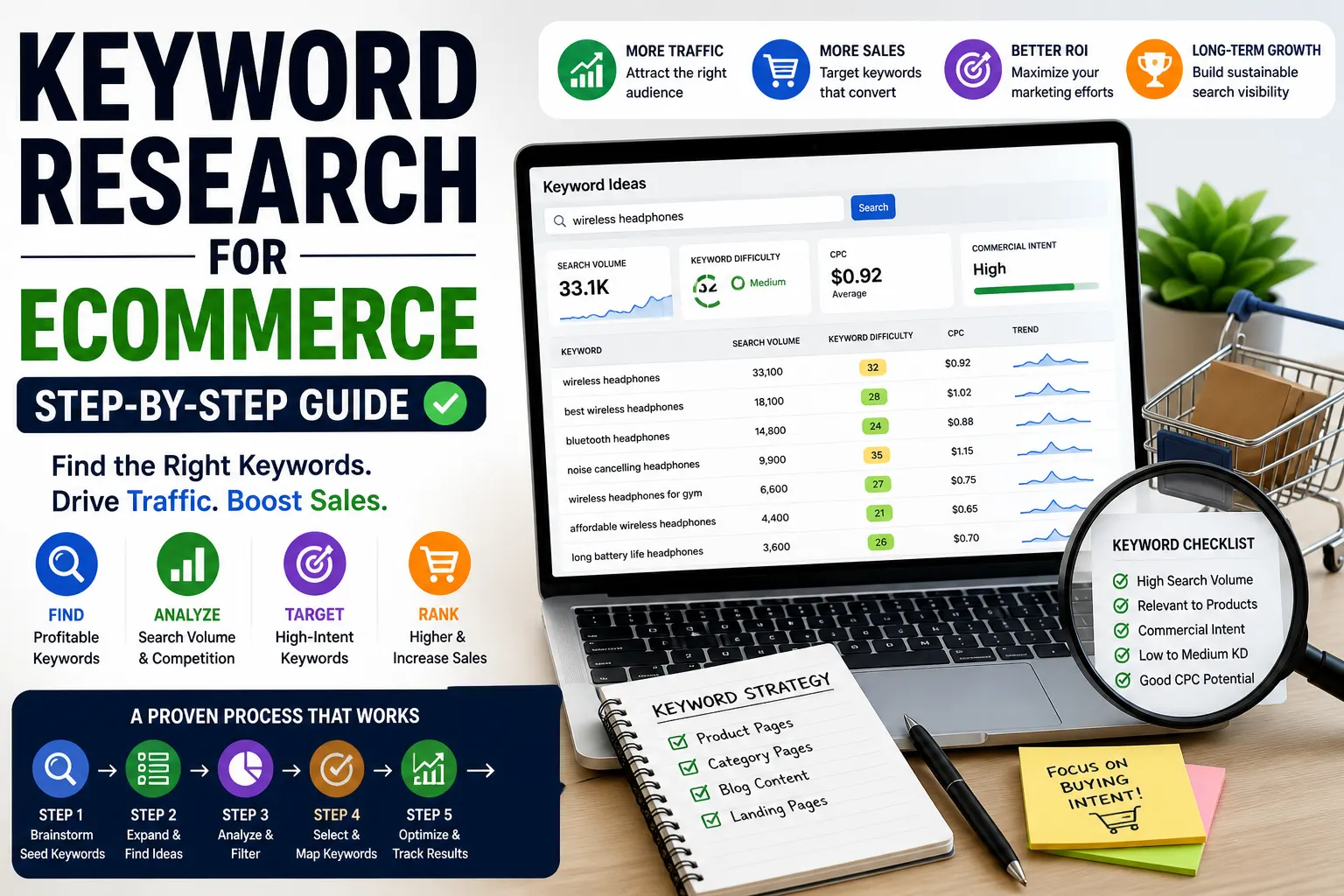
The Complete Guide to Finding High-Converting SEO Keywords for Online Stores
Introduction
Keyword research is the foundation of every successful ecommerce SEO strategy. No matter how visually appealing an ecommerce store looks or how advanced its technology stack may be, organic search growth becomes extremely difficult without targeting the right keywords. Search engines connect users to products, categories, buying guides, and solutions through keywords, making keyword research one of the most important aspects of ecommerce marketing.
In ecommerce, keyword research goes far beyond identifying high-volume search terms. Modern ecommerce SEO requires understanding search intent, buyer psychology, competition levels, semantic relevance, user behavior, and conversion potential. Businesses that target the wrong keywords often struggle with low conversions, irrelevant traffic, weak rankings, and poor return on investment.
Today’s search engines use advanced AI systems and semantic understanding to interpret user intent more accurately than ever before. This means ecommerce businesses must optimize for topics, entities, contextual relevance, and search intent rather than simply repeating keywords.
Official Resources:
- https://developers.google.com/search/docs
- https://www.bigcommerce.com/articles/ecommerce/ecommerce-seo/
- https://www.shopify.com/blog/ecommerce-seo
Keyword research helps ecommerce businesses:
- Discover what customers are searching for
- Understand buyer intent
- Build SEO-focused category pages
- Optimize product pages
- Create content marketing strategies
- Increase organic traffic
- Improve conversions
- Reduce dependency on paid advertising
This comprehensive step-by-step guide explains everything ecommerce businesses need to know about keyword research in 2026, including keyword types, research tools, competitor analysis, search intent, long-tail keywords, semantic SEO, content mapping, category optimization, AI-driven search behavior, and advanced ecommerce keyword strategies.
What Is Ecommerce Keyword Research?
Understanding Ecommerce Keyword Research
Ecommerce keyword research is the process of identifying search terms users enter into search engines when looking for products, product categories, reviews, comparisons, buying guides, or ecommerce-related solutions.
The goal is to discover keywords that:
- Match user intent
- Drive relevant traffic
- Increase conversions
- Support SEO growth
- Improve visibility
Keyword research guides ecommerce SEO decisions across:
- Product pages
- Category pages
- Blog content
- Internal linking
- Site architecture
- Paid advertising campaigns
Why Keyword Research Matters
Without proper keyword research, ecommerce stores risk:
- Targeting irrelevant audiences
- Competing for impossible keywords
- Missing high-converting opportunities
- Creating weak content strategies
Effective keyword research improves:
- Organic rankings
- Conversion rates
- Content relevance
- Customer acquisition
- Revenue growth
Understanding Search Intent in Ecommerce
What Is Search Intent?
Search intent refers to the purpose behind a user’s search query.
Understanding intent is critical because Google prioritizes pages that best satisfy user expectations.
Types of Search Intent
Informational Intent
Users seek knowledge or answers.
Examples:
- How to choose running shoes
- Best laptop for video editing
- What is organic skincare
These searches are ideal for:
- Blog articles
- Buying guides
- Tutorials
- Educational content
Navigational Intent
Users search for specific brands or websites.
Examples:
- Nike official website
- Amazon electronics
Commercial Investigation Intent
Users compare options before purchasing.
Examples:
- Best protein powder for muscle gain
- iPhone vs Samsung comparison
These keywords are highly valuable for ecommerce blogs and comparison pages.
Transactional Intent
Users are ready to buy.
Examples:
- Buy gaming laptop online
- Men’s leather wallet price
Transactional keywords often generate the highest conversions.
Step 1: Identify Your Ecommerce Niche and Audience
Understanding Your Products
Before researching keywords, businesses must understand:
- Product categories
- Customer pain points
- Buyer motivations
- Market positioning
Defining Target Audiences
Keyword strategies vary based on audiences.
For example:
- Budget shoppers search differently than luxury buyers.
- Beginners search differently than experts.
Customer Persona Research
Develop customer personas based on:
- Age
- Interests
- Income
- Goals
- Problems
- Search behavior
Understanding audiences improves keyword relevance.
Step 2: Brainstorm Seed Keywords
What Are Seed Keywords?
Seed keywords are broad terms related to products or industries.
Examples:
- Running shoes
- Protein powder
- Wireless headphones
- Office furniture
Seed keywords help generate larger keyword lists.
Sources for Seed Keyword Ideas
Product Categories
Use existing category names.
Competitor Websites
Analyze competitor structures.
Customer Questions
Identify frequently asked questions.
Marketplace Platforms
Explore:
- Amazon
- Etsy
- eBay
These platforms reveal real search behavior.
Official Resources:
Step 3: Use Ecommerce Keyword Research Tools
Importance of Keyword Tools
Keyword research tools provide:
- Search volume data
- Keyword difficulty
- Competition analysis
- Trend insights
- Related keyword ideas
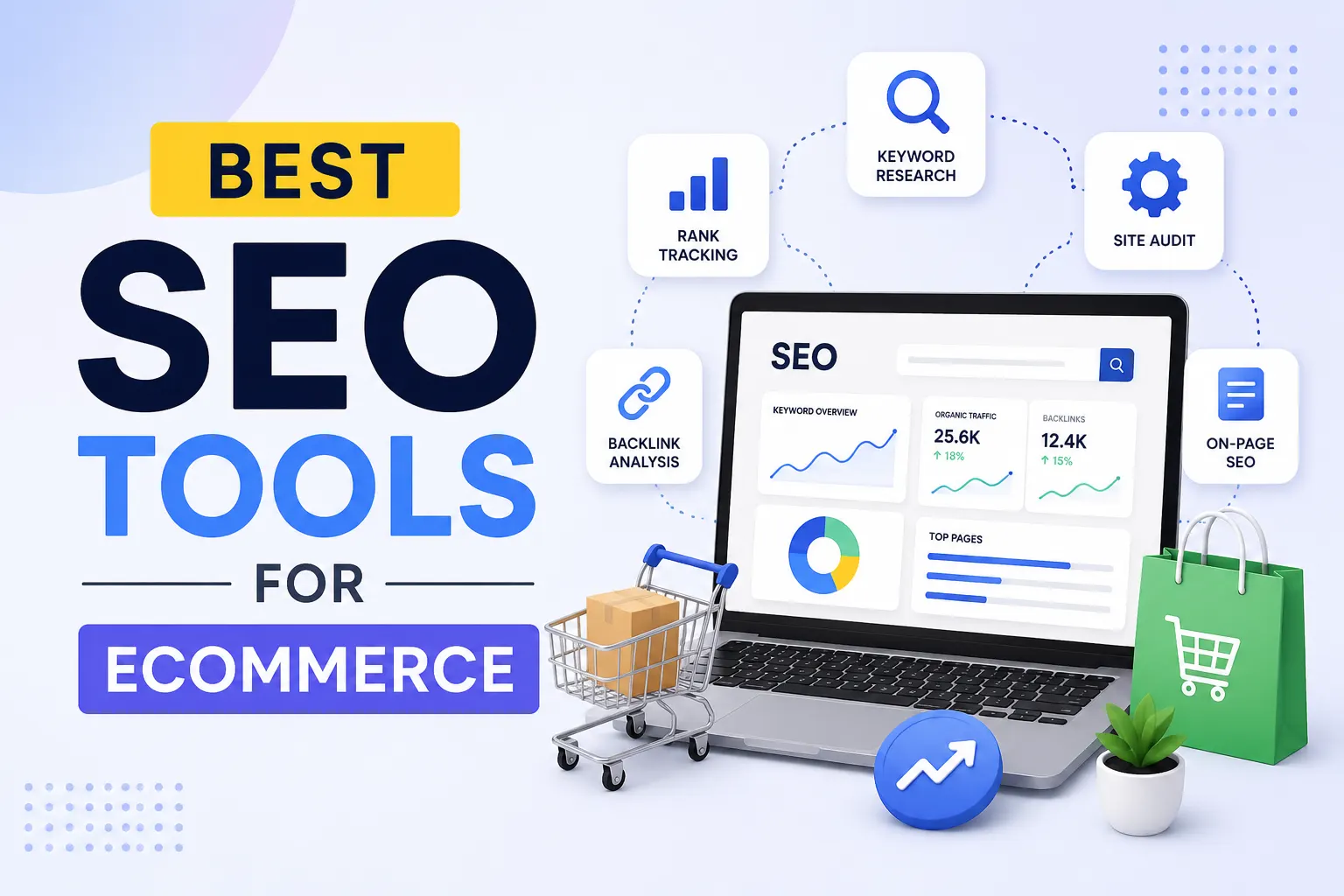
Best Ecommerce Keyword Research Tools
Google Keyword Planner
Official Tool:
Benefits:
- Free keyword data
- Search volume estimates
- CPC insights
Ahrefs
Official Website:
Ahrefs provides:
- Keyword difficulty scores
- Competitor analysis
- SERP analysis
- Content gap analysis
Semrush
Official Website:
Semrush helps with:
- Keyword clustering
- Trend tracking
- Competitor monitoring
Ubersuggest
Official Website:
KeywordTool.io
Official Website:
Useful for discovering long-tail variations.
Step 4: Analyze Competitor Keywords
Why Competitor Analysis Matters
Competitors already ranking successfully provide valuable insights.
What to Analyze
High-Traffic Pages
Identify top-performing pages.
Ranking Keywords
Analyze:
- Product keywords
- Category keywords
- Blog keywords
Content Strategies
Study:
- Guides
- Comparison articles
- FAQs
- Reviews
Competitor Gap Analysis
Keyword gap analysis identifies opportunities competitors rank for that your store does not.
Tools:
- Ahrefs
- Semrush
Step 5: Focus on Long-Tail Keywords
What Are Long-Tail Keywords?
Long-tail keywords are highly specific search queries.
Examples:
Instead of:
“Wireless headphones”
Use:
“Best wireless headphones for gym workouts”
Benefits of Long-Tail Keywords
Lower Competition
Specific keywords are easier to rank for.
Higher Conversion Rates
Users searching specific terms often have stronger buying intent.
Better Intent Matching
Long-tail searches reveal detailed user needs.
Long-Tail Keyword Sources
Google Autocomplete
Search suggestions reveal popular queries.
People Also Ask
Google’s question boxes reveal intent-driven searches.
Reddit and Forums
Communities reveal real customer language.
Official Resource:
Step 6: Understand Keyword Metrics
Search Volume
Search volume measures how often users search keywords.
High volume can indicate:
- Strong demand
- High competition
Keyword Difficulty
Difficulty scores estimate ranking challenges.
New ecommerce stores should initially target:
- Lower competition keywords
- Long-tail phrases
Cost Per Click (CPC)
High CPC often indicates strong commercial intent.
Click Potential
Some searches generate fewer clicks because Google answers queries directly.
Step 7: Organize Keywords by Search Intent
Intent-Based Keyword Grouping
Organize keywords into categories such as:
- Transactional
- Informational
- Comparison
- Navigational
Why Organization Matters
Different intents require different page types.
Examples:
- Product pages for transactional keywords
- Blogs for informational searches
- Comparison pages for commercial intent
Step 8: Map Keywords to Ecommerce Pages
Keyword Mapping Explained
Keyword mapping assigns target keywords to specific pages.
This prevents:
- Keyword cannibalization
- Duplicate targeting
- Confusing site structures
Product Page Keywords
Product pages should target:
- Specific product names
- Brand modifiers
- Feature keywords
Category Page Keywords
Category pages should target broader commercial terms.
Example:
“Men’s running shoes”
Blog Content Keywords
Blogs should target:
- Educational queries
- Comparisons
- Buying guides
Step 9: Optimize Product Page Keywords
Product Title Optimization
Include:
- Product name
- Features
- Important modifiers
Product Description Optimization
Write unique descriptions that:
- Include relevant keywords naturally
- Highlight benefits
- Improve conversions
Image SEO
Optimize:
- File names
- Alt text
- Captions
Product Schema
Structured data improves search visibility.
Official Resource:
Step 10: Optimize Category Pages
Importance of Category Pages
Category pages often rank for competitive commercial keywords.
Category Page SEO Best Practices
Introductory Content
Add useful category descriptions.
Internal Linking
Link related products and categories.
Filters and Navigation
Ensure faceted navigation does not create SEO problems.
Official Resource:
Step 11: Build Content Around Keywords
Why Content Marketing Matters
Content helps ecommerce businesses:
- Rank for informational searches
- Build authority
- Earn backlinks
- Educate customers
Content Types for Ecommerce SEO
Buying Guides
Examples:
- Best laptops for students
- How to choose skincare products
Product Comparisons
Examples:
- Nike vs Adidas running shoes
Tutorials
Educational content improves engagement.
FAQ Content
FAQs help targe