Blog
🧩 Microservices Architecture in Ecommerce: Pros & Cons (Ultimate 2026 Guide)

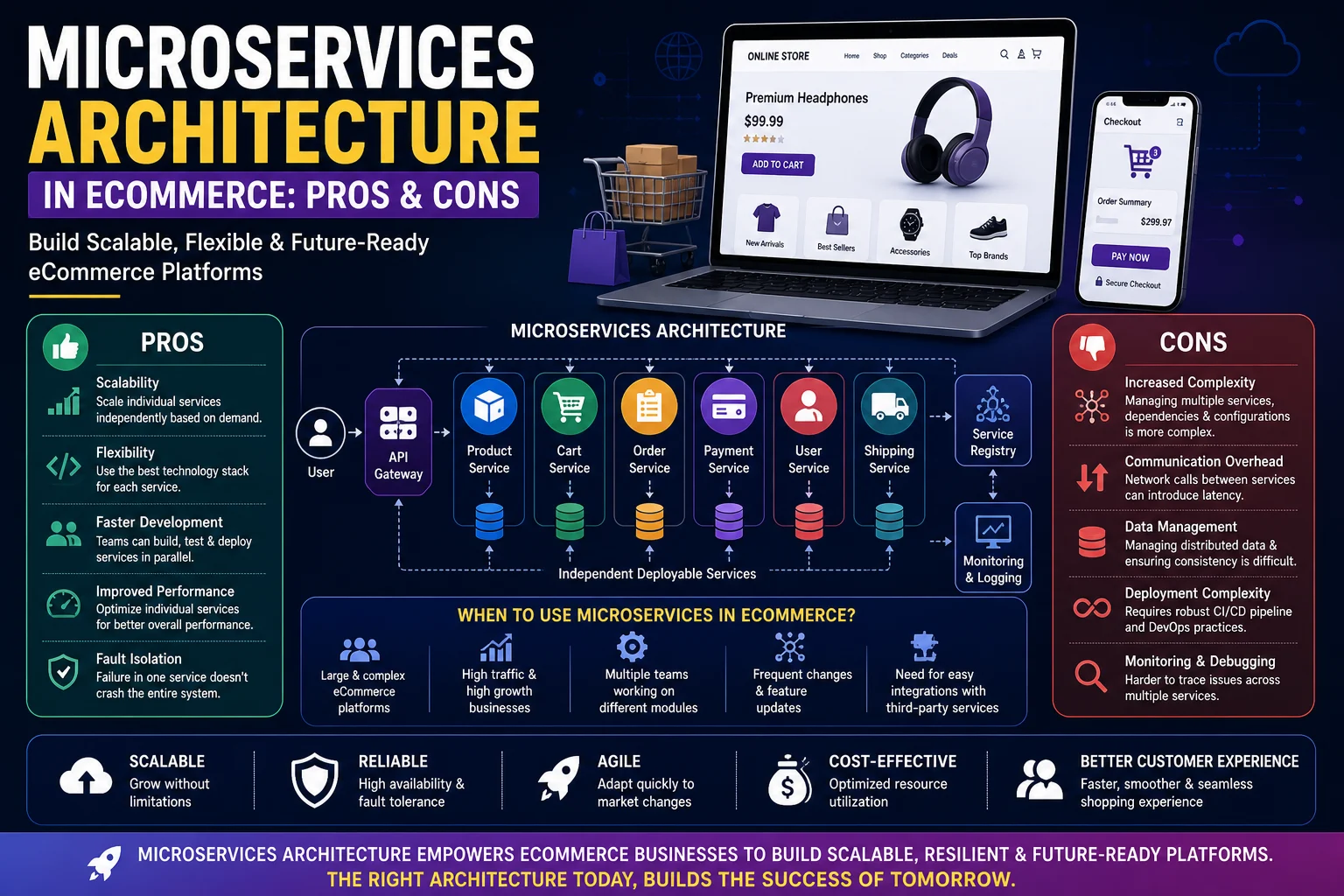
📘 Introduction: Why Microservices Matter in Modern Ecommerce
Ecommerce platforms today are no longer simple websites—they are complex ecosystems that must handle high traffic, multiple integrations, personalized experiences, and real-time operations. Traditional monolithic systems often struggle to meet these demands as businesses scale.
This is where microservices architecture becomes essential.
Microservices architecture is a modern approach to building software where applications are broken down into smaller, independent services. Each service handles a specific function and can be developed, deployed, and scaled independently.
For ecommerce businesses, this approach offers significant advantages in scalability, flexibility, and performance—but it also introduces complexity that must be carefully managed.
🧠 What is Microservices Architecture? (Deep Explanation)
Microservices architecture is a design pattern where an application is composed of multiple small services instead of a single large system.
Each microservice:
- Performs a specific task
- Operates independently
- Communicates via APIs
Example in Ecommerce
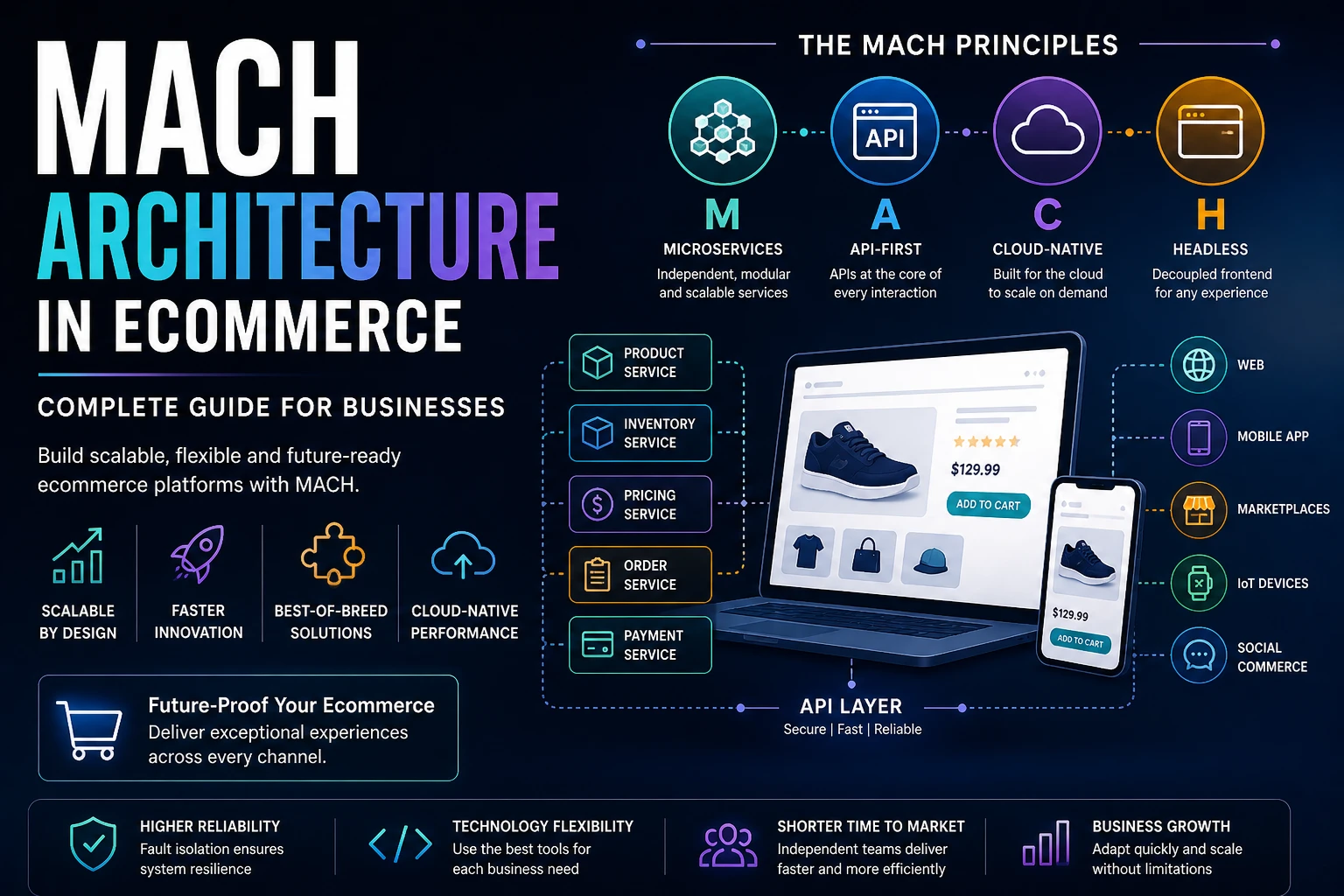
An ecommerce platform built using microservices might include:
- Product service
- Inventory service
- Order service
- Payment service
- User service
Each of these services operates independently but works together to create a complete system.
⚙️ How Microservices Work in Ecommerce
Service Independence
Each service can be:
- Developed separately
- Updated independently
- Scaled individually
API Communication
Microservices communicate using APIs.
Decentralized Data Management
Each service may have its own database.
🏗️ Microservices vs Monolithic Architecture
Monolithic Architecture
In a monolithic system:
- All components are tightly connected
- Changes affect the entire system
Microservices Architecture
In microservices:
- Components are independent
- Changes affect only specific services
Key Difference
Microservices offer flexibility, while monolithic systems offer simplicity.
🚀 Benefits of Microservices in Ecommerce (Deep Analysis)
1. Scalability
One of the biggest advantages of microservices is scalability.
Instead of scaling the entire system, businesses can scale individual services based on demand.
2. Flexibility in Technology
Different services can use different technologies.
3. Faster Development
Teams can work on different services simultaneously.
4. Improved Performance
Optimizing individual services improves overall performance.
5. Fault Isolation
If one service fails, it does not affect the entire system.
⚠️ Challenges of Microservices (Detailed)
1. Increased Complexity
Managing multiple services is more complex than a single system.
2. Communication Overhead
Services communicate through APIs, which can introduce latency.
3. Data Management Challenges
Maintaining consistency across multiple databases can be difficult.
4. Deployment Complexity
Deploying multiple services requires advanced DevOps practices.
5. Monitoring and Debugging
Tracking issues across services can be challenging.
🧠 When to Use Microservices in Ecommerce
Microservices are ideal for:
- Large ecommerce platforms
- High traffic systems
- Businesses with complex requirements
🧩 Microservices Architecture Components
API Gateway
Acts as a single entry point.
Service Registry
Keeps track of services.
Load Balancer
Distributes traffic.
Database per Service
Each service has its own database.
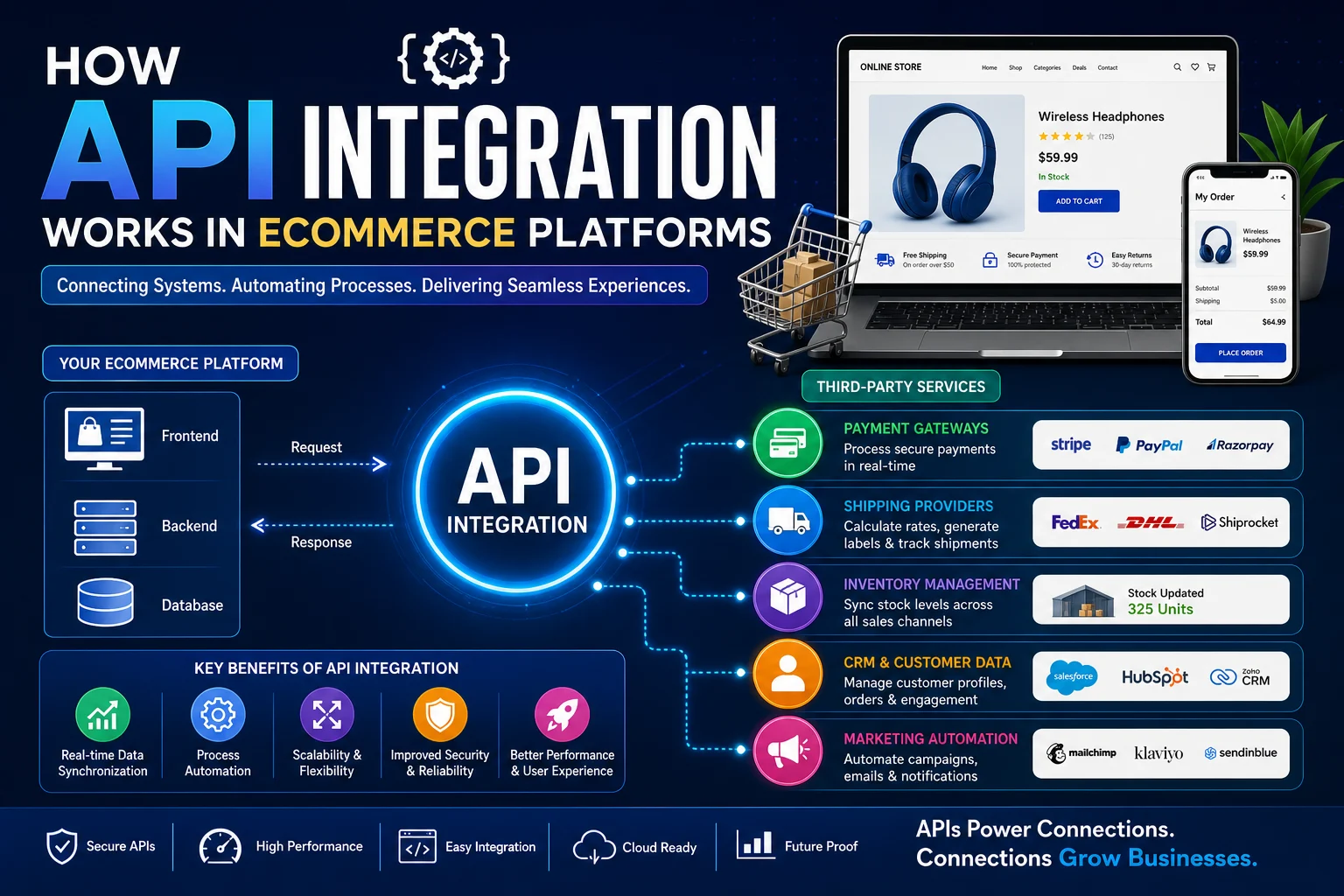
🔗 Role of APIs in Microservices
APIs enable communication between services.
⚡ Performance Optimization in Microservices
Caching
Improves speed.
Asynchronous Communication
Reduces delays.
🔐 Security in Microservices
Authentication
Ensures secure access.
Encryption
Protects data.
📈 Scalability Strategies
Horizontal Scaling
Add more instances.
Cloud Infrastructure
Use cloud platforms.
🔮 Future of Microservices in Ecommerce
- Headless commerce
- API-first development
- Serverless architecture
⚔️ Pros vs Cons Summary
Pros
- Scalability
- Flexibility
- Performance
Cons
- Complexity
- Higher cost
- Maintenance challenges
🏁 Conclusion
Microservices architecture is a powerful approach for building scalable ecommerce platforms. However, it requires careful planning, skilled teams, and proper infrastructure.
To implement microservices architecture effectively, working with experts like Sri Hayavadhana Info Tech ensures your platform is optimized for scalability, performance, and long-term success.