Blog
🧠 Ecommerce Tech Stack Explained: Frontend, Backend & APIs (Ultimate 2026 Guide)

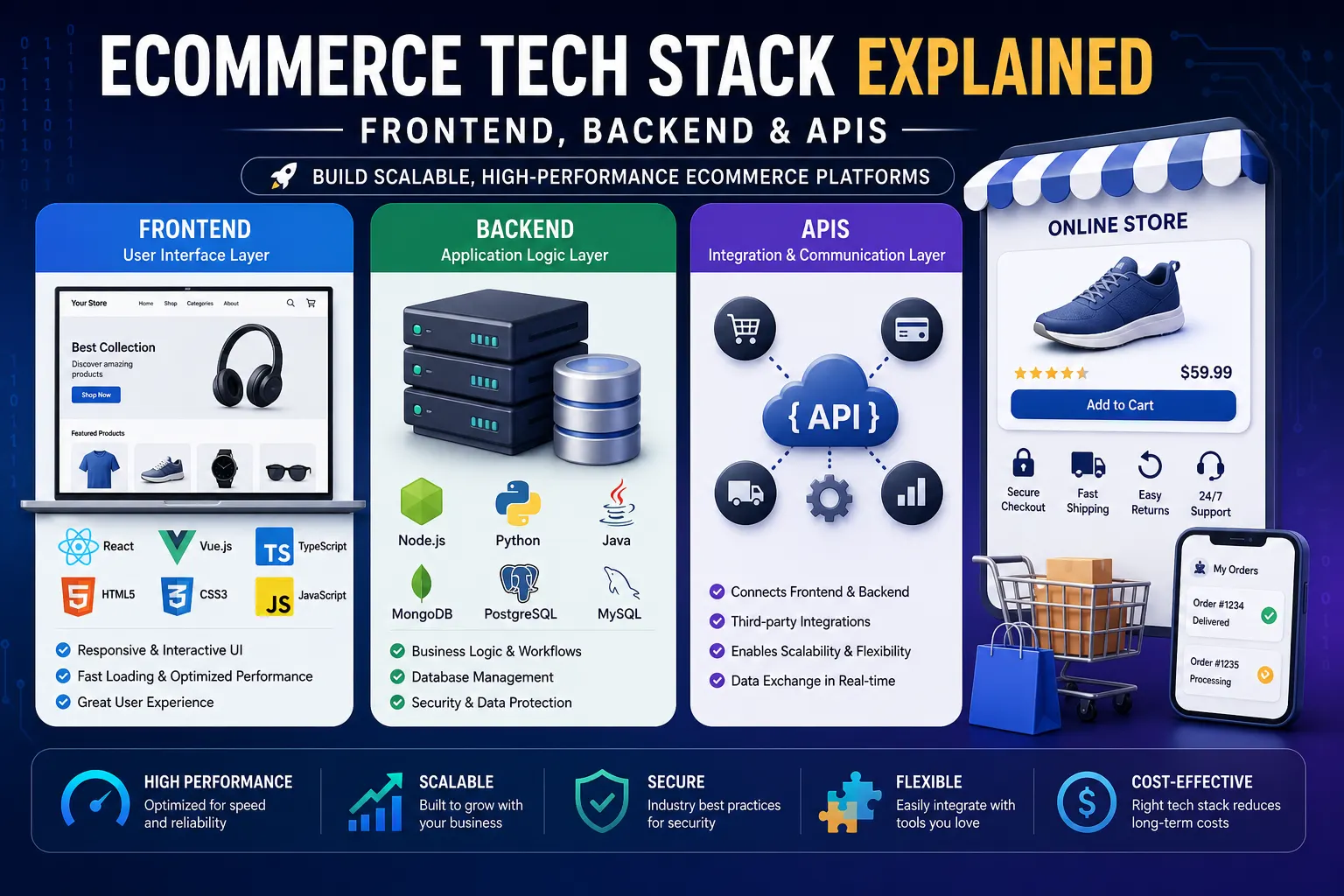
📘 Introduction: Why Your Ecommerce Tech Stack is the Backbone of Growth
In the modern ecommerce ecosystem, technology is not just a support system—it is the foundation upon which your entire business operates. From the moment a customer lands on your website to the completion of a purchase and post-sale engagement, every interaction is powered by your ecommerce tech stack.
A slow website, poor checkout experience, or lack of integration can directly impact conversions, customer satisfaction, and revenue. On the other hand, a well-architected tech stack enables businesses to scale seamlessly, personalize user experiences, and integrate with advanced tools for marketing, logistics, and analytics.
Understanding your ecommerce tech stack is no longer optional. Whether you are building a new store or optimizing an existing one, your success depends on how well your frontend, backend, and APIs work together.
🧠 What is an Ecommerce Tech Stack? (Complete Breakdown)
An ecommerce tech stack refers to the collection of technologies, tools, frameworks, and infrastructure used to build and operate an ecommerce platform.
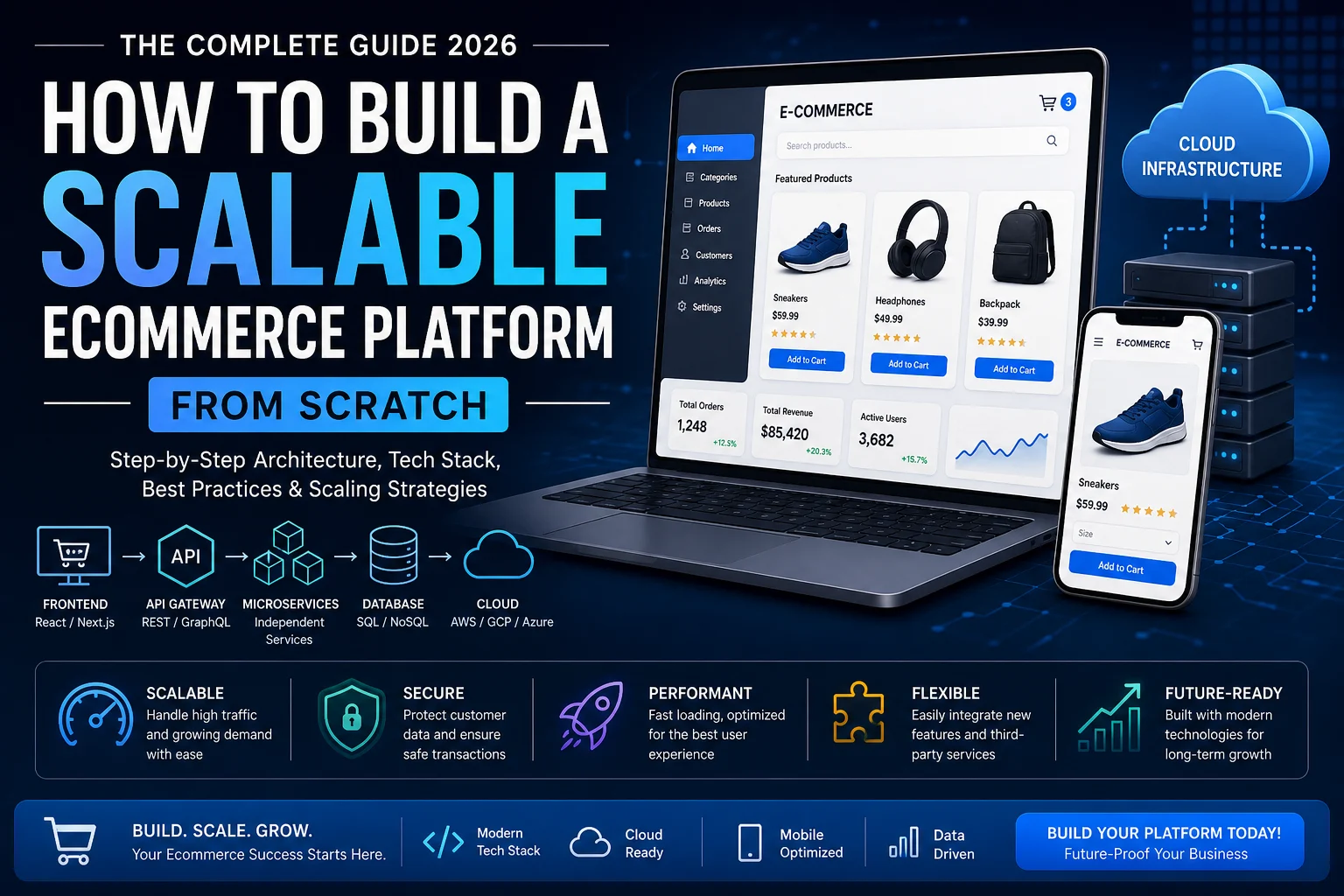
At its core, the tech stack is divided into three primary layers:
- Frontend (user interface layer)
- Backend (business logic layer)
- API layer (communication and integration layer)
Each of these layers plays a critical role in ensuring that the platform functions efficiently and delivers a seamless experience to users.
Why Tech Stack Decisions Matter
Choosing the right tech stack affects:
- Website speed and performance
- Scalability and growth potential
- Development flexibility
- Integration capabilities
- Maintenance and cost
For example, a poorly optimized frontend can slow down page loading times, while an inefficient backend can struggle to process orders during high traffic periods.
🎨 Frontend in Ecommerce (Deep Technical Explanation)
What is the Frontend?
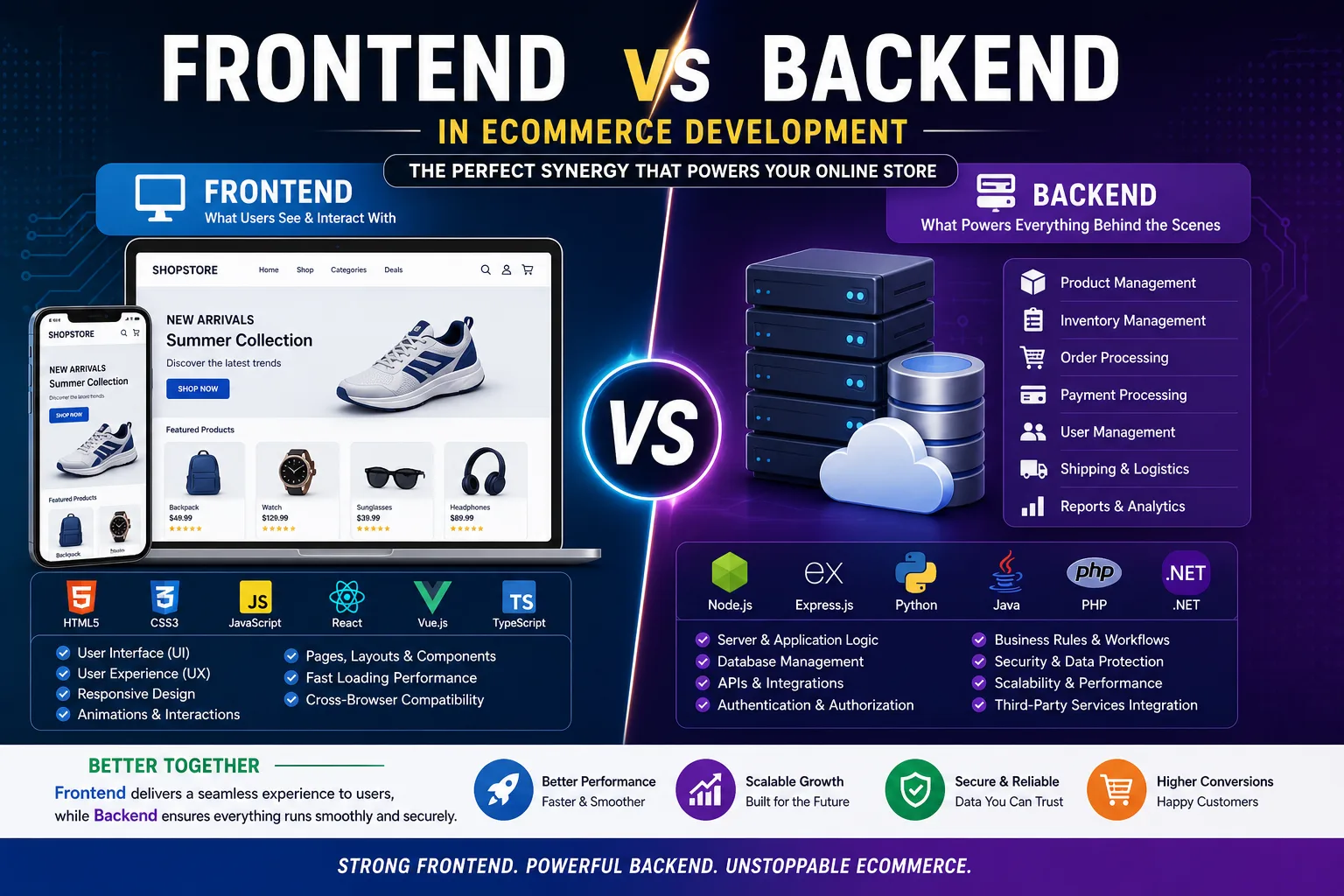
The frontend is the visual and interactive part of your ecommerce website. It is everything the customer sees and interacts with, including:
- Homepage
- Product pages
- Navigation menus
- Checkout flow
Role of Frontend in Ecommerce Success
The frontend plays a critical role in:
- User experience (UX)
- Conversion optimization
- Brand perception
A well-designed frontend can increase engagement and sales, while a poorly designed one can drive users away.
Frontend Technologies Explained
Modern ecommerce frontends rely on:
- HTML for structure
- CSS for styling
- JavaScript for interactivity
Frameworks such as React and Vue are widely used to build dynamic interfaces.
👉 Learn more about React from React
Server-Side Rendering vs Client-Side Rendering
Server-Side Rendering (SSR)
- Content is rendered on the server
- Faster initial load
- Better for SEO
Client-Side Rendering (CSR)
- Content is rendered in the browser
- More dynamic interactions
Frontend Performance Optimization (Detailed)
1. Image Optimization
Large images slow down websites. Use compressed formats like WebP.
2. Lazy Loading
Load images only when they are visible.
3. CDN Usage
Content Delivery Networks distribute content globally.
👉 Learn about CDN from Cloudflare
4. Code Splitting
Break code into smaller chunks for faster loading.
⚙️ Backend in Ecommerce (Complete Deep Dive)
What is the Backend?
The backend is the engine that powers your ecommerce platform. It processes data, executes business logic, and manages operations.
Core Responsibilities of Backend
- Product management
- Inventory tracking
- Order processing
- Payment handling
- Customer data management
Backend Technologies Explained
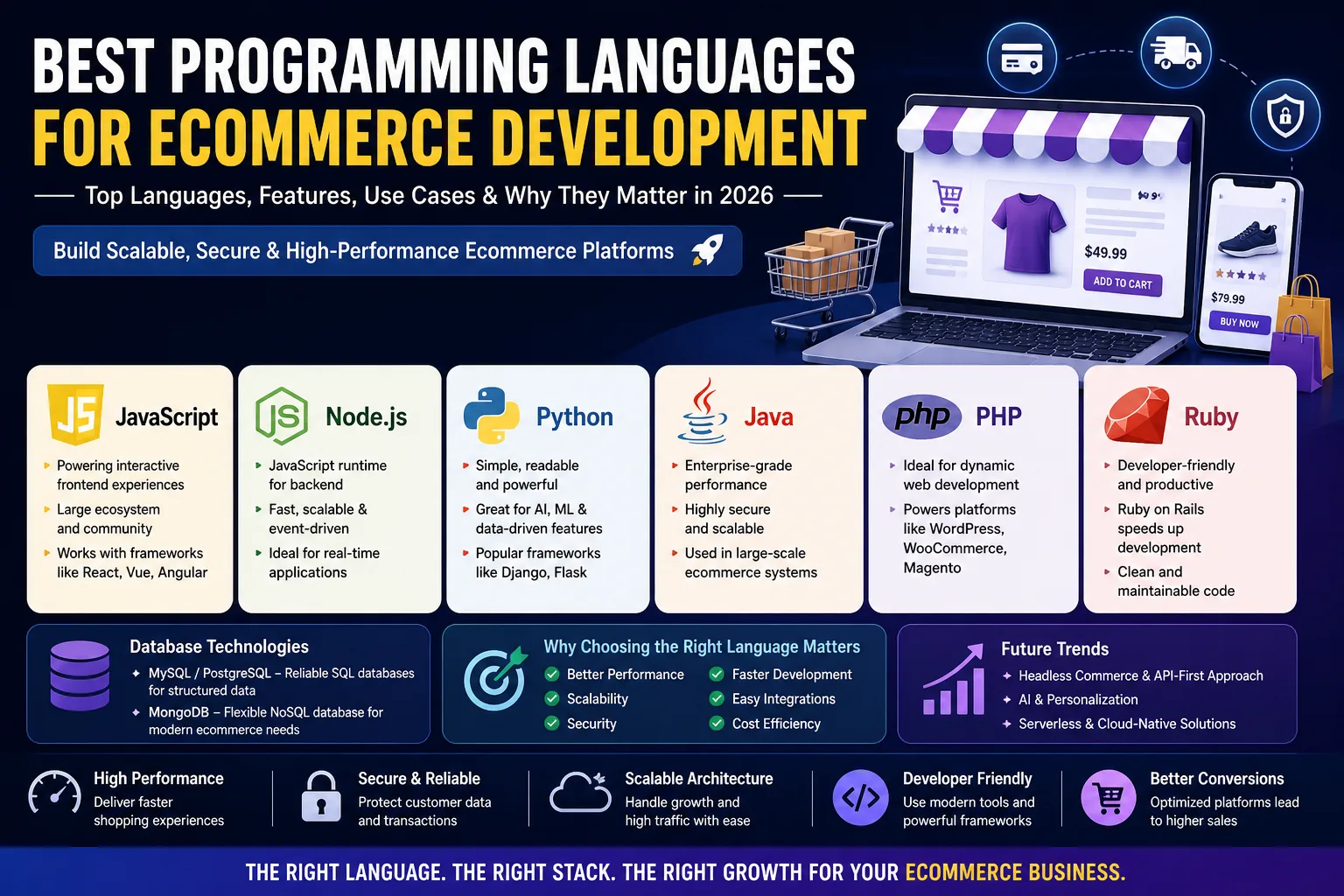
Popular backend technologies include:
- Node.js
- Python
- Java
👉 Learn more about Node.js
Database Systems in Ecommerce
SQL Databases
- Structured
- Reliable
- Examples: MySQL, PostgreSQL
NoSQL Databases
- Flexible
- Scalable
- Example: MongoDB
👉 Learn more about MongoDB
Caching Mechanisms
Caching improves performance by storing frequently accessed data.
Backend Scaling Strategies
- Horizontal scaling
- Load balancing
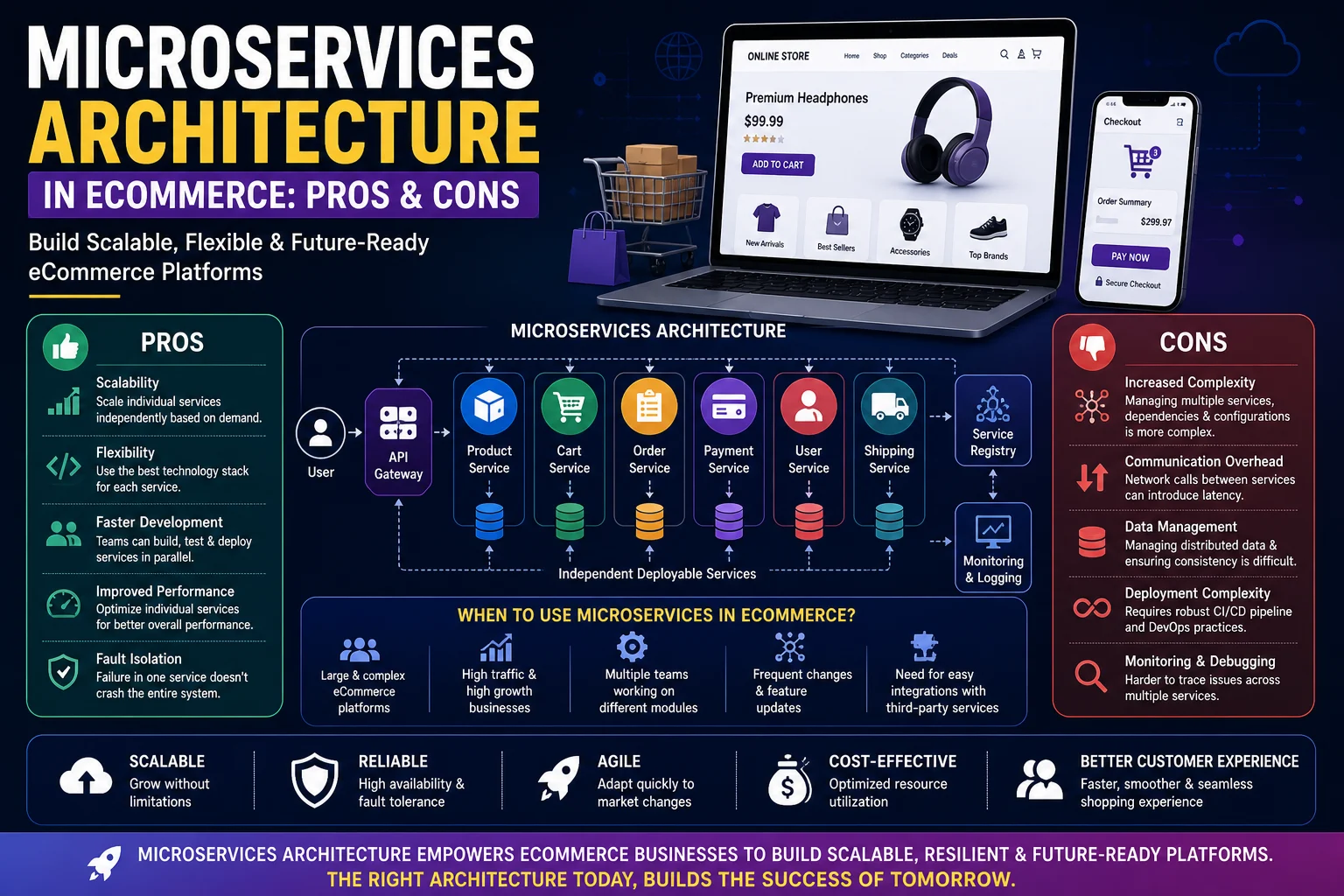
- Microservices architecture
🔗 APIs in Ecommerce (Detailed Explanation)
What are APIs?
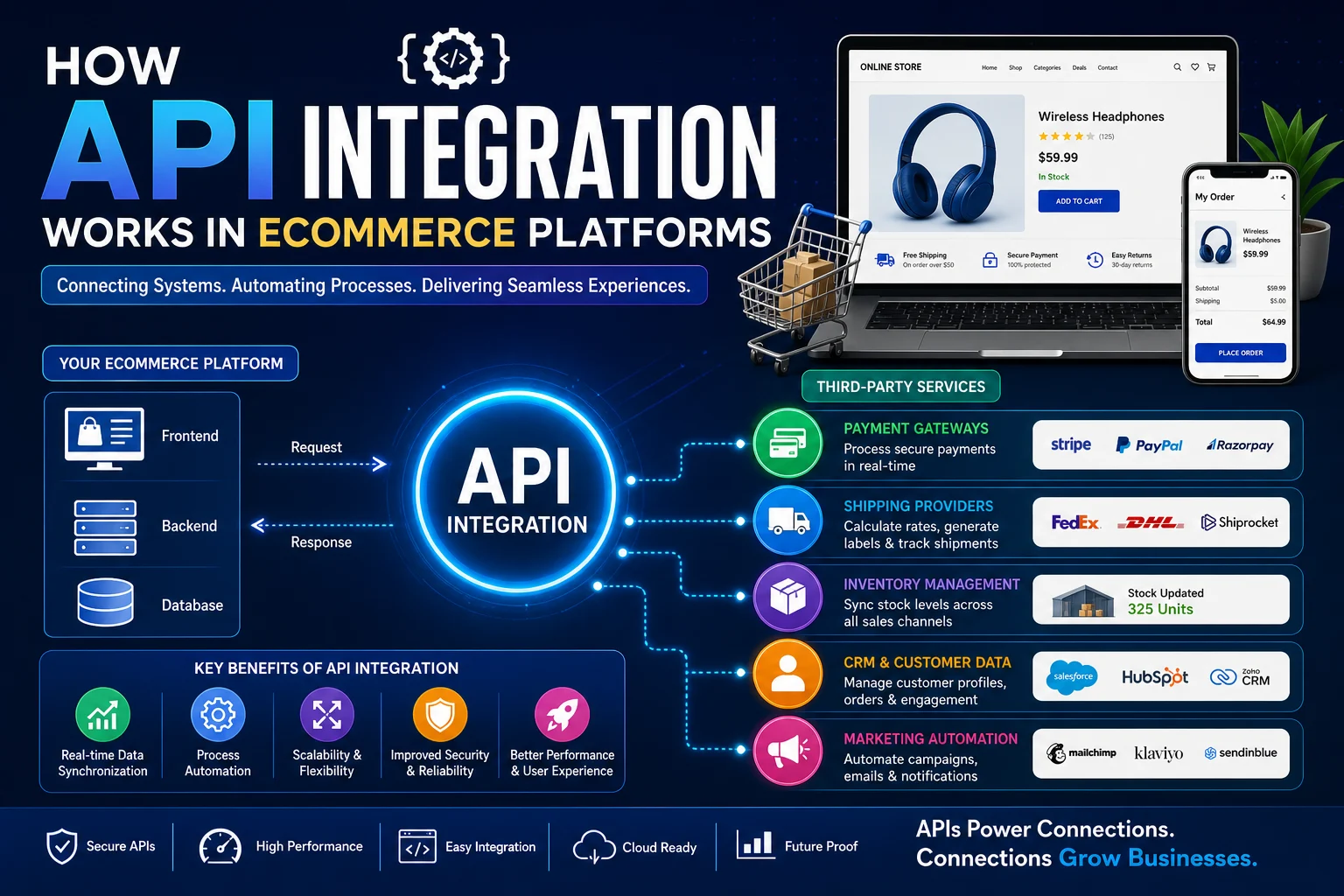
APIs allow different systems to communicate with each other.
Why APIs are Critical
APIs enable:
- Frontend-backend communication
- Integration with third-party services
- Automation of processes
Types of APIs
REST APIs
- Most common
- Easy to implement
GraphQL APIs
- Efficient data fetching
👉 Learn more about GraphQL
API Use Cases
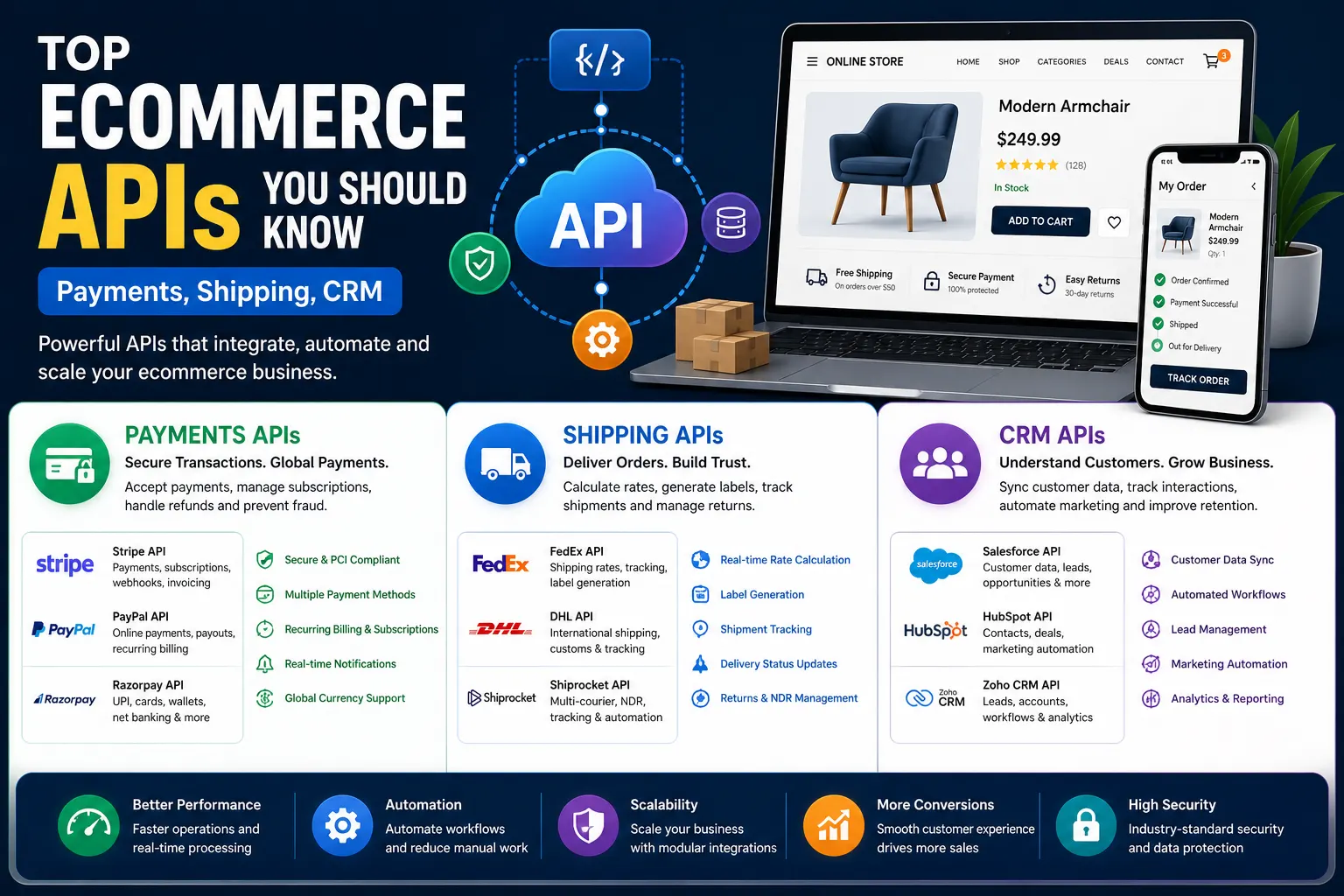
- Payment gateways
- Shipping providers
- CRM systems
🧱 How Frontend, Backend & APIs Work Together
When a user visits your store:
- Frontend displays UI
- API sends request to backend
- Backend processes request
- Response is returned to frontend
This cycle happens in milliseconds.
🚀 Modern Ecommerce Architectures (Deep Analysis)
Monolithic Architecture
All components are tightly connected.
Headless Commerce
Frontend and backend are separated.
👉 Learn more about <a href=”/headless-commerce-explained” target=”_blank”>Headless Commerce</a>
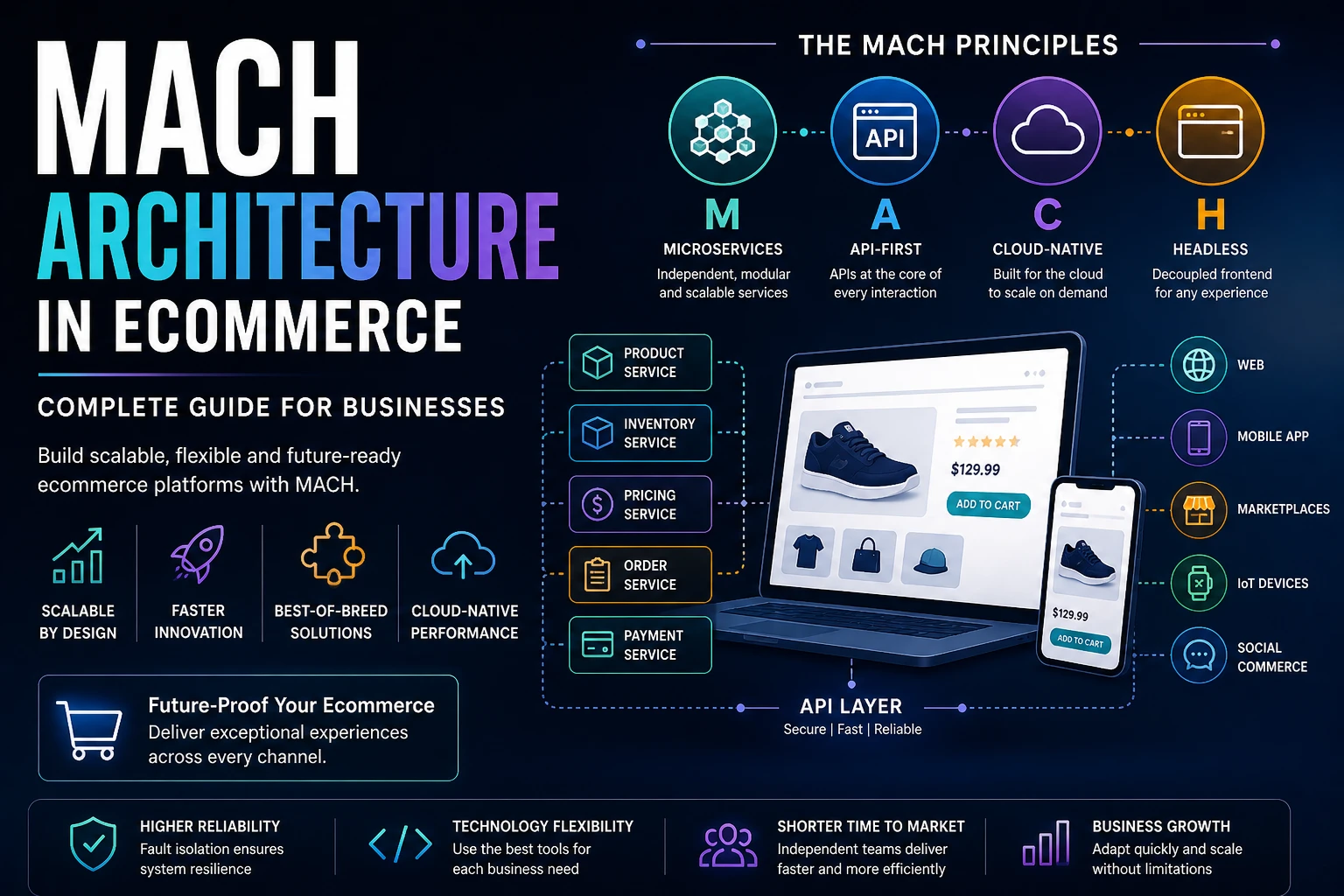
MACH Architecture
- Microservices
- API-first
- Cloud-native
- Headless
👉 Explore <a href=”/mach-architecture-ecommerce” target=”_blank”>MACH Architecture</a>
⚡ Performance Optimization Across Tech Stack
Frontend Optimization
- Minify CSS/JS
- Reduce HTTP requests
Backend Optimization
- Optimize queries
- Use caching
API Optimization
- Reduce response time
- Use efficient endpoints
🔐 Security in Ecommerce Tech Stack
Key Security Practices
- SSL encryption
- Secure APIs
- Authentication
👉 Learn more about web security from OWASP
📈 Scaling Ecommerce Tech Stack (Deep Explanation)
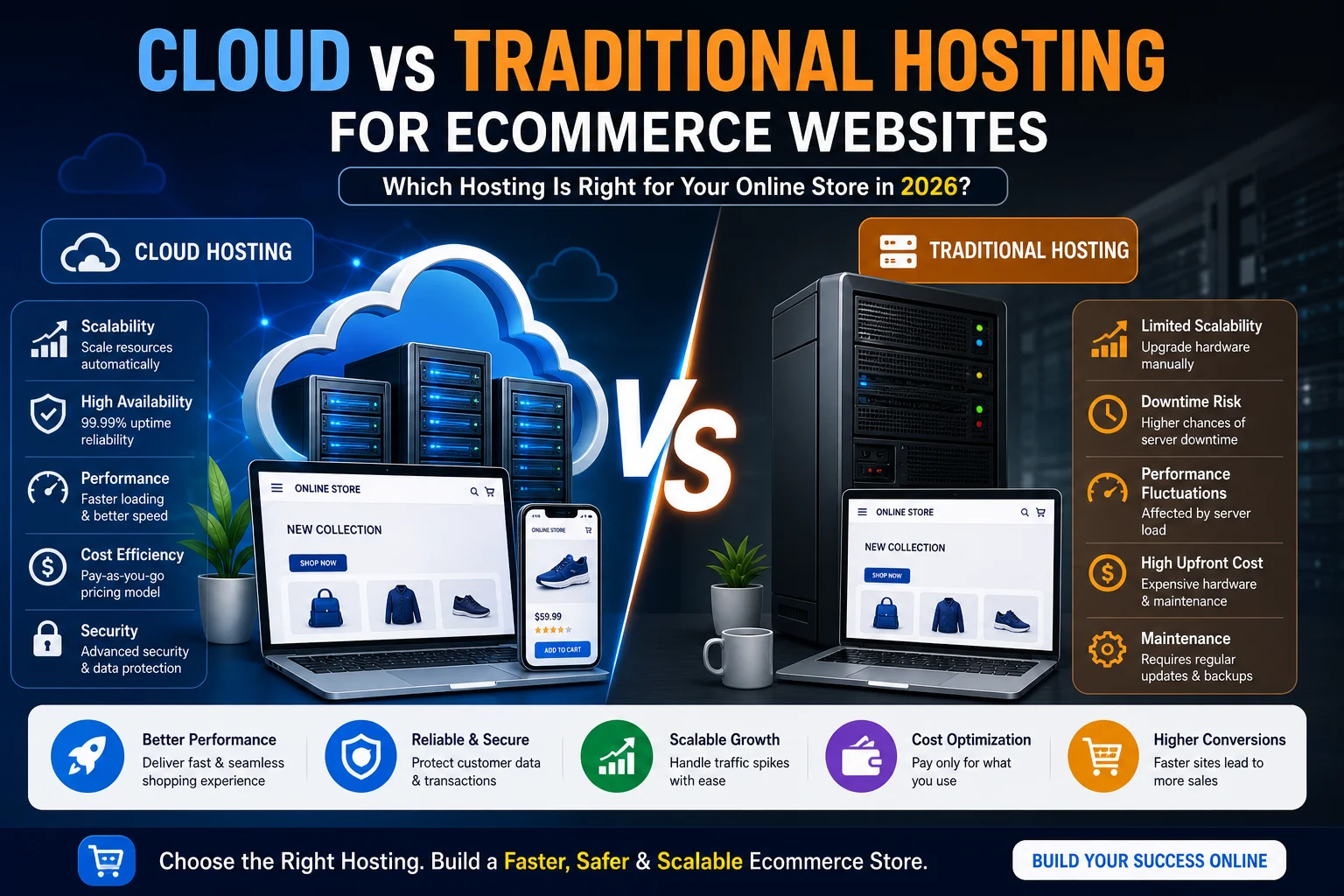
Cloud Infrastructure
Cloud platforms enable scalability:
- AWS
- Google Cloud
- Azure
👉 Explore Amazon Web Services
Auto-Scaling
Automatically adjusts resources based on traffic.
Microservices Scaling
Scale individual services independently.
🔮 Future Trends in Ecommerce Tech Stack
1. AI Personalization
AI-driven recommendations improve conversions.
2. Voice Commerce
Integration with voice assistants.
3. AR/VR Shopping
Enhanced shopping experiences.
4. Headless Commerce Growth
Decoupled architecture becoming standard.
🏁 Conclusion: Building the Right Tech Stack
A well-designed ecommerce tech stack is essential for building scalable, high-performance online stores. By understanding the roles of frontend, backend, and APIs, businesses can create systems that support growth, innovation, and customer satisfaction.
To build a scalable ecommerce tech stack, working with experts like Sri Hayavadhana Info Tech ensures your platform is optimized for performance, scalability, and long-term success.