Blog
🏗️ Magento (Adobe Commerce) Development: Enterprise Ecommerce Guide (2026 Ultimate Deep-Dive)

📘 Introduction: Why Enterprise Ecommerce Demands Magento-Level Architecture
Ecommerce at the enterprise level is fundamentally different from small or mid-sized online businesses. When a company operates across multiple countries, manages thousands (or even millions) of SKUs, and serves diverse customer segments with varying pricing rules and purchasing behaviors, the underlying technology must be capable of handling immense complexity.
Traditional ecommerce platforms often struggle in such environments because they are designed for simplicity rather than flexibility. As business requirements evolve—such as multi-store management, advanced pricing logic, customer segmentation, or integration with enterprise systems—the limitations of simpler platforms become evident.
This is precisely where Magento becomes relevant.
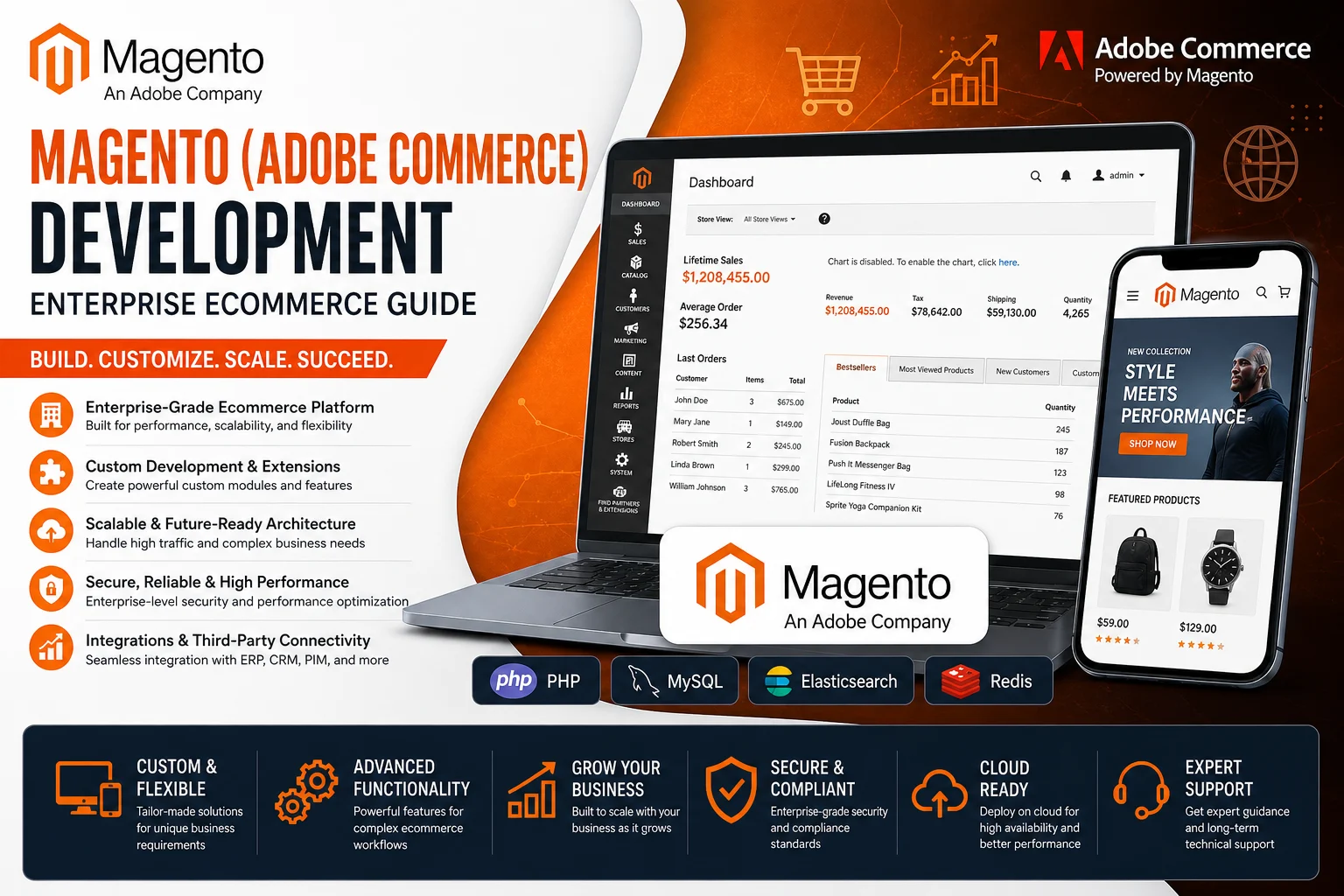
Magento is not merely an ecommerce platform—it is a full-fledged enterprise commerce framework that allows businesses to build highly customized, scalable, and integrated digital commerce ecosystems. It is designed to handle complexity without sacrificing performance, making it one of the most powerful solutions available for enterprise ecommerce.
However, leveraging Magento effectively requires a deep understanding of its architecture, development practices, and operational strategies. This guide explores Magento development in detail, helping you understand how to build and scale an enterprise ecommerce platform.
🧠 Understanding Magento (Adobe Commerce): Core Concepts
To fully grasp Magento development, you need to move beyond surface-level definitions and understand how Magento operates as a system.
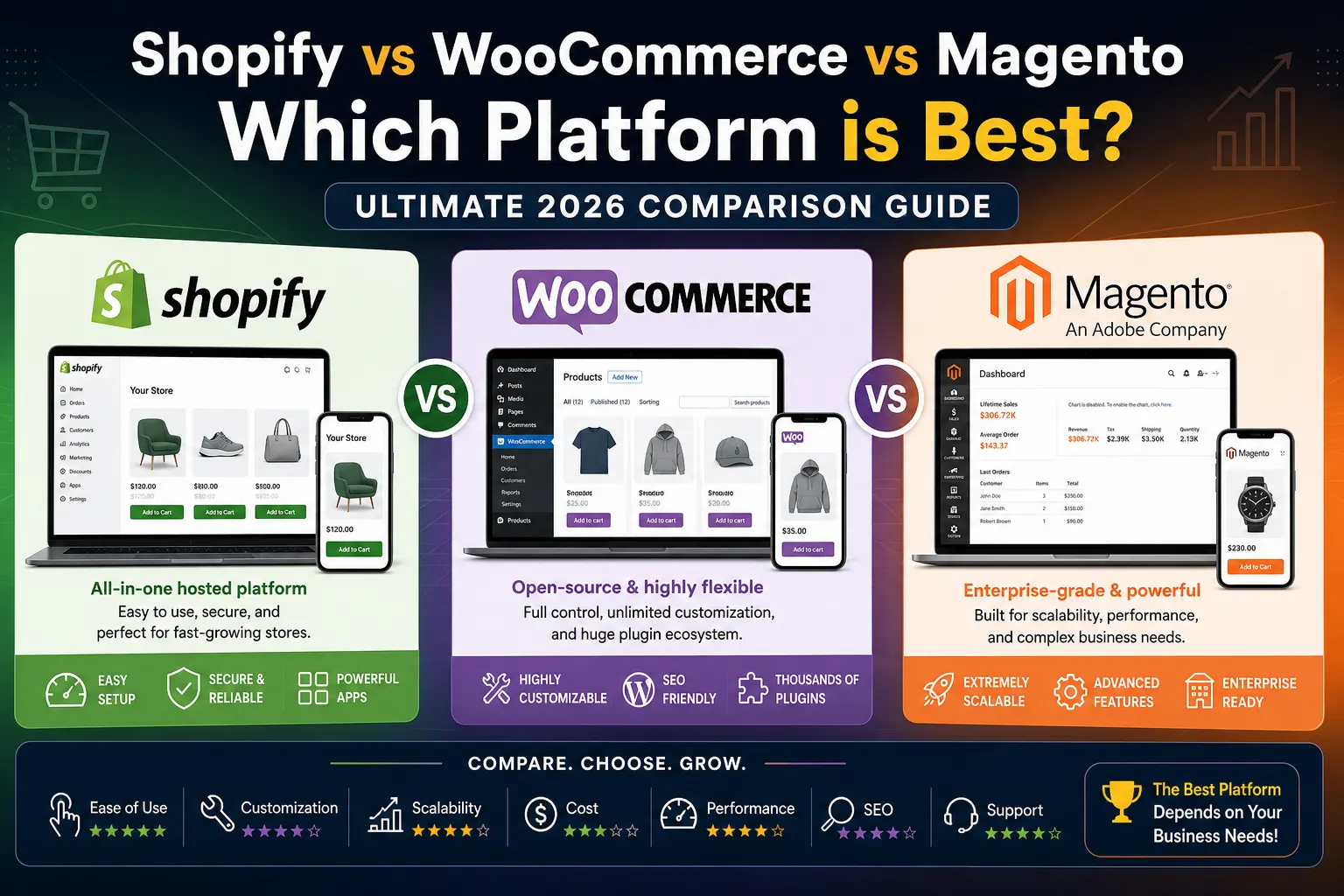
Magento is an open-source ecommerce platform that provides complete control over every aspect of an online store. Its enterprise version, Adobe Commerce, extends this capability with advanced features such as AI-driven personalization, cloud hosting, and enterprise integrations.
Magento as a Commerce Framework
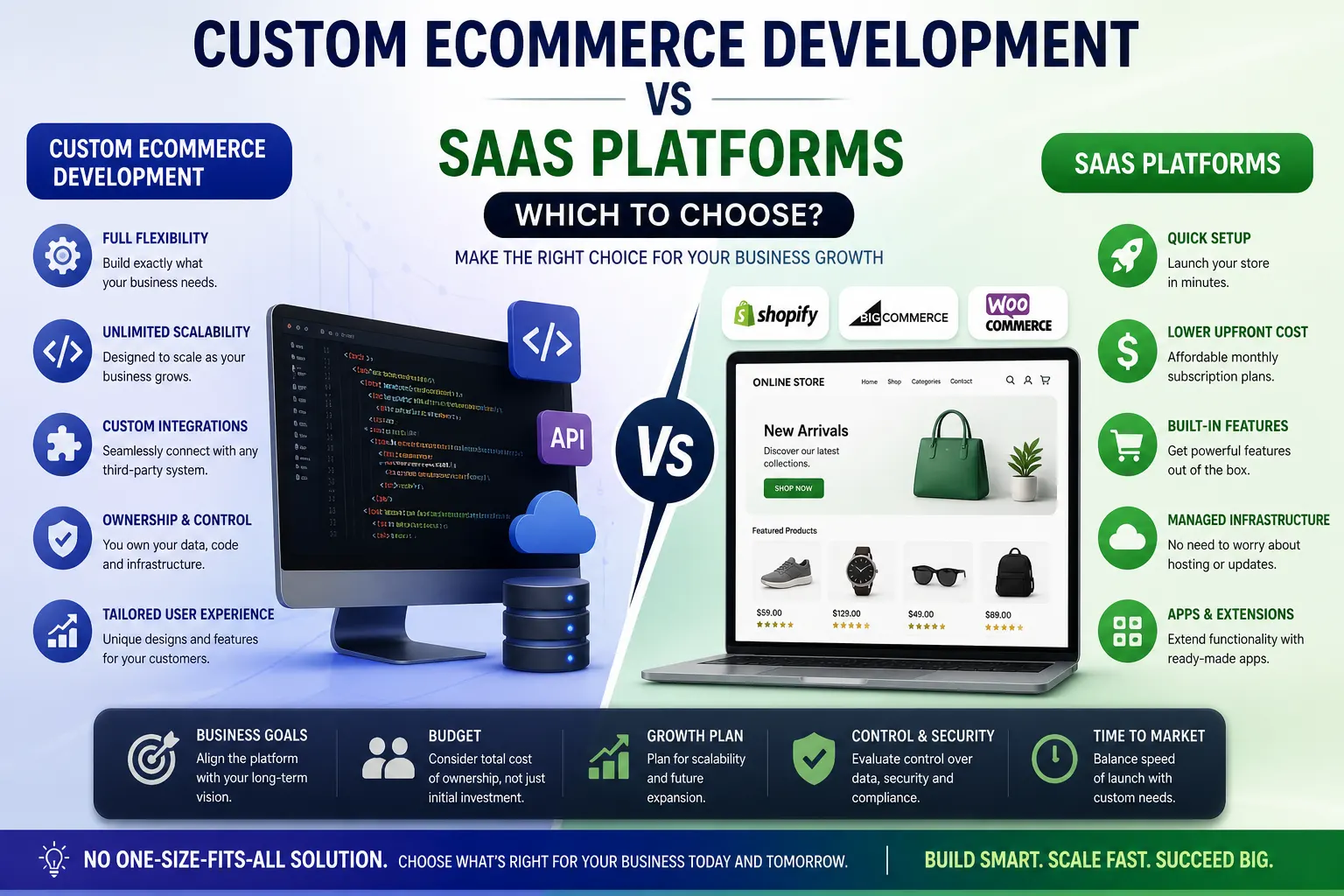
Unlike SaaS platforms, Magento functions more like a development framework than a ready-made solution. This means:
- You are not limited to predefined features
- You can customize almost every component
- You can build complex workflows tailored to your business
This flexibility is what makes Magento ideal for enterprise use.
Magento Editions Explained in Depth
Magento Open Source
Magento Open Source provides the core functionality required to build an ecommerce store. It includes:
- Product management
- Order processing
- Customer management
However, it requires significant development effort to achieve enterprise-level functionality.
Adobe Commerce (Enterprise Edition)
Adobe Commerce builds on Magento Open Source and adds:
- Advanced marketing tools
- Customer segmentation
- AI-driven recommendations
- Cloud infrastructure
This makes it suitable for large-scale businesses with complex needs.
⚙️ Magento Architecture (Deep Technical Understanding)
Magento’s architecture is one of the most sophisticated aspects of the platform. Understanding it is essential for effective development.
1. Modular Architecture: The Foundation of Flexibility
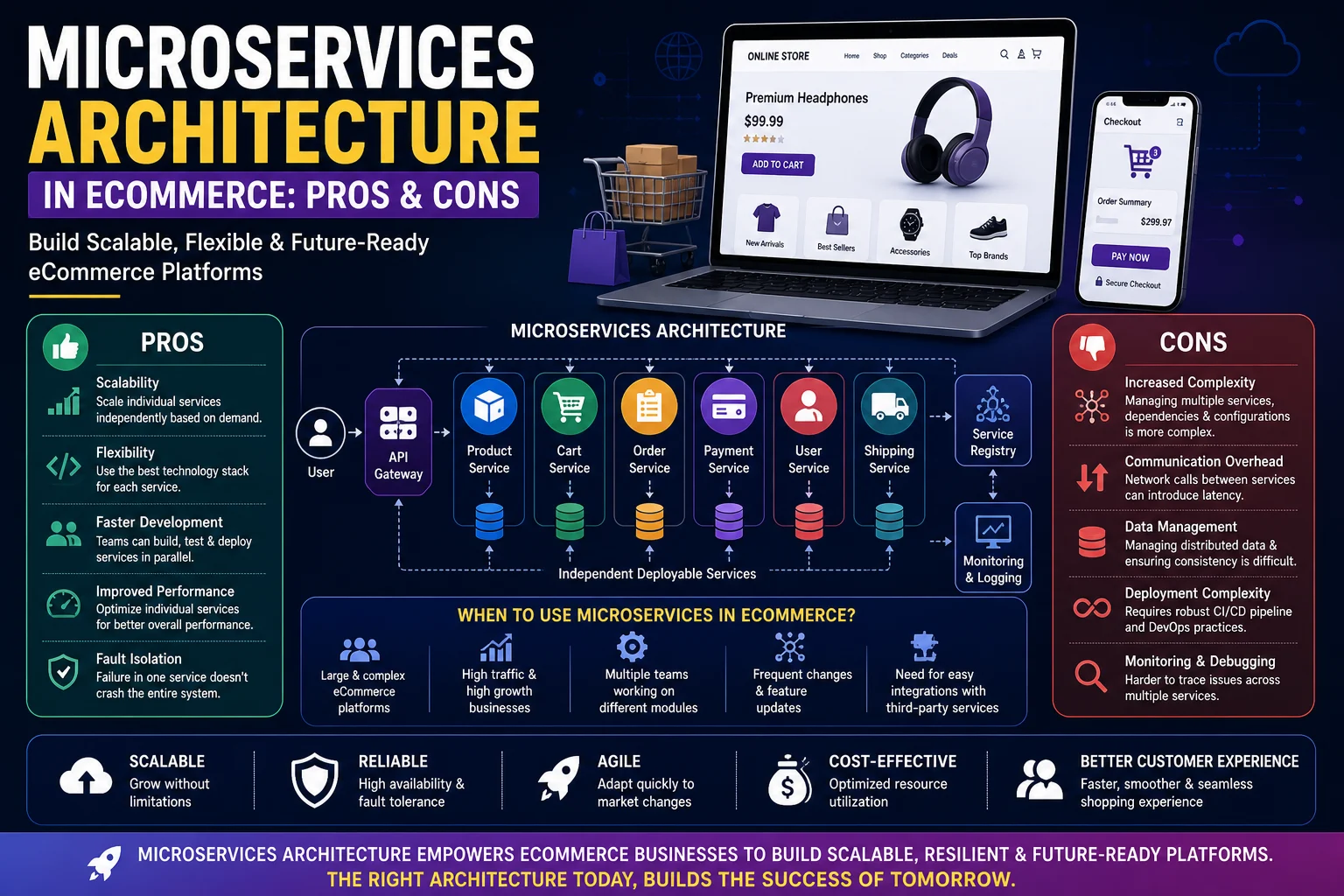
Magento is built using a modular architecture, where each feature is implemented as an independent module.
For example:
- Catalog module → handles products
- Checkout module → manages orders
- Customer module → manages users
This modular approach allows developers to:
- Add new features without affecting existing ones
- Customize functionality selectively
- Maintain clean and scalable code
2. MVC (Model-View-Controller) Pattern
Magento follows the MVC architecture:
Model
Handles data and business logic. For example, retrieving product data from the database.
View
Responsible for displaying data to the user. This includes templates and UI components.
Controller
Acts as an intermediary between model and view, handling user requests and responses.
3. Dependency Injection
Magento uses dependency injection to manage class dependencies.
This allows:
- Better code organization
- Easier testing
- Improved scalability
4. Service Contracts and APIs
Magento uses service contracts to define how components interact. These contracts ensure stability and make it easier to build APIs.
5. Database Architecture
Magento uses a complex database structure designed to handle large datasets.
It includes:
- EAV (Entity-Attribute-Value) model for flexibility
- Flat tables for performance optimization
🧩 Magento Development Workflow (Step-by-Step Deep Explanation)
Step 1: Planning and Requirement Analysis
Before development begins, it is crucial to define:
- Business goals
- Product structure
- Customer segments
- Integration requirements
This step ensures that the platform is designed to meet both current and future needs.
Step 2: Environment Setup
Magento development requires a properly configured environment, including:
- Web server (Apache/Nginx)
- Database (MySQL)
- PHP environment
Step 3: Installation and Configuration
Magento installation involves:
- Setting up the database
- Configuring store settings
- Installing necessary modules
Step 4: Theme Development
Theme development focuses on creating the frontend experience.
Developers work with:
- Layout XML files
- PHTML templates
- CSS and JavaScript
Step 5: Module Development
Custom modules allow developers to extend Magento functionality.
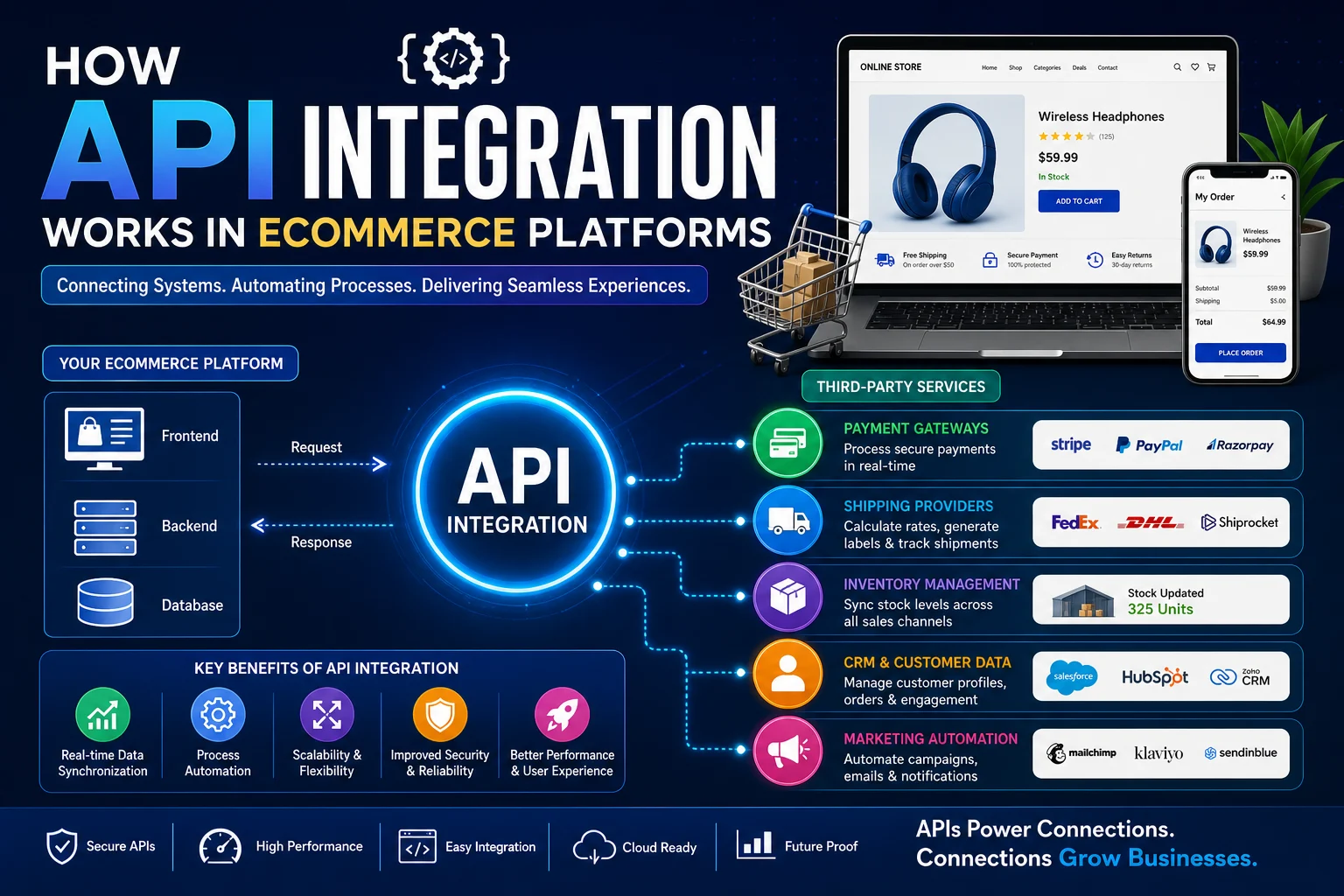
Step 6: Integration
Magento integrates with:
- ERP systems
- CRM tools
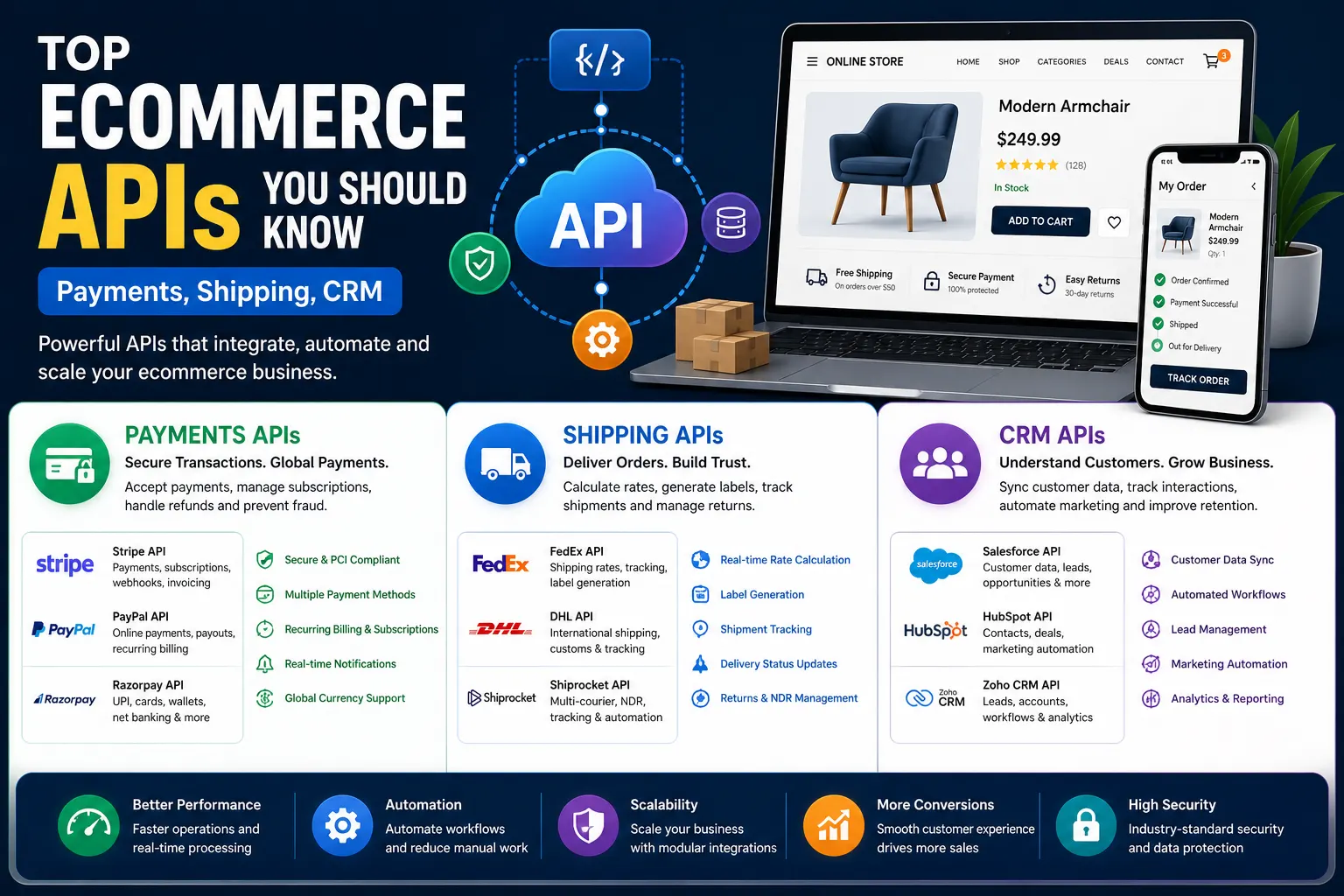
- Payment gateways
Step 7: Testing and Deployment
Testing ensures that the system works correctly and performs well under load.
🎨 Frontend Development in Magento (Detailed Explanation)
Magento’s frontend is highly customizable.
Layout System
Magento uses XML layout files to define page structure.
Templates
Templates control how data is displayed.
UI Components
Magento uses UI components for dynamic interfaces.
🔗 Integrations and Extensions (Deep Analysis)
Magento’s strength lies in its ability to integrate with other systems.
ERP Integration
Synchronizes inventory and financial data.
CRM Integration
Improves customer relationship management.
Marketing Tools
Integrates with email marketing and analytics platforms.
⚡ Performance Optimization in Magento
Performance is critical for enterprise ecommerce.
Caching Mechanisms
Magento uses:
- Full-page caching
- Varnish cache
Database Optimization
Optimizing queries improves performance.
CDN Integration
CDNs reduce latency and improve global performance.
🔐 Security in Magento (Enterprise Level)
Authentication
Two-factor authentication enhances security.
Encryption
Sensitive data is encrypted.
Regular Updates
Magento releases security patches regularly.
📈 SEO in Magento (Deep Strategy)
On-Page SEO
Includes:
- Meta tags
- URLs
- Structured data
Technical SEO
Includes:
- Site speed
- Mobile optimization
🚀 Scaling Magento for Enterprise Growth
Horizontal Scaling
Adding servers to handle traffic.
Load Balancing
Distributes traffic evenly.
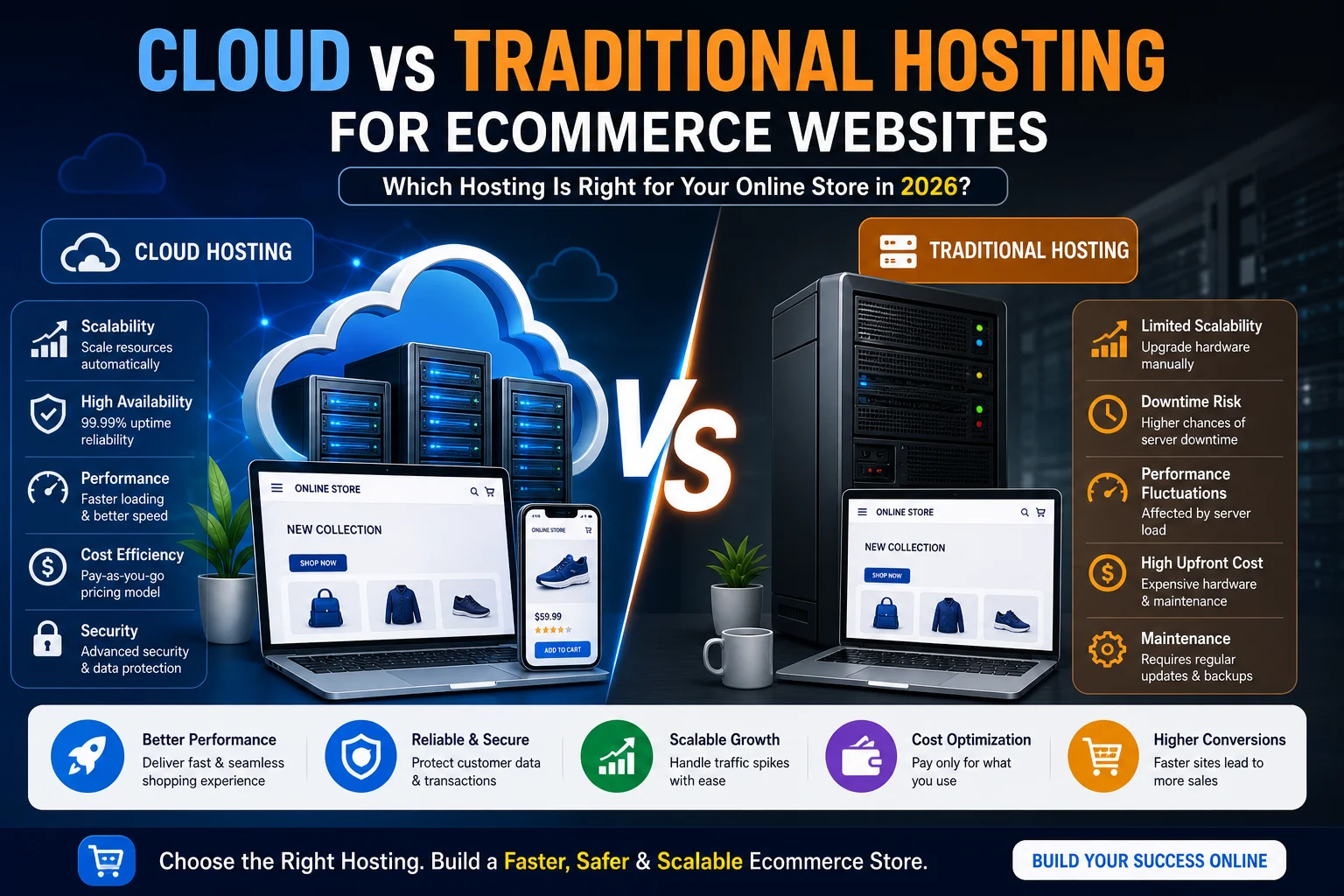
Cloud Deployment
Ensures scalability and reliability.
⚠️ Common Magento Development Mistakes
- Over-customization
- Poor hosting choices
- Ignoring performance optimization
🔮 Future of Magento Development
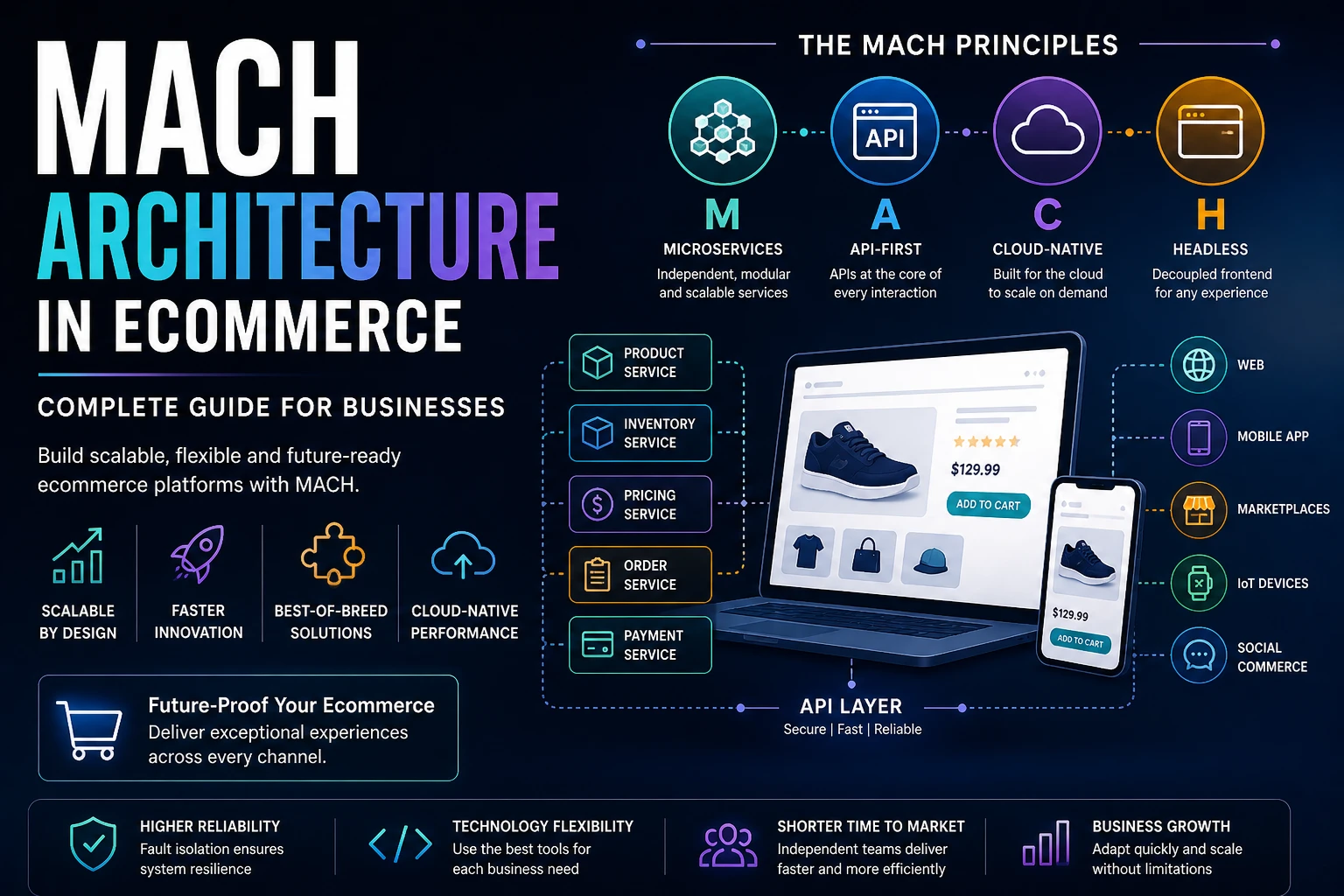
Magento continues to evolve with:
- AI integration
- Headless commerce
- API-first architecture
🏁 Conclusion
Magento (Adobe Commerce) is one of the most powerful ecommerce platforms available, offering unmatched flexibility and scalability for enterprise businesses.
To build and scale your Magento ecommerce platform effectively, working with experts like Sri Hayavadhana Info Tech ensures your system is designed for enterprise-level success, performance, and long-term growth.