Blog
🔗 How API Integration Works in Ecommerce Platforms (Ultimate 2026 Guide)

📘 Introduction: APIs — The Core Engine Behind Modern Ecommerce
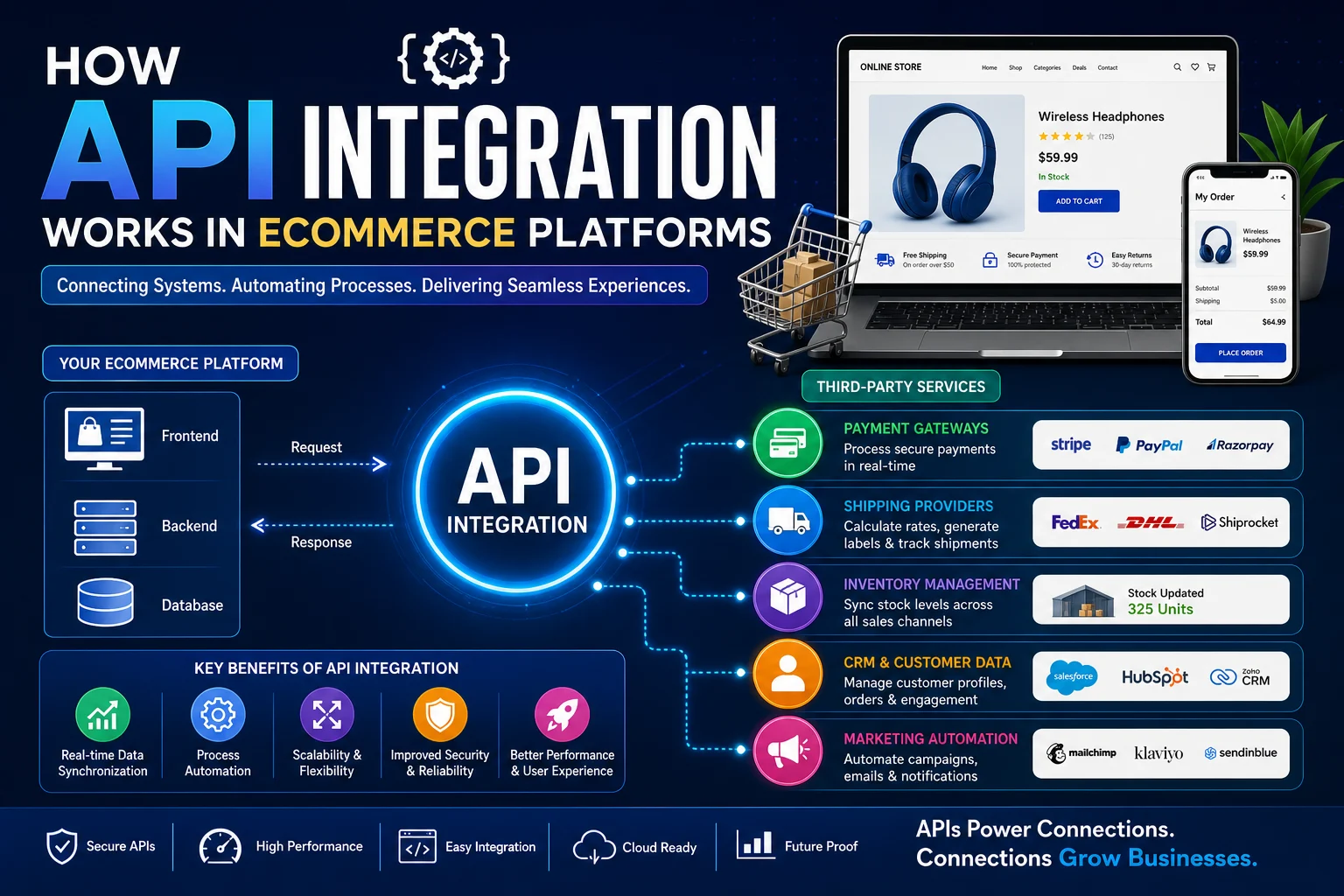
Modern ecommerce is no longer a single application—it is a connected digital ecosystem. A typical online store today depends on multiple systems working together simultaneously:
- Payment gateways for transactions
- Shipping providers for logistics
- Inventory systems for stock updates
- CRM platforms for customer data
- Marketing tools for automation
These systems must communicate in real time. The technology that enables this seamless interaction is the API (Application Programming Interface).
Without APIs, ecommerce platforms would be:
- Slow to update
- Difficult to scale
- Expensive to maintain
- Limited in functionality
APIs enable ecommerce platforms to become flexible, scalable, and future-ready systems.
🧠 What is an API? (Deep Technical Understanding)
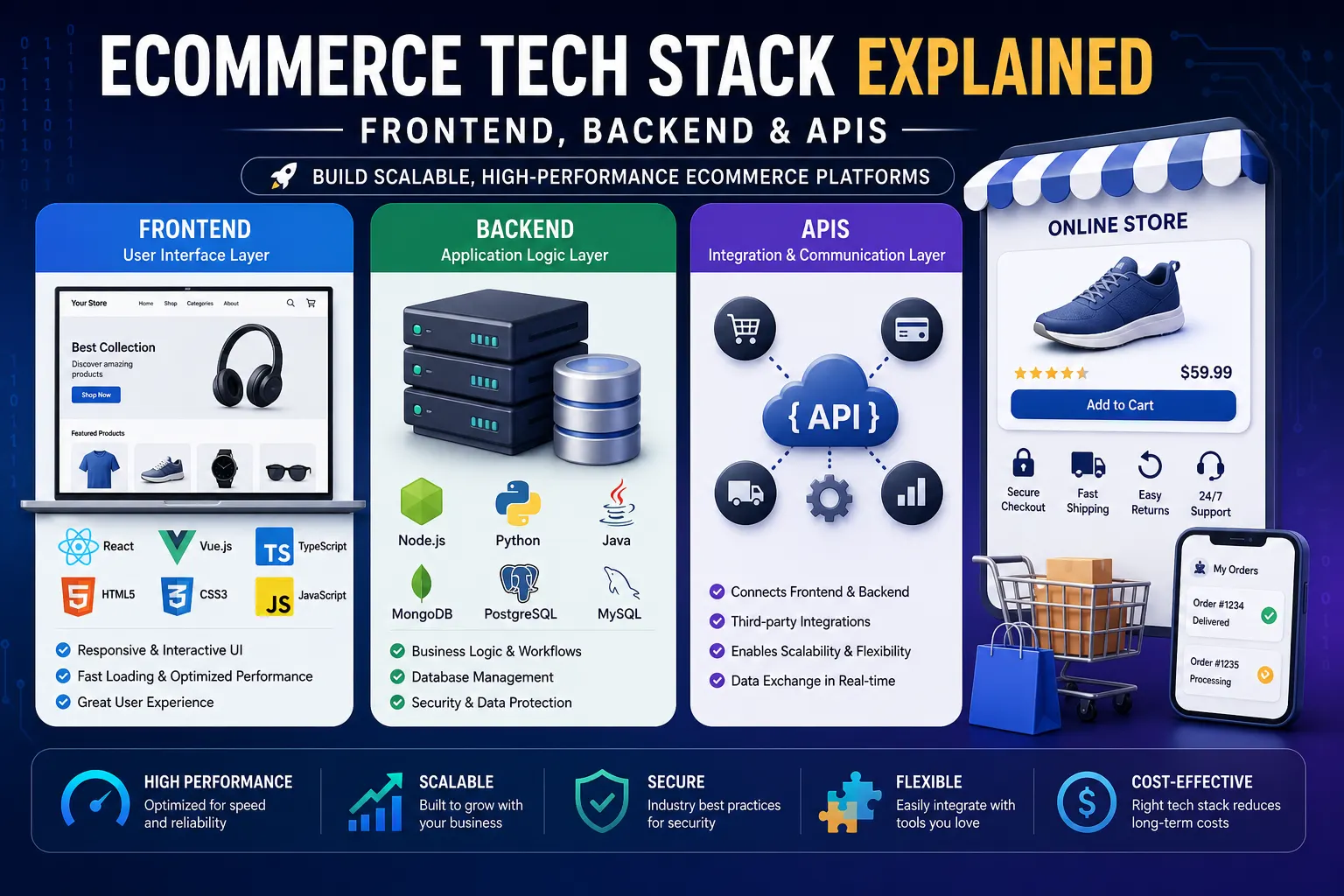
An API is a structured interface that allows two software systems to communicate without exposing their internal logic.
🔍 How APIs Actually Work (Real Technical Flow)
When an API is used:
- A client (frontend or system) sends a request
- The API receives the request
- The backend processes the request
- A response is generated
- The response is sent back to the client
🧾 Example: Product Page Load
When a user opens a product page:
- Frontend requests product data
- API fetches data from backend/database
- Response returns product details
- UI renders product
This entire process happens in milliseconds.
👉 Learn API fundamentals:
https://developer.mozilla.org/en-US/docs/Learn/JavaScript/Client-side_web_APIs/Introduction
⚙️ Why API Integration is Critical in Ecommerce
✅ 1. Real-Time Data Synchronization
Ecommerce platforms rely on real-time updates:
- Inventory levels change instantly
- Prices update dynamically
- Orders sync across systems
Without APIs, this synchronization would fail, causing overselling or incorrect data.
✅ 2. Automation of Operations
APIs eliminate manual work:
- Orders are automatically sent to warehouses
- Shipping labels are generated instantly
- Customers receive automated notifications
✅ 3. Scalability and Growth
APIs allow businesses to:
- Add new services quickly
- Expand to new markets
- Integrate with global platforms
✅ 4. Omnichannel Commerce Enablement
APIs connect multiple sales channels:
- Website
- Mobile apps
- Amazon / Flipkart
- Instagram / WhatsApp
🔗 Types of APIs Used in Ecommerce (Deep Dive)
🌐 REST APIs (Most Common)
REST APIs use HTTP methods:
- GET → Fetch data
- POST → Send data
- PUT → Update
- DELETE → Remove
Why REST Dominates Ecommerce
- Lightweight
- Easy to implement
- Scalable
- Works with all platforms
⚡ GraphQL APIs (Modern Approach)
GraphQL allows requesting only required data.
Advantage Over REST
- Reduces data load
- Improves performance
- Faster frontend rendering
🏢 SOAP APIs (Enterprise Systems)
SOAP is used in legacy enterprise integrations such as banking and ERP systems.
🔔 Webhooks (Event-Based APIs)
Webhooks send data automatically when an event occurs.
Example:
- Order placed → webhook triggers shipping system
👉 https://stripe.com/docs/webhooks
🧩 Core API Integrations in Ecommerce (Detailed Breakdown)
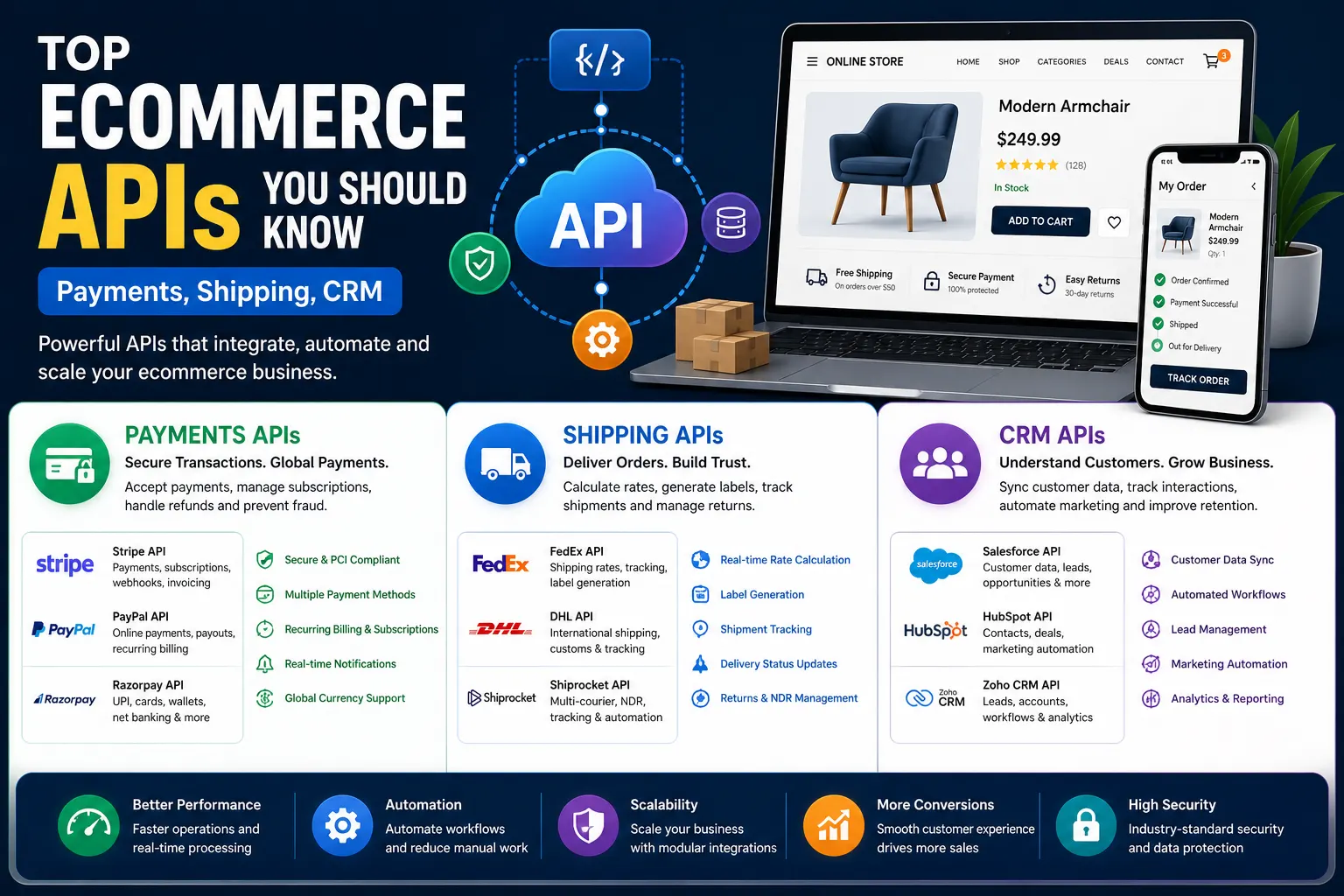
💳 1. Payment Gateway APIs
These APIs handle secure financial transactions.
How It Works:
- User enters payment details
- API sends data to gateway
- Payment is processed
- Response is returned
Popular APIs:
🚚 2. Shipping APIs
Shipping APIs calculate:
- Delivery charges
- Estimated delivery time
- Tracking updates
Example APIs:
📦 3. Inventory APIs
Inventory APIs ensure:
- Real-time stock updates
- Sync across warehouses
- Multi-channel consistency
👥 4. CRM APIs
CRM APIs manage:
- Customer profiles
- Purchase history
- Engagement data
Example:
📧 5. Marketing APIs
Marketing APIs enable:
- Email campaigns
- SMS notifications
- Retargeting
Example:
🔄 How API Integration Works (Full Step-by-Step Lifecycle)
Step 1: User Interaction
Customer clicks “Place Order.”
Step 2: Frontend Request
Frontend sends request to backend API.
Step 3: API Gateway Routing
API gateway routes request to correct service.
Step 4: Backend Processing
Backend validates:
- Product availability
- Payment data
Step 5: External API Calls
Backend communicates with:
- Payment API
- Inventory API
- Shipping API
Step 6: Response Aggregation
All responses are collected and processed.
Step 7: Frontend Update
User sees confirmation instantly.
🧱 API Architecture in Ecommerce
🏗️ Monolithic Architecture
- All APIs tightly connected
- Hard to scale
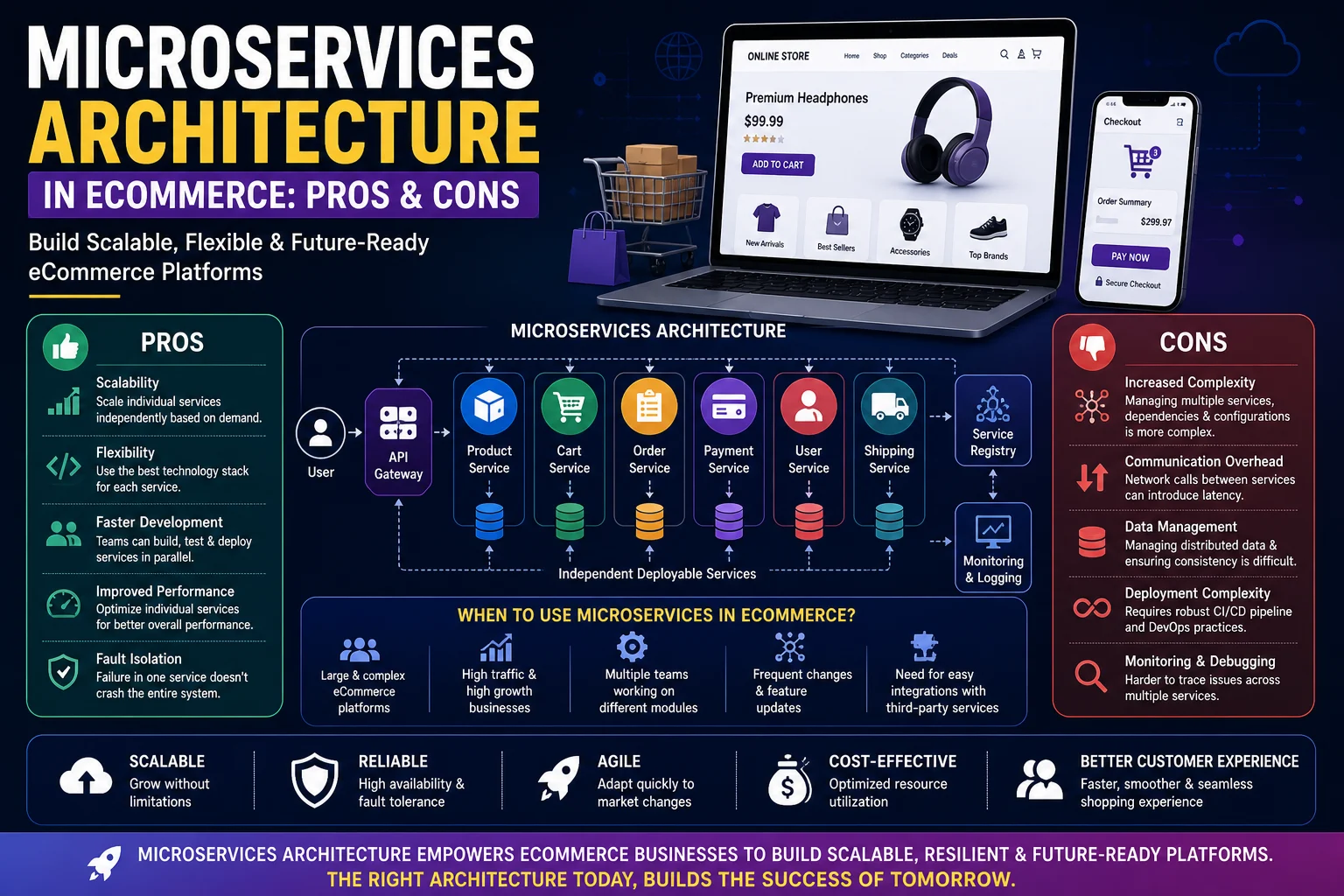
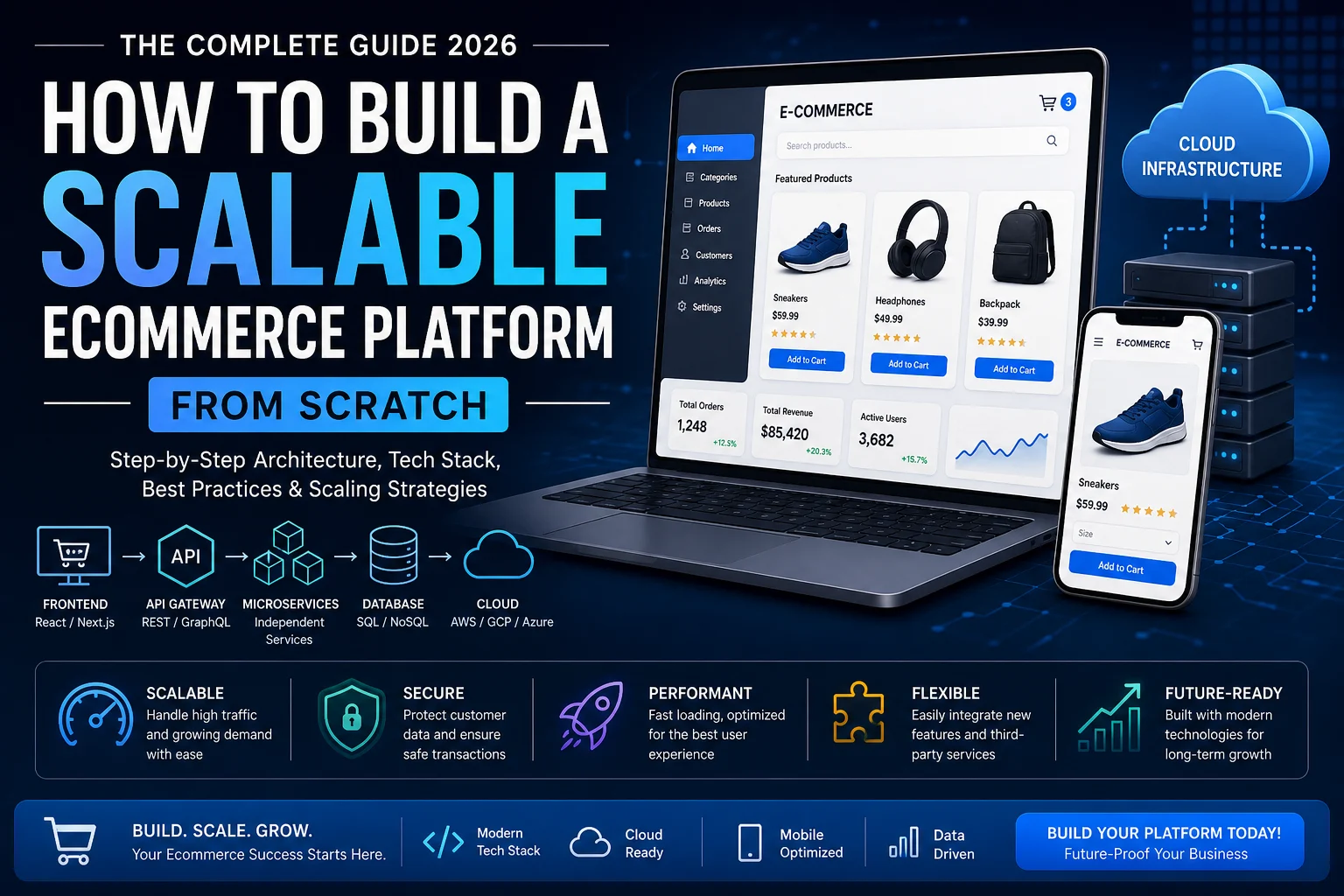
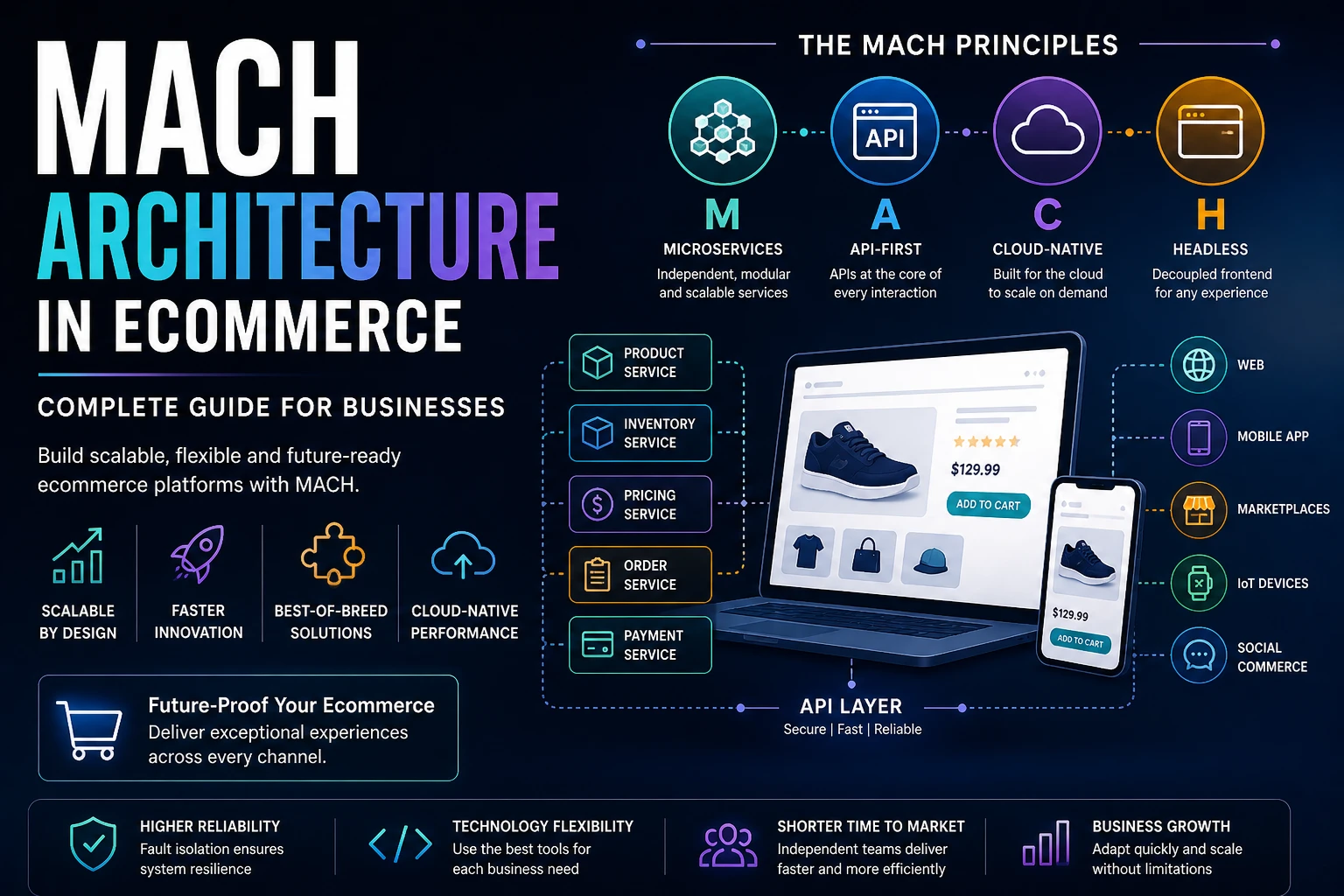
⚙️ Microservices Architecture
- Each service independent
- Communicates via APIs
- Highly scalable
🌐 Headless Commerce
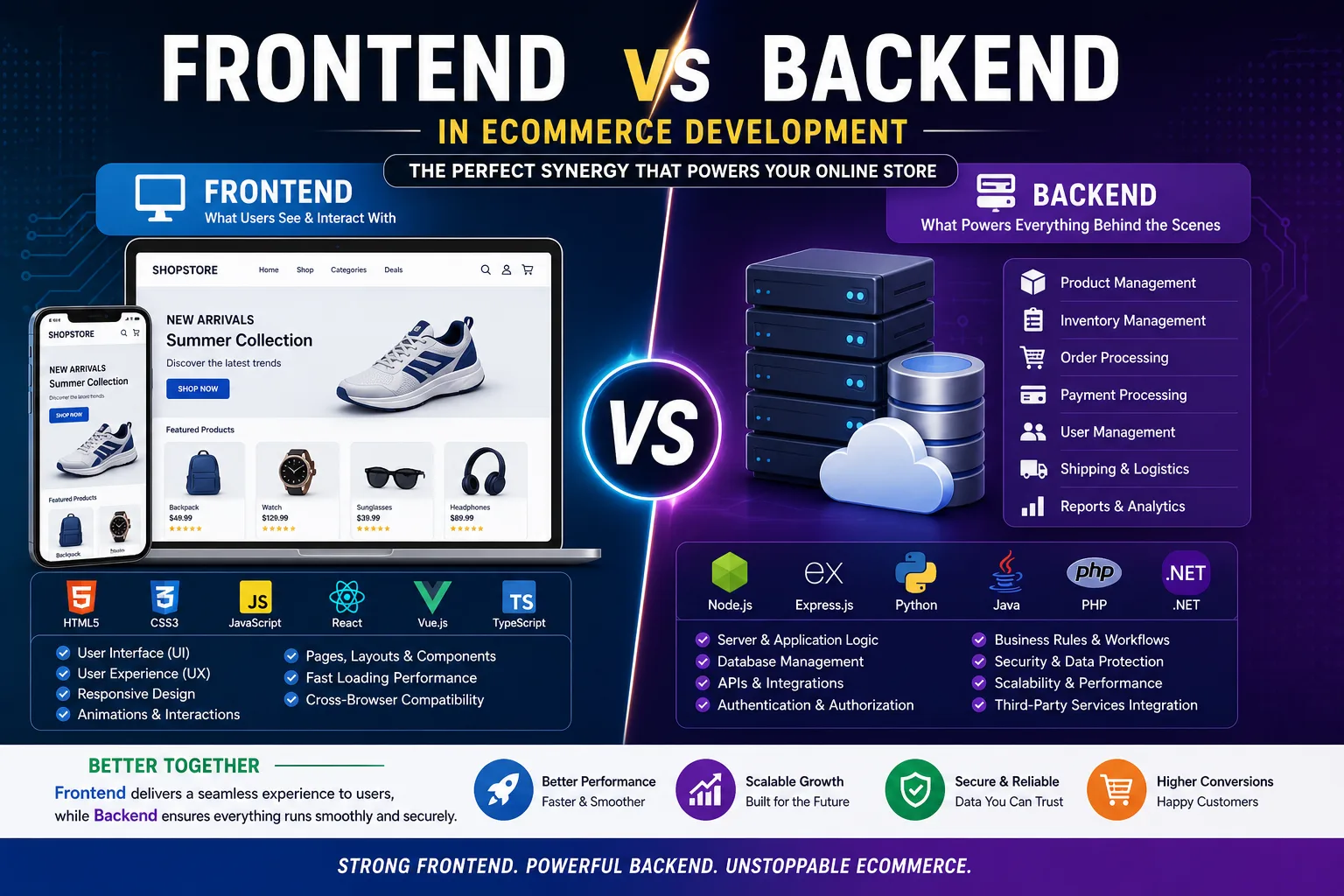
Frontend and backend are separated.
👉 https://srihayavadhana.com/headless-commerce-explained
⚡ Performance Optimization in API Integration
🚀 Caching
Stores frequently used data.
🚀 Rate Limiting
Controls API usage.
🚀 Load Balancing
Distributes traffic efficiently.
🚀 Efficient Queries
GraphQL reduces unnecessary data fetching.
🔐 Security in API Integration (Deep Section)
🔒 Authentication
Use OAuth 2.0:
🔒 Encryption
Always use HTTPS.
🔒 API Keys & Tokens
Restrict access securely.
🔒 OWASP Security Practices
👉 https://owasp.org/www-project-top-ten/
📈 SEO Impact of API Integration
🚀 Page Speed
Fast APIs improve load time.
👉 https://developers.google.com/speed/docs/insights/v5/about
📊 Dynamic Content
APIs enable real-time updates, improving engagement.
🚀 Real-World Ecommerce API Workflow
Example: Complete Order Journey
- User places order
- Payment API processes payment
- Inventory API updates stock
- Shipping API generates label
- CRM stores data
- Email API sends confirmation
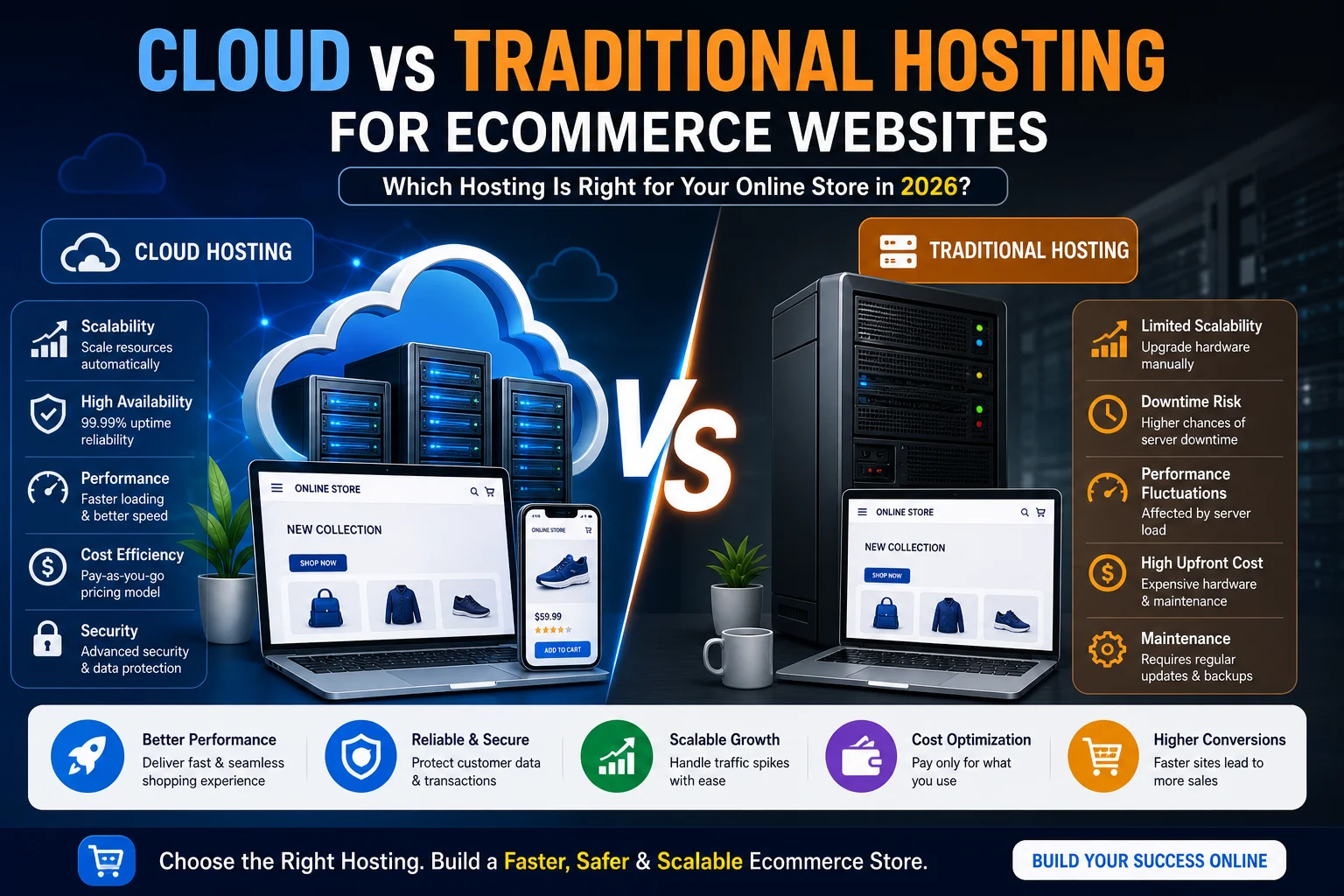
☁️ Cloud + API Integration
APIs perform best in cloud environments.
Platforms:
- https://aws.amazon.com/api-gateway/
- https://cloud.google.com/apis
- https://azure.microsoft.com/en-in/services/api-management/
🔮 Future of API Integration in Ecommerce
🔹 API-First Development
🔹 Headless Commerce Growth
🔹 AI-Powered APIs
🔹 Serverless Architecture
🏁 Conclusion
API integration is the backbone of modern ecommerce platforms. It enables:
- Real-time communication
- Automation
- Scalability
- Seamless customer experience
Businesses that adopt API-driven architecture are better positioned to grow, innovate, and compete in the evolving ecommerce landscape.
To implement powerful API integrations and build scalable ecommerce systems, partner with Sri Hayavadhana Info Tech and take your ecommerce platform to the next level.