Blog
🧠 Headless Commerce Explained: Architecture, Benefits & Use Cases (Ultimate 2026 Guide)

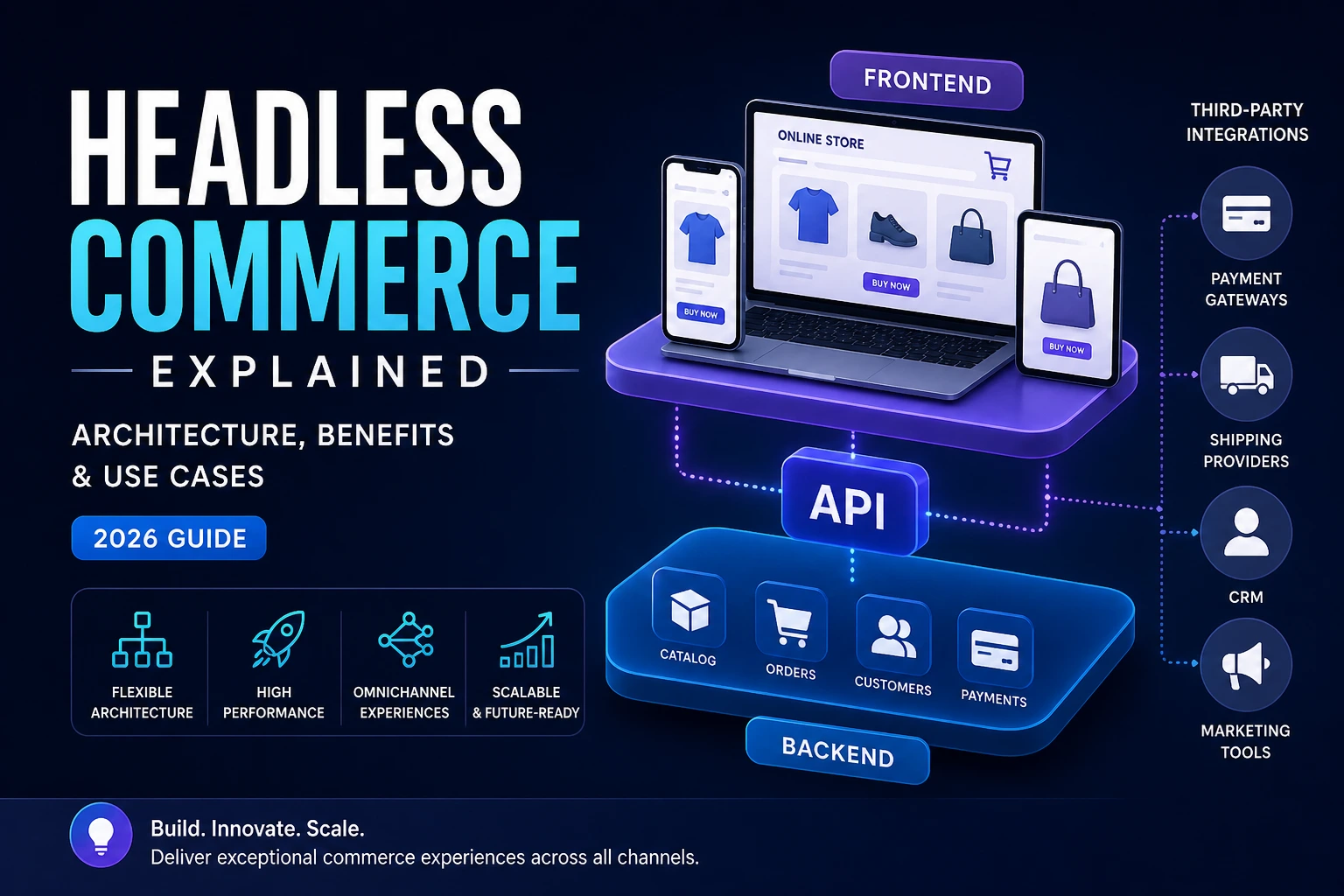
📘 Introduction: The Evolution of Ecommerce Architecture
Over the past decade, ecommerce has undergone a dramatic transformation. What began as simple online storefronts has evolved into highly sophisticated digital ecosystems that operate across multiple channels, devices, and user touchpoints. Today’s consumers no longer interact with brands through a single website. Instead, they engage through mobile apps, marketplaces, social media platforms, voice assistants, and even smart devices.
This shift in consumer behavior has forced businesses to rethink how they build and manage their ecommerce infrastructure. Traditional ecommerce platforms, which were once sufficient for managing online stores, are now struggling to keep up with the demands of modern digital commerce.
One of the primary reasons for this limitation is the architecture on which traditional ecommerce systems are built. Most conventional platforms rely on a monolithic structure where the frontend (user interface) and backend (business logic) are tightly coupled. While this approach offers simplicity in the early stages, it becomes increasingly restrictive as businesses scale and attempt to innovate.
This is where headless commerce emerges as a powerful solution.
Headless commerce is not just a new technology trend—it represents a fundamental shift in how ecommerce systems are designed, developed, and scaled. By decoupling the frontend from the backend and connecting them through APIs, headless commerce enables businesses to build flexible, scalable, and future-ready digital experiences.
In this comprehensive guide, we will explore headless commerce in depth, covering its architecture, benefits, challenges, use cases, implementation strategies, and future potential.
🔍 What is Headless Commerce? (Deep Conceptual Understanding)
Headless commerce is often defined as the separation of the frontend presentation layer from the backend commerce functionality. While this definition is technically accurate, it only scratches the surface of what headless commerce truly represents.
To fully understand headless commerce, it is important to examine how traditional ecommerce systems operate and why they fall short in modern environments.
In a traditional ecommerce setup, the frontend and backend are tightly integrated. This means that the design, layout, and user experience are directly connected to the underlying business logic and database. Any change to the user interface often requires modifications to the backend system, which increases development complexity and slows down innovation.
For example, if a business wants to redesign its homepage or improve the checkout experience, developers may need to modify backend templates or core platform code. This dependency creates bottlenecks and limits flexibility.
Headless commerce eliminates this dependency by separating the frontend from the backend.
In a headless architecture:
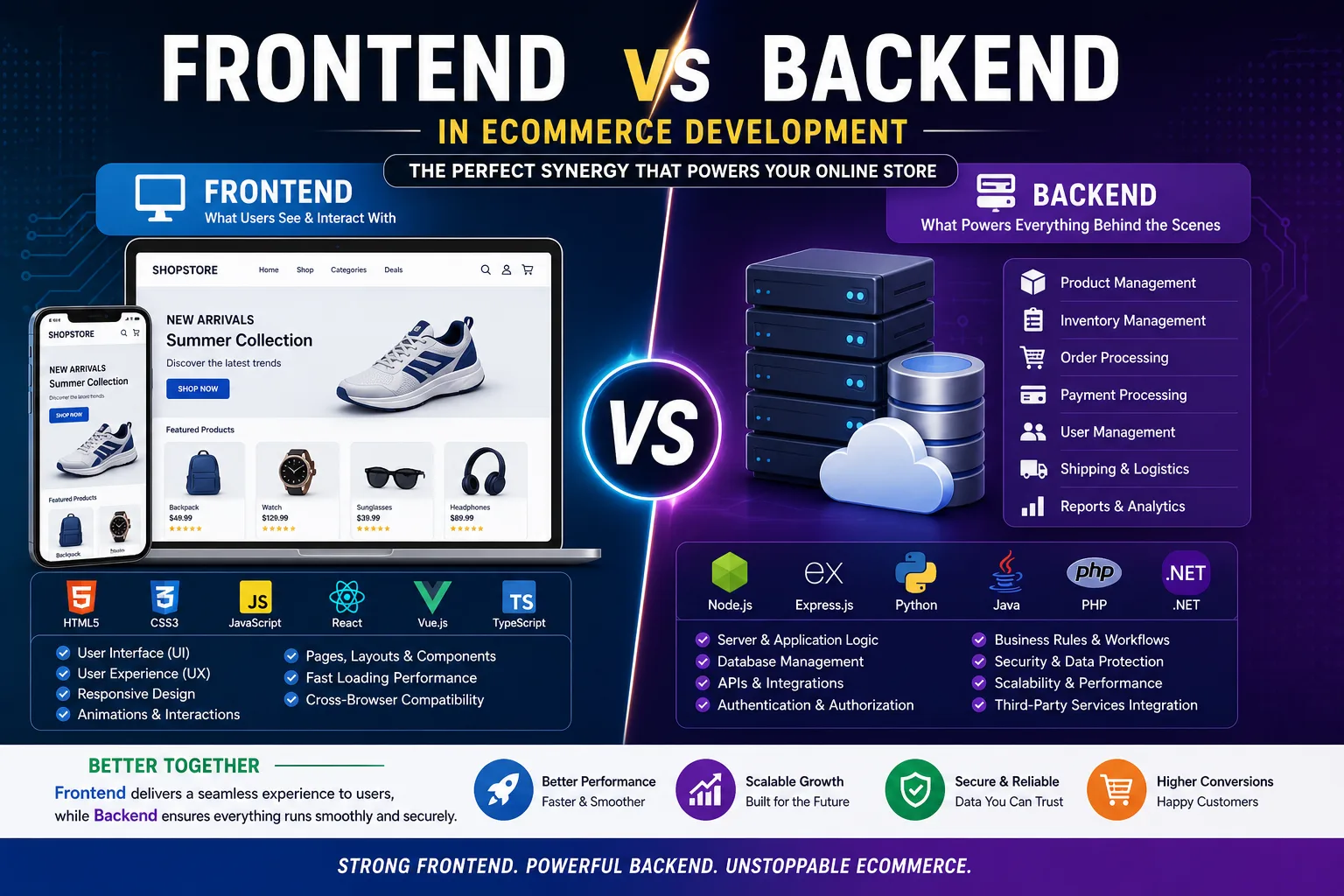
- The frontend is responsible solely for user experience and presentation
- The backend handles all business logic, data processing, and operations
- APIs act as the communication layer between the two
This decoupling allows each layer to evolve independently, enabling faster development cycles, greater flexibility, and improved performance.
Understanding the “Headless” Concept
The term “headless” originates from the idea of removing the “head” (frontend) from the “body” (backend).
In traditional systems:
- The head and body are connected
In headless systems:
- The head is removed and can be replaced or modified independently
This means businesses can create multiple frontends for different channels while using a single backend.
For instance, the same backend can power:
- A website
- A mobile app
- A smartwatch interface
- An in-store kiosk
Each frontend communicates with the backend through APIs, ensuring consistent data across all channels.
🏗️ Headless Commerce Architecture (In-Depth Breakdown)
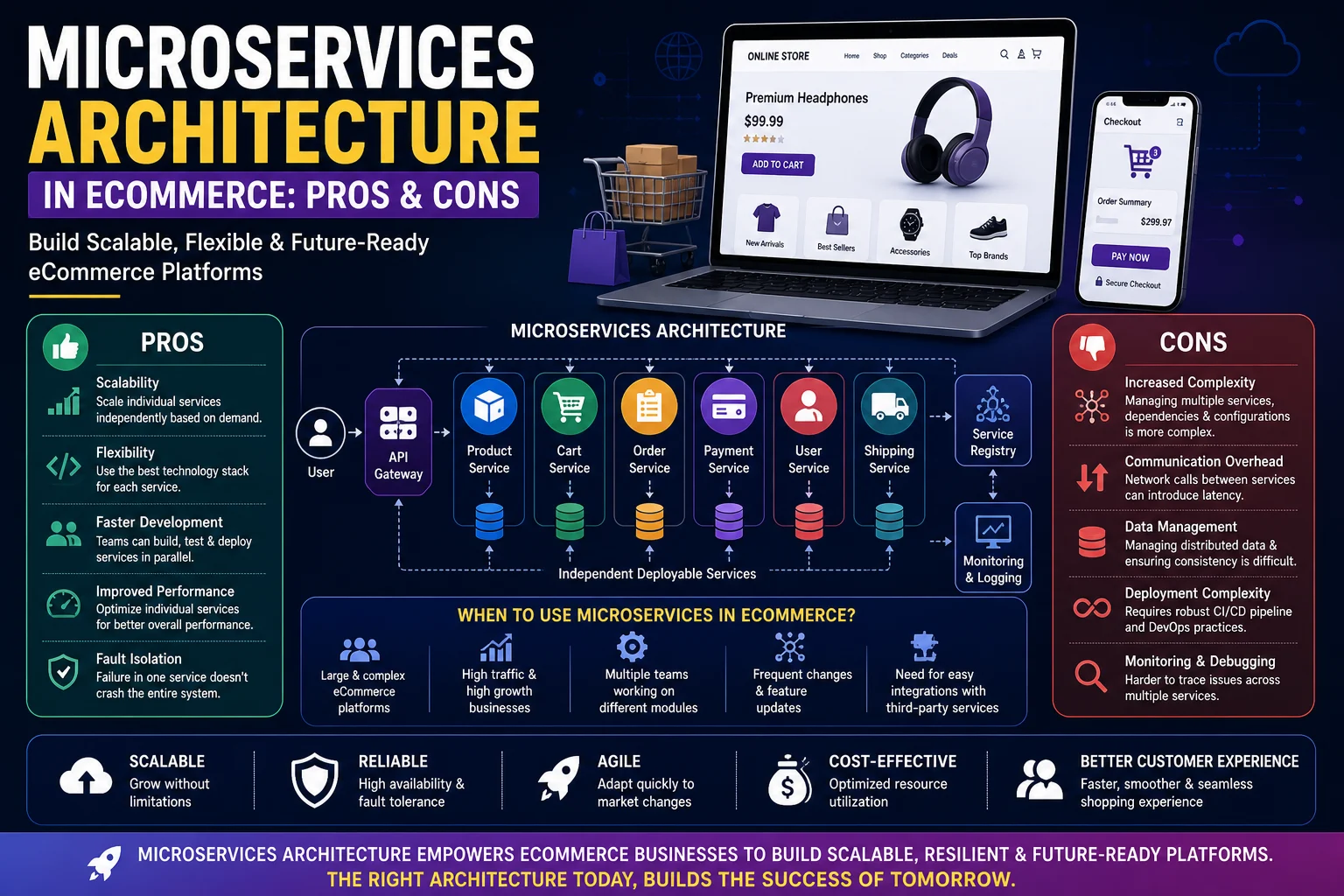
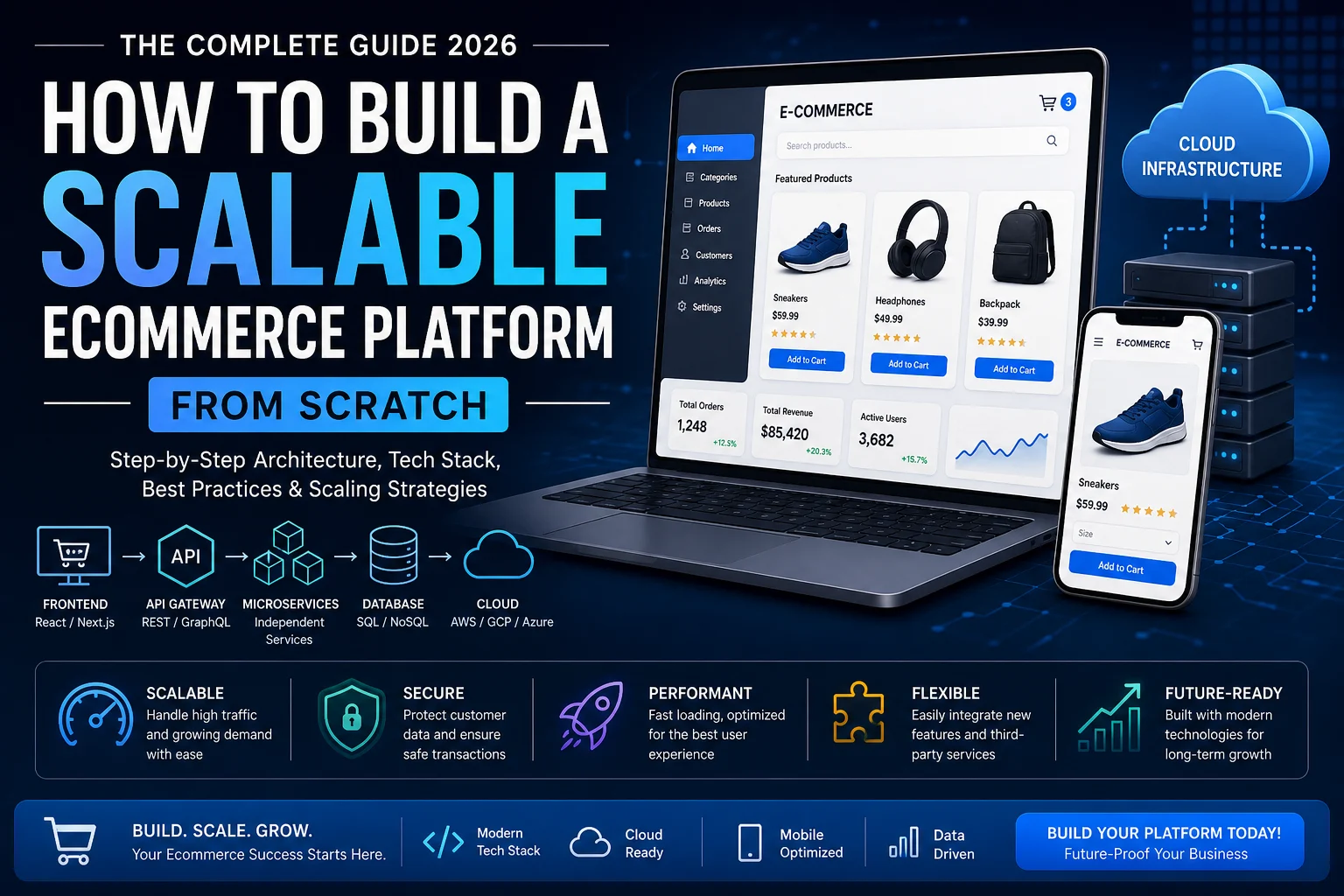
Headless commerce is built on a modular architecture that separates responsibilities into distinct layers. Each layer plays a specific role and communicates with others through APIs.
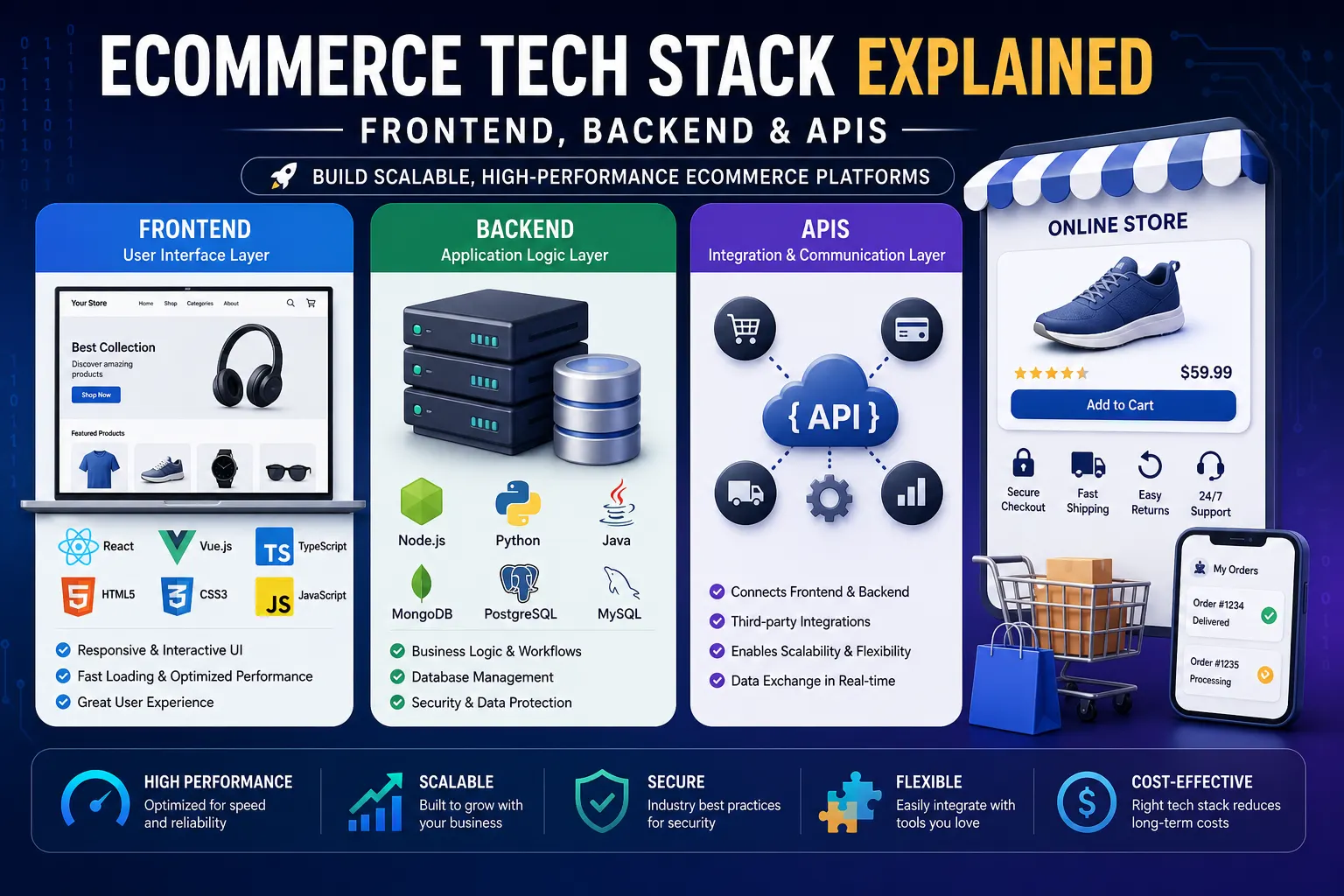
1. Frontend Layer (Presentation & Experience)
The frontend is the part of the system that users interact with. It includes all visual and interactive elements of the ecommerce experience.
This layer is responsible for:
- Displaying product information
- Managing navigation and layout
- Handling user interactions
- Rendering content dynamically
In headless commerce, the frontend is built using modern JavaScript frameworks such as:
- React
- Next.js
- Vue
These frameworks enable developers to create highly interactive, fast, and responsive user interfaces.
Because the frontend is decoupled, businesses have complete freedom to design unique user experiences without being constrained by backend limitations.
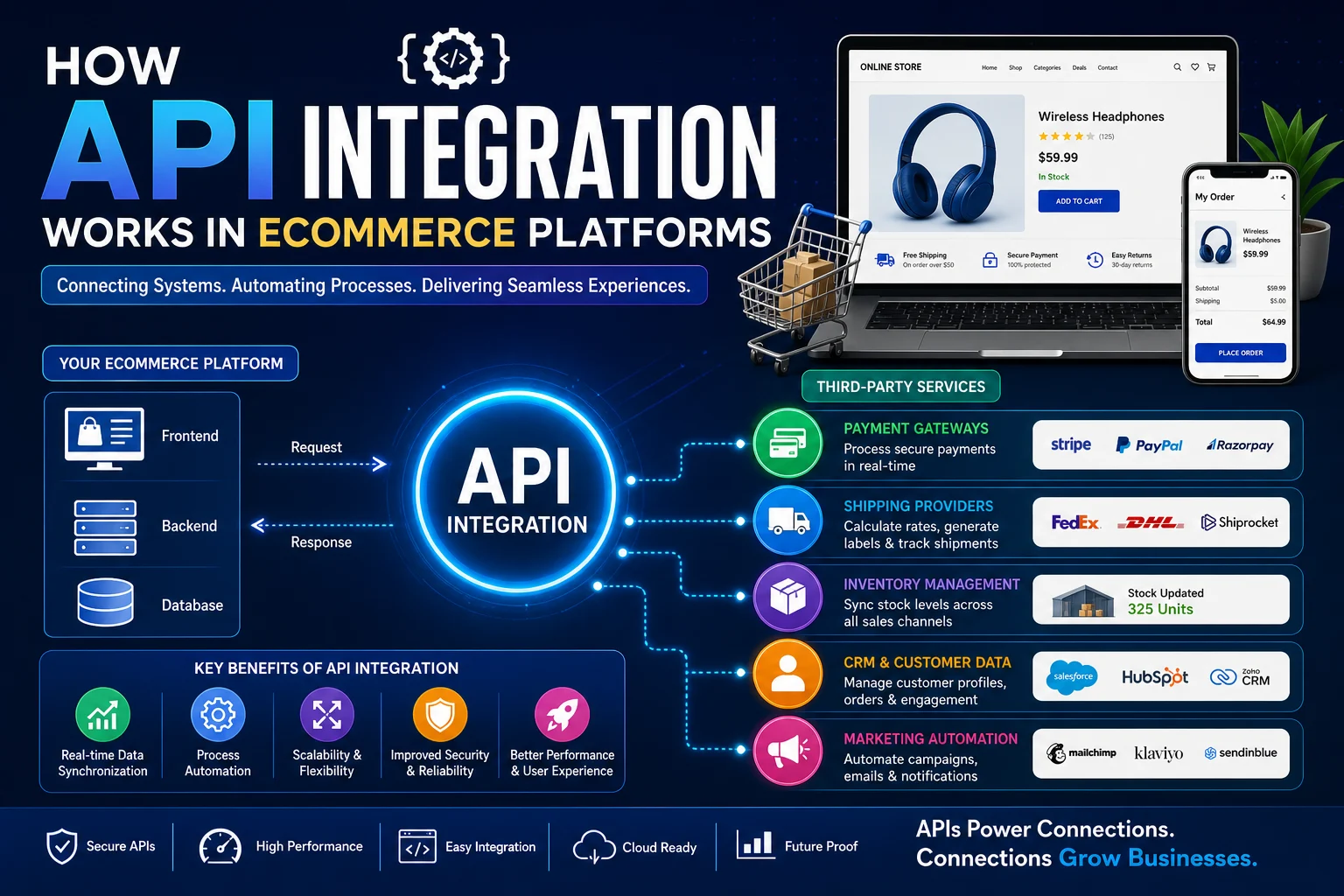
2. API Layer (Communication Bridge)
The API layer is the backbone of headless commerce. It connects the frontend with the backend and ensures seamless data exchange.
Every action performed by a user triggers an API request.
For example:
When a user searches for a product:
- The frontend sends a request to the API
- The API queries the backend
- The backend returns relevant product data
- The API sends the response back to the frontend
- The frontend displays the results
This process happens in milliseconds, enabling real-time interactions.
3. Backend Layer (Commerce Engine)
The backend is responsible for all business operations, including:
- Product management
- Inventory tracking
- Order processing
- Payment handling
- Customer data management
Unlike traditional systems, the backend in headless commerce does not control how data is displayed. It focuses solely on managing data and executing business logic.
This separation allows businesses to update backend systems without affecting the frontend.
4. Third-Party Services & Integrations
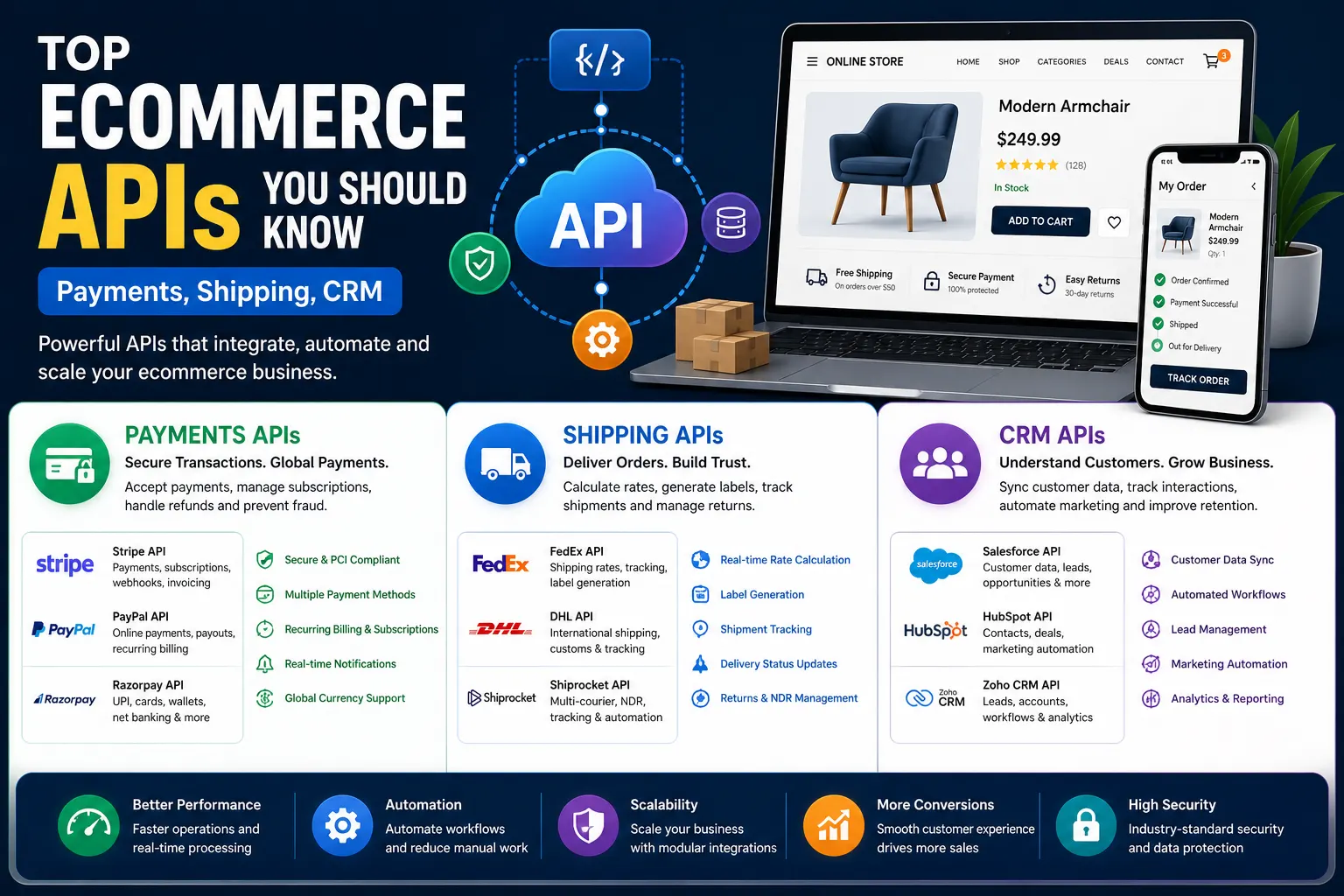
Modern ecommerce platforms rely heavily on external services, such as:
- Payment gateways
- Shipping providers
- CRM systems
- Marketing tools
In headless commerce, these services are integrated through APIs, making it easier to connect and manage multiple tools.
🚀 Benefits of Headless Commerce (Deep Analysis)
1. Flexibility and Customization
Headless commerce provides unparalleled flexibility in designing user experiences. Businesses are no longer restricted by predefined templates or platform limitations.
They can:
- Create custom layouts
- Implement advanced features
- Experiment with UI/UX improvements
This flexibility is particularly valuable for brands that want to differentiate themselves in competitive markets.
2. Improved Performance and Speed
Performance is a critical factor in ecommerce success. Slow-loading websites lead to higher bounce rates and lower conversions.
Headless architecture allows developers to optimize the frontend independently, resulting in:
- Faster page load times
- Better Core Web Vitals
- Improved SEO rankings
3. Omnichannel Experience
Modern consumers interact with brands across multiple channels. Headless commerce enables businesses to deliver consistent experiences across all touchpoints.
For example, a customer can:
- Browse products on a mobile app
- Add items to the cart
- Complete the purchase on a desktop
All while interacting with the same backend system.
4. Scalability
As businesses grow, their requirements become more complex. Headless commerce allows businesses to scale by adding new services and expanding to new channels without rebuilding the entire system.
5. Faster Innovation
Headless commerce enables parallel development. Frontend and backend teams can work independently, reducing development time and accelerating innovation.
⚠️ Challenges of Headless Commerce (Detailed Discussion)
1. Technical Complexity
Headless commerce requires a deeper understanding of system architecture, APIs, and integrations. Businesses need skilled developers to implement and manage the system.
2. Higher Initial Investment
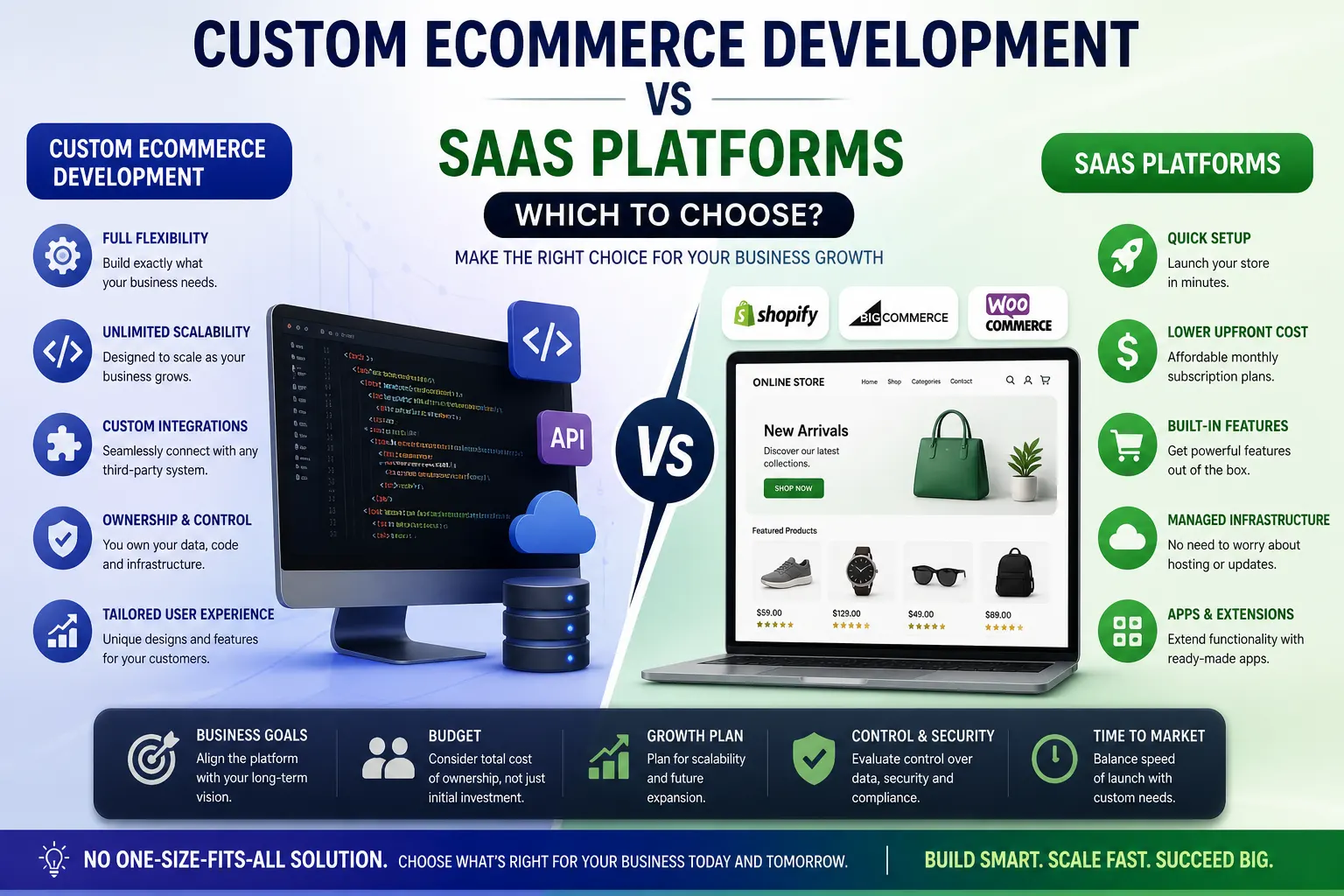
Compared to SaaS platforms, headless commerce involves higher upfront costs due to custom development and infrastructure setup.
3. API Dependency
Since all communication relies on APIs, any issues with APIs can impact the entire system.
🧩 Use Cases of Headless Commerce (Expanded)
1. High-Growth Ecommerce Brands
Brands experiencing rapid growth need flexible systems that can adapt to changing requirements. Headless commerce provides the scalability and customization needed to support growth.
2. Global Ecommerce Businesses
Businesses operating in multiple regions require:
- Multi-language support
- Multi-currency pricing
- Regional customization
Headless commerce makes it easier to implement these features.
3. Mobile-First Businesses
Mobile apps require independent frontends. Headless architecture naturally supports mobile-first strategies.
4. B2B Ecommerce Platforms
B2B platforms often involve complex workflows, custom pricing, and user roles. Headless commerce provides the flexibility needed to handle these requirements.
🔮 Future of Headless Commerce
Headless commerce is expected to play a significant role in the future of ecommerce.
Emerging trends include:
- AI-driven personalization
- Voice commerce
- Augmented reality shopping
- IoT-based commerce
🏁 Conclusion
Headless commerce represents a new era in ecommerce development. By separating the frontend from the backend and leveraging APIs, businesses can build flexible, scalable, and high-performance systems.
For companies aiming to stay competitive in 2026 and beyond, adopting headless commerce is not just a technical decision—it is a strategic move that enables innovation and growth.
🚀 Contact Sri Hayavadhana Info Tech for Future-Ready Ecommerce Solutions
To implement headless commerce effectively, partnering with experienced experts is essential. Sri Hayavadhana Info Tech specializes in building scalable, API-driven ecommerce platforms that are designed for performance, flexibility, and long-term growth.
With a strong focus on modern architecture, our team ensures your ecommerce system is:
- Built on robust headless architecture
- Optimized for speed and user experience
- Ready for multi-channel expansion
- Designed to scale as your business grows
Whether you’re planning to launch a new ecommerce platform or upgrade your existing system, we help you implement future-ready solutions that drive real business results.
👉 Get in touch today to build your next-generation ecommerce platform.