Blog
🛒 Shopify vs WooCommerce vs Magento: Which Ecommerce Platform is Best? (Ultimate 2026 Guide)

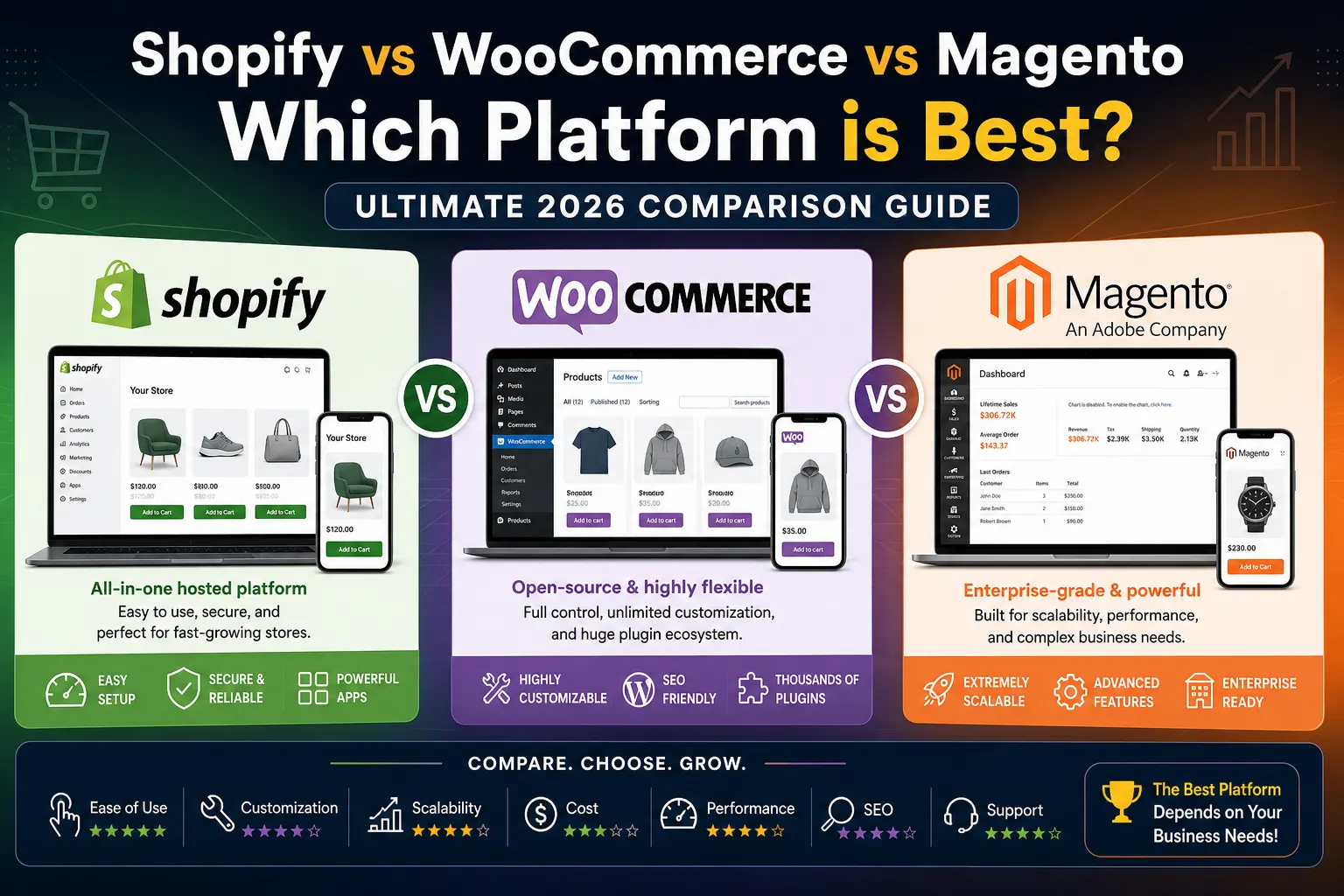
📘 Introduction: The Strategic Importance of Choosing the Right Ecommerce Platform
In today’s digital-first economy, selecting the right ecommerce platform is not just a technical decision—it is a strategic business move that can determine long-term success or failure. As ecommerce continues to grow rapidly, businesses face increasing pressure to deliver seamless customer experiences, handle high traffic volumes, integrate with multiple systems, and adapt quickly to market changes.
The ecommerce platform you choose becomes the foundation of your entire digital operation. It influences everything from user experience and conversion rates to scalability and operational efficiency. A platform that works well for a small business may become a bottleneck as the business grows. Similarly, a platform designed for enterprise-level operations may be unnecessarily complex and expensive for smaller businesses.
Among the many ecommerce platforms available today, three stand out as industry leaders:
- Shopify
- WooCommerce
- Magento
Each of these platforms represents a different approach to ecommerce development, offering unique advantages and trade-offs. Understanding these differences in depth is essential for making an informed decision.
🧠 Understanding Ecommerce Platform Types
Before comparing these platforms, it is important to understand the underlying categories they belong to.
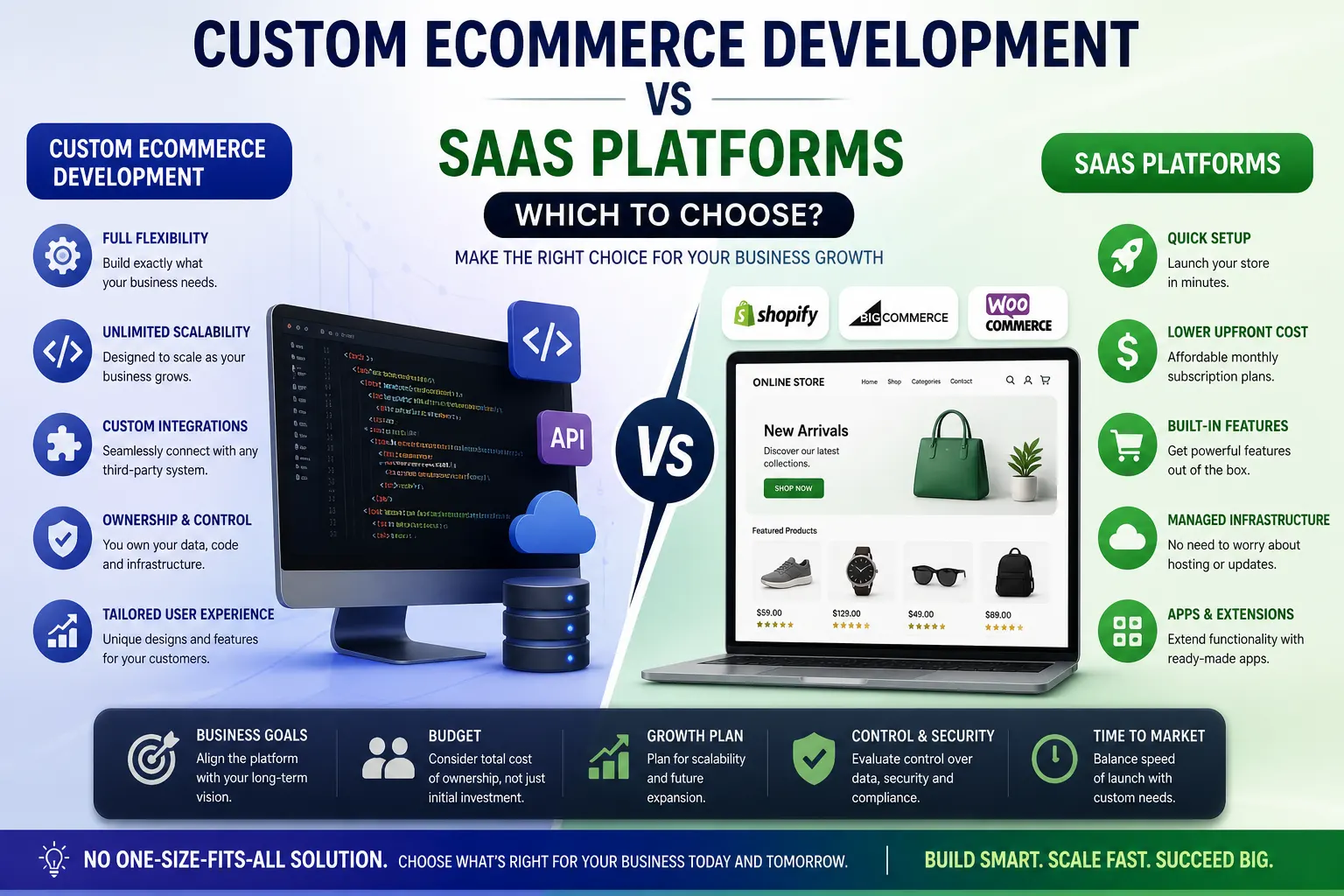
SaaS Platforms (Software as a Service)
Shopify falls into this category. SaaS platforms are hosted and maintained by the provider, which means businesses do not need to worry about infrastructure, security, or updates.
Open-Source Platforms
Both WooCommerce and Magento are open-source solutions. This means businesses have full control over the code and can customize every aspect of the platform.
Key Difference
The fundamental difference between SaaS and open-source platforms lies in control versus convenience:
- SaaS → Easy, managed, less flexible
- Open-source → Flexible, powerful, requires expertise
⚙️ Deep Dive: Shopify
Architecture and Core Philosophy
Shopify is designed with simplicity and accessibility in mind. Its architecture is fully managed, meaning all backend infrastructure, hosting, and security are handled by Shopify itself.
This allows businesses to focus entirely on selling products rather than managing technical complexities.
User Experience and Ease of Use
One of Shopify’s strongest advantages is its user-friendly interface. Even users with no technical background can create and manage an online store.
The platform provides:
- Drag-and-drop customization
- Pre-designed themes
- Simple product management tools
This ease of use significantly reduces the time required to launch a store.
Customization Capabilities
While Shopify offers customization through themes and apps, it is not as flexible as open-source platforms. Advanced customization often requires:
- Shopify Liquid (templating language)
- Third-party apps
Performance and Scalability
Shopify is built on a robust infrastructure that can handle high traffic volumes. Businesses do not need to worry about server management or scaling issues.
Shopify Plus, the enterprise version, is designed for large-scale operations.
Cost Structure
Shopify operates on a subscription model, with additional costs for:
- Apps
- Premium themes
- Transaction fees
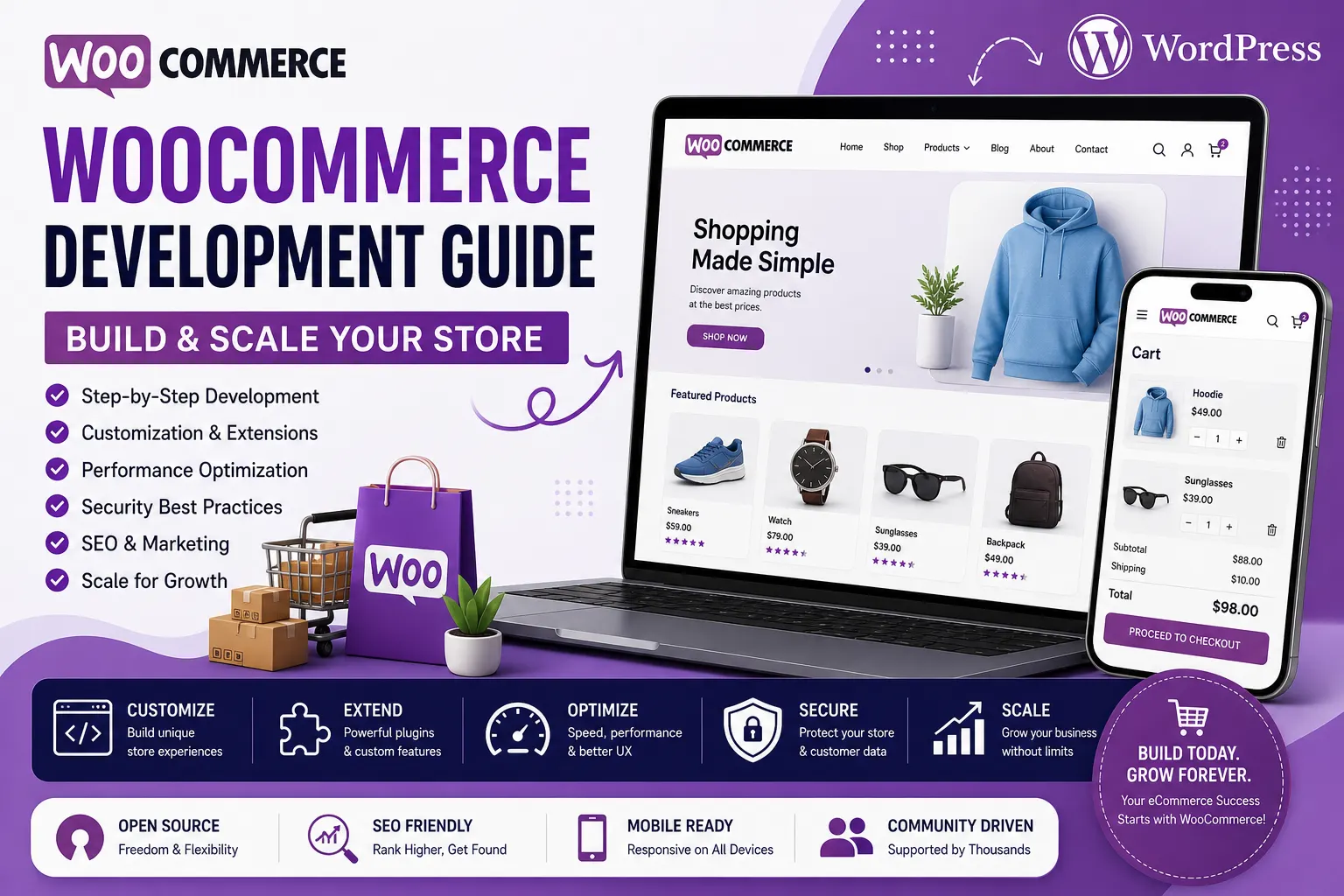
🧩 Deep Dive: WooCommerce
Architecture and Flexibility
WooCommerce is built on WordPress, making it one of the most flexible ecommerce solutions available.
Unlike Shopify, WooCommerce does not provide hosting or infrastructure. This means businesses have full control over their setup.
Customization and Control
WooCommerce allows complete customization, including:
- Custom themes
- Plugin development
- Backend modifications
This makes it ideal for businesses with specific requirements.
SEO Advantage
Since WooCommerce is built on WordPress, it offers strong SEO capabilities. Businesses can:
- Optimize content
- Use SEO plugins
- Control URLs and metadata
Performance Considerations
Performance depends heavily on:
- Hosting quality
- Plugin optimization
- Database management
With proper setup, WooCommerce can handle large-scale operations.
Cost Structure
WooCommerce itself is free, but costs include:
- Hosting
- Premium plugins
- Development
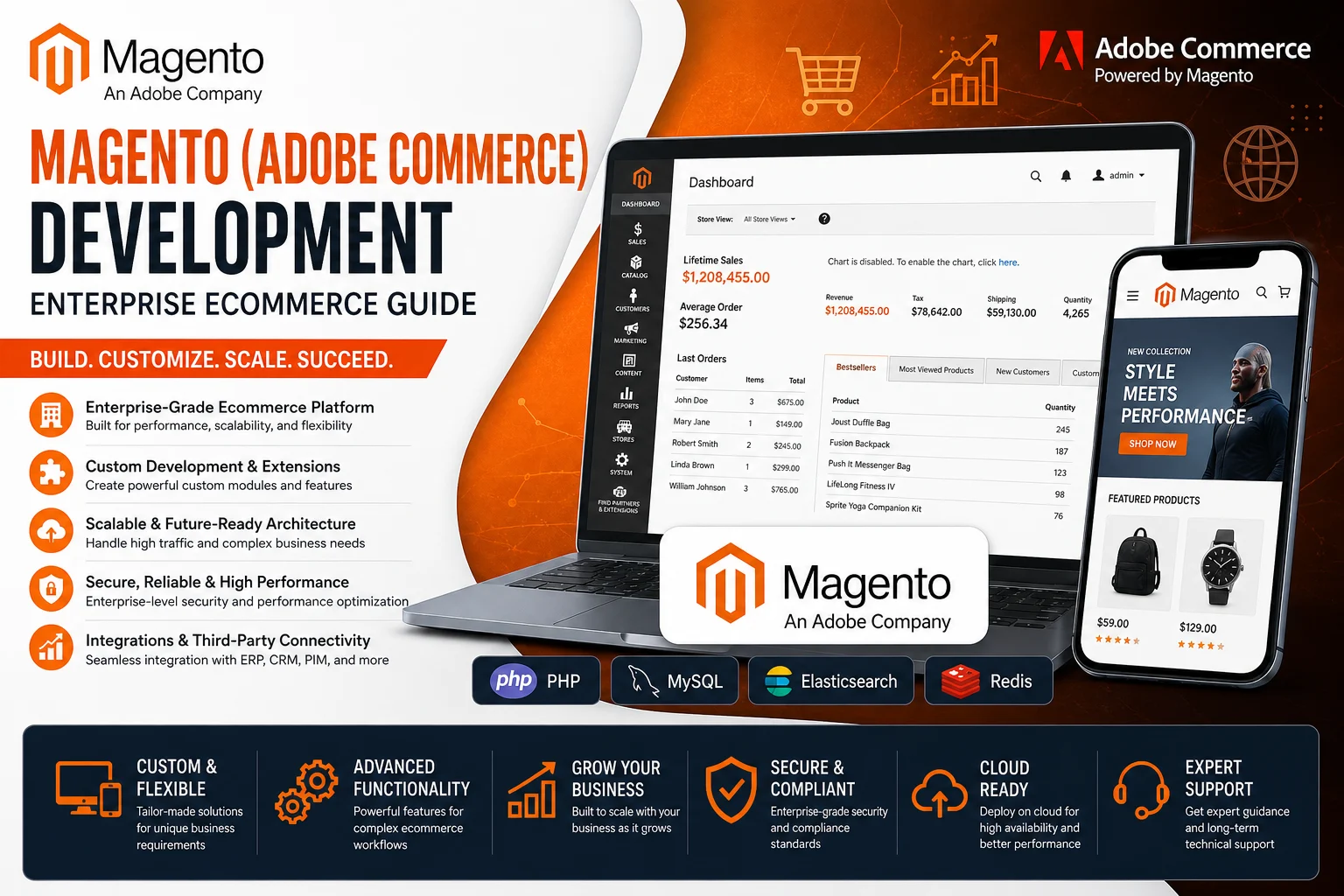
🏗️ Deep Dive: Magento (Adobe Commerce)
Architecture and Enterprise Focus
Magento is designed for large enterprises with complex ecommerce requirements.
It offers unmatched flexibility and scalability.
Customization and Features
Magento provides advanced features such as:
- Multi-store management
- Advanced product configurations
- Customer segmentation
Scalability and Performance
Magento is capable of handling:
- Large product catalogs
- High traffic volumes
- Complex workflows
Development Complexity
Magento requires experienced developers due to its complexity.
Cost Structure
Magento can be expensive due to:
- Development costs
- Hosting
- Enterprise licensing
⚔️ Comprehensive Comparison (Deep Analysis)
Ease of Use
Shopify is the easiest platform to use, making it ideal for beginners. WooCommerce requires moderate technical knowledge, while Magento is best suited for experienced developers.
Customization
Magento offers the highest level of customization, followed by WooCommerce. Shopify provides limited customization.
Scalability
Magento is the most scalable, followed by Shopify. WooCommerce scalability depends on hosting.
Cost
WooCommerce offers the most flexibility in cost, while Shopify has predictable pricing. Magento is the most expensive.
Performance
Shopify provides optimized performance out of the box. WooCommerce and Magento require proper optimization.
🧠 Use Case Scenarios (Detailed)
Small Businesses
Shopify is ideal due to its simplicity.
Growing Businesses
WooCommerce offers flexibility and control.
Enterprise Businesses
Magento provides advanced capabilities.
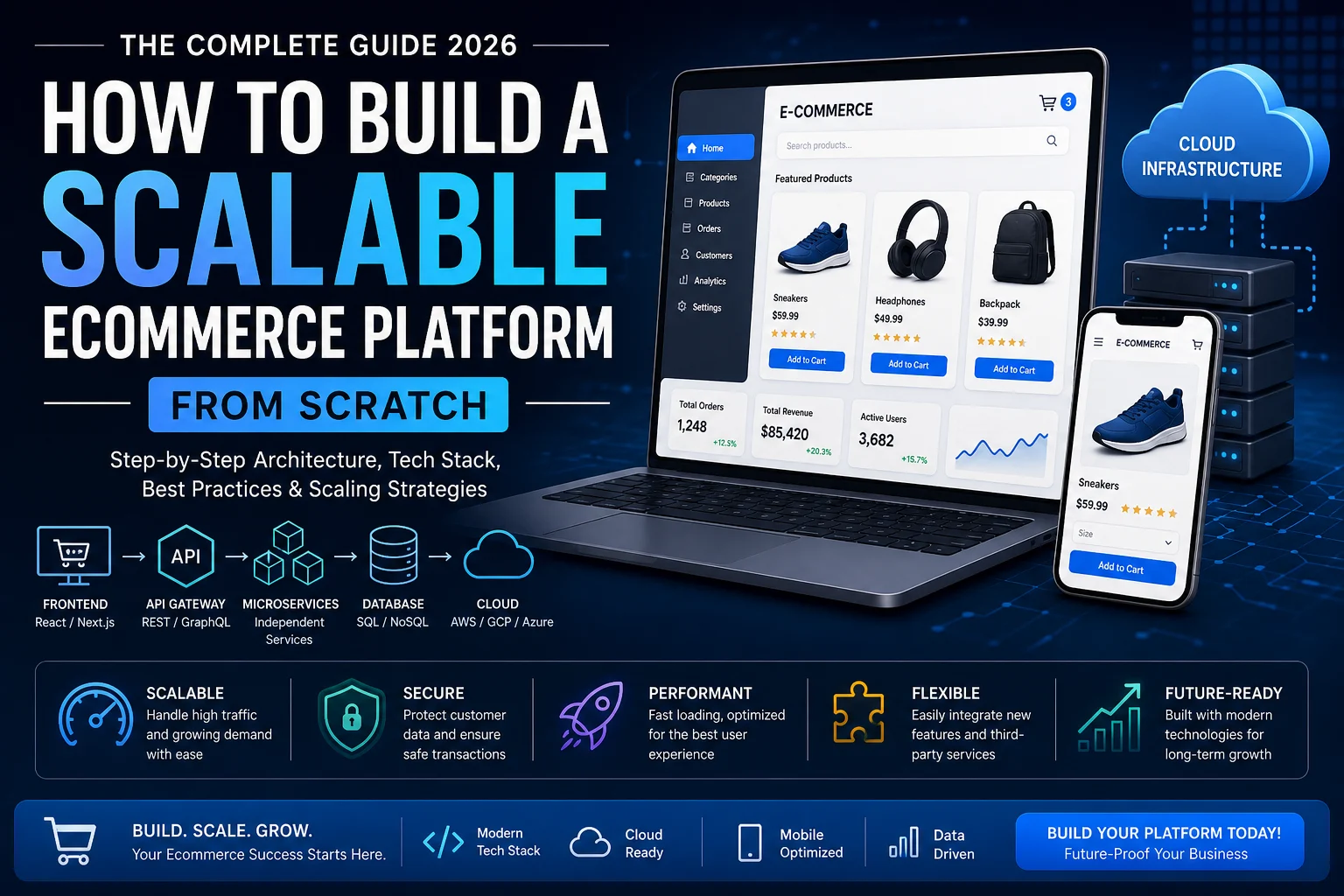
🔮 Future Trends
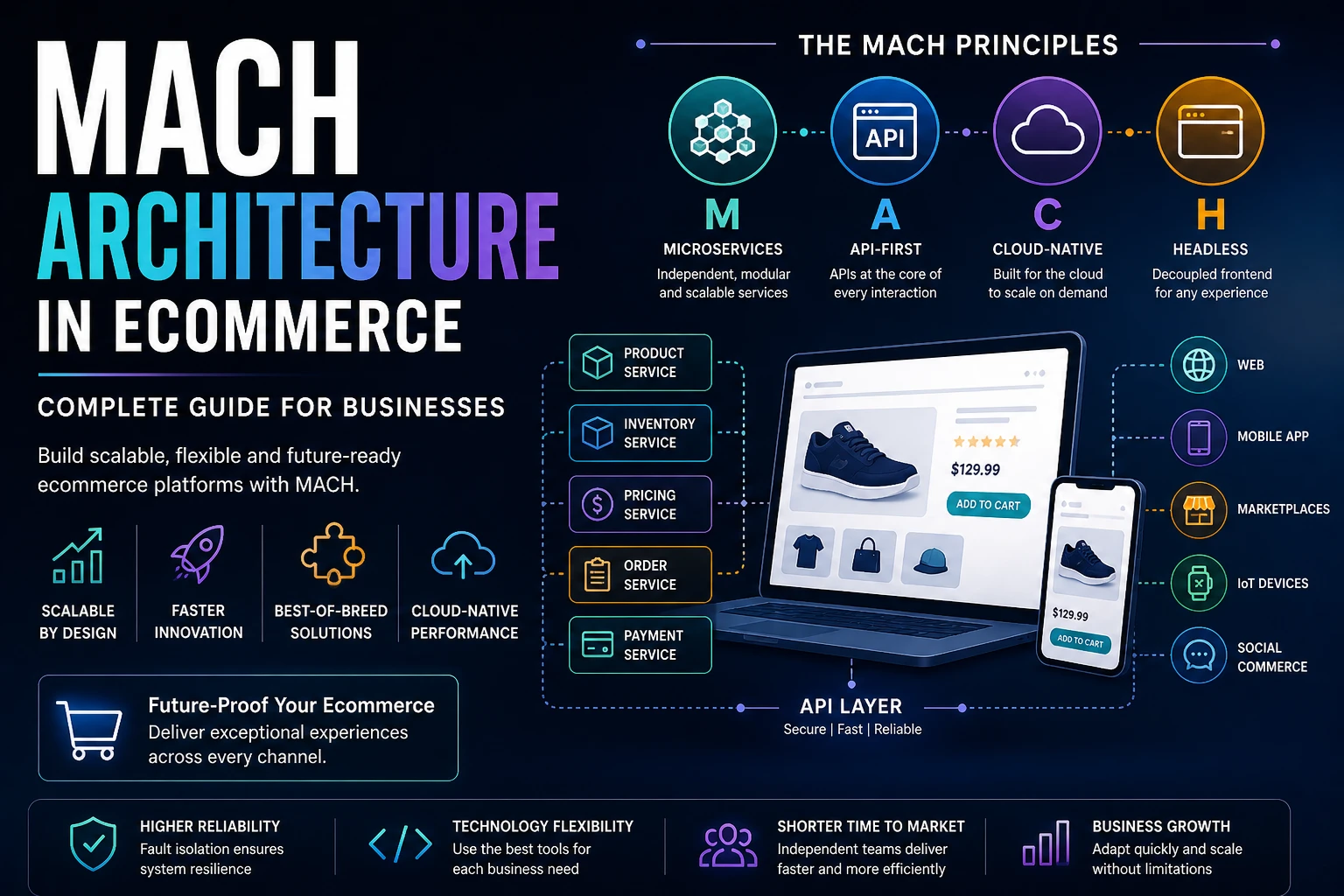
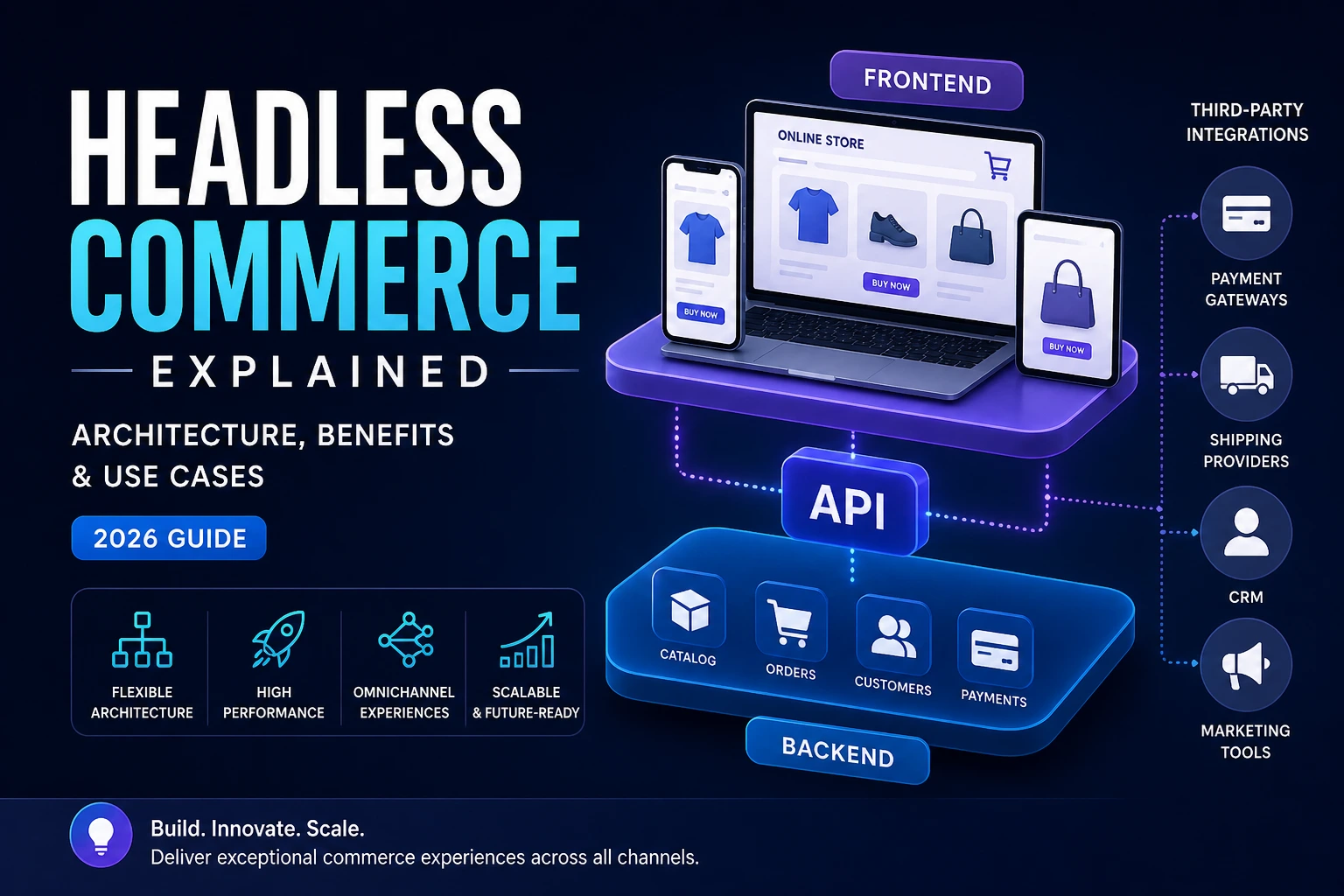
- Headless commerce
- API-driven architecture
- AI personalization
🏁 Conclusion
Choosing between Shopify, WooCommerce, and Magento depends on your business needs, technical capabilities, and growth plans.
To choose and implement the right platform, working with experts like Sri Hayavadhana Info Tech ensures your ecommerce system is optimized for performance, scalability, and long-term success.